Posts

Recently, Augmentir completed a rigorous qualification audit as part of a Tier 1 Pharmaceutical Manufacturing company’s Good Manufacturing Practice (GMP), and we are pleased to announce that our product successfully passed the audit.

A recent article published by The Washington Post shows some shocking numbers on the amount of Americans leaving their jobs over the past year. It’s no surprise that hotel and restaurant workers are resigning in high numbers due to the pandemic, but what is surprising is the fact that the manufacturing industry has been hit the hardest with “a nearly 60 percent jump” compared to pre-pandemic numbers. This “Great Resignation in Manufacturing” is the most of any industry, including hospitality, retail, and restaurants, which have seen about a 30% jump in resignations.

However, if you dig deeper, this trend isn’t new. This recent increase in job quitting in manufacturing has simply magnified a problem that had already been brewing for years, even prior to the start of the pandemic. In fact, in the four years prior to the pandemic (2015-2019), the average tenure rate in manufacture had decreased by 20% (US Bureau of Labor Statistics).

This accelerating workforce crisis is placing increased pressure on manufacturers and creating significant operational problems. The sector that was already stressed with a tight labor market, rapidly retiring baby-boomer generation, and the growing skills gap is now facing an increasingly unpredictable and diverse workforce. The variability in the workforce is making it difficult, if not impossible to meet safety and quality standards, or productivity goals. 

Manufacturing leaders’ new normal consists of shorter tenures, an unpredictable workforce, and the struggle to fill an unprecedented number of jobs. These leaders in the manufacturing sector are facing this reality and looking for ways to adjust to their new normal of building a flexible, safe and appealing workforce. As a result, managers are being forced to rethink traditional onboarding and training processes.  In fact, the entire “Hire to Retire” process needs to be re-imagined. It’s not the same workforce that our grandfather’s experienced, and it’s time for a change.

The Augmented, Flexible Workforce of the Future

The reality is that this problem is not going away. The Great Resignation in manufacturing has created a permanent shift, and manufacturers must begin to think about adapting their hiring, onboarding, and training processes to support the future workforce in manufacturing – an Augmented, Flexible Workforce.

What does this mean?

  • It means adopting new software tools to support a more efficient “hire to retire” process to enable companies to operate in a more flexible and resilient manner.
  • It means starting to understand your workforce at an individual level and using data to intelligently closes skills gaps at the moment of need and enables autonomous work.
  • And it means taking advantage of data.  More specifically, real-time workforce intelligence that can provide insights into training, guidance, and support needs.

Investing in AI-powered connected worker technology is one way to boost this operational resiliency. Many manufacturing companies are using digital Connected Worker technology and AI to transform how they hire, onboard, train, and deliver on-the-job guidance and support. AI-based connected worker software provides a data-driven approach that helps train, guide, and support today’s dynamic workforces by combining digital work instructions, remote collaboration, and advanced on-the-job training capabilities. 

As workers become more connected, manufacturers have access to a new rich source of activity, execution, and tribal data, and with proper AI tools can gain insights into areas where the largest improvement opportunities exist. Artificial Intelligence lays a data-driven foundation for continuous improvement in the areas of performance support, training, and workforce development, setting the stage to address the needs of today’s constantly changing workforce. Today’s workers embrace change and expect technology, support and modern tools to help them do their jobs.


To learn more about how AI is being used to digitize and modernize manufacturing operations, contact us for a personalized demo.

Learn how Digital Standard Work effectively transforms manufacturing production and enables operational excellence.

Manufacturing organizations are feeling the pressure of increased customer demands, skilled labor shortages, and intense shifts in their frontline workforces, however, they can effectively overcome these obstacles with digital standard work enabled by smart connected worker technology. Digital standard work promotes operational excellence in manufacturing through facilitated knowledge-sharing, enhanced process standardization, increased employee engagement, improved workforce agility, and overall optimization of workforce abilities.

digital standard work in manufacturing

Standardized work in manufacturing (centerlining, machine setup/maintenance, inspection checklists, workforce training, lubrication procedures, etc.) is effective for continuously improving the most efficient and safe methods for performing work to meet customer demand while minimizing waste. Digital Standard Work takes these processes one step further, enhancing them with digital technology to establish a true culture of continuous improvement where frontline workers and shop floor processes benefit from digital workflows, collaboration, AI-powered guidance, generative AI assistants, real-time access to centralized knowledge bases, and more.

By redefining standard work for the digital age, manufacturers can achieve operational excellence through increased efficiency, quality, flexibility, and innovation across their frontline workforces. Read more on Digital Standard Work and how it effectively transforms manufacturing production and enables success:

Digitizing Standard Work in Manufacturing

According to Forbes and McKinsey, through digital tools manufacturers can reduce machine downtime by 30% to 50% and quality-related costs can be reduced by 10% to 20%. Effectively digitizing manufacturing standard work through smart, AI-driven connected worker technology involves:

  • Interactive Digital Work Instructions
    Replace paper-based standard operating procedures (SOPs) with interactive digital work instructions that include multimedia elements like videos, images, and animations. These can be accessed by workers on tablets, wearables, and other mobile devices right on the shop floor.
  • Data Capture and Integration
    Leverage smart tools and sensors to automatically capture shop floor data from the manufacturing process, such as torque values, cycle times, and quality checks. This data can be integrated into the digital work instructions to provide real-time feedback and ensure adherence to standards.
  • Workflow Automation
    Automate non-value-added tasks like data entry, approvals, and documentation through connected worker platforms. This streamlines workflows, reduces errors, and frees workers to focus on value-adding activities aligned with standard work.
  • Knowledge Management
    Digitize and centralize tribal knowledge and tacit knowledge, best practices, and process documentation in a connected worker platform. This ensures standardized methods are easily accessible and updatable for consistent knowledge sharing across the workforce.

Using smart, connected worker platforms to digitize and optimize standard work in manufacturing drives improved productivity, ensures better and more consistent product quality, and fosters a safer work environment for enhanced operational success. Connected worker platforms that digitize standard work can also be used to support a company’s broader IWS  (integrated work systems) strategy, which helps improve operational excellence in manufacturing.

Pro Tip

Using a low-code no-code workflow builder simplifies the creation of complex digital workflows for frontline work processes. Furthermore, integrating remote collaboration tools facilitates real-time guidance, knowledge sharing, and the ability to update standard work procedures based on captured tribal knowledge.

A

Engaging Frontline Workers with Digital Standard Work

As manufacturing workforces shift due to retirement and tribal knowledge loss, effective workforce training has become critical for continued success. Interactive digital interfaces, augmented and enhanced capabilities, and wearable technologies make standard work practices like workforce training more engaging and accessible, improving workforce adoption and adherence.

Digital tools facilitate information visibility and knowledge sharing among frontline workers, enabling them to learn from each other, share best practices, and contribute to a culture of continuous improvement. By tracking and analyzing performance data from digital systems, manufacturers can identify top performers, provide personalized feedback, and recognize achievements, fostering a sense of engagement and motivation among frontline workers.

Digital Standard Work empowers frontline workers by involving them in process improvements, recognizing their contributions, and providing opportunities for learning and growth, leading to increased job satisfaction and commitment. By leveraging digital technologies and interactive interfaces, manufacturers can transform Standard Work procedures into engaging and empowering experiences for their frontline workforce, driving productivity, quality, and a culture of continuous improvement.

Most importantly it gives manufacturing frontline and factory staff the tools they need to be successful and thus create a more satisfied environment where employees come to work and feel good about what they are doing and how they are doing it.

Driving More Effective Collaboration

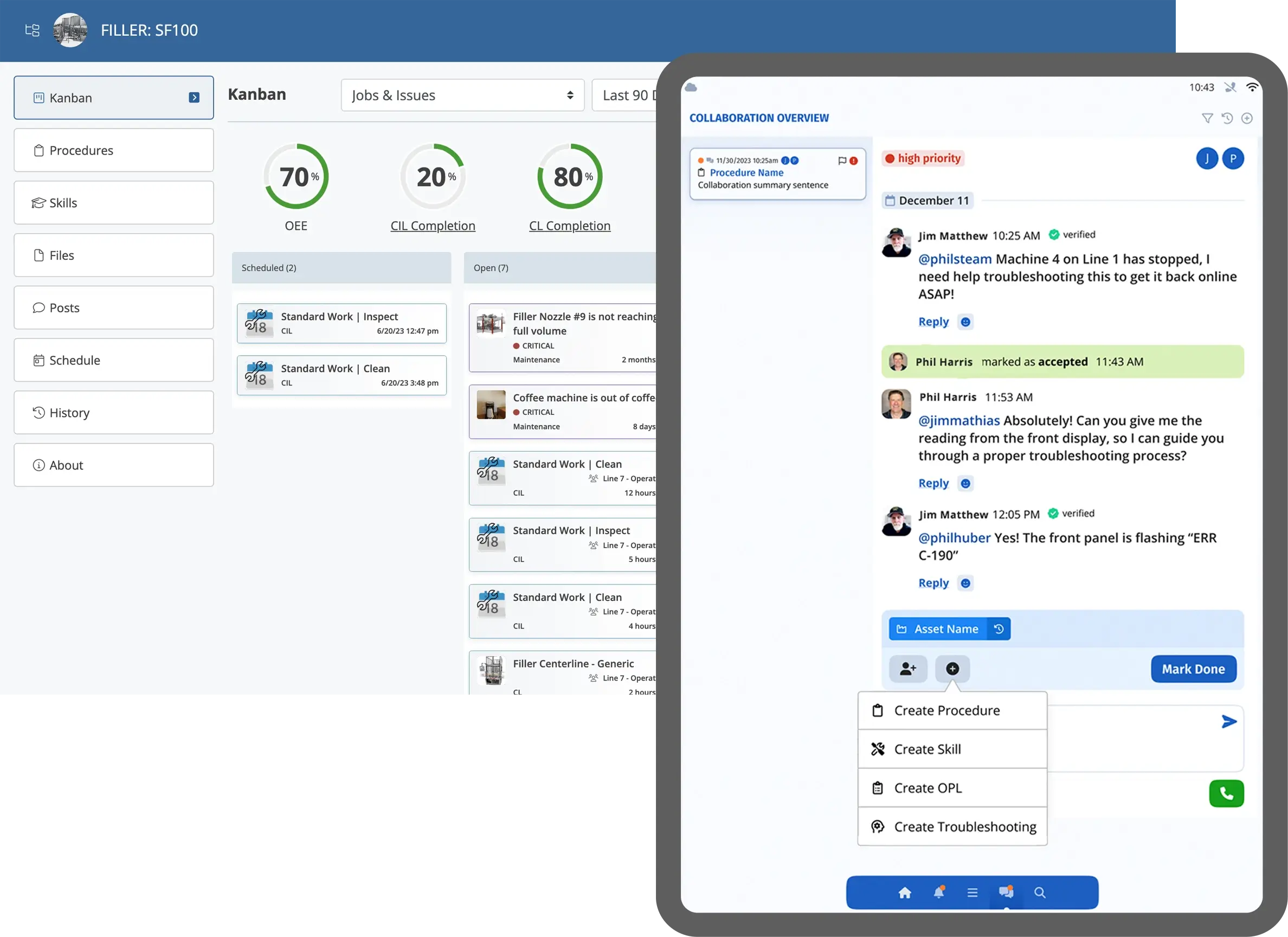
Digital standard work also facilitates better collaboration across your frontline teams. Effective communication starts with digital tools, and by implementing digital standard work with connected worker technology, manufacturers can connect frontline team members across shifts, departments, locations, and languages, improving visibility into workforce planning, training, skills tracking, daily management, troubleshooting, and more.

industrial collaboration with augmentir

From frontline workers to executives, a digital standard work strategy that leverages connected worker technology allows employees to collaborate seamlessly and easily access information. Connected worker solutions that include industrial collaboration tools allow workers to virtually connect to subject matter experts for remote guidance and assistance. These software tools are becoming commonplace in manufacturing and other industrial settings, where companies are faced with an increasingly distributed and remote workforce, yet still require team collaboration to help troubleshoot and resolve issues. In a nutshell, workers can get more done with greater accuracy in less time.

Interested in learning more?

If you’d like to learn more about how Augmentir and our AI-powered connected worker solution digitizes standard work, streamlines operations, improves communication, and empowers frontline workers with the tools and information they need, schedule a demo with one of our product experts.


See Augmentir in Action
Get in Touch for a Personalized Demo

Learn how continuous and workflow learning can help modernize employee training in the manufacturing industry.

Staying ahead of the curve in today’s manufacturing marketplace means that businesses need to innovate and adapt. To accomplish this, organizations must have a skilled workforce and ongoing training and workforce management processes to support continuous learning and development.

Modernizing training cultivates employee skillsets by implementing continuous learning in the flow of work.

modernize manufacturing training with continuous learning

Continuous learning is the process of attaining new skills on a constant basis. Workflow learning involves educating yourself on the job using resources and self-directed learning materials. Done together, this modern training approach can help streamline productivity.

If you want to learn how to improve manufacturing training with continuous learning and workflow learning, explore this article that answers the following:

What is continuous learning?

Continuous learning in manufacturing involves enabling workers to learn new skills regularly. It’s a great way to improve employee performance and innovation. According to Forbes, embracing a culture of continuous learning can help organizations adapt to market demands, foster innovation, as well as attract and retain top talent.

Learning can come in different forms, from formal course training to hands-on experience. Employees are encouraged to be self-starters who want to evolve their skills on an on-going basis. A good example of a continuous learning model is everboarding; everboarding is a modern approach toward employee onboarding and training that shifts away from the traditional “one-and-done” onboarding model and recognizes learning as an ongoing process.

How can continuous learning be used in manufacturing?

When businesses don’t support continuous learning, manufacturing processes stagnate. This contributes to a lack of innovation and hinders potential opportunities for success that a company may experience.

In a nutshell, the more workers know and the more they can accomplish, the more they can contribute to business growth. This may consist of employees taking an online course or learning a new technique hands-on, no matter what department they’re in.

For example, assembly line workers may learn new manufacturing processes to ensure everything is functioning properly. Meanwhile, operators may study the latest machinery to learn new tricks of the trade.

What is workflow learning?

Workflow training in manufacturing involves learning while doing. This means that workers pick up new skills while on the job through hands-on experience.

The key to workflow learning is that it happens while employees perform their everyday tasks.

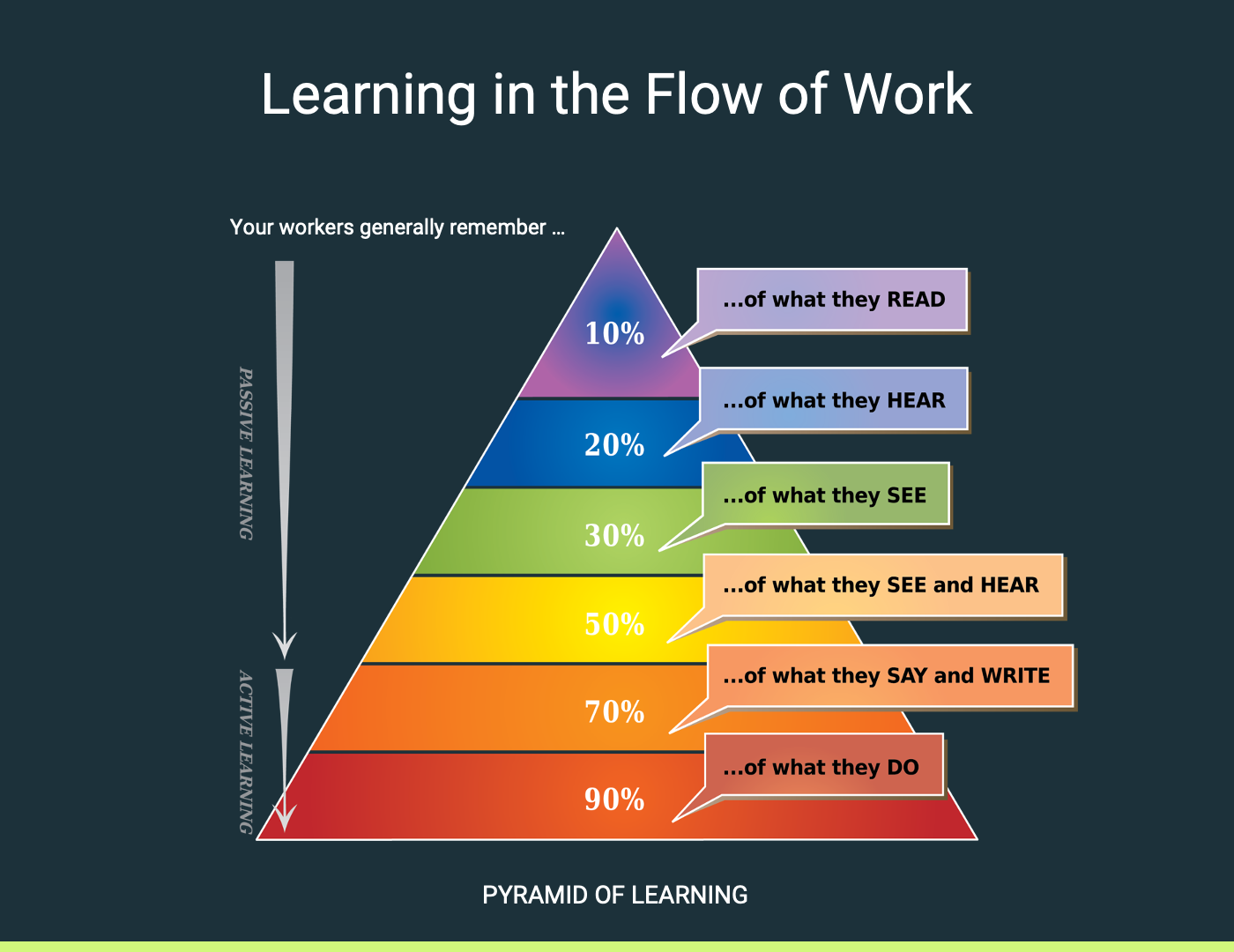
Many workers in the manufacturing industry work in shift-based environments, making it difficult for them to attend traditional classroom-based training sessions. With workflow learning, organizations can incorporate more learning processes into the everyday workday of frontline workers – essentially bridging the gap between knowing and doing. This “active learning” aligns with the Pyramid of Learning visual model that illustrates the different stages of learning and their relative effectiveness.

pyramid of learning

Active learning involves the learner actively engaging with the material, often through problem-solving, discussion, or application of the knowledge while they are on the job.

In general, active learning is considered more effective than passive learning in promoting deep understanding and retention of information. Therefore, learning leaders often strive to design learning experiences that involve higher levels of active learning, moving beyond the lower levels of the pyramid and promoting critical thinking, creativity, and problem-solving skills.

How can workflow learning be used in manufacturing?

Workflow learning consists of using resources at your disposal to complete tasks. This strategy is sometimes referred to as performance support.

For example, workers can look up answers to questions, steps of a process, or new services while performing their jobs instead of interrupting their workflow to go to a class or training session.

Pro Tip

Active, or workflow learning can be implemented with mobile learning solutions that leverage connected worker technology and AI to provide workers with bite-sized, on-demand training modules that they can access on smartphones or tablets. These modules can be developed with customized learning paths that are focused on the type of tasks and work employees are doing on the factory floor.

A

How can technology improve manufacturing training?

The nature of manufacturing training is changing in the age of artificial intelligence. Today, many training processes can be streamlined and optimized using digital and smart, connected worker technologies.

For instance, data collected from everyday manufacturing processes can polish training programs online. Experienced workers can share best practices on customized dashboards for other employees to access. These can be updated in real-time and show changes highlighted to better optimize manufacturing processes.

Digital training tools can also help improve learning speed and retention. For example, workers who need visuals or real-world scenarios can assess them using AI-powered software to maximize their training.


Augmentir is the world’s leading AI-powered connected worker solution that helps industrial companies optimize the safety, quality, and productivity of the industrial frontline workforce. Contact us for a live demo, and learn why leading manufacturers are choosing us to elevate their manufacturing operations to the next level.


See Augmentir in Action
Get in Touch for a Personalized Demo

Empower your workforce with real-time, on-the-job performance support. Learn how Augmentir delivers AI-powered tools to boost productivity, reduce errors, and improve training efficiency.

What Is Performance Support?

Performance support refers to tools and systems that deliver real-time, on-the-job guidance—helping workers complete tasks more efficiently and accurately. Unlike traditional training, which relies on employees retaining information for future use, performance support provides just-in-time knowledge exactly when and where it’s needed.

performance support for frontline workers in manufacturing

This approach addresses a critical challenge: information retention. According to a recent study by the Learning Guild, employees forget an average of 50% of classroom training within an hour. That figure rises to 70% within 24 hours, and up to 90% of the content is lost after just one week.

In contrast, delivering assistance and support at the moment of need, organizations can incorporate more learning processes into the everyday workday of frontline workers—essentially bridging the gap between knowing and doing. This “active learning” aligns with the Pyramid of Learning visual model that illustrates the different stages of learning and their relative effectiveness.

pyramid of learning

By delivering timely assistance at the moment of need, performance support closes the gap between learning and doing—boosting productivity, reducing errors, and increasing employee confidence.

Why Performance Support Matters

In today’s fast-paced world, businesses can’t afford downtime or mistakes due to forgotten procedures or unclear processes. That’s where performance support shines:

  • Reduces training time by enabling learning in the flow of work
  • Minimizes human error with guided workflows and checklists
  • Improves productivity with instant access to instructions, diagrams, or expert assistance
  • Boosts employee confidence and retention by removing the fear of making mistakes
  • Adapts to changing processes without retraining entire teams

Types of Performance Support Tools

Modern performance support systems come in a variety of forms:

1. Digital Work Instructions

Digital work instructions and step-by-step guides delivered on tablets, smartphones, or AR-enabled wearables that ensure workers follow best practices.

using ai to improve manufacturing training

2. Smart Forms and Checklists

Interactive smart forms and checklists that adapt based on context, role, or equipment—reducing the risk of skipped steps or safety violations.

3. Knowledge Bases & Microlearning

Searchable libraries with short how-to videos, job aids, and FAQs, accessible at any moment of need.

4. AI-Based Guidance

Context-aware suggestions powered by AI that anticipate the user’s next move and offer proactive support.

Benefits of a Performance Support System

Implementing a performance support platform leads to measurable improvements:

  • Faster onboarding: New employees become productive in days, not weeks. In one example, a global packaging company reduced onboarding time by 72% using connected worker technology
  • Improved operational efficiency: Real-time support eliminates bottlenecks
  • Error reduction: Guided execution ensures compliance and safety
  • Continuous improvement: Insights from usage data help refine SOPs and training

Performance Support with Augmentir

Augmentir is the only AI-powered connected worker platform that delivers personalized, real-time performance support at scale.
augmentir connected worker platform

How Augmentir Enhances Performance Support

  • Smart Digital Workflows: Augmentir allows you to create and deploy intelligent digital work instructions that adapt based on worker proficiency, context, and task complexity.
  • AI-Based Recommendations: Unlike static systems, Augmentir uses artificial intelligence to optimize each user’s experience—delivering dynamic guidance and identifying where additional support is needed.
  • Integrated Collaboration: Augmentir’s built-in manufacturing collaboration software tools connect frontline workers with subject matter experts instantly—ensuring issues are resolved in real time.
  • Personalized Learning in the Flow of Work: Using workforce data, Augmentir delivers workflow learning—targeted microlearning and upskilling opportunities during task execution—accelerating growth and minimizing disruption.
  • Connected Insights for Continuous Improvement: Data captured during task execution feeds into dashboards and analytics, helping you identify performance gaps, improve SOPs, and drive operational excellence.

Augmentir in Action

Manufacturers and industrial companies across the globe trust Augmentir to:

  • Cut training time by up to 60%
  • Reduce errors and rework by 40%
  • Increase first-time quality and throughput
  • Drive continuous workforce improvement with AI-driven insights

Implementing a robust performance support system isn’t just about efficiency—it’s about creating a culture of empowerment and agility. Workers feel supported, supervisors gain visibility, and businesses stay competitive.

Schedule a demo today to learn how Augmentir can elevate your performance support strategy.


See Augmentir in Action
Get in Touch for a Personalized Demo

Discover key strategies to boost production efficiency in manufacturing—maximize output, cut waste, and improve operations with smart, practical solutions.

In today’s competitive industrial landscape, production efficiency in manufacturing is a critical factor that directly impacts profitability, customer satisfaction, and long-term business success. To achieve production efficiency, the actual output must match the optimal standard output, which involves minimizing waste, reducing downtime, optimizing labor, and ensuring consistent quality at every step of the manufacturing process.

production efficiency in manufacturing

Introduction to Production Efficiency

Production efficiency refers to the ability of a manufacturing process to produce the maximum output with the given resources, while minimizing waste and reducing costs. It is a key concept in economics and operational analysis, essential for businesses to remain competitive in the market. Achieving production efficiency involves optimizing processes, reducing waste, and improving productivity to achieve higher profitability and competitiveness. By focusing on improving production efficiency, manufacturers can increase their production capacity, reduce costs, and enhance product quality. This, in turn, leads to increased customer satisfaction and loyalty, as high-quality products are delivered consistently and on time.

What is Production Efficiency in Manufacturing?

Production efficiency refers to the ability of a manufacturing operation to produce goods using the least amount of resources—time, materials, and labor—without compromising on quality. An efficient production line runs smoothly, minimizes bottlenecks, and ensures equipment and workforce are fully utilized. To measure production efficiency, metrics such as Overall Equipment Effectiveness (OEE), cycle time, yield rates, and labor productivity are used.

Pro Tip

Using digital tools, AI-powered analytics, and connected worker platforms are revolutionizing how factories operate. These technologies provide visibility into operations, uncover hidden inefficiencies, and support agile decision-making.

A

Why is Production Efficiency Important?

In manufacturing, even small inefficiencies can lead to significant cost overruns, missed deadlines, and quality issues. Improving production efficiency is essential for maximizing output while minimizing input—helping manufacturers stay competitive, agile, and profitable in an ever-evolving market. Manufacturing efficiency, on the other hand, focuses specifically on optimizing the effectiveness of manufacturing processes, workforce deployment, and overall productivity on the shop floor. Efficient production processes enable manufacturers to do more with less, which not only boosts the bottom line but also enhances the overall customer experience.

Here are some of the key benefits:

Lower Operational Costs

By reducing machine downtime, optimizing labor, and minimizing material waste, companies can optimize processes to significantly cut overhead costs and improve profitability.

Reduced Waste and Rework

Quality control ensures that products are made right the first time, decreasing scrap rates and minimizing costly rework caused by defects or human error.

Shorter Lead Times

Streamlined workflows and fewer production delays, coordinated through efficient production schedules, mean faster turnaround times, allowing manufacturers to fulfill orders more quickly and meet tight delivery schedules.

Better Resource Utilization

Whether it’s labor, machinery, or raw materials, efficient production ensures every resource is used to its full potential throughout the entire production cycle—maximizing value and reducing idle time.

Higher Customer Satisfaction

Consistently delivering high-quality products on time builds trust with customers and strengthens relationships, leading to repeat business and positive brand reputation. Manufacturers improve efficiency by leveraging modern technologies and real-time data analytics, which helps streamline processes, reduce downtime, and enhance productivity.

Greater Competitiveness in the Market

Manufacturers that improve efficiency can offer better prices, respond faster to market changes, and innovate more effectively—gaining a clear edge over less agile competitors.

Ultimately, production efficiency is not just about internal gains—it’s a strategic advantage that drives growth, scalability, and long-term success.

Key Strategies to Improve Production Efficiency

Here are some proven strategies to improve production efficiency:

1. Implement Lean Manufacturing Principles to Drive Continuous Improvement

Lean manufacturing methodologies focus on improving efficiency by eliminating waste (or “muda”) from every aspect of the production process. Tools such as 5S Audits, Kaizen, and value stream mapping help identify inefficiencies and areas for continuous improvement.

2. Invest in Autonomous Maintenance and TPM

Encouraging operators to handle basic maintenance tasks—such as Clean, Inspect, Lubricate (CIL)—as part of an Autonomous Maintenance and Total Productive Maintenance (TPM) strategy minimizes equipment downtime, improves machine efficiency, and ensures machines run at peak performance.

3. Leverage Digital Work Instructions and Connected Worker Tools

Modern digital approaches like digitizing standard operating procedures (SOPs) and adopting connected worker tools helps ensure consistency, reduce errors, and make it easier to train workers by providing accurate data.

improve production efficiency in manufacturing with augmentir

In a recent survey conducted by LNS Research, more than 70% of the most profitable manufacturers are currently utilizing in Future of Industrial Work (FOIW) initiatives and connected worker technology, with the vast majority of them seeing meaningful progress and delivered corporate value through these workforce initiatives. Connected Worker platforms like Augmentir enable manufacturers to create AI-powered workflows that guide frontline workers through each task efficiently and accurately.

3. Use Real-Time Data and Analytics to Track Key Performance Indicators

Data-driven decision-making is critical for efficiency. Historical data can provide insights into the maximum output achieved by a facility under full capacity, which can help in defining standard outputs accurately. Real-time monitoring of machine performance, operator productivity, and process quality helps identify issues quickly and supports predictive maintenance strategies.

4. Streamline Workforce Management

Matching the right tasks to the right workers based on skills, experience, and availability reduces errors and idle time for any manufacturing company. Smart workforce tools can track training, performance, and certification to ensure optimal labor allocation.

Critical Components of Production Efficiency

Equipment Efficiency

Equipment efficiency is a critical component of production efficiency, as it directly impacts the overall productivity and effectiveness of the manufacturing process. Equipment efficiency refers to the ability of machinery and equipment to operate at optimal levels, with minimal downtime and maintenance. To achieve equipment efficiency, manufacturers can implement regular maintenance schedules, invest in modern and efficient equipment, and provide training to operators to ensure they are using the equipment correctly. By improving equipment efficiency, manufacturers can reduce waste, minimize downtime, and increase overall production efficiency. This not only enhances the reliability of the production process but also ensures that machinery operates at peak performance, contributing to higher output and better product quality.

Capacity Utilization

Capacity utilization is a key performance indicator (KPI) that measures the extent to which a manufacturing facility is using its available capacity to produce goods. It is calculated by dividing the actual output by the maximum potential output and is expressed as a percentage. Capacity utilization is essential for production efficiency, as it helps manufacturers identify areas of inefficiency and optimize their production processes. By improving capacity utilization, manufacturers can increase their production capacity, reduce costs, and improve product quality. High capacity utilization indicates that a manufacturing facility is effectively using its resources, leading to more efficient operations and better alignment with market demand.

Inventory Management

Inventory management is a critical component of production efficiency, as it directly impacts the availability of raw materials and finished goods. Effective inventory management involves managing the flow of goods, services, and related information from raw materials to end customers. By implementing efficient inventory management systems, manufacturers can reduce waste, minimize stockouts, and improve overall production efficiency. Inventory management involves tracking inventory levels, managing supply chains, and optimizing inventory turnover to ensure that the right products are available at the right time. This not only helps in meeting customer demand promptly but also reduces the costs associated with excess inventory and stockouts, contributing to a more streamlined and efficient production process.

Workforce Management

Workforce management (WFM) is a critical component of production efficiency because it directly impacts how well human resources are aligned with operational goals. Here are the key reasons why:

  • Optimal Staffing: WFM ensures the right number of workers with the right skills are available when needed, reducing overstaffing (which increases costs) and understaffing (which leads to delays or quality issues).
  • Productivity Monitoring: Through tracking attendance, breaks, and output, WFM helps identify performance gaps and opportunities to improve workflow or training.
  • Cost Control: Efficient labor scheduling and time management reduce overtime expenses, idle time, and unplanned labor costs.
  • Compliance and Risk Management: Proper WFM systems help companies stay compliant with labor laws, union rules, and safety standards, reducing legal and financial risk.
  • Employee Engagement: Transparent scheduling, fair workload distribution, and career development through performance data can boost morale and reduce turnover, which supports consistent productivity.
  • Forecasting and Planning: WFM tools use historical data to predict future labor needs based on demand, helping operations run smoothly during peak and off-peak periods.

Connected worker platforms are a vital solution for workforce management because they digitize and streamline the way organizations engage with their frontline employees, enabling real-time communication, task coordination, and data capture. These platforms empower workers by providing instant access to schedules, training, and support tools, while giving managers visibility into performance and resource needs. By collecting operational data at the source, they support better forecasting, faster decision-making, and improved compliance with safety and regulatory standards. Ultimately, they enhance agility, reduce inefficiencies, and ensure that the workforce is aligned with evolving production demands.

Improving Production Efficiency with Augmentir

Modern manufacturing is increasingly driven by digital transformation. Tools like Industrial IoT (IIoT), AI-powered analytics, and connected worker platforms are revolutionizing how factories operate. These technologies provide visibility into operations, uncover hidden inefficiencies, and support agile decision-making.

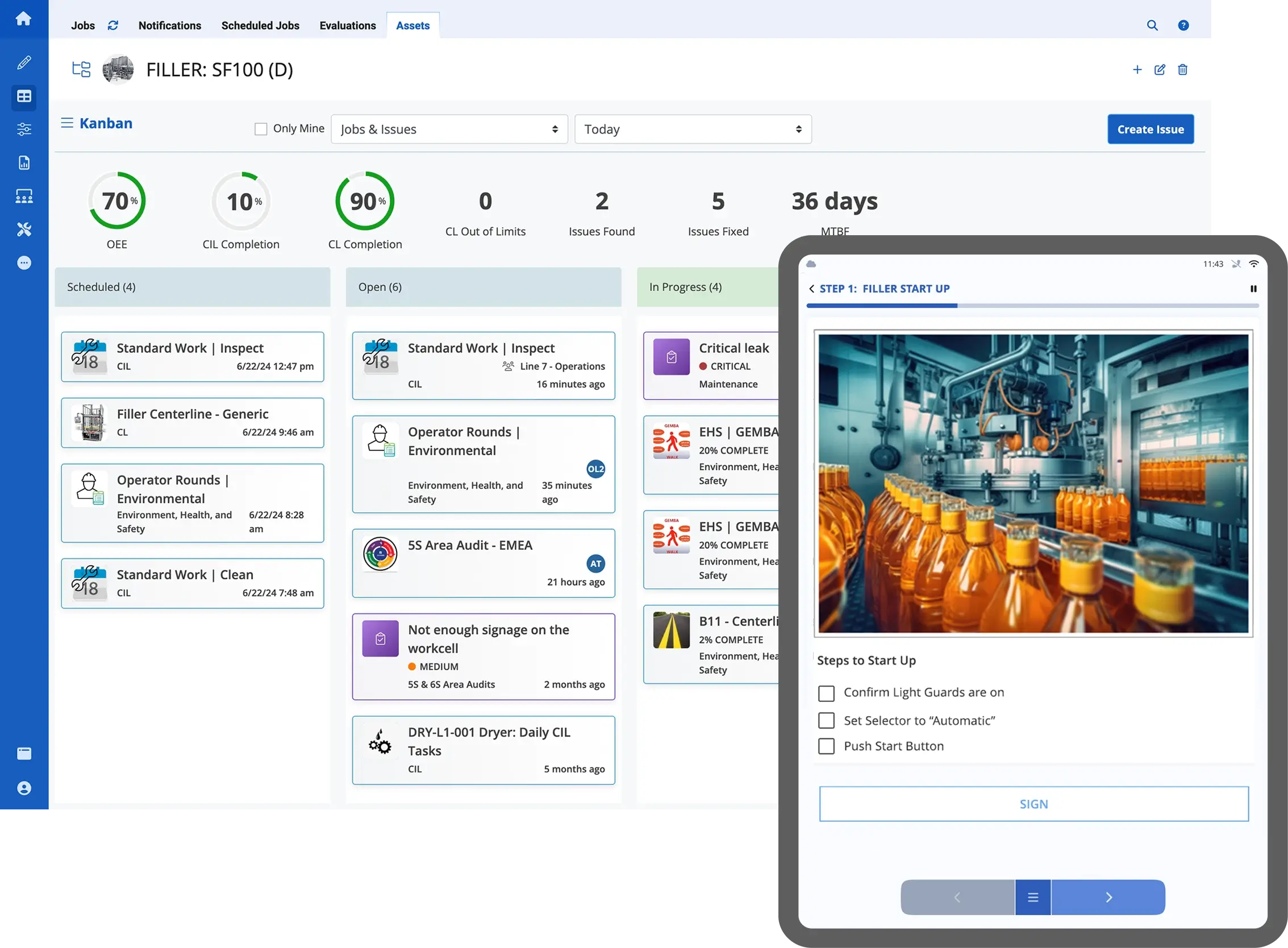
Connected Worker Technology is transforming the way manufacturers approach production efficiency by bridging the gap between frontline workers and digital operations. These platforms equip workers with real-time access to information, interactive digital work instructions, and collaboration tools—right at the point of work. By digitizing tasks, capturing live performance data, and enabling guided workflows, connected worker solutions ensure that every job is done accurately, efficiently, and consistently.

augmentir connected worker platform

With features like AI-driven insights, skills tracking, and remote expert support, Connected Worker platforms help manufacturers identify bottlenecks, reduce errors, and optimize workforce deployment. Tools such as Augmentir go a step further by personalizing guidance based on an individual’s skill level, automatically suggesting improvements, and helping identify opportunities for continuous training and upskilling. Ultimately, Connected Worker Technology empowers teams to work smarter, adapt faster, and drive sustainable gains in production efficiency.

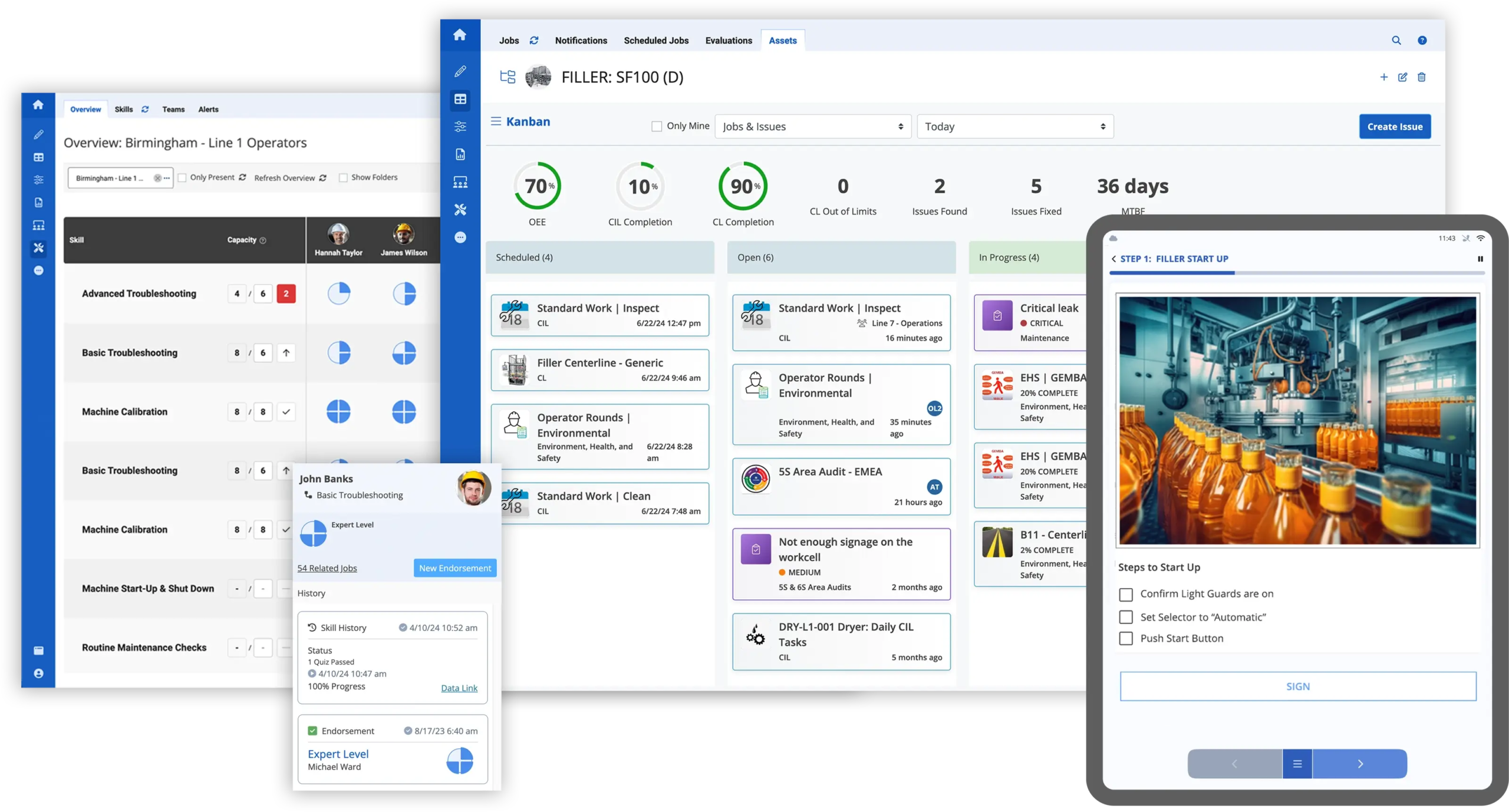
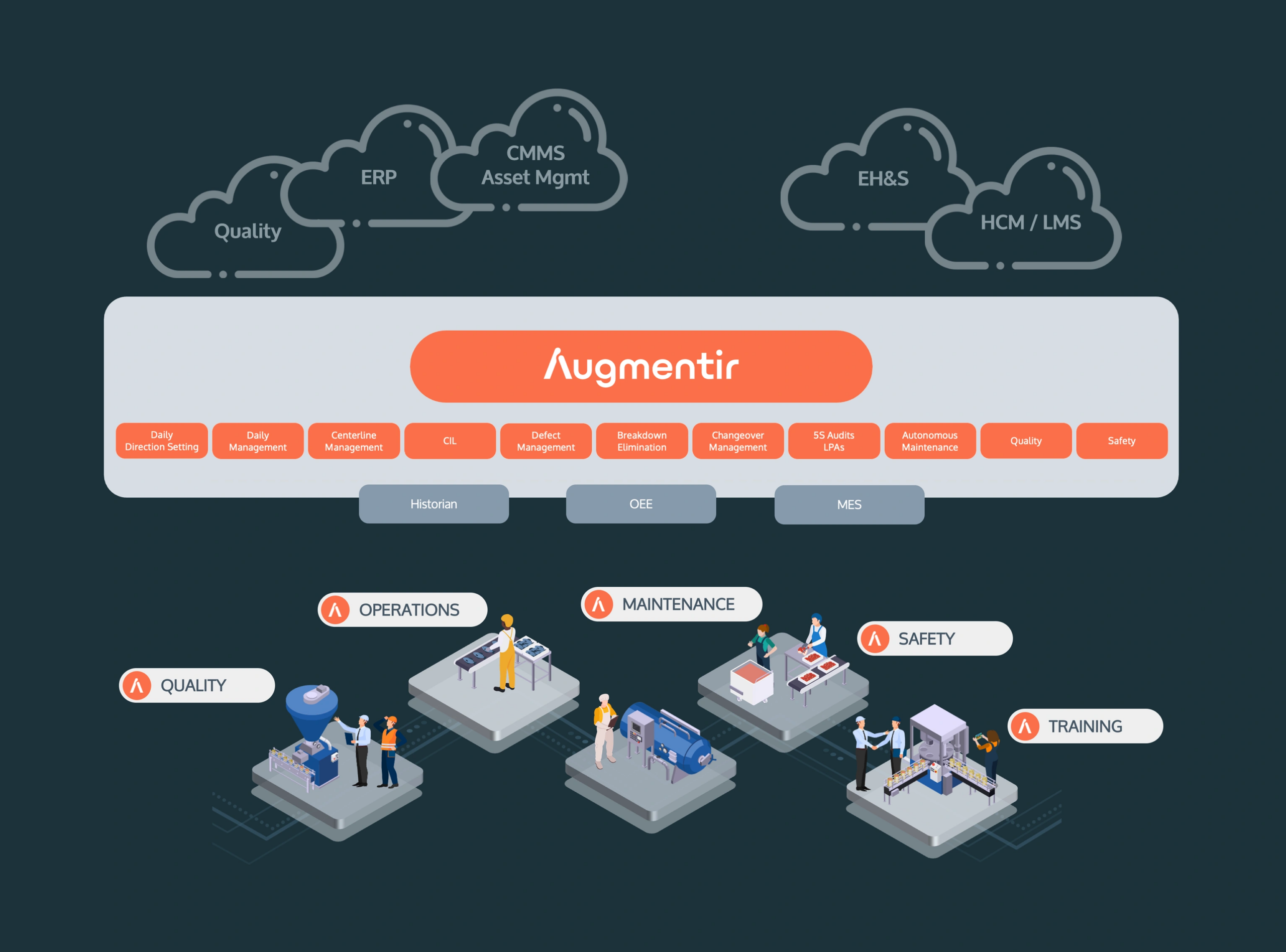
Augmentir serves as a digital frontline operating system for your lean strategy, and helps improve production efficiency. With Augmentir, you can digitize, manage, and optimize all aspects of your frontline operation:

  • Daily Direction Setting (DDS)
  • Daily Management System (DMS)
  • Centerline Management
  • Clean, Inspect, Lubricate processes
  • Defect Management
  • Breakdown Elimination
  • Changeover Management
  • Shift Handover
  • 5S and Layered Process Audits
  • Quality Management on the Shop Floor
  • Safety

augmentir connected worker platform – digital frontline operating system for iws


Contact us today for a live demo.


See Augmentir in Action
Get in Touch for a Personalized Demo

Join Chris Kuntz for an interview Packaging Insights on how AI and connected worker technology can help the packaging industry overcome the skilled labor crisis.

The packaging industry has been hit by the low availability of skilled workers, but for Chris Kuntz, VP of Strategic Operations at Augmentir, AI systems offer the solution. In this interview with Joshua Poole from Packaging Insights, Chris explores how AI and the Augmented Connected Workforce could revolutionize the packaging industry and how Augmentir’s AI-powered connected worker solution supports optimal efficiencies in manufacturing. He also discusses the importance of effective regulatory frameworks for AI.

This transcript has been edited for clarity and length. View the original video interview on the Packaging Insights website here.

packaging industry connected workforce

——

Joshua Poole: Hello, everyone. My name is Joshua Poole, and I am the editorial team leader at CNS Media, the publisher of Packaging Insights. I am very pleased to be joined today by Chris Kuntz, who is the Vice President of Strategy at Augmentir, and who is here to talk about the benefits of AI in relation to the packaging industry.

So welcome to you, Chris.

Chris Kuntz: Thank you very much, and thanks for having me, Joshua.

Joshua Poole: So, Chris, AI systems are expected to really transform the wider society but in relation to the packaging industry, to what extent could they revolutionize operations there?

Chris Kuntz: The reality is, to a huge extent. The impact centers around the manufacturing workforce – the people that are part of manufacturing. Historically, the application of AI, artificial intelligence, and machine learning, in manufacturing anyway, has focused on automating repetitive lower-level processes, that replace humans in the factory. Today, what we need to think about, and what we focus on here at Augmentir, is how we can use AI to augment the human workforce. And so, AI, again, used throughout the industry, its served great application from a predictive maintenance, machine failure standpoint, energy efficiency – things like resource utilization and even supply chain visibility and quality control.

And those applications of AI in manufacturing will continue to provide value. But the reality is people are still needed in paper mills, on the factory floor in the areas of safety, quality, and maintenance. There are jobs that just require that humans are there. And that’s not going away any time soon. But what we are faced with, and what many manufacturers are faced with, is these workforce challenges of the aging workforce, the retiring workforce going away. They’re walking out the door with a vast amount of knowledge that is essential to operate factories and plants. Pre-pandemic we had an emerging workforce coming in that maybe didn’t have the necessary skills, but today post-pandemic era, there’s a massive job shortage. There are no workers coming in, and so manufacturers are forced to look at a pool of less-skilled workers to perform tasks that they may not be initially qualified for.

So, it is not just that the skilled labor is going out, it’s just that we don’t have any skills coming in. And so, every manufacturer is faced with a massive labor shortage and as a result a massive shortage of skills required to operate successfully any given day on the shop floor. And that’s really where we think the value is going to come from an AI standpoint, and it’s kind of transformative when you look at historically the application of AI in manufacturing.

Joshua Poole: So, you mentioned the industry is really struggling to overcome the lack of a qualified workforce. How can AI overcome this problem across the industry?

Chris Kuntz: One of the great things about artificial intelligence, and our history as a company, and one of our previous companies was focused on collecting data from connected machines and then using that data and analyzing that data with AI to understand how to make those machines operate better and improve those machines.

From a human standpoint, humans have been relatively disconnected on the shop floor. They’re using paper-based checklists and SOPs and work procedures, the same sort of technology they were using 20, 30 years ago. So, they’re relatively disconnected, and we know little about how they’re operating and how they’re performing and where they need help and where they need assistance.

If we can connect those workers – and I am talking connecting with phones, tablets, wearable devices – if we can connect those workers we have a digital portal into how they’re performing, and through AI we can analyze how they’re performing and then offer them real-time guidance almost like an AI assistant that’s sitting there helping them out if they are struggling, helping them out if they need help, guidance, or support, or if there is a potential safety or security issue that they might be running into.

The same way that AI has historically been used to act on machine data to improve machine efficiency and performance, we can use the same approach for the humans in the factory.

Joshua Poole: Mm-hmm, and can you provide any examples of the ways in which your platform, Augmentir, has benefited companies looking to embrace AI to improve their operations?

Chris Kuntz: Yes, there are a few different ways. More recently we just launched our Generative AI assistant called Augie™. And what that does is that allows workers or operations managers, using natural language, to solve problems faster, assist in troubleshooting, and provide guidance when needed.

One of the first use cases is troubleshooting. This happens every day in a plant, in a paper mill, it happens every day – there’s a problem with a machine, we need to get it back up and running. Otherwise, there’s a downtime issue, which leads to production/revenue loss. And it’s not a standard procedure to fix the machine. And so there’s troubleshooting that needs to happen. This process is very collaborative. But also from a worker standpoint, they typically have to go to 5, 6, 10 different systems to try to find information or talk to different people.

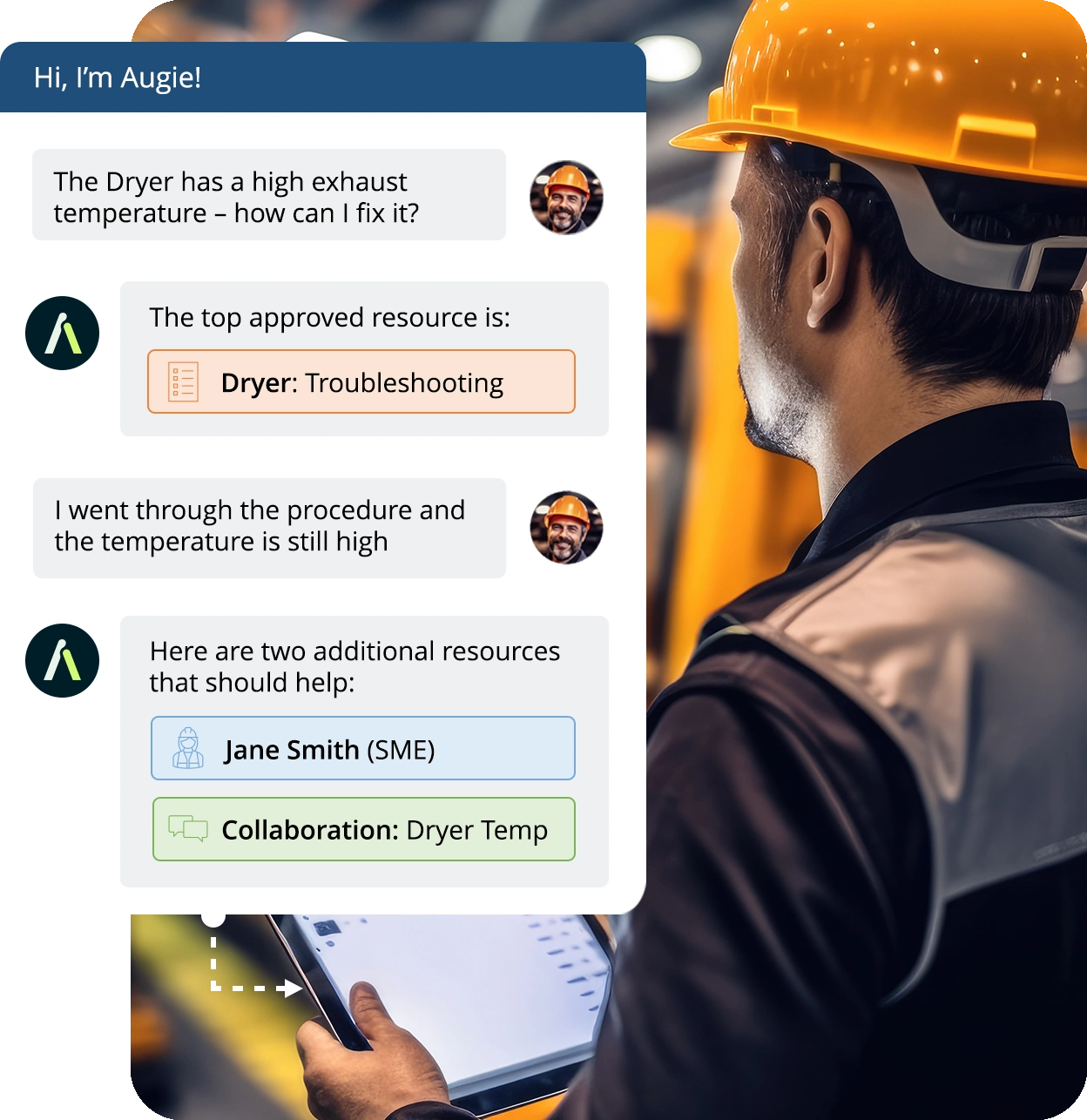
And what a Generative AI assistant can do is be that digital front end to all that wealth of information and return information on, “Hey here’s the solution to this problem. It’s been solved before, it’s in this published guide, here you go.” Or, “You may want refer at this work procedure. This is something, a troubleshooting guide that could help you solve the problem.” Or, “Here’s a subject matter expert that exists” and you can remotely connect to this person who has expertise in this particular type of equipment.

And so being able to give real-time access to that individual at the time of need is critical. And I think the other big area, at least early on here, is around training.

So, if you think about the skilled labor, workforce shortage, the tenure rates in manufacturing, people are quitting faster. They’re not sticking around for 15 years, they’re sticking around for three years, maybe, possibly, at max. And so, training and learning and development, HR leaders have to think about how to change onboarding practices because it’s not practical anymore to onboard someone for six months if they’re only gonna be around for nine months.

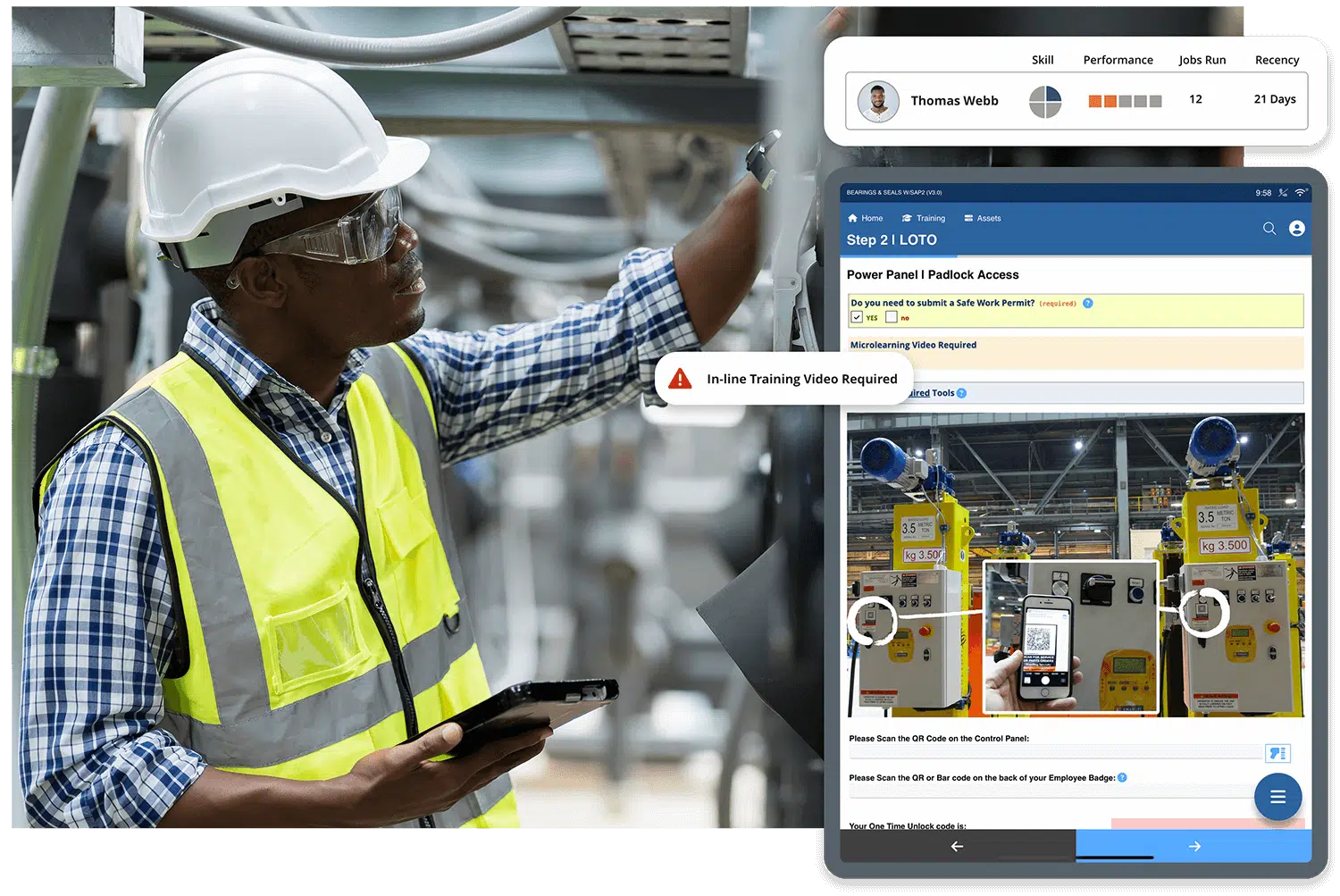
And so the goal, with many of the organizations that we speak with, the goal is to reimagine and rethink training and move it away from the before they’re productive in the classroom to move it onto the floor. Move it into the flow of work, they call it. And so what we can do with AI there is, we don’t understand that worker or their skill level or their competency levels. And if that’s digitally tracked, we can use AI to augment those work instructions and work procedures to say, “Hey, you’re a novice. This is your first month on the job. You’re required to watch this safety video before you do this routine.” And if you’re an expert worker, maybe you wouldn’t be required to do that. Or if you were trained, but your performance is lagging vs. the benchmark, we can come – the instructions can come and be dynamically adjusted to say, “Hey, here’s some additional guidance to help you through this procedure and through this routine.”

So, it gives visibility and insight into areas. I mean, if you had three people on the shop floor, you’d probably know exactly what they were doing. But once you get some larger organizations and they have dozens of people or hundreds of people, it becomes much much harder to understand where the opportunities for improvement are. And AI has the ability to do that, certainly in the training area.

Joshua Poole: Hmm, that’s very interesting. And of course, AI is largely unregulated worldwide, which can create problems like AI washing and irresponsible use. But what do you see as the biggest concern with the proliferation of AI systems within the packaging industry?

Chris Kuntz: So, certainly there’s a lot of concerns with respect to that, and for Augmentir, our approach is we leverage a – certainly from a Generative AI standpoint, we leverage a proprietary, fit-for-purpose, pre-trained large language model that sits behind our Generative AI solution. And when you combine that with robust security and permissions that can help factory managers, operators, and ever engineers or frontline workers only have access to the information that they need, and still provide the benefits of problem-solving faster and improved collaboration.

One of the other things though that I think is really important is this concept of “verified content” – so we’ve all used ChatGPT, right? And early on, I think they had this disclaimer, ChatGPT is 90% correct, so it could return false data. That’s not just not acceptable in an industrial settting. You can’t say, “Here’s a routine to do a centerlining on a piece of equipment” and have someone stick their hand in a place and get it chopped off. You can’t be 90%, you have to be 100%.

So, we have a concept of our Generative AI system, the ability to return verified and unverified data, and then the organization can decide what they want to do with that. So, if it’s a frontline worker, maybe, if it is unverified data, it’s labeled, and you need a supervisor that has to come over if you are going to perform that routine. And then the ability to sort of take the information that comes back and categorize it in terms of verified data, unverified data, and then be able to control how you’re using that. So, it’s not the wild wild west, it’s a very controlled environment. The scope of, if you think about our, in our world, if we’re serving a manufacturing company – and Augmentir is being used for digital manufacturing in paper and packaging companies like Graphic Packaging and WestRock, and so the information that, in our scope of their world is corporate documentation, engineering documentation, operational data, work order data, people data – could be their skills matrix and training history and things like that, but it’s all contained within their enterprise. We’re not looking outside of that, it’s really a constrained data set. And that’s what feeds our large language model.

That significantly helps the application of this, there are people that are exploring using more open AI and GPT models to do this. But then you run into the problems that you said, where there’s a lot of information that both you are feeding into the AI, which could be a security risk, and then the information that you are getting back that could be a security risk.

Joshua Poole: Okay, and as a final question. What advice would you give to politicians working to establish these regulatory frameworks for AI systems?

Chris Kuntz: Great question.

You know, our point of view is we think, you know President Biden had the AI regulation executive order here in the United States back in October, we think it’s much needed on several fronts. Certainly, every company now is saying that they’re an AI company and trying to sprinkle in AI to everything they do. And some of that can be a little problematic.

But at least in the U.S. here in Biden’s AI regulation executive order, there was a lot of talk about job disruptions and putting focus on the labor and union concerns related to AI policies. I think that reinforces our use of AI as a way to augment workers. We’re not looking to replace workers and it’s addressing a huge problem. I think the Department of Labor, they’re issuing guidance to employers around AI that you can’t use it to track workers and you can’t use it to, you know there’s labor rights that exist in the world. And I think that gets back to having these AI co-pilots or Generative AI assistants that can help workers perform their jobs safely and correctly, maximizing the potential. It’s really where on-the-job learning comes into play. It’s things that were happening off the factory floor before. Now it’s squarely suited to help address some of the big manufacturing labor workforce problems that exist today. So, there’s a lot of language in that executive order around making sure that AI is used, not just responsibly, but used for purposes that are going to further the industry. And again, that’s squarely where we sit in terms of workforce development and using it to address the labor shortages from a training and support standpoint.

But, overall, I think, absolutely we embrace the regulatory – Generative AI regulation – and control aspects of this because it could become problematic if you are not doing that, for sure.

Joshua Poole: Mm-Hmm that’s very interesting. Chris, thanks for your time today.

Chris Kuntz: Yes, thank you very much. Thanks for having me.


See Augmentir in Action
Get in Touch for a Personalized Demo
LNS Research reviewed dozens of Connected Frontline Worker (CFW) vendors, ranking Augmentir as the leading CFW solution innovator.

Efforts to enable the frontline industrial workforce through connected worker and other digital technologies have become increasingly common over the past several years, recently, LNS Research found that over half of industrial organizations globally have undertaken Connected Frontline Workforce (CFW) initiatives. CFW has become a strategic part of Industrial Transformation (IX) initiatives as manufacturers seek to solve critical labor shortages, skills gaps, and retention issues in frontline operations.

CFW-enabling technologies hold the promise of helping companies meet their frontline workforce challenges while optimizing operational performance across safety, quality, and productivity dimensions. However, industrial business and technology leaders must navigate the uncertain waters of the relatively immature and highly fragmented CFW Applications market to capture the opportunity fully.

LNS Research Connected Worker Solution Selection Matrix

From their extensive analysis, LNS Research has created the CFW Applications Solution Selection Matrix™ (SSM) – a comprehensive guide intended to help man­ufacturers better understand, evaluate, and even select from a shortlist of Connected Frontline Worker technology vendors.

LNS Research reviewed dozens of vendors within the CFW ecosystem and categorized them based on various key criteria, including product capabilities, market potential, and company presence.  Augmentir was named by LNS Research as a leading CFW solution innovator in their SSM.

Augmentir positioned as a leading front runner and innovator

According to LNS Research, Augmentir is well-positioned for future growth, with a trajectory that gives it the potential to be among a small set of likely market leaders in the Connected Frontline Worker (CFW) Applications space. This assessment is based partly on the strength of differentiated capabilities of its AI-enabled solution suite to enable proactive, data-driven performance improvement, personalization of work execution support and training, and the integration of individual and team skills and qualifications to guide workforce development and shift-specific work assignment.

Other key factors impacting Augmentir’s potential are the strength and proven experience of the leadership and management teams, strong momentum in the market, a record of successful product innovation, ecosystem partnerships, and likely continued access to adequate funding and resources to support the expansion of go-to-market initiatives. Augmentir’s track record indicates a strong likelihood of continued growth and the potential over time to be among a select group of market leaders in the CFW Applications space.

Read the full report here.

Augmentir’s results from the field

Manufacturers are using connected frontline worker solutions as a foundation to their industrial transformation strategy to empower their employees with real-time, actionable data; driving better decision-making and improving safety, training, and more.

Leading manufacturers that deployed Augmentir’s AI-driven, smart, connected worker solution have seen impressive results, such as:

  • 75% reduction in new hire training/onboarding time
  • 27% reduction in machine downtime using Autonomous Maintenance
  • 32% improvement in worker productivity

In addition to the above results, our customers have seen quality, safety, and productivity increases across all operations, as well as increases in employee retention and reductions in operating costs associated with employee churn.


If you are interested in learning why LNS Research ranked Augmentir as the leading connected worker solution in the market, reach out to us and request a live demo.


See Augmentir in Action
Get in Touch for a Personalized Demo
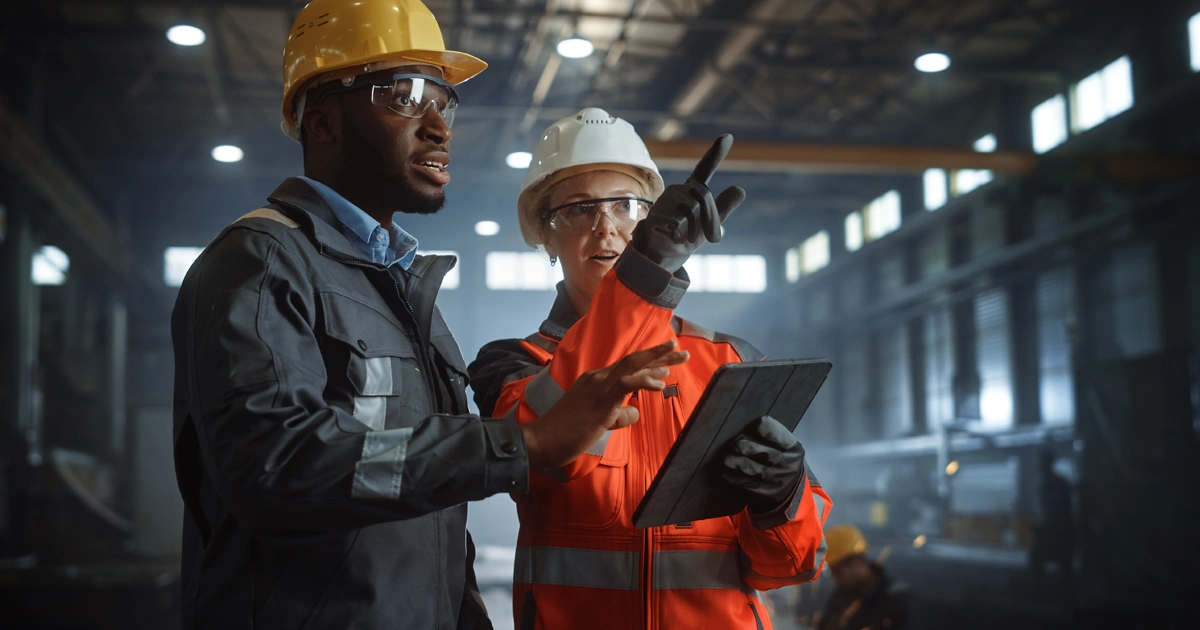
 

Say hello to the newest addition to the Augmentir platform, Augie – the GenAI powered digital assistant for manufacturing.

Say hello to the future of work in manufacturing with the latest addition to Augmentir’s suite of connected worker tools, Augie™.

augie generative ai assistant for manufacturing

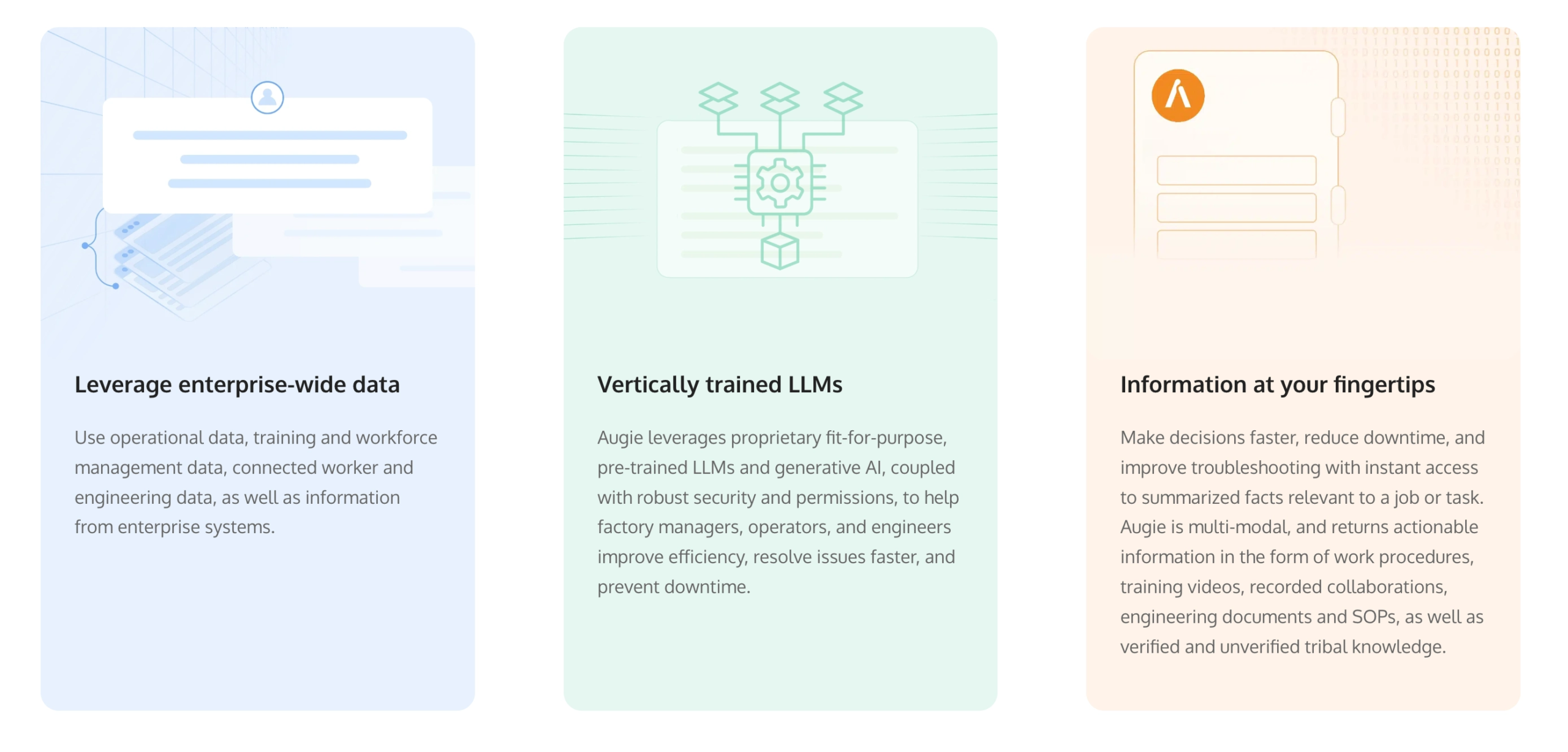
Augie is a digital assistant for frontline operations that utilizes Generative AI and proprietary fit-for-purpose, pre-trained Large Language Models (LLMs) to enhance operational efficiency, problem-solving, and decision-making for today’s less experienced frontline industrial workers. It leverages enterprise-wide data, provides instant access to relevant information, closes skills gaps with personalized support, offers insights into standard work and skills inventory, and identifies opportunities for continuous improvement.

Augie is a result of our dedication to empowering frontline workers, leveraging AI to support manufacturing operations, and giving manufacturing workers better tools to do their jobs safely and more efficiently.

Continue reading below to learn more about how Augie works and how it can benefit your frontline workforce and manufacturing operations:

How our GenAI Powered Assistant Works

Generative AI-powered smart manufacturing assistants are designed to provide secure, role-based, personalized assistance to frontline workers, engineers, and managers in various industries, including manufacturing.

They work by leveraging artificial intelligence and integrations across different software systems, providing guidance and assistance in various tasks to enhance productivity and performance. This includes providing data insights, recommendations on actions to improve performance, and the ability to create analyses and dashboards with a natural language-based assistant.

A majority of smart manufacturing assistants only draw their information from manufacturing execution systems (MES), without tying in other important systems necessary for frontline manufacturing success.

Augie, however, is different. It leverages enterprise-wide data tying in information from a wide range of platforms including operational data, training and workforce management data, connected worker and engineering data, as well as information from enterprise systems.

gen ai industrial manufacturing

How Augie Benefits Your Frontline Workforce

Augie is unique among other smart manufacturing assistants. It leverages proprietary fit-for-purpose, pre-trained LLMs and generative AI, coupled with robust security and permissions, to help factory managers, operators, and engineers improve efficiency, resolve issues faster, and prevent downtime.

With information readily available via Augie, frontline workers can make decisions faster, reduce downtime, and improve troubleshooting with instant access to summarized facts relevant to a job or task. Additionally, Augie is multi-modal, meaning it can return actionable information in the form of work procedures, training videos, recorded collaborations, engineering documents and SOPs, as well as tribal knowledge.

Through Augie, manufacturers can instantly:

  • Close skills and experience gaps with personalized support
  • Gain insights into Leader Standard Work
  • Gain new insights into skills inventories
  • Convert Tribal Knowledge into Digital Corporate Assets
  • Identify opportunities for continuous improvement
  • Forecast potential operational issues

augie gen ai industrial assistant troubleshooting

With Augie by your side, you can streamline manufacturing operations, optimize performance, empower your frontline workforces, and stay ahead in today’s rapidly evolving and competitive landscape.

Webinar

6 Ways Manufacturers Can Use GenAI Today

On-Demand


Improve Operational Efficiency with Augie and Augmentir

The digitization of frontline processes has become a must-have to keep up with the velocity of change – but not just digitization … smart digitization. Recently, Deloitte found that 86% of manufacturing executives believe smart factory solutions will be the primary drivers of competitiveness in the next five years. Leveraging smart, AI-driven connected worker solutions that allow industrial organizations to best support their frontline workforces and optimize processes to make them safer and more efficient is critical to overall enterprise success.

At Augmentir, we have been met with continued success in our efforts to transform manufacturing operations. Our patented Smart AI foundation helps manufacturing organizations close the loop between training and work execution, delivering the data and in-line insights necessary to continuously improve operational excellence day-over-day, year-over-year. Augmentir is the world’s leading connected worker solution, combining smart connected worker and GenAI technologies to drive continuous improvement and enhance performance management initiatives in manufacturing.

The addition of Augie to our platform is a game-changer for factory floor and other frontline workers, allowing for quick reference troubleshooting and useful, contextualized information to be delivered at the moment of need. Furthermore, with Augie, less experienced workers are provided with additional support and individualized guidance based on the job or task needs.

With patented AI-driven insights that digitize and optimize manufacturing workflows, training and development, workforce allocation, and operational excellence, Augmentir is trusted by manufacturing leaders as a digital transformation partner delivering measurable results across operations. Schedule a live demo today to learn more.


See Augmentir in Action
Get in Touch for a Personalized Demo