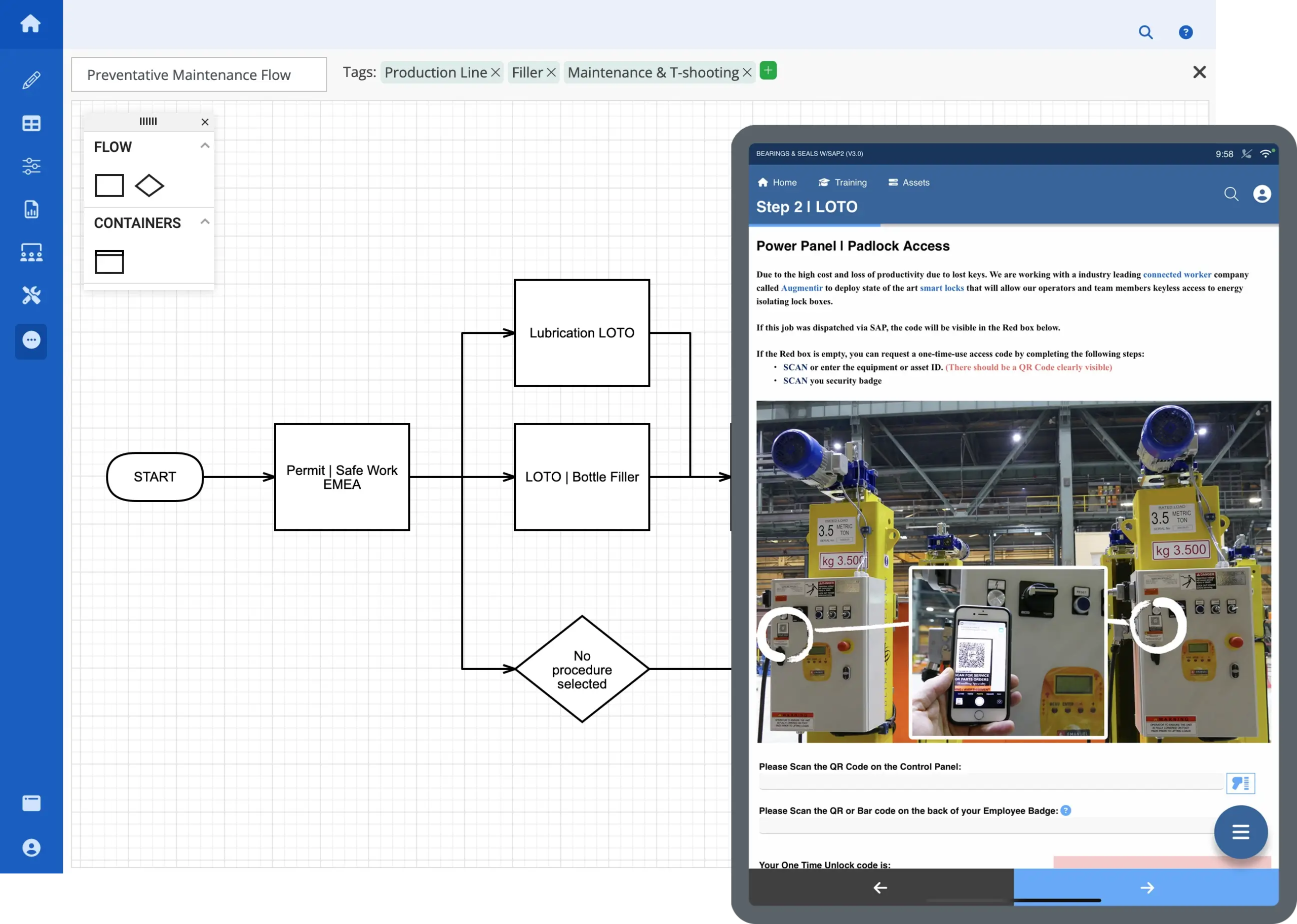
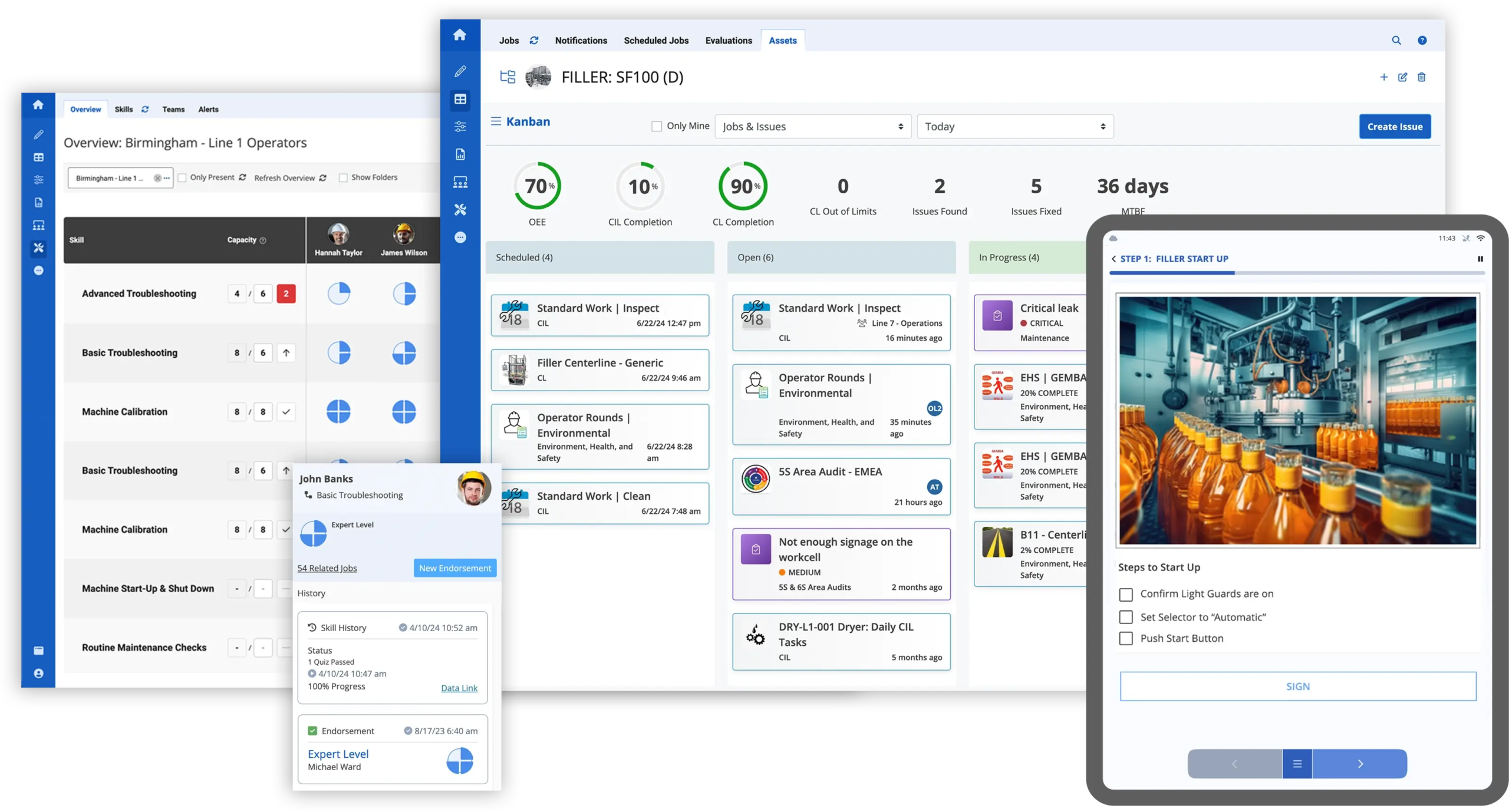
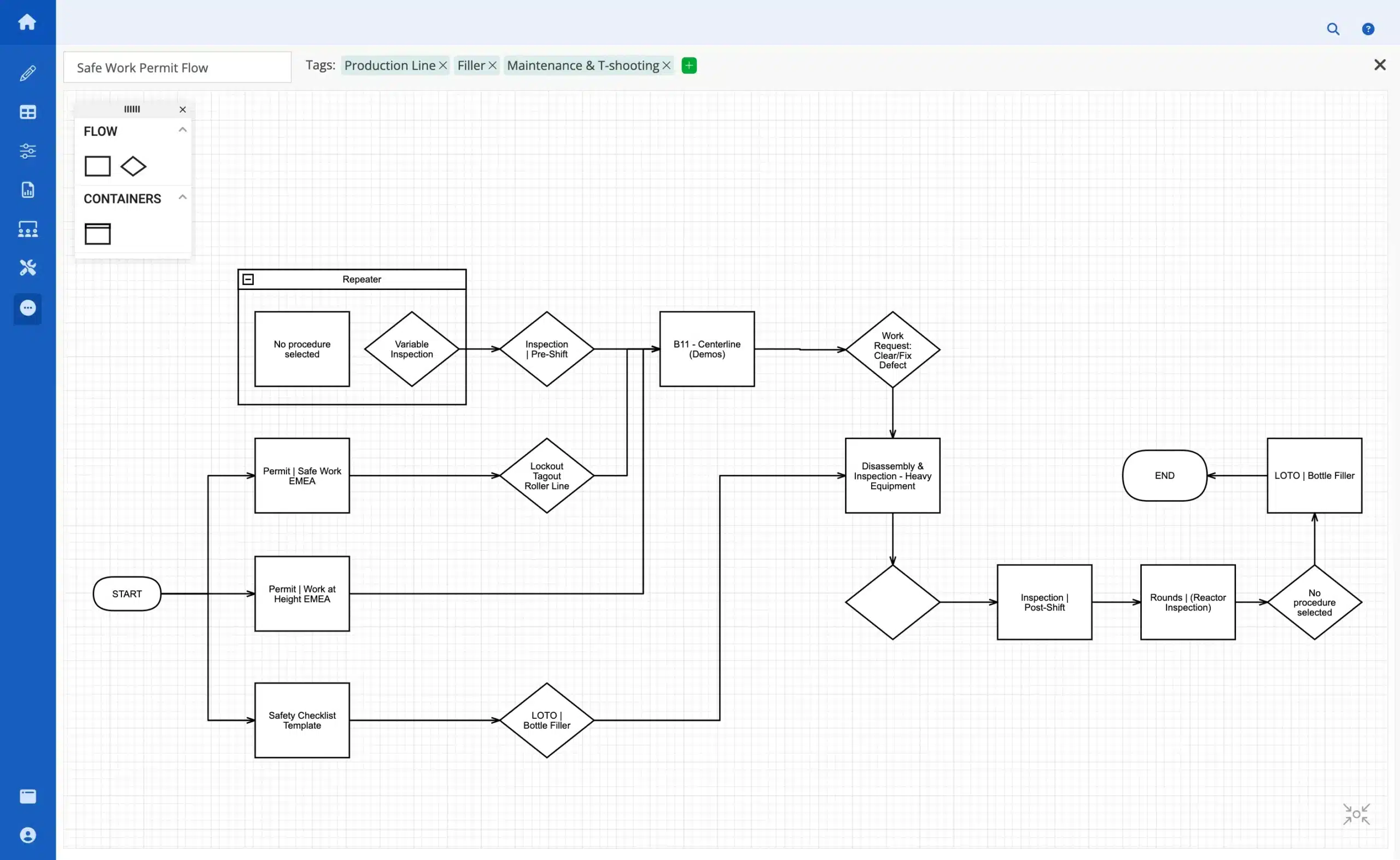
Workflows logically orchestrate procedures, checklists, and data collection to simplify the execution of work and associated data collection across frontline operations. Here are some examples of digital workflow use cases:
Standard Operating Procedures (SOPs)
Standardize and digitize SOPs with step-by-step instructions, visuals, and videos to ensure consistency and reduce variability across the workforce.
Work Order Execution
Digital workflows guide workers through complex processes with built-in checks and data capture to ensure accurate and timely task completion.
Permit to Work
Digitizing your permit to work (PTW) system offers several benefits over traditional work control processes. With digital workflow tools, manufacturers can quickly create digital safe work permit systems and processes. This improves and streamlines the permit-to-work process by managing all permit requests, approvals, and renewals, ensuring that all safety protocols are followed before work begins.
Maintenance and Inspections
Technicians can follow digital workflows for preventive and corrective maintenance tasks with integrated documentation, alerts, and tracking.
Health and Safety Audits
Perform consistent, documented safety checks using digital forms. Automatically generate reports and escalate issues in real time.
Changeover and Setup Procedures
Digital workflows streamline machine setup which helps reduce changeover time, reduce downtime ,and ensure correct execution of each step.
Quality Control and Assurance
Embed inspections and quality gates into the workflow to catch defects early, enforce compliance, and improve traceability.
Employee Onboarding and Upskilling
Accelerate onboarding with role-based digital training and guided workflows that build skills on the job and track progress automatically.
Continuous Improvement (Kaizen) Initiatives
Workflow analytics help identify inefficiencies and bottlenecks, enabling data-driven improvement cycles and lean manufacturing initiatives.