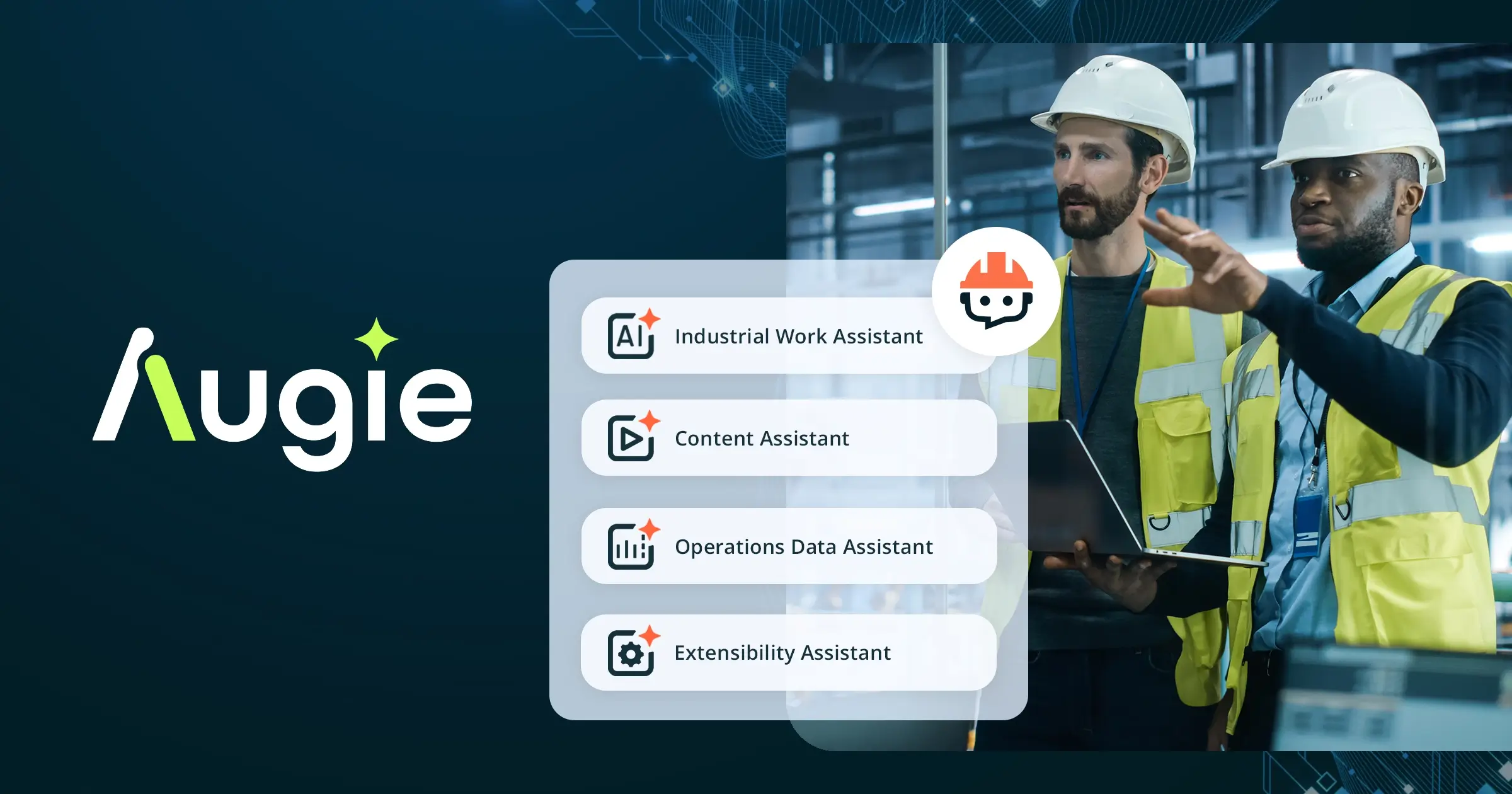
Posts

Industrial AI doesn’t have a data problem—it has a context problem. Learn why execution intelligence is the missing link between AI insights and real manufacturing outcomes.

Nearly every industrial technology conversation today revolves around AI. Manufacturers are evaluating copilots, autonomous agents, industrial knowledge graphs, digital workers, and generative AI. Software vendors are racing to demonstrate how AI can automate decisions, improve productivity, and streamline operations.

Yet amid all of the excitement, one critical question often goes unanswered: What data is this AI actually using to using to make decisions?

For many industrial AI initiatives, the answer is familiar—machine telemetry, ERP transactions, MES records, CMMS work orders, quality systems, and historian data. These systems provide valuable operational information, but they only tell part of the story. Manufacturing performance depends not only on machines and processes, but also on how people execute work.

Every maintenance task, inspection, changeover, startup, quality check, and standard operating procedure depends on frontline workers making thousands of decisions every day. Those decisions generate an enormous amount of execution data, yet that information has historically been difficult to capture, structure, and analyze at scale.
system of context the missing layer

Without understanding how work is actually performed, AI has an incomplete view of operations. It may have data, but it lacks context—and in manufacturing, context is what transforms AI from simply generating answers into driving the right actions.

Context is What Separates AI from Action

Today’s large language models (LLMs) are remarkably capable. They can summarize documents, generate procedures, answer questions, and analyze massive amounts of information. But LLMs don’t inherently understand manufacturing operations. They rely on rich operational context to reason effectively, enabling AI agents to make informed decisions and take meaningful action. Without that context, even the most advanced models are limited.

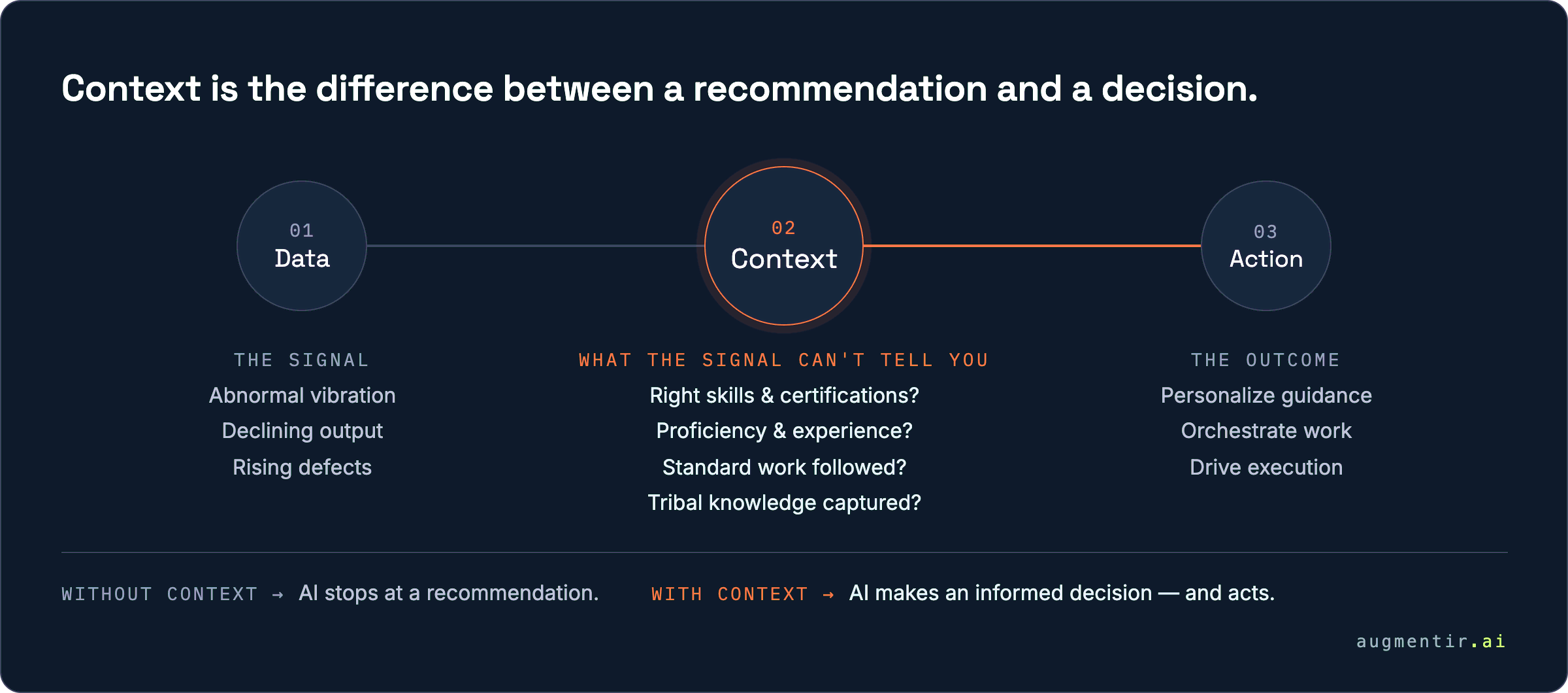
An AI agent may receive a signal from an IoT sensor indicating abnormal equipment vibration, recognize declining production output from MES data, or identify an increase in quality defects from a QMS. What it often cannot determine is whether the technician assigned to the work has the right skills, certifications, proficiency level, and experience to perform the repair, whether they’ve successfully completed similar work in the past, whether the operator has recently completed training, if standard work is actually being followed, or what tribal knowledge experienced workers have developed that never made it into the SOP.

Without this context, AI can generate recommendations. With it, AI can make informed decisions, personalize guidance, orchestrate work, and drive execution.
system of context drives ai action

As AI moves beyond answering questions to initiating actions, governance becomes just as important as context. Manufacturers need confidence that AI agents operate within defined permissions, business rules, security policies, and human approval workflows. Context enables AI to make better decisions; governance ensures those decisions are safe, transparent, auditable, and aligned with operational and regulatory requirements.

Building a System of Context

Manufacturers have spent decades investing in systems that collect operational data. ERP platforms manage business transactions, MES platforms manage production, CMMS platforms manage maintenance, QMS platforms manage quality, and historians collect equipment and process information.

That investment is only accelerating. Deloitte’s 2025 Smart Manufacturing and Operations Survey found that 92% of manufacturers believe smart manufacturing will be the primary driver of competitiveness over the next three years. As manufacturers continue investing in AI and connected technologies, they’re generating more operational data than ever before—but more data alone doesn’t create better AI. It must be transformed into context.

A system of context isn’t built by integrating enterprise systems alone. It is built by continuously capturing how work is actually performed across the factory.

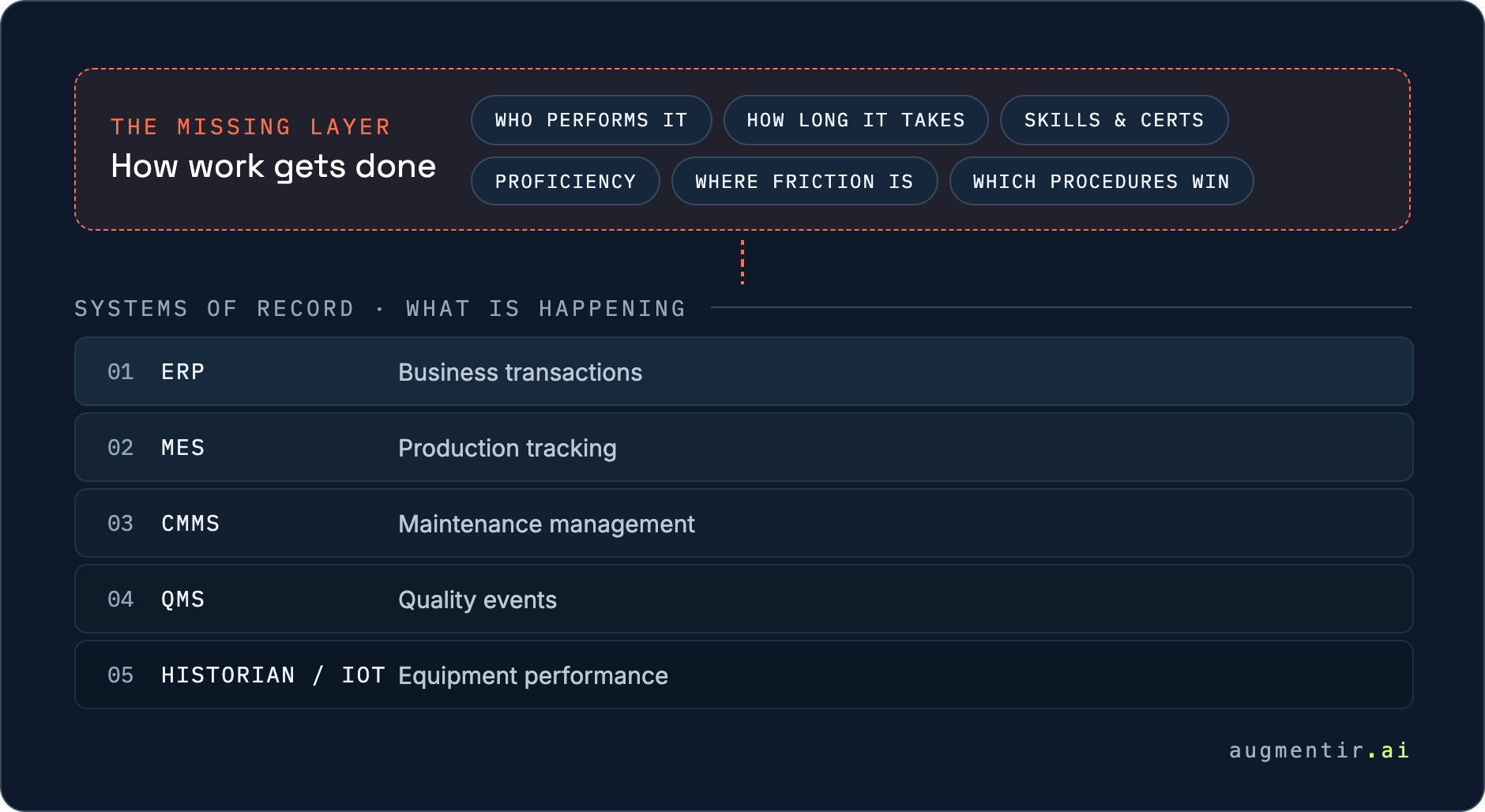
ERP systems manage business transactions. MES tracks production. CMMS manages maintenance. QMS captures quality events. Historians and IoT platforms monitor equipment performance. Together, these systems describe what is happening across the operation.

The missing layer is how work gets done.

This is where AI-native connected worker platforms fundamentally change the equation. Unlike traditional software that simply digitizes work, an AI-native platform continuously captures the execution of work itself—how tasks are performed, who performs them, how long they take, where workers encounter friction, when assistance is required, which procedures produce the best outcomes, and how worker skills, proficiency, and experience influence operational performance.
system of context equation

Every completed procedure, inspection, maintenance activity, changeover, quality check, and guided workflow becomes another source of execution intelligence.

Unlike static operational data that simply records what happened at a point in time, execution intelligence compounds with every task performed. Each new execution expands the platform’s understanding of workforce performance, creating an ever-growing foundation of operational knowledge.

Execution intelligence is the continuous measurement and AI-driven understanding of frontline work—capturing not only what workers do, but how effectively they perform, what drives performance variation, and where opportunities for improvement exist.

As millions of frontline work activities are captured, AI continuously structures, cleans, and normalizes the data, distinguishing normal variation from true performance opportunities. Over time, it builds an increasingly rich understanding of how work is performed, how well it is performed, and the factors that consistently drive better operational outcomes.

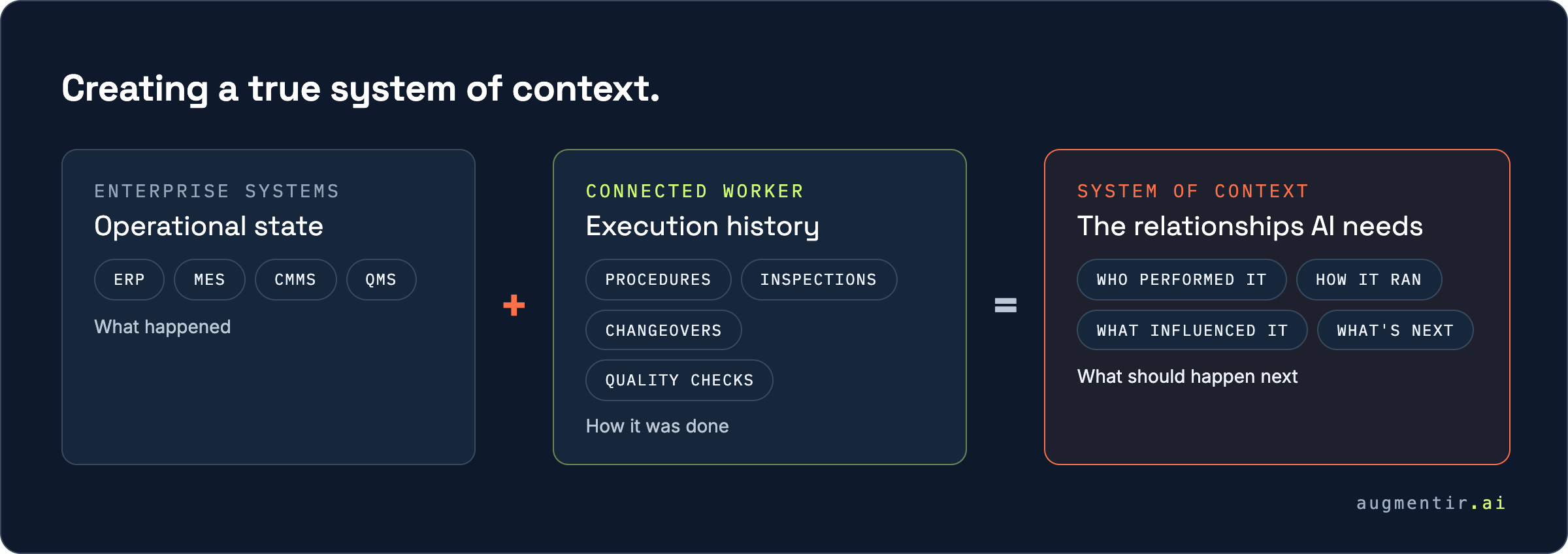
This is what creates a true system of context. Enterprise systems provide the operational state of the factory. Connected worker platforms provide the execution history of the workforce. Together, they create the relationships AI needs to understand not only what happened, but who performed the work, how it was executed, what influenced the outcome, and what should happen next.

Technologies such as industrial knowledge graphs play an important role by organizing these relationships, but the graph is only as valuable as the context it contains. The real advantage comes from continuously generating new execution intelligence—not simply connecting existing records.

This is where AI-native platforms establish a durable data advantage. Every workflow completed, every task executed, and every AI-optimized time & motion study expands the platform’s understanding of how work is performed. After analyzing millions of real-world execution events, AI begins to understand not only what happened, but why it happened, which workers consistently achieve the best outcomes, what behaviors lead to success, and how those best practices can be replicated across the workforce.

Over time, this creates a proprietary foundation of workforce intelligence that becomes increasingly difficult to replicate. Rather than relying on static historical records, AI continuously learns from the daily execution of work itself—enabling AI agents to make better decisions, personalize guidance for every worker, orchestrate work across enterprise systems, and drive continuous operational improvement.

Closing the Context Gap

Industrial AI is advancing rapidly, but its long-term value won’t be determined by the size of the language model or the sophistication of the AI agent. It will be determined by the quality of the context those systems can reason over.

Manufacturers have spent decades digitizing machines, equipment, and enterprise processes. The next frontier is digitizing the execution of work itself—capturing not only what happens on the factory floor, but how work is performed, how performance varies, and why some workers, teams, and processes consistently achieve better outcomes than others.

This is where Augmentir takes a fundamentally different approach. From the beginning, the platform was designed as an AI-native connected worker platform—not simply to digitize frontline work, but to continuously learn from it. Every guided workflow, every completed procedure, every captured skill, and every AI-optimized time & motion study contributes to a growing foundation of execution intelligence that helps AI better understand the realities of manufacturing operations.

That continuously expanding understanding closes the context gap between enterprise data and frontline execution. It enables AI to move beyond answering questions or generating recommendations to delivering personalized guidance, orchestrating work, identifying improvement opportunities, and driving measurable operational outcomes.

As industrial AI continues to evolve, manufacturers won’t compete based solely on who has the most AI. They’ll compete based on who has the richest understanding of how work gets done. Because in manufacturing, context isn’t just another input to AI—it is the foundation that turns intelligence into action. Combined with strong governance, security, and human oversight, it also ensures that those actions are trustworthy, auditable, and aligned with the operational and safety requirements of modern manufacturing.


See Augmentir in Action
Get in Touch for a Personalized Demo


Frequently Asked Questions (FAQ)

  • What is execution-driven industrial AI in manufacturing?

    Execution-driven industrial AI combines artificial intelligence with workforce intelligence and operational data to help manufacturers make better decisions and automate work on the factory floor. Instead of simply analyzing machine data, execution-driven AI understands how work is performed, who is performing it, and what actions should happen next. Augmentir's AI-native Connected Worker platform enables execution-driven industrial AI by connecting workers, work, and enterprise systems to continuously improve safety, quality, productivity, and operational performance.

  • Why do AI agents in manufacturing need workforce intelligence?

    AI agents in manufacturing need workforce intelligence because machine and operational data alone do not provide enough context to make informed decisions. Workforce intelligence includes worker skills, certifications, proficiency, training history, and step-level execution data. Augmentir captures and analyzes this information to give AI agents the context they need to recommend actions, orchestrate workflows, personalize worker guidance, and continuously optimize manufacturing operations.

  • How does Augmentir use AI agents to improve manufacturing operations?

    Augmentir uses AI agents to help manufacturers automate and optimize frontline operations. Built on an AI-native Connected Worker platform, Augmentir's AI agents leverage workforce intelligence, digital work instructions, and data from ERP, MES, CMMS, QMS, and historian systems to assist workers, coordinate multi-step workflows, support maintenance and quality processes, and drive continuous improvement across the factory.
See how Augmentir’s TWI software supercharges Training Within Industry’s four pillars with AI-driven personalization, safety, and continuous improvement.

For more than 80 years, Training Within Industry (TWI) has been a proven foundation for building skilled, capable workforces. Organizations in manufacturing, food and beverage, and other industrial sectors have relied on its structured approach to Job Instruction (JI), Job Methods (JM), Job Relations (JR), and Job Safety (JS) to ensure quality, productivity, and employee engagement.

supercharging training within industry with twi software from augmentir

At Augmentir, we’re not here to reinvent TWI. We’re here to amplify it—to give it the tools it needs to thrive in the modern, connected, data-driven world.

Recently, a food and beverage company that has followed TWI principles for over 20 years shared with us how Augmentir’s Connected Worker software is helping them unlock value they didn’t realize they were losing.

Our TWI software builds on TWI’s four pillars by combining their time-tested structure with modern digital capabilities—AI-driven personalization, real-time data capture, integrated safety workflows, and collaborative improvement tools—that close long-standing gaps, preserve the integrity of the methodology, and extend its impact across today’s fast-changing industrial landscape.

Pillar 1: Job Instruction – From Good to Great

One of our client’s first observations was that Job Instruction isn’t as simple as writing a standard operating procedure. Get the structure wrong, and the benefits of TWI start to slip away.

Their feedback? Our ability to configure job instructions exactly to their needs is helping them reclaim value that had been leaking from their process for years. Instead of rigid templates, Augmentir’s TWI software allows Job Instructions to be built and delivered in ways that match the precise structure, flow, and visual cues required for mastery.

Even better, our AI continuously assesses each worker’s knowledge and adapts the training to meet them where they are—so no one sits through irrelevant steps and no one is left behind.

Beyond personalization, our AI agents act as always-on digital trainers. Workers can ask questions in natural language at the moment of need, get step-by-step coaching during unfamiliar tasks, and receive proactive nudges when an agent detects hesitation, errors, or a deviation from the standard. The result is true on-the-job training—where Job Instruction is reinforced every shift, not just during onboarding.

Pillar 2: Job Methods – Continuous Improvement, Powered by the Frontline

In classic TWI, Job Methods is about refining the way work gets done. Our client has seen this pillar transformed with Augmentir.

By enabling workers to contribute improvement ideas at any step of work, they have seen a 20% increase in job improvement recommendations over last year. These aren’t just suggestions—they’re captured, evaluated, and acted on with a closed feedback loop, creating a living system of operational improvement.

Our AI detects variability in work execution and pinpoints where skills gaps exist, driving targeted upskilling opportunities that improve both productivity and consistency.

Pillar 3: Job Relations – Objective Insights that Build Stronger Teams

For TWI, Job Relations is about fostering trust, communication, and engagement. Augmentir’s AI agents continuously monitor skill progression, certification status, and on-the-job performance—giving leaders a real-time view of how each operator is developing, where they’re excelling, and where they need support.

This isn’t about surveillance—it’s about partnership. Supervisors can have objective, meaningful conversations with workers, backed by clear metrics and personalized development paths. Our client reported that this is improving retention, engagement, and happiness scores—and ultimately strengthening the relationship between employees, leaders, and the organization as a whole.

Pillar 4: Job Safety – The Modern Essential

While traditional TWI implies safety as a byproduct of strong training, modern operations demand more. Our client pointed out something powerful:

“Having an employee trained makes them safer. But Augmentir’s ability to tailor training to the specific knowledge of each person makes them even safer.”

With Augmentir, safety becomes a core, trackable element of daily work:

  • Safety prompts embedded directly into digital workflows.
  • Real-time hazard alerts and compliance checks.
  • Data-driven insights to proactively address risks before incidents occur.

By elevating Job Safety to a pillar of its own, organizations can make safety culture measurable, visible, and consistently reinforced.

Extending TWI Software with Custom AI Agents

Every TWI program is unique. The way one organization captures skill progression, validates certifications, or coaches new hires looks very different from the next. That’s why Augmentir’s TWI software and AI Agent Studio gives manufacturers the tools to build their own AI agents—purpose-built for their specific TWI workflows, terminology, and operating standards.

industrial ai agent studio - build custom ai agents for manufacturing

With AI Agent Studio, teams can deploy custom agents that:

  • Track operator skill progression against TWI-defined competencies and surface gaps before they affect quality or safety.
  • Coach new hires through Job Instruction breakdowns, adapting guidance to the worker’s experience level and learning pace.
  • Recertify operators on critical tasks by quizzing them in context, scheduling refreshers, and flagging expirations to supervisors.

Rather than waiting for a vendor roadmap, manufacturers can stand up agents in minutes—turning their hardest-won TWI knowledge into a system that scales across lines, plants, and shifts.

The Future of TWI Software is Connected

TWI’s principles have stood the test of time since their introduction during World War II because they work. But today’s operations are more complex, the pace of change is faster, and the demand for agility is higher than ever.

By combining TWI’s enduring framework with Augmentir’s AI-powered Connected Worker platform, companies can:

  • Deliver Job Instructions that truly fit the work and the worker.
  • Make Job Safety a measurable, proactive outcome.
  • Harness frontline input for continuous improvement at scale.
  • Use objective insights to strengthen relationships and grow talent.

This isn’t about replacing TWI—it’s about giving it the digital muscle to thrive for the next 80 years.

Ready to take TWI further? See how Augmentir’s Connected Worker platform and AI Agent Studio can amplify every pillar of your training program. Book a Demo.


See Augmentir in Action
Get in Touch for a Personalized Demo

Augmentir welcomes Mike Carroll to our Board of Advisors! Mike is widely recognized as an industry trailblazer and visionary, with a proven track record of driving innovation, industrial transformation, and AI strategy.

We’re excited to welcome Mike Carroll to Augmentir’s Board of Advisors!

A recognized leader in industrial operations, digital innovation, and workforce strategy, Mike brings decades of experience driving transformation across manufacturing and industrial enterprises.

augmentir welcomes mike carroll to board of advisors

Widely regarded as an industry visionary, Mike most recently served as Vice President of Innovation at Georgia-Pacific, where he led transformative initiatives across the company and its parent, Koch Industries. His leadership in AI strategy, operational excellence, and workforce enablement makes him a powerful addition to Augmentir as we continue to grow our AI-powered connected worker platform — helping manufacturers tackle their most critical workforce challenges.

A Career at the Intersection of Manufacturing, Innovation, and Industrial Transformation

Mike’s career spans key leadership roles where he has helped organizations modernize operations by aligning people, process, and technology. At Georgia-Pacific, he led enterprise-wide efforts in operations, engineering, and manufacturing excellence, creating more adaptive, future-ready workforces.

His expertise extends beyond technology adoption — encompassing workplace modernization and the human side of digital transformation. These experiences make him a valuable voice in the evolving conversation about the future of work.

Why This Matters Now

Manufacturing is undergoing a seismic shift. With aging workforces, widening skills gaps, labor shortages, and increasing production complexity, manufacturers are being forced to rethink how they engage, support, and train their frontline teams.

At the same time, emerging technologies like AI, connected worker platforms, and intelligent automation are opening new opportunities — but only when implemented with real-world operational understanding.

That’s where Mike’s experience is invaluable. Having led transformation initiatives from within the industry, he brings both a strategic lens and practical wisdom to ensure that workforce transformation remains central to industrial innovation.

Mike has a unique ability to connect operational goals with frontline execution. His strategic vision and practical insight will be a tremendous asset as we continue helping manufacturers digitize their frontline operations and unlock workforce potential through AI.

We see the future of industrial work now being realized by emerging AI approaches, utilizing generative AI knowledge management, and AI factory agents collaborating alongside humans on the shop floor. Augmentir’s focus on delivering an intelligent frontline operations platform goes beyond visualizing data to actually driving action. It digitally connects people, processes, and systems, enabling proactive management through intelligent workflows, digital task management, and continuous improvement tools. With Augmentir, data isn’t just displayed—it’s used to empower smarter, faster, and more effective operations.

“Augmentir isn’t just another layer of dashboards, it’s goal is to be a unified ‘single pane of glass’ that closes the loop between training and work execution, empowering frontline teams with AI-driven insights and augmented guidance to drive continuous improvement in safety, quality, and productivity. I’m excited to join a company that doesn’t merely digitize processes but learns from every action on the shop floor and delivers in-line support, whether through generative AI assistants or remote expert collaboration, so manufacturers can onboard workers faster, optimize skills, and unlock their full potential.”

– Mike Carroll

Driving the Future of Connected Work

At Augmentir, we’re committed to helping manufacturers digitize and optimize their frontline operations with AI-powered tools for skills management, digital workflows, industrial collaboration, and continuous improvement.

Welcoming Mike Carroll to our Board of Advisors is another step forward in that journey — strengthening our ability to serve manufacturers with both cutting-edge technology and real-world operational insight.

Please join us in welcoming Mike to the team!


See Augmentir in Action
Get in Touch for a Personalized Demo

How AI, HR, and operations come together to support frontline workers. Key insights from the HR Happy Hour podcast, featuring Chris Kuntz from Augmentir on skills, training, and connected work.

Augmentir’s VP of Marketing, Chris Kuntz, recently joined Steve Boese on the System of Record podcast from the HR Happy Hour Network to talk about a topic that doesn’t get nearly enough attention: how AI, operations, and HR come together to support the frontline workforce.

hr happy hour podcast with chris kuntz from augmentir

Listen Now

While much of the AI-at-work conversation focuses on desk and knowledge workers, Chris and Steve shifted the spotlight to the 65% of the workforce who work on factory floors, in distribution centers, and out in the field—and how technology can be used to augment and empower, not replace, them.

Below are the key themes and insights from the conversation.

The Missing Link in Industrial Transformation: People

Chris shared his background in industrial and emerging technologies, including his work helping pioneer Industrial IoT at ThingWorx. After years of making machines smarter and more connected, his team recognized a critical gap in Industry 4.0 and 5.0 initiatives:

Humans were the missing piece.

Frontline workers—despite being essential to safety, quality, and productivity—have historically been underserved by technology. Post-pandemic workforce shifts have only intensified the challenge, with:

  • Shorter average tenure
  • Less experience on the job
  • Higher early attrition rates

These trends make traditional six-month onboarding models unsustainable and force organizations to rethink how they support and develop frontline talent.

Augmentir’s Focus: Closing the Skills and Experience Gap

Founded in 2018, Augmentir is an AI-native connected worker platform designed to address what Chris calls the most critical problem in manufacturing today: the combination of labor shortages, skills gaps, and experience gaps.

Rather than treating frontline technology as just digitized paperwork, Augmentir connects workers directly to the digital thread of the business, integrating:

  • Operational systems (ERP, MES, QMS)
  • Learning and training platforms
  • HR systems and skills data

This creates a single interface where workers are active participants in the digital ecosystem—while giving leaders unprecedented visibility into performance, skills, and improvement opportunities.

From Paper Procedures to Continuous Improvement

Chris described how many industrial processes have historically relied on paper instructions or tribal knowledge. By digitizing standard work and connecting workers digitally, organizations can:

  • Capture real-time performance data
  • Identify skill gaps and training needs
  • Reduce safety incidents, rework, and downtime

Augmentir applies machine learning to analyze hundreds of data points—from task duration to error rates—to surface insights such as:

  • Where individuals may need targeted training
  • Where processes or content need improvement
  • How onboarding and training programs are performing

For plant managers and operations leaders, this replaces backward-looking reports with actionable, real-time decision support.

Worker Empowerment, Not Surveillance

A key part of the discussion focused on worker trust and experience. Chris emphasized that successful connected worker initiatives are grounded in empowerment, not micromanagement.

When frontline employees are involved early in the rollout and change management process, the technology is seen as a tool that:

  • Helps them do their jobs safely and correctly
  • Reduces frustration and guesswork
  • Recognizes and rewards positive behaviors

From reporting safety issues to improving efficiency, these signals also provide valuable engagement insights for HR—bridging a gap that has long existed between HR and operations.

Bridging HR and Operations

One of the most compelling themes was the disconnect between HR systems and day-to-day operations. Skills matrices, certifications, and training data often live in HR tools that operations leaders can’t easily access.

By bringing skills and competency data directly into operational workflows, organizations can:

  • Schedule work based on real capabilities
  • Identify reskilling and upskilling needs
  • Measure the effectiveness of training programs

For HR leaders, this turns training ROI from a “black box” into something measurable and defensible.

The Rise of AI Agents on the Frontline

Chris also shared how Augmentir evolved beyond analytics into AI assistants and agents. From its generative AI factory assistant Augie to emerging agentic use cases, the vision includes:

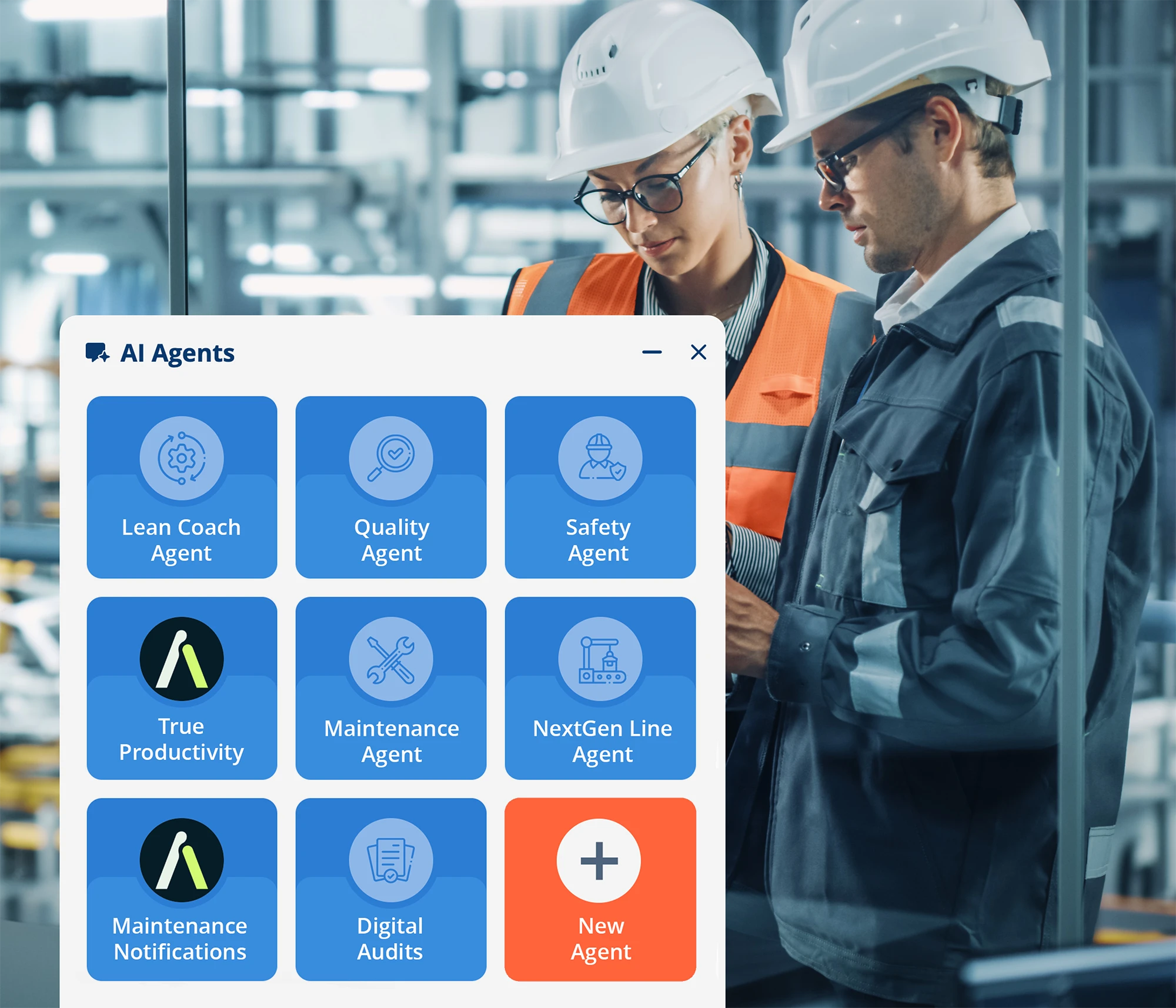
  • Digital lean coaches
  • Training and skills agents
  • Root cause analysis (“5 Whys”) agents
  • Quality agents
  • Safety agents

Importantly, Augmentir has established clear guardrails—such as human-in-the-loop approvals and deterministic logic for safety-critical tasks—to ensure AI supports workers responsibly; these principles are codified in Augmentir’s Six Laws of Agents.

What’s Next: A Human-Centered Future of Work

Looking ahead, Chris highlighted how leading manufacturers like Colgate-Palmolive and Hershey are creating new roles that blend HR and operations, focused on people capability and performance excellence.

The most exciting trend?

Companies are using technology to make frontline work better—faster onboarding, skills development in the flow of work, higher retention, and a stronger sense of purpose for workers.

By truly aligning people, process, and technology, these organizations are redefining what frontline work can look like.

Listen to the Full Conversation

To hear the full discussion on connecting HR, operations, and AI for the frontline workforce, check out the System of Record podcast on the HR Happy Hour Network.

Request a demo to learn more about Augmentir or connect with Chris Kuntz on LinkedIn to continue the conversation.


See Augmentir in Action
Get in Touch for a Personalized Demo

The evolution of AI in manufacturing has seen tremendous growth over the past few decades, now becoming more adaptive and collaborative, and being used to augment and directly support frontline workers.

The evolution of artificial intelligence and machine learning technologies in manufacturing has seen tremendous growth over the past few decades, with astounding leaps in technology and industry-wide transformations.

evolution of ai in manufacturing

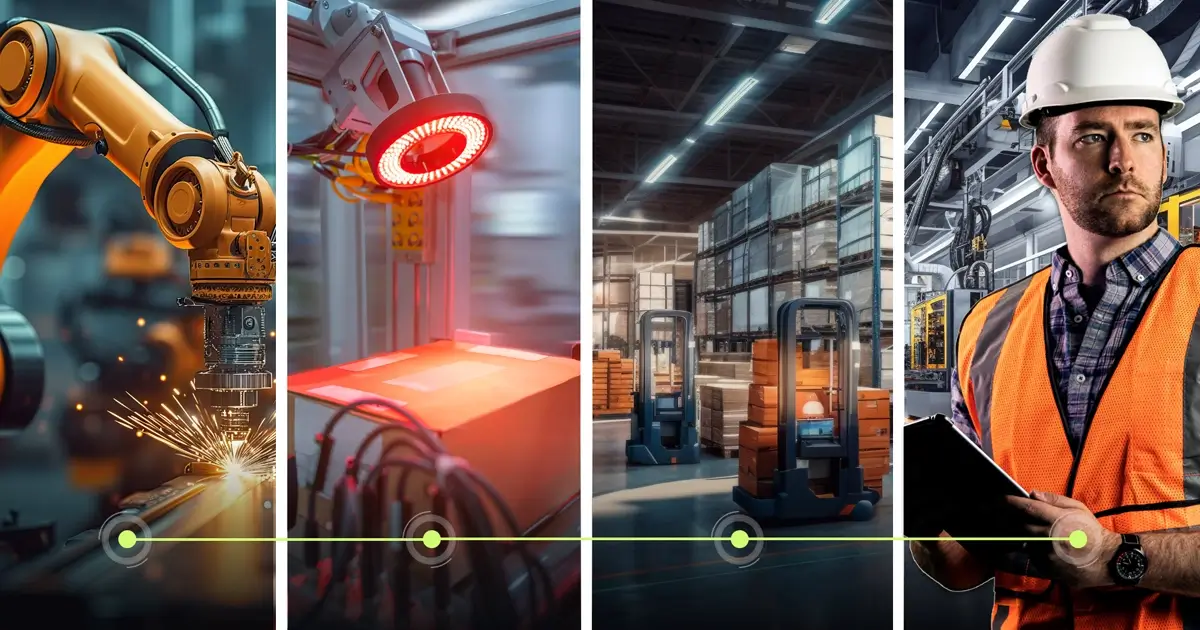
Dating back to the 1960’s, manufacturers started using AI in robotics and basic automation. This early usage focused on automating manual, highly repetitive human tasks such as assembly, parts handling, and sorting, allowing for higher levels of production and efficiency.

Over time, this evolved with AI-enabled machine vision systems, which were used to automate visual inspections, allowing for better quality control and precision during production cycles. More recently, AI has been at the center of warehouse automation, as well as the Industrial Internet of Things (IIoT), where physical machines and equipment are embedded with sensors and other technology for the purpose of connecting and exchanging data, which is used in predictive analytics for machine health monitoring. Manufacturers can now glean valuable insights from data collected over time about optimizing their operations for maximum efficiency without sacrificing quality.

Despite the breath of applications that AI has in the industrial setting, there is a common thread across all of the above examples – AI has largely been used to automate highly repetitive or manual tasks, or perform functions designed to replace the human worker.

These examples laid the groundwork for the adoption of AI in manufacturing and for the use of AI technologies that augment and directly support frontline workers today.

Read below for more information on how the use of AI and GenAI is evolving in manufacturing, and being used to augment the human worker, transforming productivity and efficiency at a time when workforce optimization is needed most.

Using AI to Augment, not Replace the Workers in our Factories

Today, AI technologies in manufacturing have evolved to encompass a diverse range of applications. According to Deloitte, 86% of surveyed manufacturing executives believe that AI-based factory solutions will be the primary drivers of competitiveness in the next five years. Robotics and automation have become more adaptive and collaborative, working alongside and augmenting human workers to streamline production processes and increase efficiency – rather than simply trying to replace them.

As computing power and algorithmic capabilities improved, AI in manufacturing has become more advanced and widespread. The emergence of Industry 4.0, characterized by the convergence of digital technologies, further accelerated AI’s role in manufacturing. By leveraging tools like connected worker solutions to gather frontline data, manufacturing organizations can now capitalize on AI’s extraordinary computing power to analyze that data and derive actionable insights, improved processes, and more.

Much like the industry has learned to optimize equipment from the 1.7 Petabytes of connected machine data that is being collected yearly, we are now able to optimize frontline work processes and people from highly granular connected worker data, with one major caveat: In order to leverage this incredibly noisy data, a system has to be designed with an AI-native strategy, where the streaming and processing of this data is intrinsic to the platform – not added as an afterthought.

The potential for AI to help augment the human worker is there, but why now?

Because for today’s manufacturers, time is not on your side.

The workforce crisis in manufacturing is accelerating, and at the forefront of the minds of Operations and HR leaders. Job quitting is up, tenure rates are down, and manufacturers struggle daily to find the skilled staff necessary to meet production and quality goals. The threat is huge – with significant impacts to safety, quality, and productivity.

AI-based connected worker solutions allow industrial companies to digitize and optimize processes that support frontline workers from “hire to retire”. These solutions leverage data from your connected workforce to optimize training investments and proactively support workers on the job, across a range of manufacturing use cases.


paperless factory

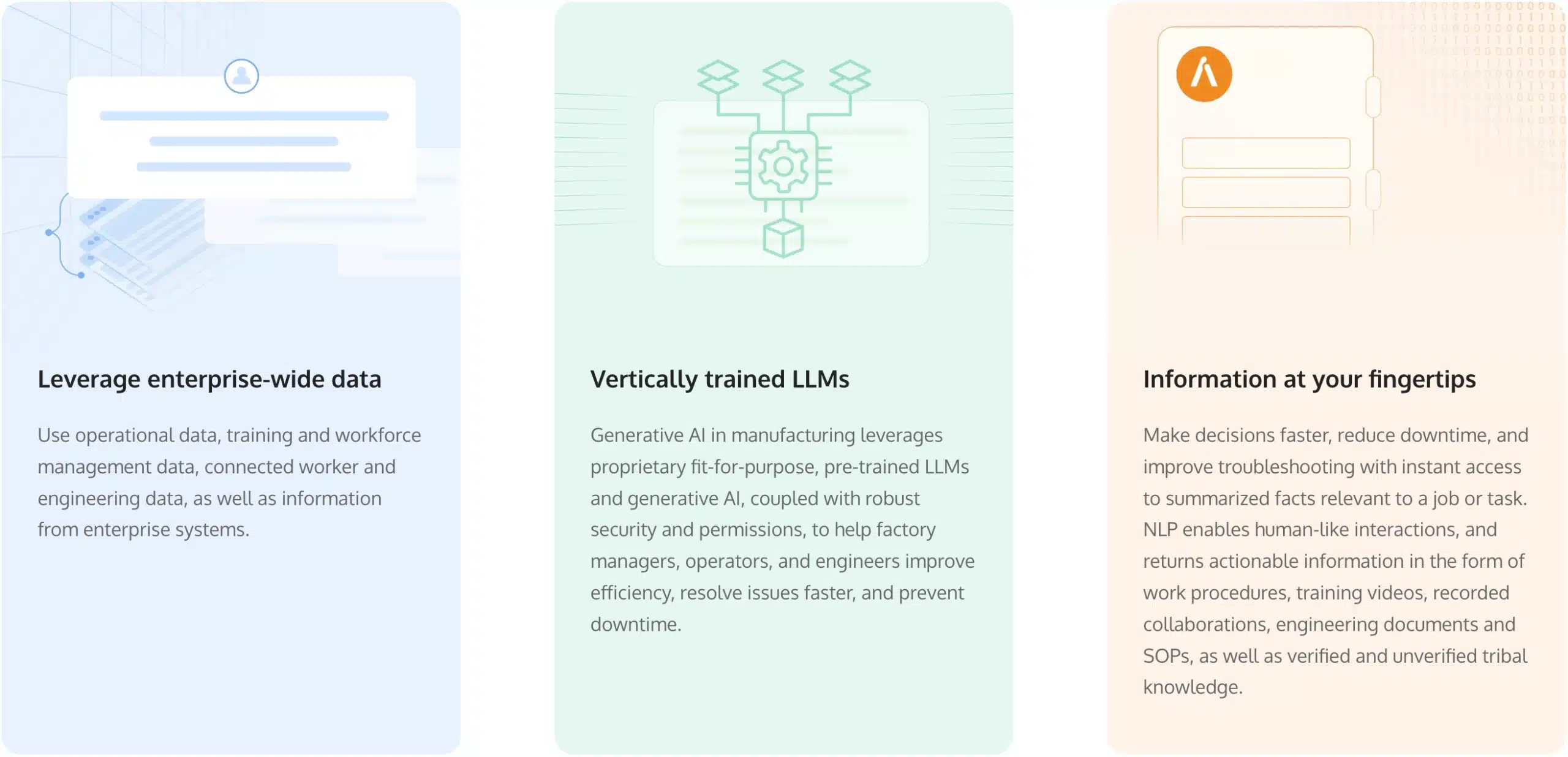
Furthermore, solutions that leverage Generative AI and proprietary fit-for-purpose, pre-trained Large Language Models (LLMs) can enhance operational efficiency, problem-solving, and decision-making for today’s less experienced frontline industrial workers. Generative AI assistants can leverage enterprise-wide data, provides instant access to relevant information, closes skills gaps with personalized support, offers insights into standard work and skills inventory, and identifies opportunities for continuous improvement.

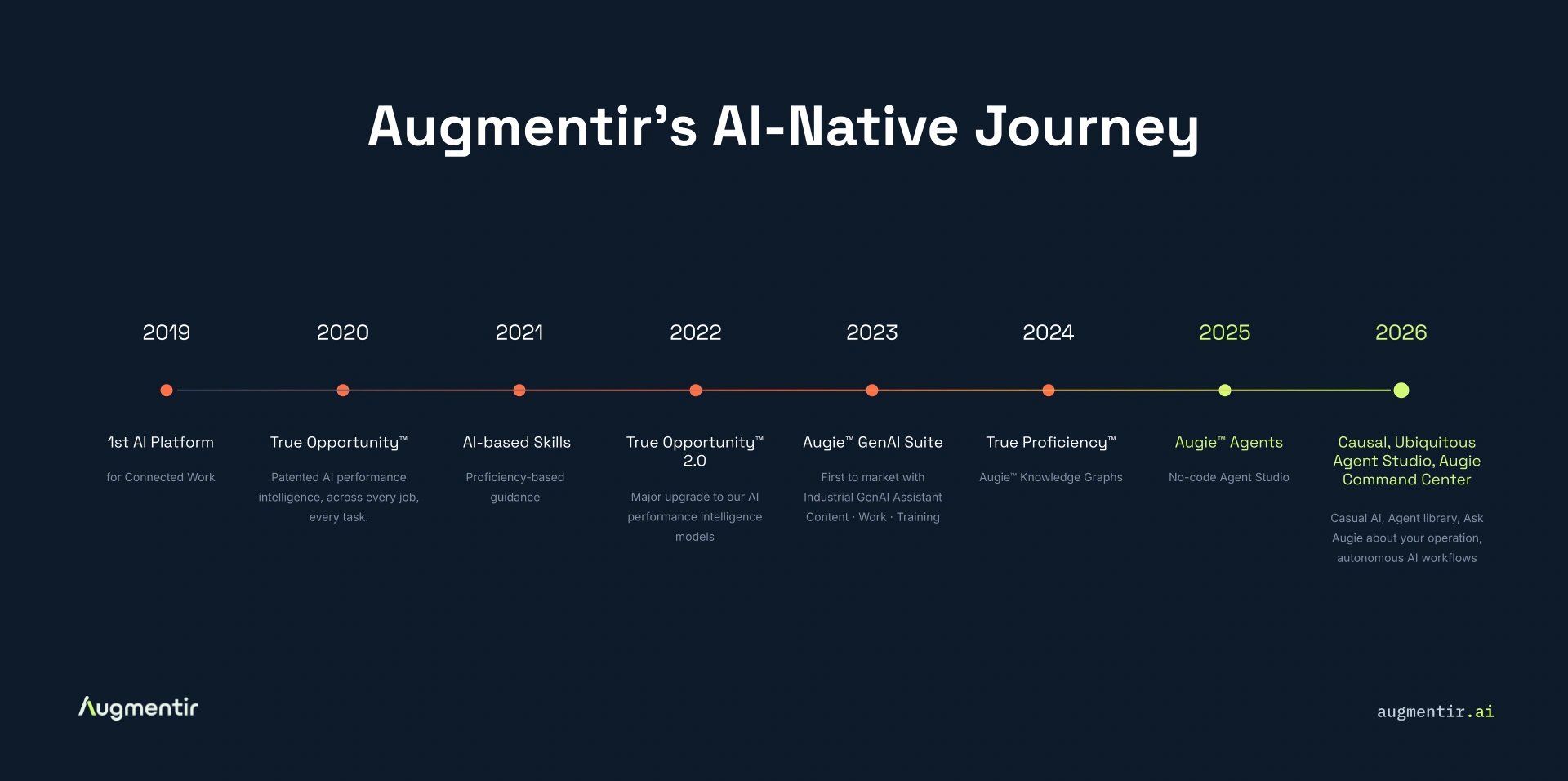
Augmentir’s AI-Native Journey

At Augmentir, since the beginning, we pioneered an AI-native approach toward manufacturing and connected frontline worker support. 

augmentir ai-native journey

Many manufacturing solutions incorporated AI technology as an add-on or afterthought as the technology gained more advanced capabilities and popularity. We, however, have been championing and building a suite of solutions using AI as a foundation. Our platform was designed from the bottom up with AI capabilities in mind, placing us as a leader in the connected frontline worker field. 

  • 2019 – Augmentir launched the world’s first AI-native connected platform for manufacturing work empowering frontline workers to perform their jobs with higher quality and increased productivity while driving continuous improvement across the organization. This marked the start of our AI-native journey, giving industrial organizations the ability to digitize human-centric work processes into fully augmented procedures, providing interactive guidance, on-demand training, and remote expert support to improve productivity and quality.
  • 2020 – Augmentir unveiled True Opportunity™, the first AI-based workforce metric designed to help improve operational outcomes and frontline worker productivity through our proprietary machine learning algorithms. These algorithms take in frontline worker data, then combine it with other Augmentir and enterprise data to uncover and rank the largest capturable opportunities and then predict the effort required to capture them.
  • 2021 – Building on user feedback and field data, Augmentir reveals True Opportunity 2.0™, with improved and enhanced capabilities surrounding workforce development, quantification of work processes, benchmarking, and proficiency. By Leveraging anonymized data from millions of job executions to significantly improve and expand the platform’s ability and automatically deliver in-app AI insights we were able to increase benefits and returns for Augmentir customers.
  • 2022 – Augmentir announces the release of True Productivity™ and True Performance™. True Productivity allows industrial organizations to stack rank their largest productivity opportunities across all work processes to focus continuous improvement teams at the highest ROI and True Performance determines the proficiency of every worker at every task or skill enabling truly personalized workforce development investments.
  • 2023 – Augmentir launches Augie™ – the GenAI-powered assistant for industrial work. By incorporating the foundational technology underpinning generative AI tools like ChatGPT, we enhanced our already robust offering of AI insights and analytics. Augie adds to this, improving operational efficiency and supporting today’s less experienced frontline workforce through faster problem-solving, proactive insights, and enhanced decision-making.
  • 2024 – As this year progresses, we have already continued to refine our AI-native solutions and apply user feedback and additional features to best support frontline industrial activities and workers everywhere.
  • 2025 –First to market with industrial AI Agents and a no-code AI Agent Studio purpose-built for frontline operations.
  • 2026 and beyond – Advancing to Agentic Automation, expanding our AI Agent Library and introducing Augie Command Center, Casual AI, and autonomous execution across the platform.

We are deeply involved in applying AI and emerging technologies to manufacturing activities to augment frontline workers, not replace them. Providing enhanced support, access to key knowledge (when and where it does the most good), and improving overall operational efficiency and productivity.

The Future of AI in Manufacturing – The Journey Forward

As we press onward into the future, we at Augmentir are determined to champion the application of AI and smart manufacturing to augment and enhance frontline workers and industrial processes. We will continue to evolve our application of AI and its use cases in manufacturing to help frontline teams and workforces, reinforcing our AI-native pedigree.

The addition of Augie to our existing AI-powered connected worker solution is an important step forward. Augie is a Generative AI assistant that uses enterprise-wide data, provides instant access to relevant information, closes skills gaps with personalized support, offers insights into standard work and skills inventory, and identifies opportunities for continuous improvement. Augie is a result of our dedication to empowering frontline workers, leveraging AI to support manufacturing operations, and giving manufacturing workers better tools to do their jobs safely and more efficiently.

With patented AI-driven insights that digitize and optimize manufacturing workflows, training and development, workforce allocation, and operational excellence, Augmentir is trusted by manufacturing leaders as a industrial transformation partner delivering measurable results across operations. Schedule a live demo today to learn more.


See Augmentir in Action
Get in Touch for a Personalized Demo

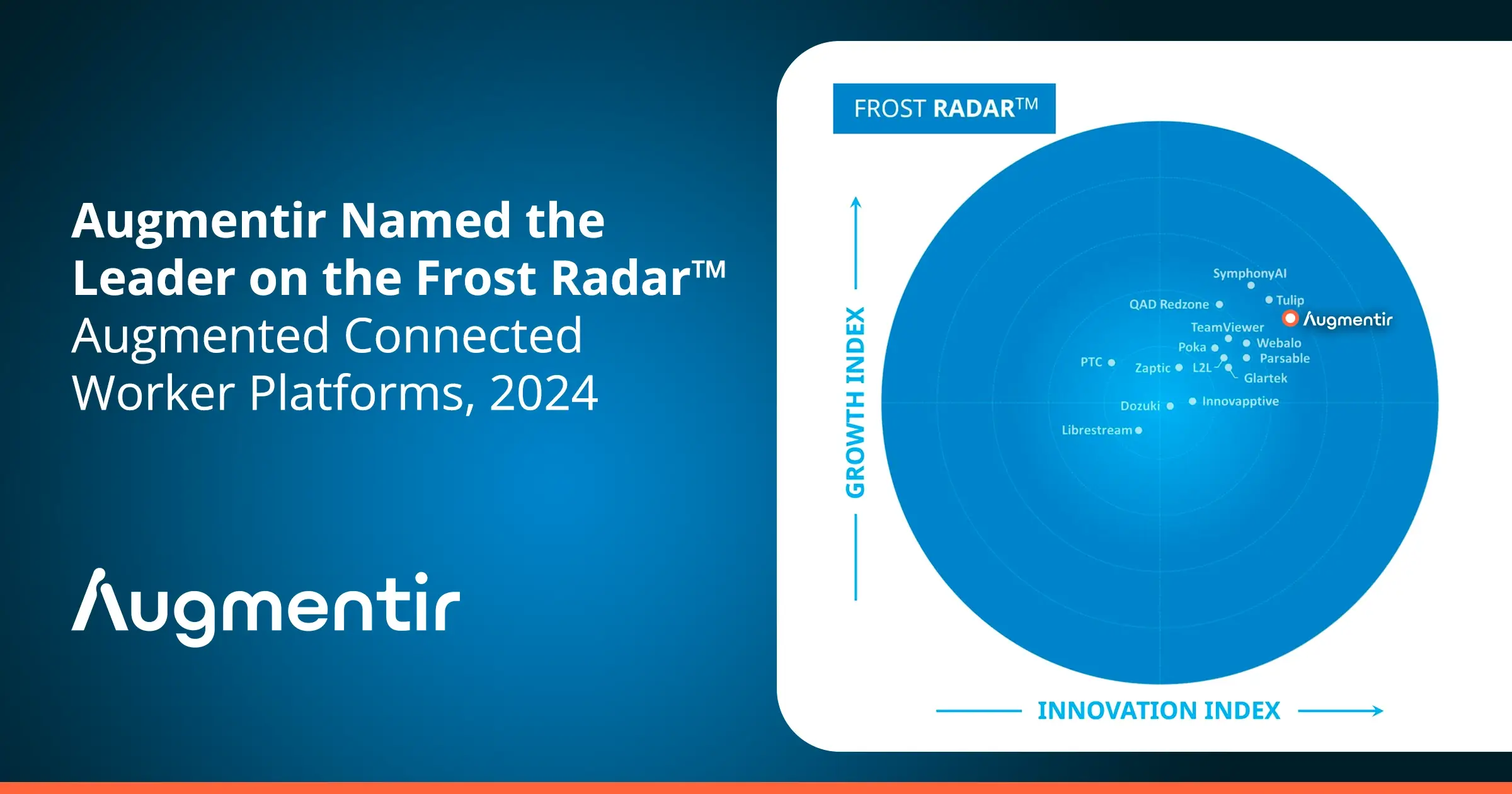
The latest Frost & Sullivan Radar report recognizes Augmentir as the Leading Augmented Connected Worker Platform.

Augmented Connected Worker (ACW) solutions revolutionize manufacturing and industrial operations and Augmentir is leading the way!

The recent Frost & Sullivan Radar report recognized Augmentir as the Leading ACW Solution with our AI-powered connected worker platform. AWC is a concept that combines the methodologies behind connected worker and augmented worker initiatives to provide a clearer, more accurate picture of what the future of manufacturing work looks like.

augmentir named the leader in frost radar for augmented connected worker platforms 2024

Read below to learn more about Augmentir in the Frost Radar report and how ACW technologies benefit both manufacturers and their workers alike.

The Frost & Sullivan Augmented Connected Worker Radar Report 2024

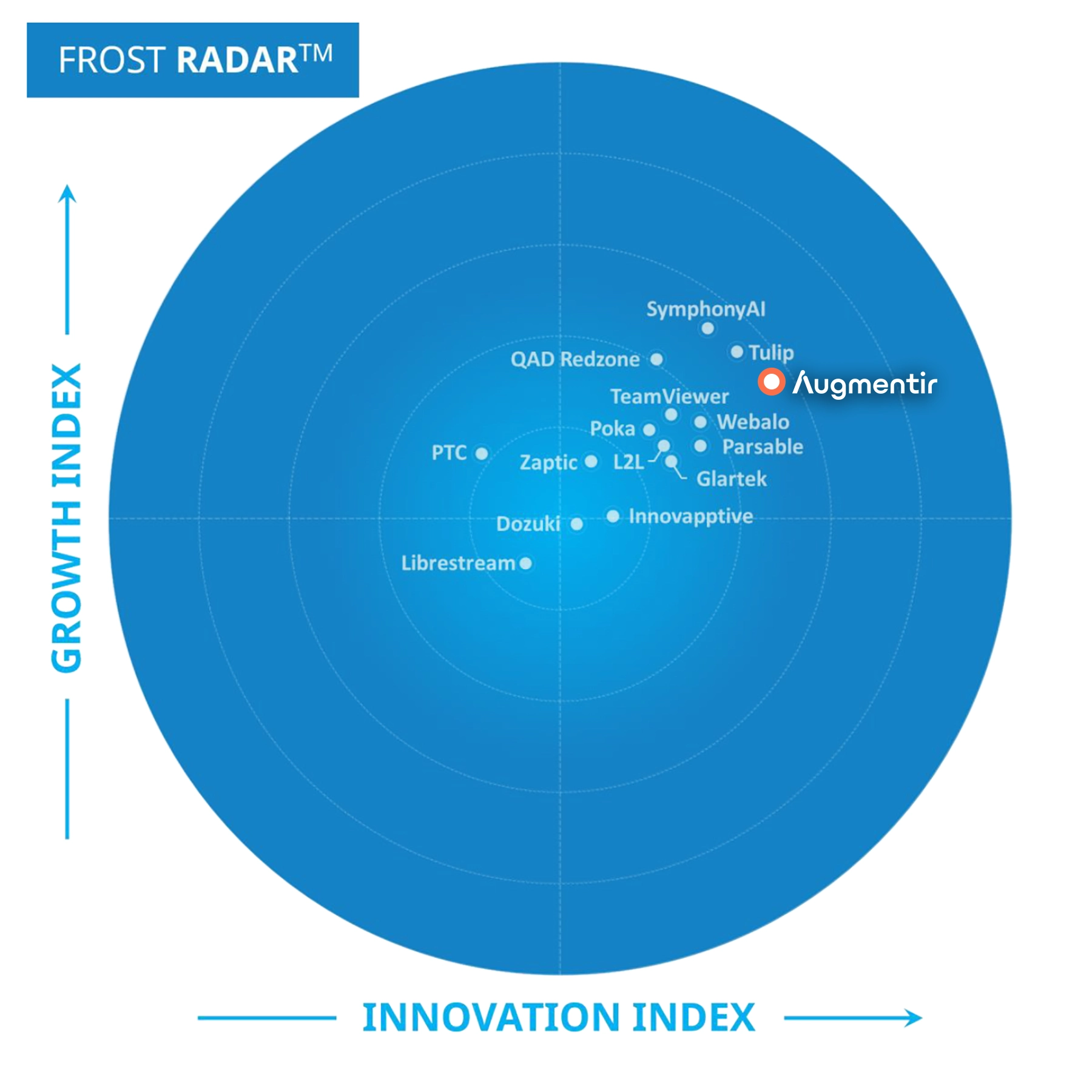
The Frost & Sullivan Radar Report, or Frost Radar™, is an analytical tool that benchmarks the future growth of leading organizations across multiple industries. Through careful selection and research across criteria that encompasses 2 major indices and 10 evaluation criteria, analysts select organizations that will be able to successfully support users into the future.

This edition of the Frost Radar, ranked Augmentir #1 out of all the ACW vendors. Augmentir empowers organizations to embrace Augmented Connected Worker initiatives through a comprehensive platform that combines connected worker and AI technologies to connect and support frontline workers like never before.

frost radar augmented connected worker platforms

As manufacturing workers become more interconnected, they can use AI tools in conjunction with smart connected worker solutions to gain insights that pinpoint areas with significant potential for improvement, this allows them to truly augment their workforces equipping them with the knowledge and abilities to complete their work safely and competently.

For more information on the Frost Radar, and the evaluation methodology used by Frost & Sullivan, click here.

Augmentir Ranked #1 Connected Worker Platform, Most Complete Solution on the Market

Frost & Sullivan has identified nine functionalities that are essential for a complete ACW solution.

  1. Knowledge and data management. The solution serves as a repository of knowledge.
  2. Work assistance and productivity. It provides digital tools to enhance frontline workers’ tasks, such as digital work instructions, digital Kanban boards, and navigation guidance.
  3. Seamless experience. The solution must be easily accessible from available devices (phones, tablets, wearables) to integrate seamlessly into everyday operations.
  4. Skills management. This serves as an extension for learning management systems (LMS) and provides supervisors and plant managers the necessary tools to upskill the workforce.
  5. Channel for communication. The solution offers native features to enable collaboration across operations, such as remote assistance, multi-site or multi-team workflows, and news feeds.
  6. Reporting and analytics. This refers to pre-built dashboards with workforce and task execution data. The ACW platform can also provide tools for configuring custom dashboards and integrating data from other systems.
  7. Integrations. The solution comes with a variety of pre-built connectors and tools to easily build new integrations to common systems.
  8. Platform capabilities. NC and LC development environments allow the building of digital procedures, workflows, training programs, and dashboards. Standard templates are available to accelerate time to value and the default deployment option is cloud-based.
  9. Integrated AI. The solution leverages AI in one or more ways. AI-enabled features include predictive maintenance, automatic creation of workflows/digital work instructions/troubleshooting procedures based on video or worker input, automatic analysis and optimization recommendations for processes, AI-powered search engines, copilots, live translations, and more.

Frost & Sullivan ranked Augmentir as a Leader in both innovation and growth within the ACW solution landscape.

According to Frost & Sullivan:

Augmentir offers one of the most comprehensive ACW solutions in the market. Its new AI copilot sets it apart from most other products in the market by covering a variety of use cases. The company’s plans to leverage engagement data from the workforce is a unique initiative in the current market. All these factors contribute to making Augmentir the leader in the Frost Radar Innovation Index.

Augmenting Frontline Workers with an AI Platform for Connected Work

Manufacturing is uniquely situated as an industry to benefit from Augmented Connected Worker solutions leveraging AI-powered connected worker technology for process improvements, quality, management, enhanced training, and more. ACW initiatives facilitate faster onboarding, increased workforce flexibility, and the retention of essential knowledge.

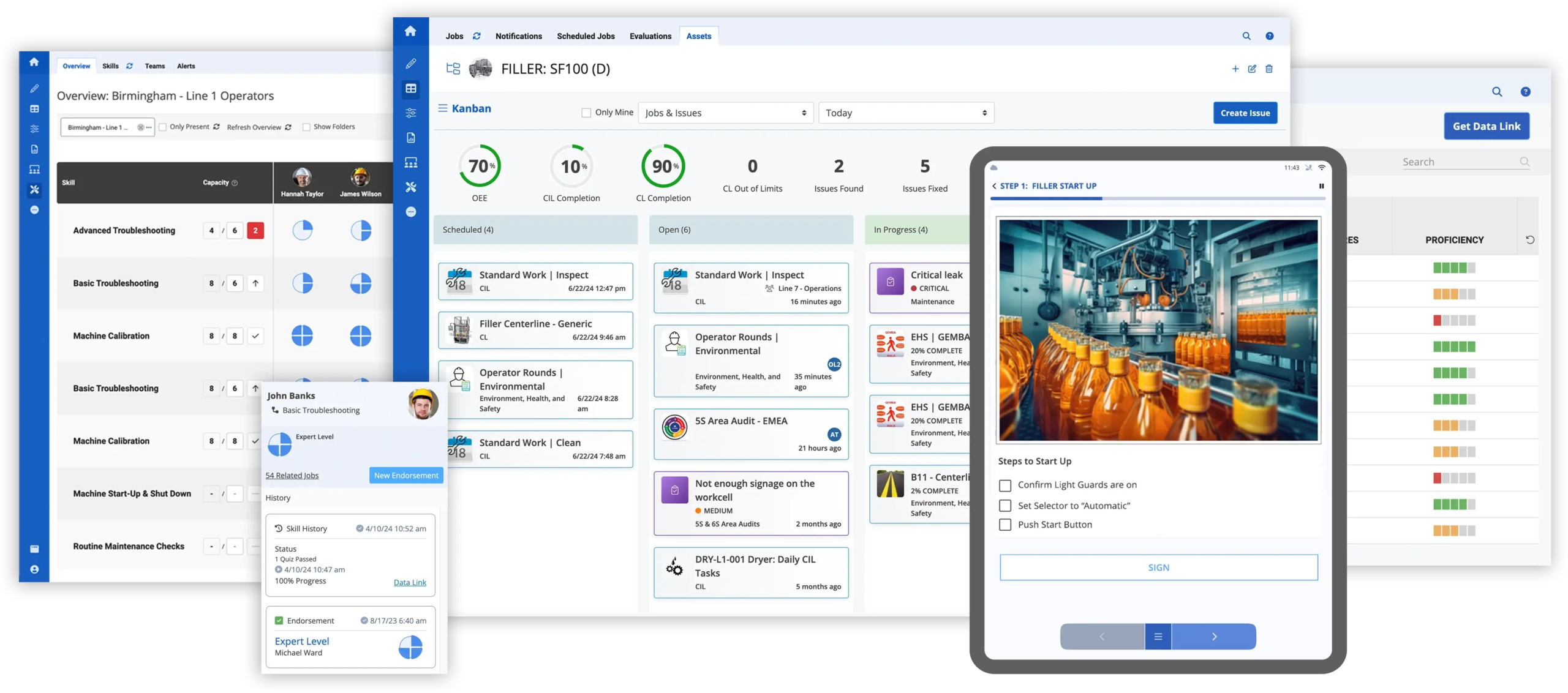
augmentir connected worker platform

AI – including generative AI tools, software, and assistants – plays a crucial role in ACW initiatives, addressing overarching trends like skills variability and the loss of tribal knowledge within the workforce. It serves as the cornerstone for implementing data-driven improvements in operational performance and continuous enhancement.

At Augmentir, we believe that a connected worker platform’s purpose goes beyond just delivering instructions and remote support; it should continually optimize the entire connected worker ecosystem and augment the capabilities of frontline workers. With this in mind, we introduced Augie™ – our generative AI assistant for industrial work, in early 2023.

With Augie, manufacturers can unlock previously untapped potential in their frontline personnel and operations. Our recent expansion and enhancements now offer the first-ever suite of dedicated GenAI assistants for manufacturing enterprises covering anything from Troubleshooting, Operations, and Data Insights, to Content Creation and even GenAI-as-a-Service.

Interested in learning more?

If you’d like to learn more about Augmentir and see how our AI-powered connected worker platform enables Augmented Connected Worker initiatives to improve safety, quality, and productivity across your workforce, schedule a demo with one of our product experts.


See Augmentir in Action
Get in Touch for a Personalized Demo

AI is playing a key role in changing the manufacturing landscape, augmenting workers and empowering them with improved, optimized processes, better data, and personalized instruction.

Deloitte recently published an article with the Wall Street Journal covering how AI is revolutionizing how humans work and its transformative impact. They emphasized that AI is not merely a resource or tool, but, that it serves almost as a co-worker, enhancing work processes and efficiency. This article discussed how the evolving form of intelligence augments human thinking and emphasized this as a catalyst for accelerated innovation.

Manufacturing is uniquely situated to benefit from AI to improve operations and empower their frontline workforces. The skilled labor gap has reached critical levels, and the market is under tremendous stress to keep up with growing consumer demand while staying compliant with quality and safety standards. Manufacturing workers are crucial to the success of operations – maintenance, quality control and assurance, and more – manufacturers rely upon their workforce to ensure production proceeds smoothly and successfully.

AI is playing a key role in changing the manufacturing landscape, augmenting workers and empowering them with improved, optimized processes, better data for informed decision-making, troubleshooting, personalized instructions and training, and improved quality assurance and control. According to the World Economic Forum, an estimated 87% of manufacturing companies have accelerated their digitalization over the past year, the IDC states 40% of digital transformations will be supported by AI, and a recent study from LNS Research found that 52% of industrial transformation (IX) leaders are deploying connected worker applications to help their frontline workforces. Not only that, AI technology is expected to create nearly 12 million more jobs in the manufacturing industry.

Integrating AI into manufacturing not only enhances productivity, but also opens the door to new possibilities for worker safety, training, and innovative new manufacturing practices. Here are some ways AI is transforming manufacturing operations:

  • AI-based Workforce Analytics: Collecting, analyzing, and using frontline worker data to assess individual and team performance, optimize upskilling and reskilling opportunities, increase engagement, reduce burnout, and boost productivity.
  • Personalized Training in the Flow of Work: With AI and connected worker solutions, manufacturers can identify and supply training at the time of need that is personalized to each individual and the task at hand.
  • Personalized Work Instructions: AI enables manufacturers to offer customized digital work instructions mapped to their skill levels and intelligently assign work based on each individual’s capabilities.
  • Digital Performance Support and Troubleshooting Guide: Generative AI assistants and bot-based AI virtual assistants offer support and guidance to manufacturing operators, enabling access to collaborative technologies and knowledge bases to ensure the correct actions and processes are taken.
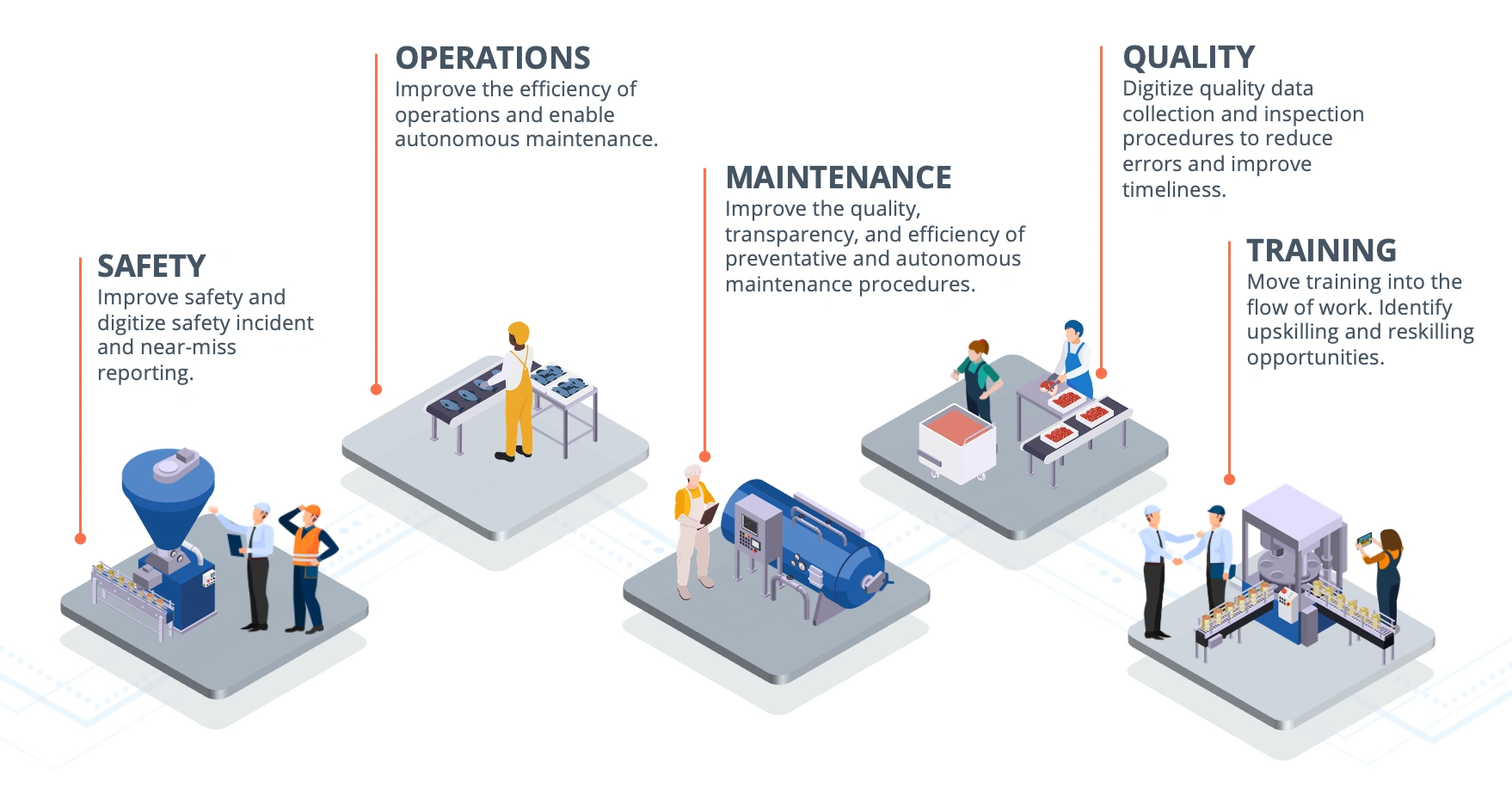
  • Optimize Maintenance Programs: AI algorithms analyze data from sensors on machinery and other connected solutions to predict when equipment is likely to fail. This enables proactive maintenance, minimizing downtime and reducing maintenance costs. Additionally, with AI technologies, manufacturers can implement autonomous maintenance processes through a combination of digital work instructions and real-time collaboration tools. This allows operators to independently complete maintenance tasks at peak performance.
  • Improve Quality Control: AI-powered solutions can improve inspection accuracy and optimize quality control and assurance processes to identify defects faster. With connected worker solutions, manufacturers can effectively turn their frontline workforce into human sensors supplying quality data and enhancing assurance processes.
  • Ensure Worker Safety: AI-driven safety systems coupled with connected worker technologies monitor the work environment, supplying real-time data and identifying potential hazards to ensure a safer workplace for employees.

connected enterprise

As AI continues to advance, the manufacturing industry is poised for even greater transformation, improving both the quality of products and the working conditions for employees. AI is revolutionizing the way humans work and how the manufacturing industry approaches nearly every process across operations, augmenting work interactions, productivity, efficiency, and boosting innovation.

Explore top use cases for generative AI in manufacturing, how GenAI copilots and digital assistants work, and benefits for frontline workers.

Generative AI in manufacturing refers to the application of generative models and artificial intelligence techniques to optimize and enhance various aspects of the manufacturing process.

While traditional AI focuses on data analysis, pattern recognition, and decision-making, generative AI creates new content and synthetic data, enabling innovative solutions. This involves using AI algorithms to generate new product designs, optimize production workflows, predict maintenance needs, and improve production efficiency within frontline operations.

generative ai in manufacturing

According to McKinsey, nearly 75% of generative AI’s major value lies in use cases across four areas: manufacturing, customer operations, marketing and sales, and supply chain management. Manufacturers are uniquely situated to benefit from generative AI and it is already a transformative force for some. Generative AI is driving innovation and efficiency across the manufacturing sector, enabling advanced digital solutions and competitive advantages. A recent Deloitte study found that 79% of organizations expect generative AI to transform their operations within three years, and 56% of them are already using generative AI solutions to improve efficiency and productivity.

Manufacturing is rapidly evolving and by integrating cutting-edge technologies like Generative AI, manufacturers can better support, augment, and enhance their frontline workforces with improved decision-making, collaboration, and data insights. Gen AI is being adopted as a modern alternative to traditional methods, surpassing manual inspections and basic automation to deliver greater operational improvements.

Join us below as we dive into generative AI in manufacturing exploring how it works, the benefits and risks, and some of the top use cases that generative AI, specifically generative ai digital assistants, can provide for manufacturing operations:

What is Generative AI in Manufacturing

Generative AI refers to artificial intelligence systems designed to create new content, such as text, images, or music, by learning patterns from existing data. In manufacturing, this includes the ability to generate new product designs and create synthetic data, such as realistic images, videos, or text, to support manufacturing innovation and AI training. The use of Large Language Models (LLMs) and Natural Language Processing (NLP) enables these systems to analyze vast amounts of data, leveraging advanced algorithms and machine learning algorithms to improve prediction accuracy and operational efficiency, simulate different scenarios, and generate innovative solutions that can impact a wide range of manufacturing processes.

generative ai in manufacturing with LLMs and NLP

Large Language Models

Large Language Models (LLMs) are a type of generative artificial intelligence model that have been trained on a large volume – sometimes referred to as a corpus – of text data. They are capable of understanding and generating human-like text and have been used in a wide range of applications, including natural language processing, machine translation, and text generation.

In manufacturing, generative AI solutions should leverage proprietary fit-for-purpose, pre-trained LLMs, coupled with robust security and permissions.  Industrial LLMs use operational data, training and workforce management data, connected worker and engineering data, as well as information from enterprise systems. LLMs can also enhance document search by efficiently finding, extracting, and summarizing information from technical manuals, reports, and operational records.

Natural Language Processing

Natural Language Processing (NLP) is a branch of artificial intelligence that focuses on the interaction between computers and humans using natural language. It involves the development of algorithms and models that enable computers to understand, interpret, and respond to human language in a way that is both meaningful and useful.

For generative AI, NLP is a key technology that enables the assistants to understand and generate human-like text, providing seamless conversational user experiences and valuable assistance to frontline workers, engineers, and managers in manufacturing and industrial settings.

NLPs allow the AI to process and interpret natural language inputs, enabling it to engage in human-like interactions, understand user queries, and provide relevant and accurate responses. This is essential for common manufacturing tasks such as real-time assistance, documentation review, predictive maintenance, and quality control.

By combining large language models and natural language processing, generative AI can produce coherent and contextually relevant text for tasks like writing, summarization, translation, and conversation, mimicking human language proficiency. NLP also enables interactive learning experiences, allowing employees to engage with training content, receive immediate feedback, and clarify doubts in real time.

Benefits of Leveraging Generative AI in the Manufacturing Industry

Generative AI and solutions that leverage them offer several benefits for manufacturing operations, including:

  • Operational/Production Optimization and Forecasting: GenAI technology offers a significant boost to manufacturing processes by monitoring and analyzing in real-time, spotting problems quickly, and providing predictive insights and personalized assistance to boost efficiency for manufacturing workers. Through process optimization and enhancing efficiency with real-time data analysis and automation, manufacturers can streamline operations, reduce downtime, and improve productivity. Additionally, AI assistants empower manufacturers to explore multiple control strategies within their process, identifying potential bottlenecks and failure points.
  • Proactive Problem-Solving: Generative AI-powered tools provide real-time monitoring and risk analysis of manufacturing operations, enabling the quick identification and resolution of issues to optimize production and efficiency. They can spot events as they happen, providing valuable insights and recommendations to help operators and engineers rapidly identify and resolve problems before they escalate. Predictive analytics and improved quality control help reduce waste and support continuous improvement in manufacturing processes.
  • Reduce Unplanned Downtime: Generative AI solutions can analyze vast datasets to predict equipment maintenance needs before issues arise, allowing manufacturers to schedule maintenance proactively, minimizing unplanned disruptions. Generative AI can also optimize maintenance schedules and delivery schedules to further reduce downtime and improve supply chain reliability. This not only improves downtime but also contributes to the overall operational resilience of mission-critical equipment.
  • Personalized Support and On-the-job Guidance: Generative AI tools can be tailored to diverse roles within the manufacturing plant, offering personalized assistance to operators, engineers, and managers. It can provide role-based, personalized assistance, and proactive insights to understand past events, current statuses, and potential future happenings, enabling workers to perform their tasks more effectively and make better, more informed decisions. GenAI solutions and applications involved implementing generative AI provide optimized parameters for operators and help manage inventory more effectively.

These benefits demonstrate the significant impact of generative AI on frontline manufacturing activities, improving overall operational efficiency, adjusting processes where needed, and driving operational excellence.

Pro Tip

Generative AI assistants can take these benefits one step further by incorporating skills and training data to measure training effectiveness, identify skills gaps, and suggest solutions to prevent any skilled labor issues. This guarantees that frontline workers have the essential skills to perform tasks safely and efficiently, while also establishing personalized career development paths for manufacturing employees that continuously enhance their knowledge and abilities.

A

Risks of Generative AI in Manufacturing

Generative AI in manufacturing presents several risks, including data security, intellectual property concerns, and potential bias in AI models. The reliance on vast amounts of data raises the risk of data breaches and cyberattacks, potentially exposing sensitive information. Intellectual property issues may arise if AI-generated designs or processes inadvertently infringe on existing patents or proprietary technologies. Additionally, biases in training data can lead to suboptimal or unfair outcomes, affecting the quality and equity of AI-driven decisions. There is also the risk of over-reliance on AI, which may reduce human oversight and lead to errors if the AI models make incorrect predictions or generate flawed designs. Ensuring proper validation, transparency, and human intervention is crucial to mitigating these risks.

The use of any genAI tool in manufacturing requires careful consideration of ethical, data privacy, and security risks, as well as potential impacts on employment.

Top Use Cases for Generative AI Manufacturing Assistants

Generative AI assistants and frontline copilots are AI-powered tools designed to provide valuable assistance and insights in industrial settings, particularly in manufacturing. These assistants are a type of generative AI that are used in manufacturing operations to enhance human-machine collaboration, streamline workflows, and offer proactive insights to optimize performance and productivity for frontline workers. The manufacturing sector is being transformed by these advanced AI applications, which are driving efficiency, innovation, and better decision-making across the industry.

What makes frontline AI assistants unique among other generative AI copilots is the enhanced human-like interaction beyond standard data analytics and analysis to understand the context around a process or issue; including what happened and why, as well as anticipate future events.

Generative AI assistants work via specialized large language models (LLMs) and generative AI, providing contextual intelligence for superior operations, productivity, and uptime in industrial settings. Additionally, they typically involve natural language processing for understanding human language, pattern recognition to identify trends or behaviors, and decision-making algorithms to offer real-time assistance. This, combined with machine learning techniques, allows them to understand user inputs, provide informed suggestions, and automate tasks. AI and machine learning are used together in manufacturing to automate defect detection and optimize supply chains, further enhancing operational efficiency.

Here are 6 of the top use cases for generative AI in manufacturing:

1. Troubleshooting

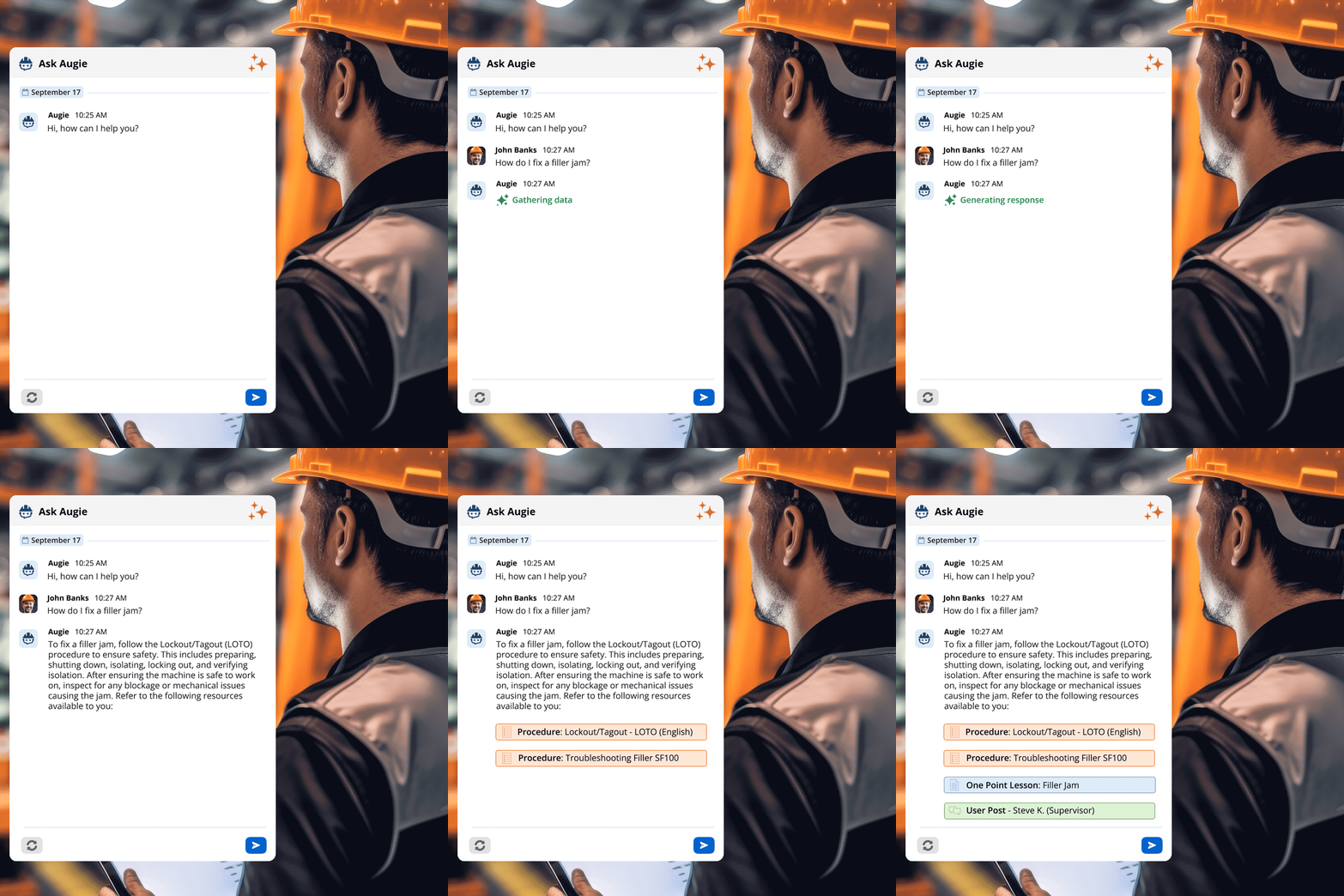
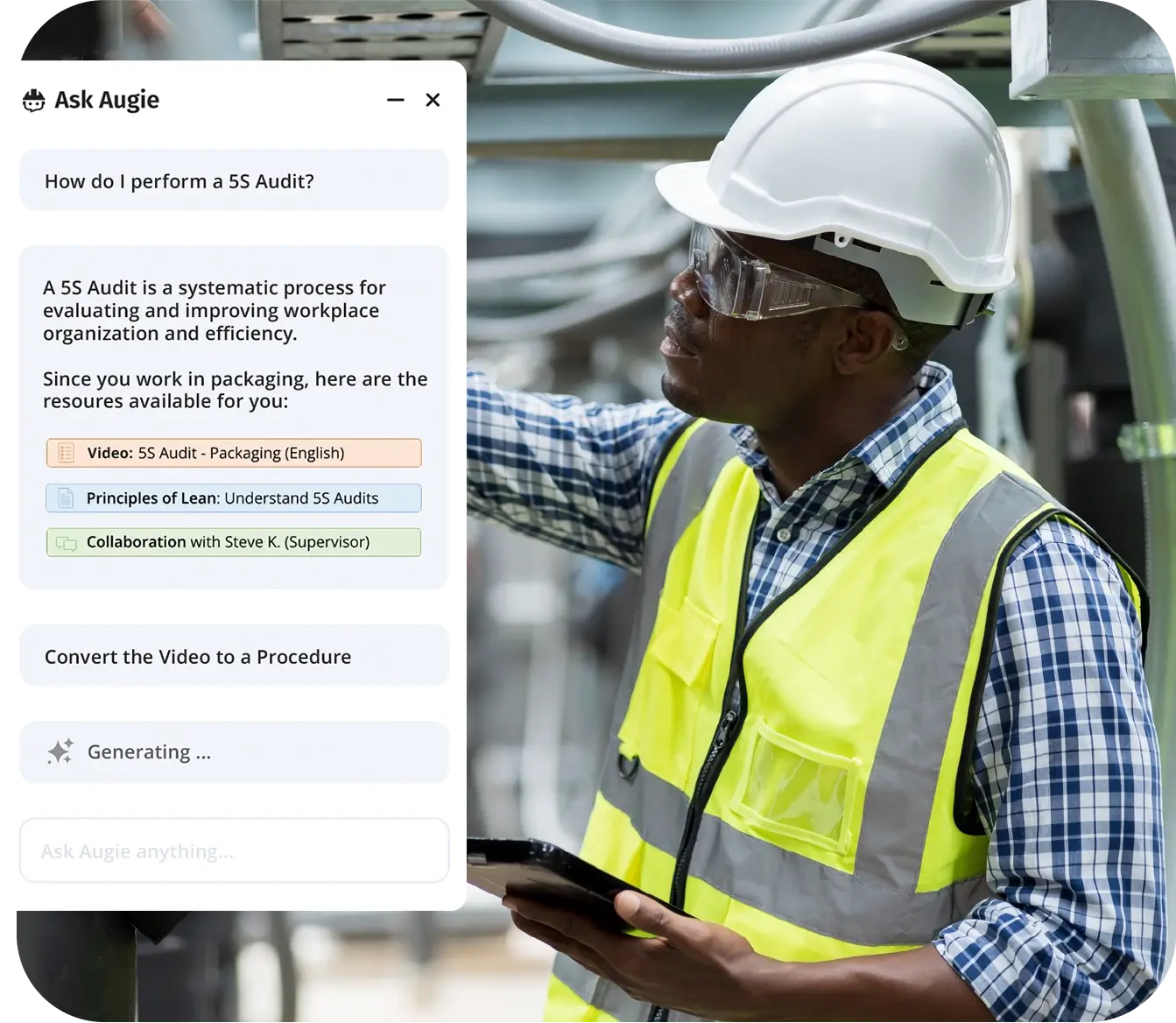
Troubleshooting is such a critical use case in manufacturing. With today’s skilled labor shortage, frontline workers are often times in situations where they don’t have the decades of tribal knowledge required to quickly troubleshoot and resolve issues on the shop floor. AI assistants can help these workers make decisions faster and reduce production downtime by providing instant access to summarized facts relevant to a job or tasks, this could come from procedures, troubleshooting guides, captured tribal knowledge, or OEM manuals.

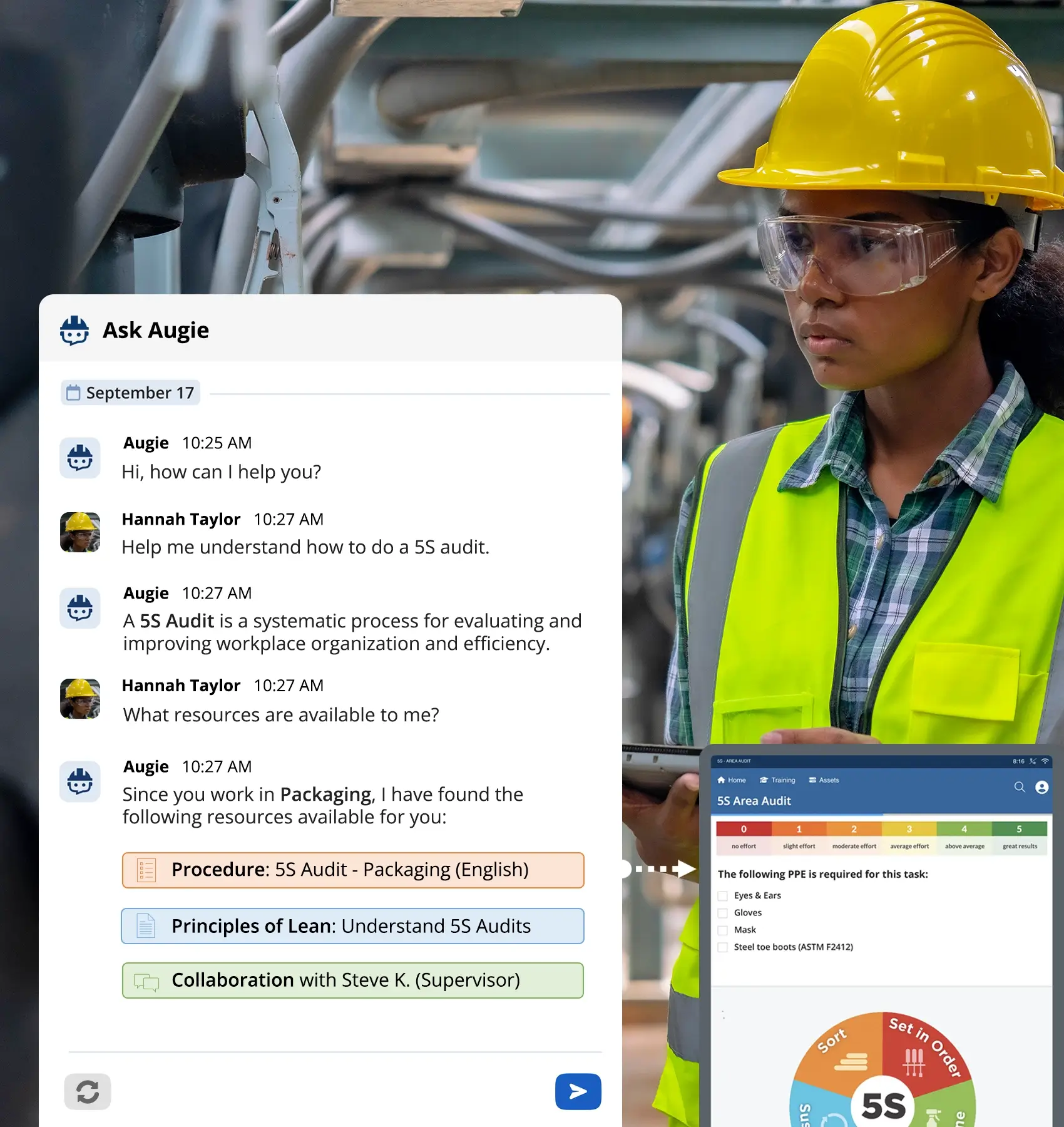
generative ai in manufacturing use case - troubleshooting

2. Personalized Training & Support

With GenAI assistants, manufacturers can instantly close skills and experience gaps with information personalized, context-aware to the individual worker. This could include: on the job training materials, one point lessons (OPLs), or peer/user generated content such as comments and conversations.

generative ai in manufacturing use case - training and work assistant

3. Leader Standard Work

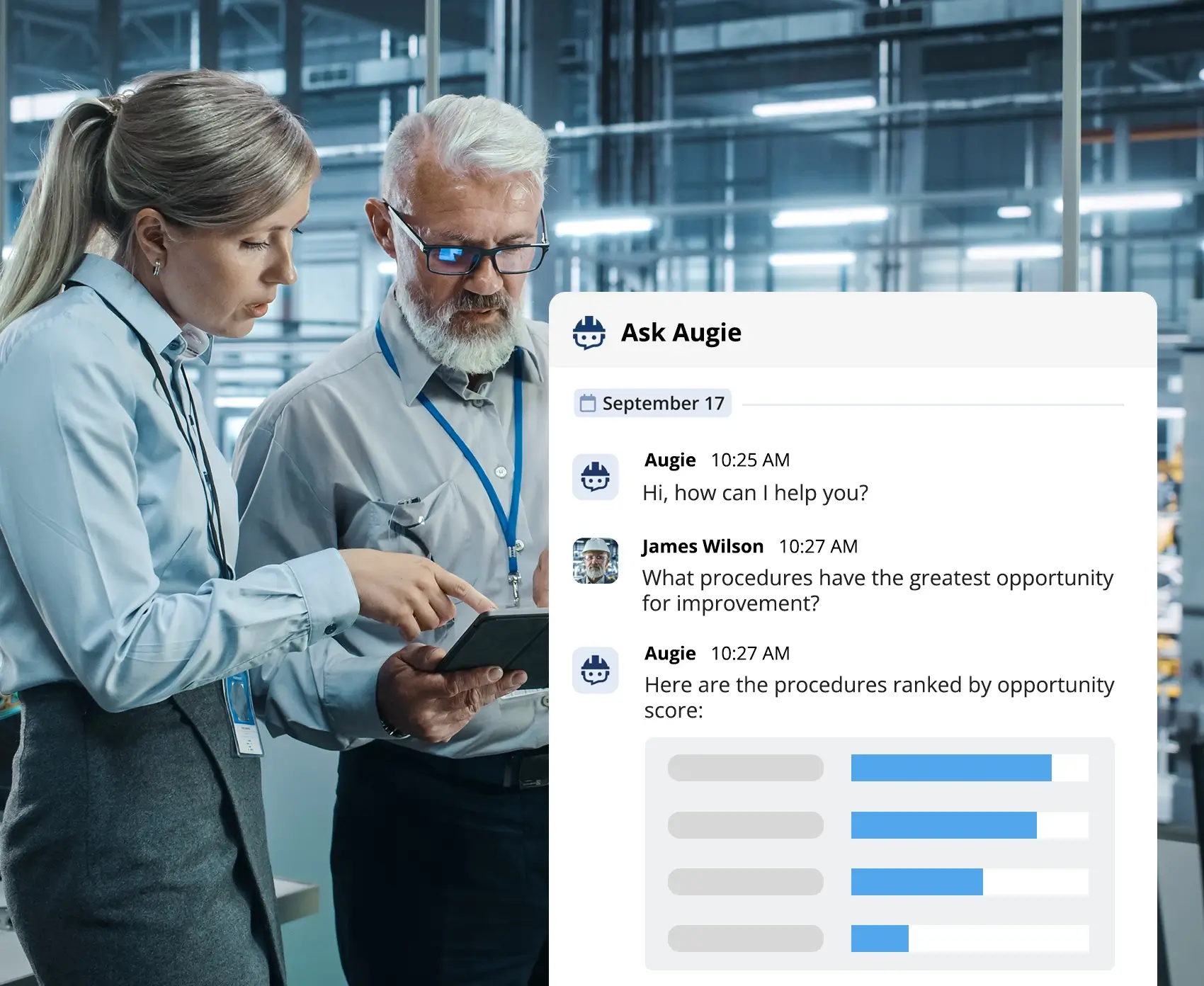
With Generative AI assistants, operations leaders can assess and understand the effectiveness of standard work within their manufacturing environment, and identify where there are areas of risk or opportunities for improvement.

4. Converting Tribal Knowledge

One of the more pressing priorities that many manufacturers face is the task of capturing and converting tribal knowledge into digital corporate assets that can be shared across the organization. With connected worker technology that utilizes Generative AI, manufacturing companies can now summarize the exchange of tribal knowledge via collaboration and convert these to scalable, curated digital assets that can be shared instantly across your organization.

generative ai in manufacturing use case - convert tribal knowledge

5. Continuous Improvement

AI and GenAI assistants can help us identify areas for content improvement, and make those improvements, measure training effectiveness, and measure and improve workforce effectiveness.

generative ai in manufacturing use case - continuous improvement

6. Operational Analysis

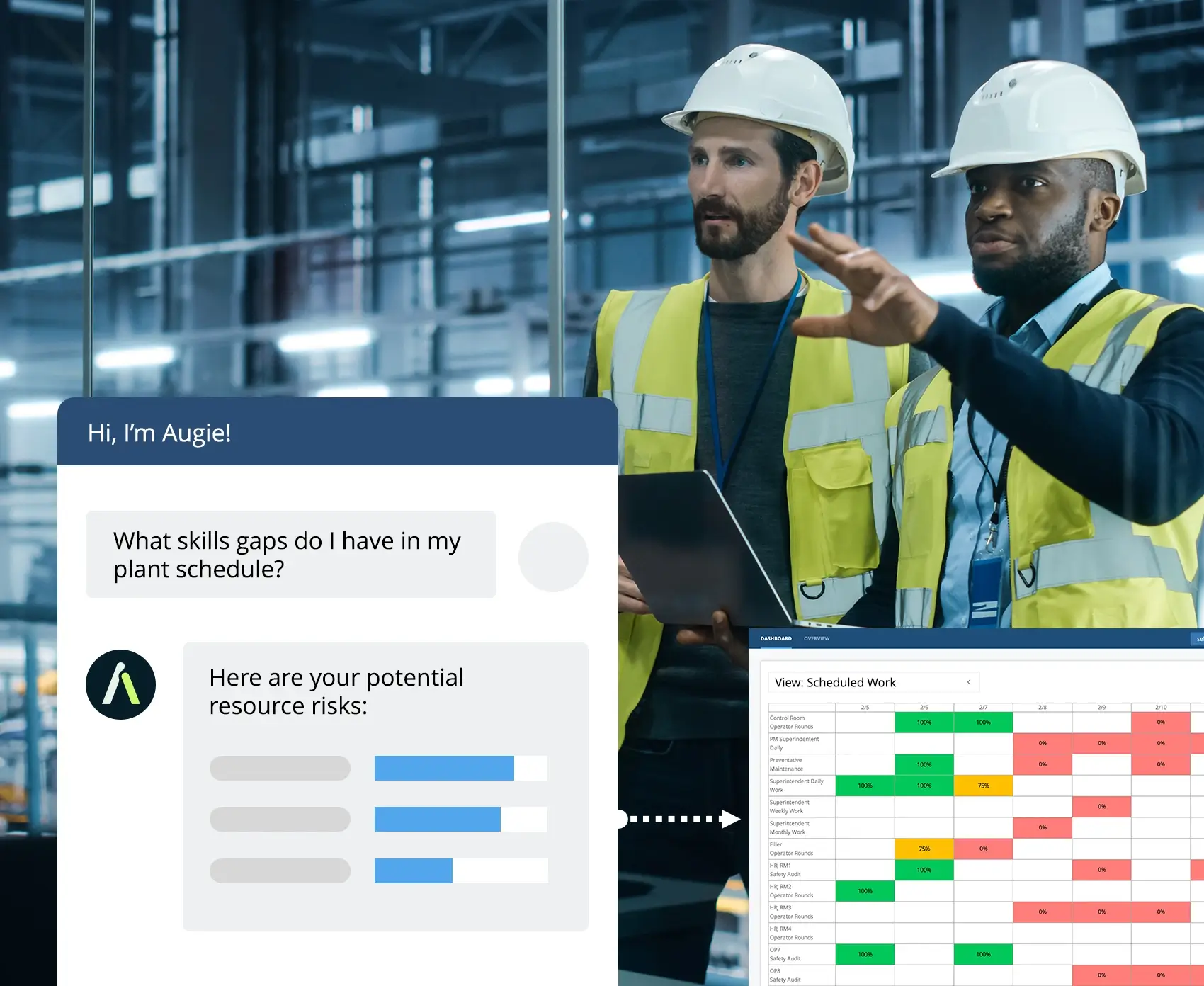
Generative AI assistants can also provide value when it comes to operational improvements. GenAI assistants can use employee attendance data to help shift managers or line leaders determine where the risks are, and potentially offset any resource issues before they become truly problematic. An organization’s skills matrix, presence data, and production schedules all can feed into a fit-for-purpose, pre-trained LLM – giving you information that manufacturing leaders need to keep their operations running.

generative ai in manufacturing use case - operational analysis

Generative AI and other AI-powered solutions are leveling up manufacturing operations, analyzing data to predict equipment maintenance needs before issues arise, allowing for proactive maintenance scheduling, and minimizing unplanned disruptions. With these tools manufacturers can empower frontline workers with improved collaboration and provide real-time assistance with contextual information, ensuring relevant and timely support during critical decision-making processes.

Overall, generative AI is transforming a wide array of manufacturing and industrial activities, connecting workers in ways that were previously thought impossible, and making frontline tasks and processes safer and more efficient for workers everywhere.

Future-proofing Manufacturing Operations with Augie™

Augie™, Augmentir’s generative AI assistant for frontline work, represents the next generation of generative AI solutions, purpose-built to help manufacturing companies future-proof their operations. By harnessing the power of artificial intelligence and machine learning, Augie enables manufacturers to optimize production processes, improve quality control, and reduce maintenance costs—all while adapting to rapidly changing market demands.

paperless shop floor with augie industrial generative ai suite

With Augie, manufacturers can analyze vast amounts of data from diverse sources, including machine data, sensor data, and historical data, to identify patterns and make predictive, data-driven decisions. This advanced platform delivers real-time insights into production processes, allowing manufacturers to quickly respond to shifts in demand, supply chain disruptions, or operational anomalies. Augie also features sophisticated algorithms for demand forecasting, inventory management, and supply chain optimization, helping companies minimize environmental impact and maximize operational efficiency.

Augie pulls in skill capabilities, workforce development information, and training data in addition to MES and ERP data. It offers contextual, proactive insights and automated workflows to optimize production and prevent bottlenecks, contributing to manufacturing efficiency, uptime, quality, and decision-making.

Additionally, Augie ties together operational data, training and workforce management data, engineering data, and knowledge/information from various disparate enterprise systems to empower frontline workers, streamline workflows, and increase manufacturing performance.

By integrating Augie into their operations, manufacturers can boost productivity, reduce unplanned downtime, and achieve significant cost savings. The platform’s AI-driven quality control ensures improved product quality, while its customer service automation capabilities enhance responsiveness and satisfaction. Ultimately, Augie empowers manufacturing companies to stay ahead of the competition, adapt to evolving industry trends, and secure a sustainable, competitive advantage in the global marketplace.

Augmentir is trusted by manufacturing leaders as a digital transformation partner delivering measurable results across operations. Schedule a live demo today to learn more.


See Augmentir in Action
Get in Touch for a Personalized Demo