World Class Manufacturing
See Augmentir in Action
Get in Touch for a Personalized Demo
See how Augmentir’s connected worker platform can help you implement world class manufacturing within your operation.

World class manufacturing (WCM) is a management ideology for producing the greatest and most cost-effective products or services in a timely manner.
In today’s ever-changing market, industry leaders must do more than just develop high-quality products. They must also consistently deliver goods on time and at an affordable price.
That’s where WCM comes in. It’s about ensuring quality, delivery, and cost to keep an organization competitive — whether your marketplace is local, national, or global. Essentially, WCM is a set of guiding principles for successfully operating and managing a manufacturing company. It revolves around the continuous improvement of production processes and systems to achieve excellence in efficiency, quality, and customer satisfaction.
WCM focuses on eliminating waste and reducing costs by optimizing production processes and minimizing defects and errors. It also emphasizes the importance of employee involvement and empowerment, promoting a culture of continuous improvement and innovation.
Learn more about WCM and how to become a world class manufacturer by exploring the following sections:

Regardless of where you are in the production process, producing waste free, efficient, and reasonably priced products should be at the top of your list. World class manufacturing is guided by three main principles:
1. Implementing lean manufacturing and just-in-time principles to reduce production waste and cost. Just-in-time and lean manufacturing principles go hand in hand in making sure that the items produced will meet customer demand rather than be in excess or ahead of need. This can be accomplished by removing any manufacturing process that doesn’t bring value to the customer.
Examples of wasteful processes include:
2. Applying total quality management to decrease the number of defects and improve customer experience. Total quality management is based on the idea that every worker, from management to frontline staff, is dedicated to continuously improving production processes and creating high-quality products.
3. Executing total productive maintenance to help catch operational failures that can lead to defective machinery and equipment. Total productive maintenance (TPM) is made up of eight pillars that focus on preventative strategies to improve equipment reliability.
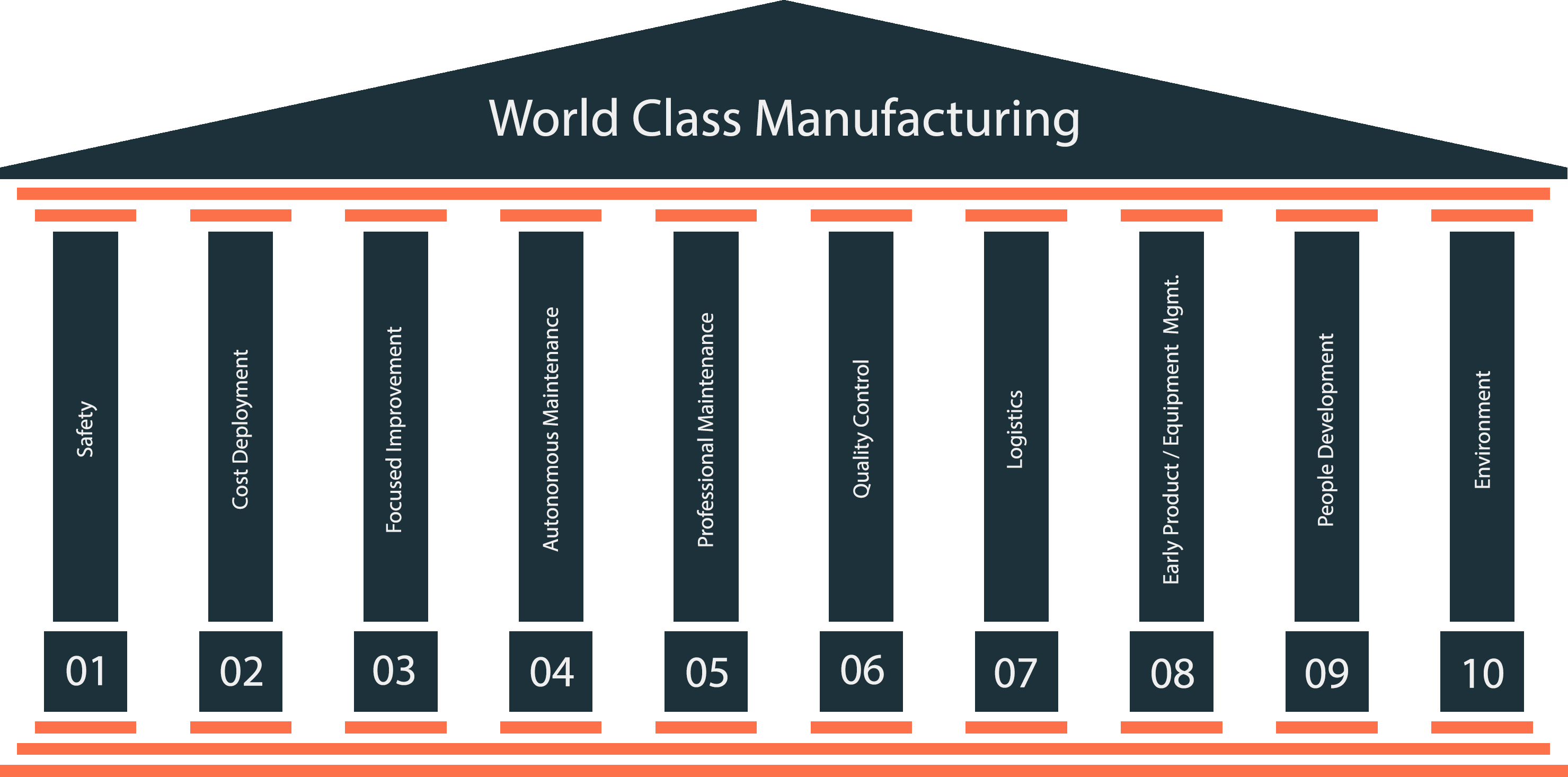
There are several pillars that form the foundation of World Class Manufacturing (WCM). While the specific pillars may vary depending on the organization and industry, the following are some of the most commonly recognized pillars of WCM:
By focusing on these ten pillars, organizations can achieve high levels of efficiency, quality, and customer satisfaction, while also reducing costs and minimizing waste in the production process.
SPOTLIGHT
The Hershey Company is redefining the role of the frontline worker through digital transformation — not by replacing people with technology, but by empowering people through technology.
There are a number of strategies businesses can employ to improve workplace efficiency and production procedures. Examples include:
WCM sets the standard for excellence for all manufacturing processes across an organization. You can become a top manufacturer despite the size of your operation or resources.
The following tips on becoming a world class manufacturer can help get you started:
It’s important to carefully study key performance indicators (KPIs) to better gauge if workers are implementing world class manufacturing approaches throughout the factory floor.
Some important metrics to track are:
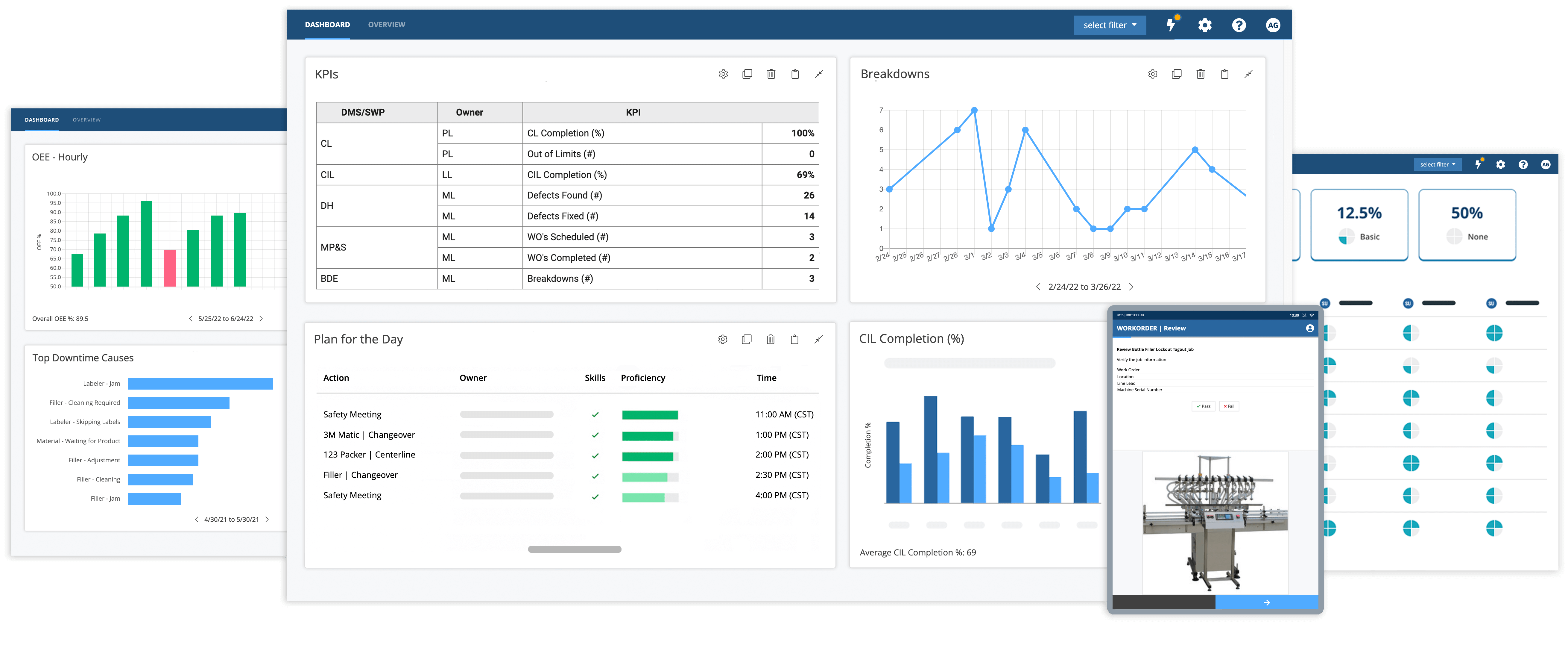
World class manufacturing depends on more than standardized processes alone. To sustain improvements in quality, cost, delivery, safety, and continuous improvement, manufacturers need the ability to capture operational knowledge, guide frontline execution in real time, and turn plant data into action.
Augmentir’s Industrial AI Suite helps manufacturers extend world class manufacturing principles beyond documentation and audits by embedding intelligence directly into frontline operations. Manufacturers can digitize and standardize work, guide operators and technicians with context-aware support, capture tribal knowledge from experienced workers, and identify opportunities to improve productivity, quality, and uptime. Augmentir’s platform combines Generative and Agentic AI with connected worker capabilities, digital workflows, skills management, and predictive operational insights to help teams continuously improve execution on the factory floor.
Augie, Augmentir’s Industrial AI assistant, helps bring these capabilities to life in day-to-day operations. Augie supports manufacturers with content creation, work assistance, troubleshooting, and operational insights, helping frontline teams find answers faster, make better decisions, and execute work more consistently. With Augie, manufacturers can support less experienced workers, reduce variability across shifts and sites, and accelerate continuous improvement by delivering the right guidance at the point of work.
See how Augmentir’s connected worker platform can help you implement world class manufacturing within your operation.
Dive further into how world class manufacturing can help your business by exploring the following content: