Posts

The benefits of digital work instructions go far beyond simply standardizing work. The real benefit is in personalized guidance and support for today’s workers.

Digital work instructions are step-by-step directions on the best way to complete any task, from basic maintenance to fixing equipment. These digitized instructions are electronic versions of work procedures that are kept in a centralized system so workers can easily access them to work on tasks or to make timely decisions on projects. While the benefits of digital work instructions are numerous, the real benefit in manufacturing comes when digital work instructions can be personalized to the unique needs and skills of each worker.

So say goodbye to static documentation and hello to a new era of personalized digitization. If you’re interested in learning the real benefits of digital work instructions, read on about the following:

How digital work instructions are transforming manufacturing processes

Traditional instructions on paper can slow down a manufacturing operation. They can be lengthy, become quickly outdated, and are often full of mistakes. With paper-based reporting, for example, workers may forget to note the condition of equipment or update a faulty procedure.

Fortunately, digital instructions are an ideal solution. They offer visual demonstrations, how-to videos, and other resources for completing tasks. Most importantly, when digital work instructions are managed and delivered through a connected worker solution, they can be kept up-to-date to ensure compliance and product quality. According to Quality Magazine, not only do digital work instructions support overall enterprise productivity, but they also provide workers with an improved level of control over their work through enterprise data and automated insights.
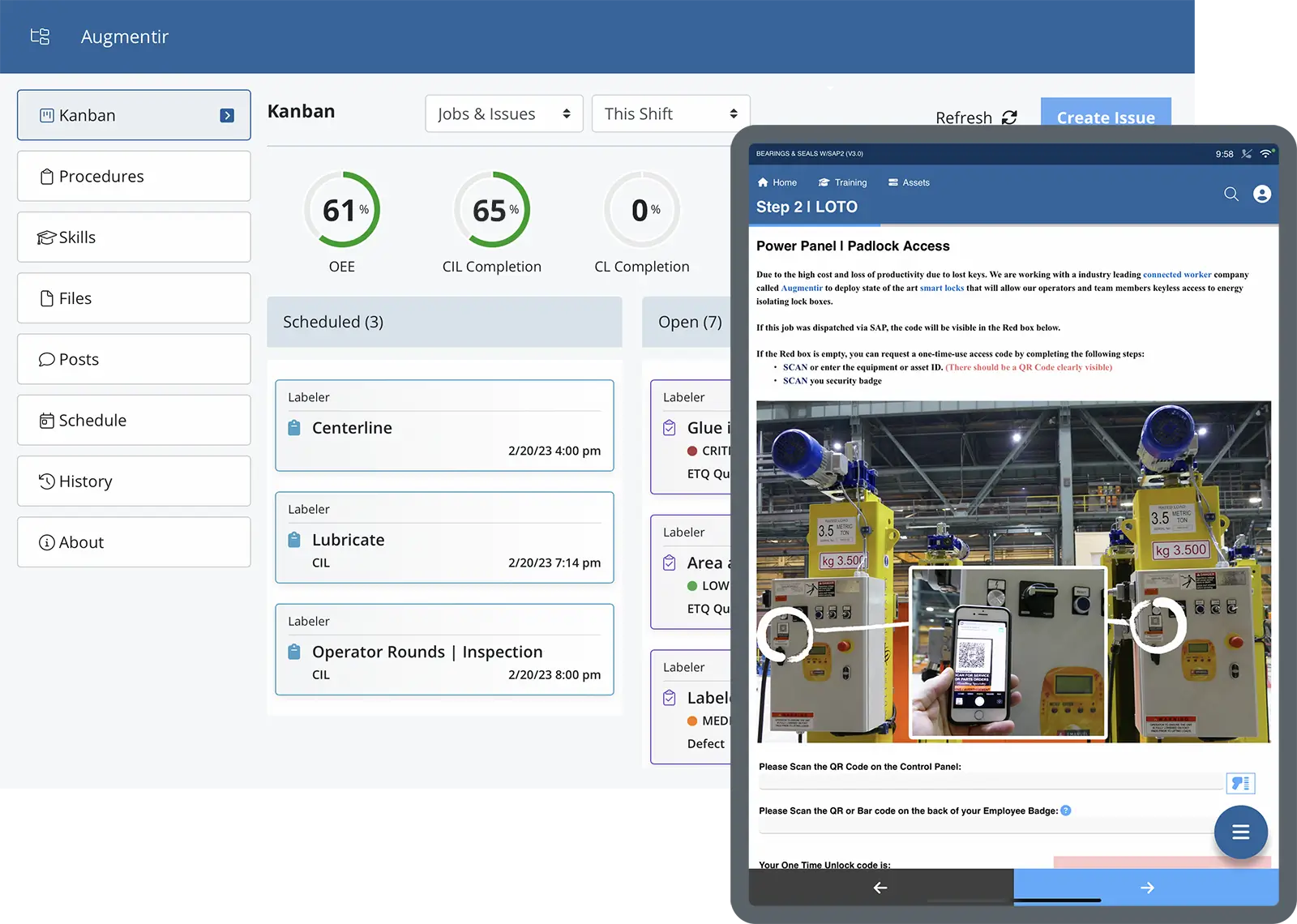
benefits of digital work instructions

When you digitize your procedures, they can be accessed and kept up to date from wherever employees work. They can be enhanced with visual aids, contextual information, and augmented reality experiences to guide workers through complex jobs. Best of all, workers are less likely to make mistakes or miss steps when they can easily refer to clear and visually engaging information.

Digital work instructions are maintained via a connected worker solution, and delivered through mobile or wearable devices on the shop floor. These solutions can be coupled with AI-powered software to further help companies digitize production procedures.

This leads to greater worker productivity and output.

The real benefits of digital work instructions

Digital work instructions provide countless advantages when implemented throughout your entire organization, including improved production processes, decreased downtime, greater operational competence and safety, as well as support for a centralized database of knowledge. On their own, they deliver standard work guidelines but fail to consider the unique skills of each worker, which is increasingly important in today’s evolving and labor-constrained workforce.  The typical one-size-fits-all approach to managing, guiding, and supporting employees won’t cut it in today’s market.

Businesses need a solution that helps them improve manufacturing processes and meet their workers where they are.

This is where AI-based solutions come in.

Using AI-based connected worker solutions, organizations can digitize and easily manage skills tracking and training programs and connect them with frontline operations. Embedded AI can dynamically optimize work processes to deliver training in the flow of work, tailored support, and more. Solutions that combine skills tracking capabilities with connected worker technology and on-the-job digital guidance can deliver significant additional value. Data from actual work performance can inform workforce development initiatives allowing you to target your training, reskilling, and upskilling efforts where they have the largest impact.

It can generate an abundance of valuable data to provide tailored training support and skills endorsements and identify workforce opportunities. These benefits extend beyond simply standardizing work to include:

1. A more motivated, more engaged workforce

An organization’s commitment to cultivating its team’s skills can influence their attitudes toward the job. A worker is likelier to perform better when valued and appreciated. Digitized skills tracking also ensures that workers are qualified to perform their job.

2. Mitigate risk and ensure safety

Solutions that include personalized work instructions that incorporate worker skills allow organizations to validate at the time of work assignment who has the skill level to safely perform a specific task. This helps to mitigate risk and ensure safety.

3. Intelligently assigning work

Ensure the right person is assigned to the right job. Manage work assignments based on skill level, endorsements, and actual job performance.
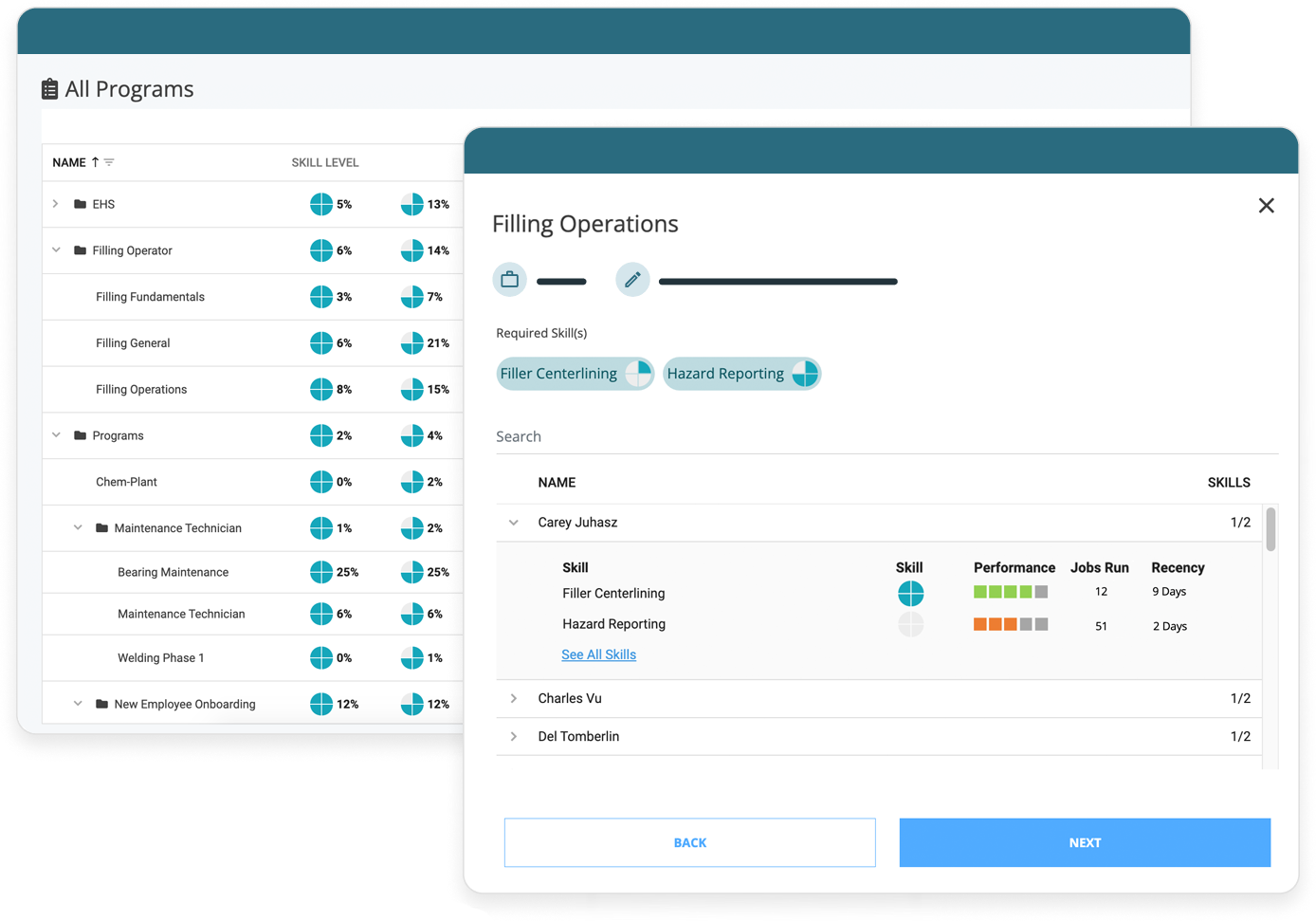
skills taxonomy

4. Closes the skills gap

Tracking skills is a great way to identify gaps between the skills employees already have and the skills they need. With this information, the company can arrange for additional training or other ways to invest in their employees. Keep in mind that as your manufacturing organization evolves and grows, so should your employee skillset.

6. Identify upskilling or reskilling opportunities

Use data from actual work performance, combined with an employee’s current skills and endorsements to inform your reskilling and upskilling decisions. Knowing where improvements need to be made can close any learning gaps and boost the overall success of a company. Optimizing your workforce can help improve productivity in every department, giving your company a competitive edge in today’s market.


Connected worker solutions that combine skills management with digital work instructions, collaboration, and knowledge management are uniquely suited to optimize today’s variable workforce. AI-generated insights are pulled from patterns identified across all work activity in real-time. These insights identify where new and experienced workers may benefit from either reskilling or upskilling.

This combination of smart digital technology can also leverage your training resources, such as instructional videos, written instructions, or access to remote experts, to deliver personalized guidance for the worker to perform their best. These tools intelligently work together to help you assign workers to procedures based on required skill levels.

FAQs about digital work instructions

What is the purpose of digital work instructions?

Digitized work instructions provide clear, step-by-step directions on how each manufacturing task should be performed. They are kept in a centralized database for real-time view of procedures, how-to videos, training opportunities, and more. Companies implement them in order to improve workers’ procedural knowledge, ensure standard work compliance, reduce mistakes, and raise production quality overall.

How can digital work instructions help manufacturers?

Digital work instructions help manufacturers create a more productive workforce that values detail, quality, and learning. Work instructions can be updated to fit best practices, reduce human error, and provide learning opportunities with visual cues like videos, pictures, augmented reality experiences, and more.

Which work instruction software is right for me?

Although there are different software programs out there, Augmentir is the world’s leading connected worker solution, and the only solution that uses AI to personalize instructions based on individual worker proficiency and skill levels.

How Augmentir’s digital solutions can help

Digitizing work instructions is a great start to address manufacturing issues, however, alone, it won’t help completely solve some of the biggest workforce challenges. It’s not enough to simply move from paper-based to digital work instructions.

We must go a step further, for example, Augmentir’s platform provides complete digital workflow authoring tools that allow you to not only quickly convert your paper-based processes to digital work instructions, but also use AI to dynamically personalize them to the needs of your individual workers.

  • Digital work instructions, augmented with visual aids, contextual information, and industrial collaboration tools, help intelligently guide workers through complex jobs
  • Complete workflows allow you to digitize complex business processes
  • Embedded AI dynamically optimizes work procedures and workflows to deliver in-situ training and support

 

See Augmentir in Action
Get in Touch for a Personalized Demo

Learn how Digital Standard Work effectively transforms manufacturing production and enables operational excellence.

Manufacturing organizations are feeling the pressure of increased customer demands, skilled labor shortages, and intense shifts in their frontline workforces, however, they can effectively overcome these obstacles with digital standard work enabled by smart connected worker technology. Digital standard work promotes operational excellence in manufacturing through facilitated knowledge-sharing, enhanced process standardization, increased employee engagement, improved workforce agility, and overall optimization of workforce abilities.

digital standard work in manufacturing

Standardized work in manufacturing (centerlining, machine setup/maintenance, inspection checklists, workforce training, lubrication procedures, etc.) is effective for continuously improving the most efficient and safe methods for performing work to meet customer demand while minimizing waste. Digital Standard Work takes these processes one step further, enhancing them with digital technology to establish a true culture of continuous improvement where frontline workers and shop floor processes benefit from digital workflows, collaboration, AI-powered guidance, generative AI assistants, real-time access to centralized knowledge bases, and more.

By redefining standard work for the digital age, manufacturers can achieve operational excellence through increased efficiency, quality, flexibility, and innovation across their frontline workforces. Read more on Digital Standard Work and how it effectively transforms manufacturing production and enables success:

Digitizing Standard Work in Manufacturing

According to Forbes and McKinsey, through digital tools manufacturers can reduce machine downtime by 30% to 50% and quality-related costs can be reduced by 10% to 20%. Effectively digitizing manufacturing standard work through smart, AI-driven connected worker technology involves:

  • Interactive Digital Work Instructions
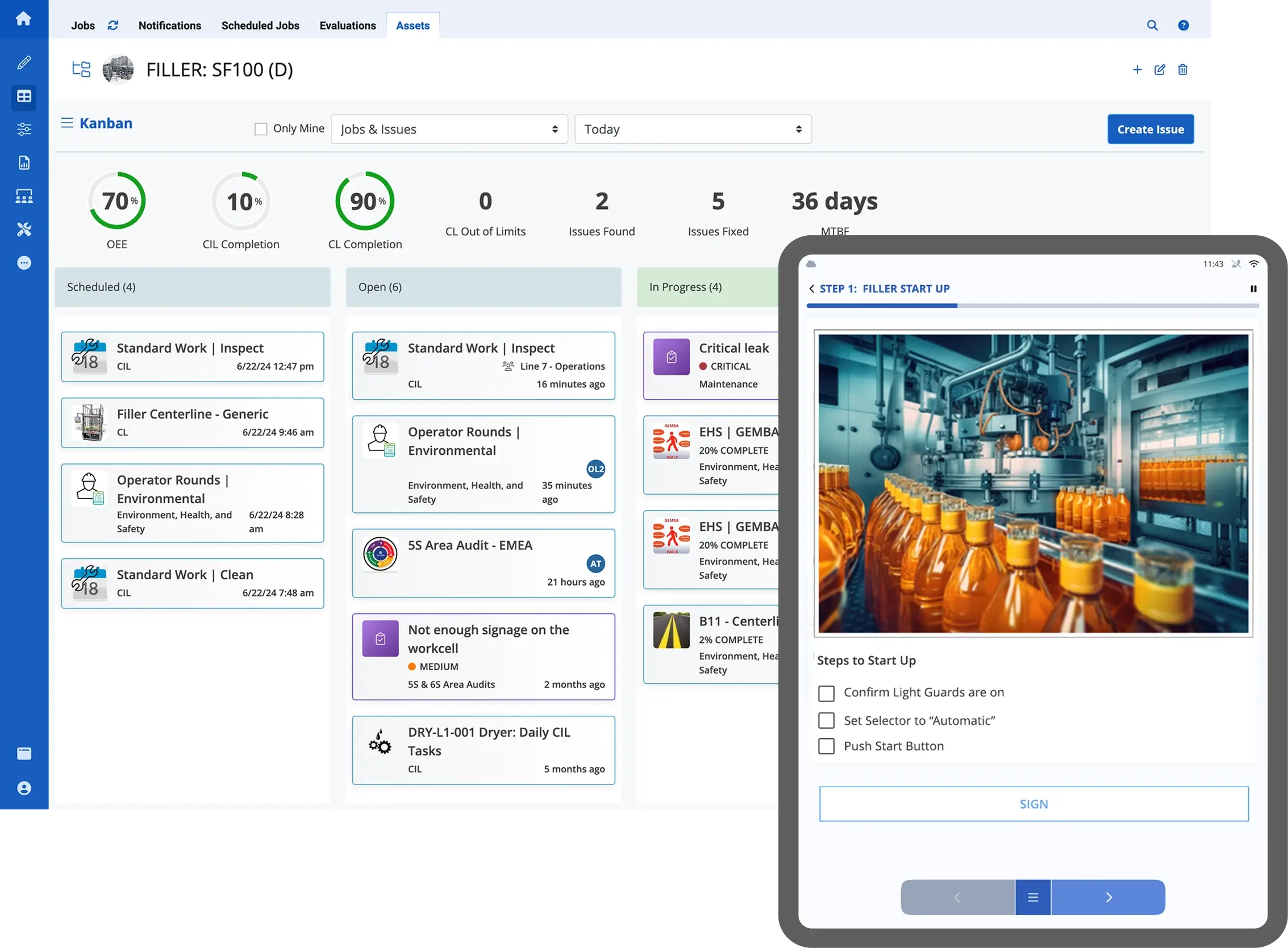
    Replace paper-based standard operating procedures (SOPs) with interactive digital work instructions that include multimedia elements like videos, images, and animations. These can be accessed by workers on tablets, wearables, and other mobile devices right on the shop floor.
  • Data Capture and Integration
    Leverage smart tools and sensors to automatically capture shop floor data from the manufacturing process, such as torque values, cycle times, and quality checks. This data can be integrated into the digital work instructions to provide real-time feedback and ensure adherence to standards.
  • Workflow Automation
    Automate non-value-added tasks like data entry, approvals, and documentation through connected worker platforms. This streamlines workflows, reduces errors, and frees workers to focus on value-adding activities aligned with standard work.
  • Knowledge Management
    Digitize and centralize tribal knowledge and tacit knowledge, best practices, and process documentation in a connected worker platform. This ensures standardized methods are easily accessible and updatable for consistent knowledge sharing across the workforce.

Using smart, connected worker platforms to digitize and optimize standard work in manufacturing drives improved productivity, ensures better and more consistent product quality, and fosters a safer work environment for enhanced operational success. Connected worker platforms that digitize standard work can also be used to support a company’s broader IWS  (integrated work systems) strategy, which helps improve operational excellence in manufacturing.

Pro Tip

Using a low-code no-code workflow builder simplifies the creation of complex digital workflows for frontline work processes. Furthermore, integrating remote collaboration tools facilitates real-time guidance, knowledge sharing, and the ability to update standard work procedures based on captured tribal knowledge.

A

Engaging Frontline Workers with Digital Standard Work

As manufacturing workforces shift due to retirement and tribal knowledge loss, effective workforce training has become critical for continued success. Interactive digital interfaces, augmented and enhanced capabilities, and wearable technologies make standard work practices like workforce training more engaging and accessible, improving workforce adoption and adherence.

Digital tools facilitate information visibility and knowledge sharing among frontline workers, enabling them to learn from each other, share best practices, and contribute to a culture of continuous improvement. By tracking and analyzing performance data from digital systems, manufacturers can identify top performers, provide personalized feedback, and recognize achievements, fostering a sense of engagement and motivation among frontline workers.

Digital Standard Work empowers frontline workers by involving them in process improvements, recognizing their contributions, and providing opportunities for learning and growth, leading to increased job satisfaction and commitment. By leveraging digital technologies and interactive interfaces, manufacturers can transform Standard Work procedures into engaging and empowering experiences for their frontline workforce, driving productivity, quality, and a culture of continuous improvement.

Most importantly it gives manufacturing frontline and factory staff the tools they need to be successful and thus create a more satisfied environment where employees come to work and feel good about what they are doing and how they are doing it.

Driving More Effective Collaboration

Digital standard work also facilitates better collaboration across your frontline teams. Effective communication starts with digital tools, and by implementing digital standard work with connected worker technology, manufacturers can connect frontline team members across shifts, departments, locations, and languages, improving visibility into workforce planning, training, skills tracking, daily management, troubleshooting, and more.

industrial collaboration with augmentir

From frontline workers to executives, a digital standard work strategy that leverages connected worker technology allows employees to collaborate seamlessly and easily access information. Connected worker solutions that include industrial collaboration tools allow workers to virtually connect to subject matter experts for remote guidance and assistance. These software tools are becoming commonplace in manufacturing and other industrial settings, where companies are faced with an increasingly distributed and remote workforce, yet still require team collaboration to help troubleshoot and resolve issues. In a nutshell, workers can get more done with greater accuracy in less time.

Interested in learning more?

If you’d like to learn more about how Augmentir and our AI-powered connected worker solution digitizes standard work, streamlines operations, improves communication, and empowers frontline workers with the tools and information they need, schedule a demo with one of our product experts.


See Augmentir in Action
Get in Touch for a Personalized Demo

Discover how Augmentir’s Gen AI Suite and Augie transforms how manufacturers support frontline activities and personnel.

If you haven’t heard about Augie yet, you’re missing out on one of the most important AI technologies in manufacturing.

augie industrial gen ai suite - the next frontier in ai for manufacturing

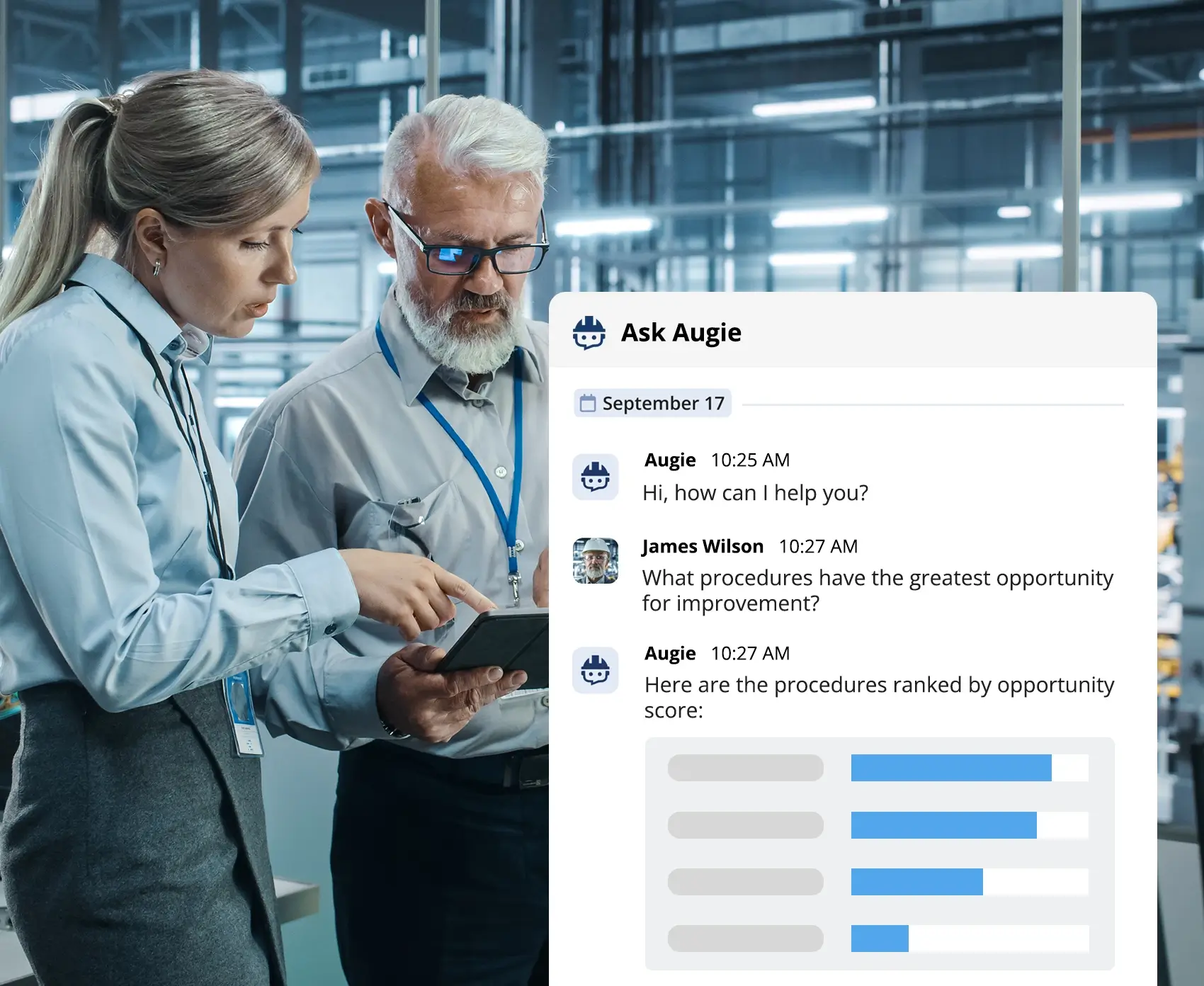
Augie, a suite of Industrial Generative AI tools from Augmentir, is revolutionizing the way manufacturing teams operate by combining advanced AI capabilities with practical, human-centric applications. Designed to empower frontline workers and optimize industrial processes, Augie uses generative AI and the power of advanced Large Language Models (LLMs) to create adaptive workflows, provide real-time guidance, transform digital content creation, and analyze data to deliver actionable insights. It bridges the skills gap by offering personalized support and training while improving productivity and reducing downtime. Whether it’s streamlining operations or fostering innovation, Augie is setting a new standard for how AI can drive efficiency and empower workers in the manufacturing industry.

Read below to learn more about the Augie GenAI Suite and what it means for the future of industrial work.

The Next Phase of AI in Manufacturing is Here

Augie from Augmentir is redefining the next phase of AI in manufacturing by seamlessly integrating generative AI into frontline operations to enhance productivity, agility, and worker empowerment. Augie includes a complete suite of AI-powered assistants and Factory Agents that help bridge the skills gap, accelerate onboarding, and ensure frontline workers are equipped with the knowledge they need to succeed.

The Augie Industrial Gen AI Suite transforms every stage of the Connected Worker Journey.


augie transforms your connected worker journey


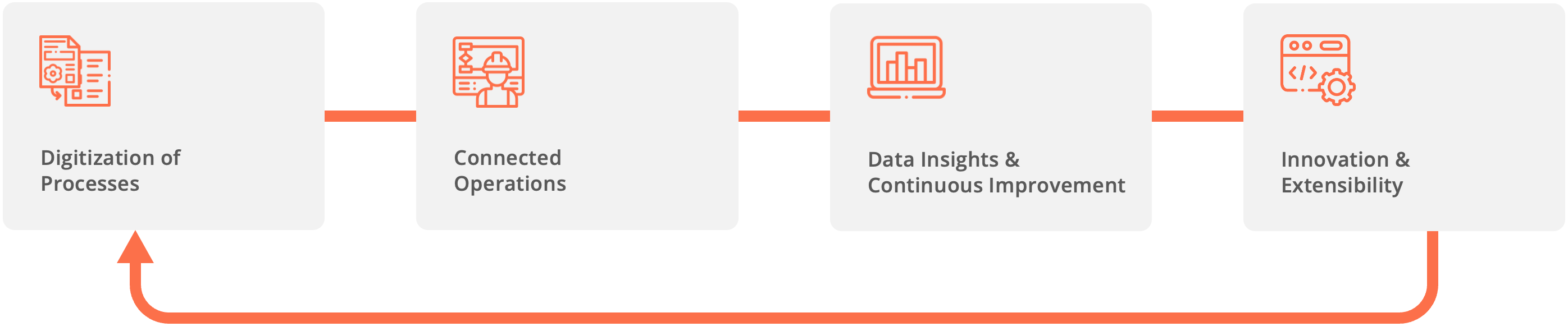
Augie is transforming every stage of the connected worker journey by providing a complete suite of AI tools that evolves alongside an organization’s needs. It begins with the digitization of processes and the conversion of static, paper-based content into dynamic, interactive digital workflows, making operations more accessible and efficient for frontline workers. As operations become connected, Augie leverages real-time data to deliver actionable insights, enabling companies to identify inefficiencies, improve workflows, and drive continuous improvement.

Beyond operational enhancements, Augie fosters continuous innovation through its extensibility and seamless integrations with other enterprise systems, creating a unified, scalable ecosystem that adapts to new challenges and opportunities. By addressing every phase of the connected worker journey, Augie empowers organizations to not only modernize their operations but also build a foundation for long-term success and innovation.


Accelerate Your Transition to Digital

Augie is a powerful tool for accelerating the transition from paper-based to digital operations in manufacturing and industrial settings.

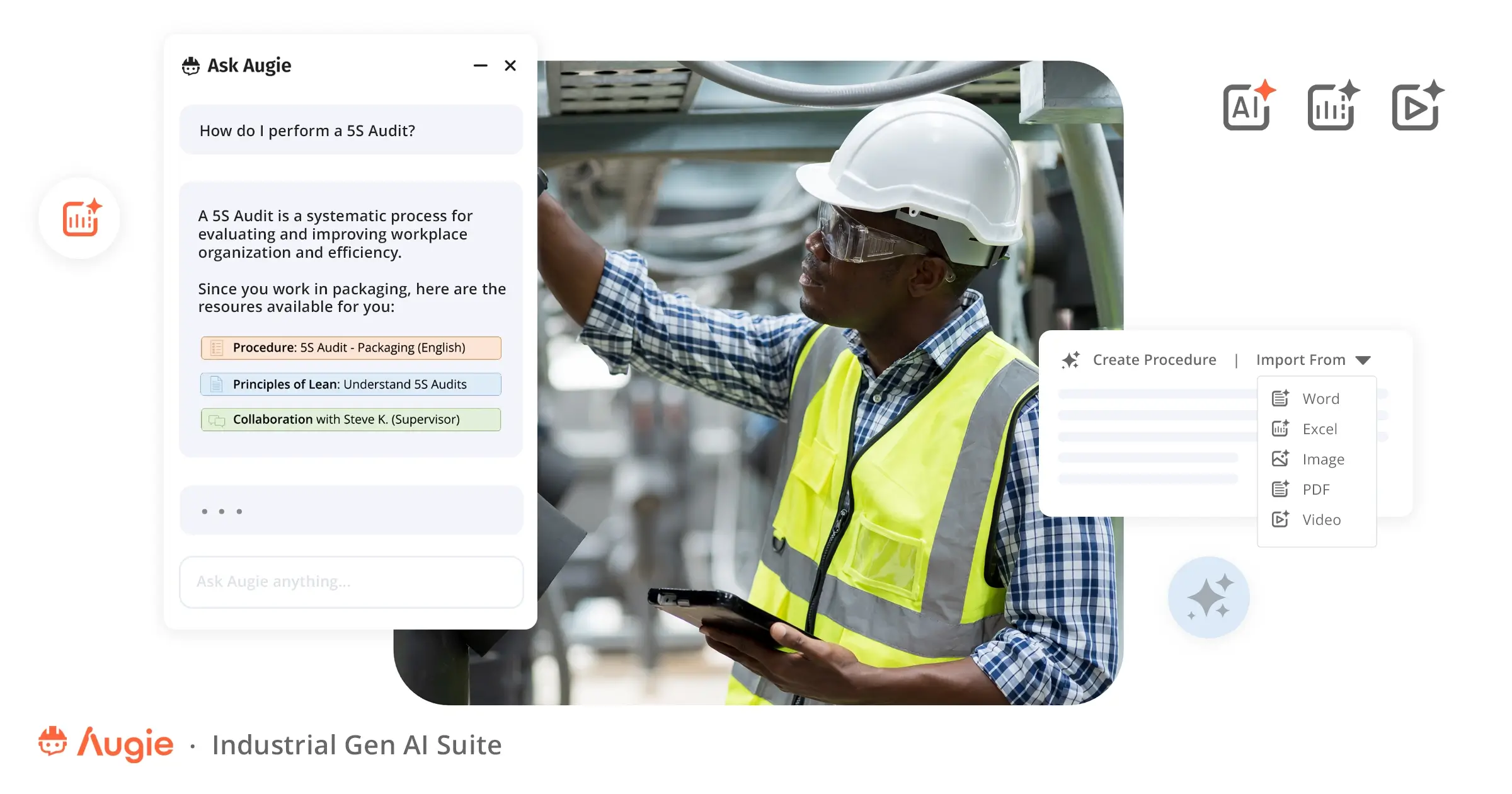
Quickly generate standard work procedures from Excel, Word, PDFs, images, or videos. Augie takes your existing content and generates digital smart forms, checklists, and digital work instructions.


“This is a significant game-changer for our digitization efforts. Migrating our existing paper-based SOPs and work instructions to a modern, digital format used to be a major roadblock for us. The Augie Content Assistant reduces this effort by 75%, which is helping us accelerate our digital transformation efforts.”

VP Global Engineering Services
Fortune 500 Consumer Goods Manufacturer


Deliver Context-aware AI for Frontline Workers

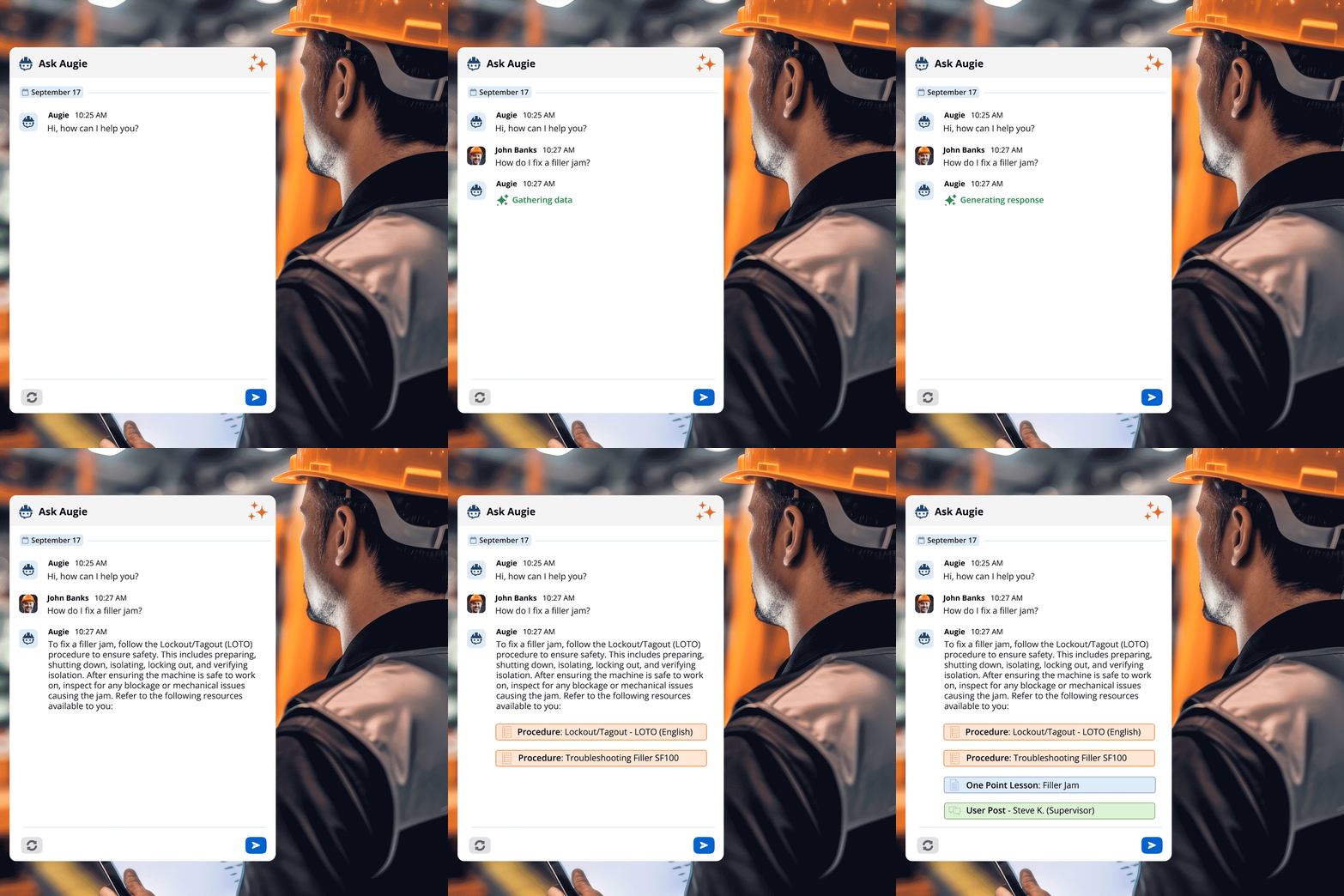
Augie leverages context-aware AI to deliver highly personalized and situationally relevant support to frontline workers, revolutionizing how they interact with technology and perform their tasks. By analyzing real-time data from equipment, workflows, and worker inputs, Augie can understand the specific context of a worker’s environment—such as their current task, skill level, or the operational status of machinery—and provide tailored guidance and recommendations.

augie gen ai suite

For example, if a worker encounters an equipment issue, Augie can instantly offer troubleshooting steps or alert maintenance teams, ensuring minimal downtime. This context-awareness not only enhances productivity but also improves safety by proactively identifying risks and suggesting corrective actions. By aligning AI assistance with the unique needs of each worker and situation, Augie empowers frontline employees to work more effectively, confidently, and efficiently.

Uncover New Opportunities for Continuous Improvement

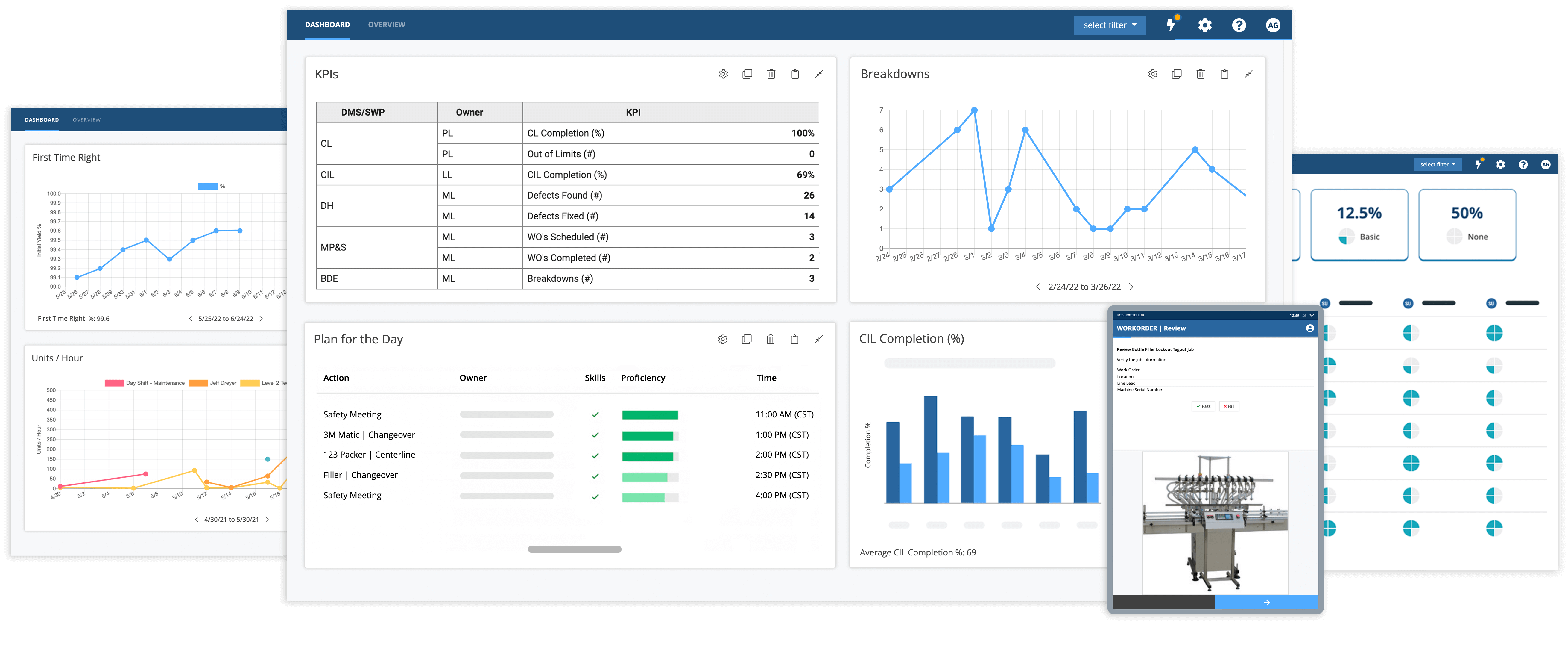
With Augie, companies can identify opportunities for continuous improvement, get access to a clear view into at-risk KPIs, measure training effectiveness, and surface AI-based insights into where your operations are succeeding or failing.

augie data assistant continuous improvement


Augie is undoubtedly the next frontier in AI for manufacturing, offering a transformative solution that redefines how companies approach productivity, workforce empowerment, and operational efficiency. By seamlessly integrating generative and context-aware AI, Augie provides frontline workers with real-time, personalized support, bridging the skills gap and driving innovation at every level of the organization. Its ability to digitize processes, optimize workflows, and enable smarter decision-making sets a new standard for what’s possible in the age of Industry 4.0.

Now is the time to embrace the future of manufacturing—don’t miss out on the opportunity to empower your workforce and elevate your operations with Augie. Take the first step toward a smarter, more efficient manufacturing environment today.


See Augmentir in Action
Get in Touch for a Personalized Demo

Discover key strategies to boost production efficiency in manufacturing—maximize output, cut waste, and improve operations with smart, practical solutions.

In today’s competitive industrial landscape, production efficiency in manufacturing is a critical factor that directly impacts profitability, customer satisfaction, and long-term business success. To achieve production efficiency, the actual output must match the optimal standard output, which involves minimizing waste, reducing downtime, optimizing labor, and ensuring consistent quality at every step of the manufacturing process.

production efficiency in manufacturing

Introduction to Production Efficiency

Production efficiency refers to the ability of a manufacturing process to produce the maximum output with the given resources, while minimizing waste and reducing costs. It is a key concept in economics and operational analysis, essential for businesses to remain competitive in the market. Achieving production efficiency involves optimizing processes, reducing waste, and improving productivity to achieve higher profitability and competitiveness. By focusing on improving production efficiency, manufacturers can increase their production capacity, reduce costs, and enhance product quality. This, in turn, leads to increased customer satisfaction and loyalty, as high-quality products are delivered consistently and on time.

What is Production Efficiency in Manufacturing?

Production efficiency refers to the ability of a manufacturing operation to produce goods using the least amount of resources—time, materials, and labor—without compromising on quality. An efficient production line runs smoothly, minimizes bottlenecks, and ensures equipment and workforce are fully utilized. To measure production efficiency, metrics such as Overall Equipment Effectiveness (OEE), cycle time, yield rates, and labor productivity are used.

Pro Tip

Using digital tools, AI-powered analytics, and connected worker platforms are revolutionizing how factories operate. These technologies provide visibility into operations, uncover hidden inefficiencies, and support agile decision-making.

A

Why is Production Efficiency Important?

In manufacturing, even small inefficiencies can lead to significant cost overruns, missed deadlines, and quality issues. Improving production efficiency is essential for maximizing output while minimizing input—helping manufacturers stay competitive, agile, and profitable in an ever-evolving market. Manufacturing efficiency, on the other hand, focuses specifically on optimizing the effectiveness of manufacturing processes, workforce deployment, and overall productivity on the shop floor. Efficient production processes enable manufacturers to do more with less, which not only boosts the bottom line but also enhances the overall customer experience.

Here are some of the key benefits:

Lower Operational Costs

By reducing machine downtime, optimizing labor, and minimizing material waste, companies can optimize processes to significantly cut overhead costs and improve profitability.

Reduced Waste and Rework

Quality control ensures that products are made right the first time, decreasing scrap rates and minimizing costly rework caused by defects or human error.

Shorter Lead Times

Streamlined workflows and fewer production delays, coordinated through efficient production schedules, mean faster turnaround times, allowing manufacturers to fulfill orders more quickly and meet tight delivery schedules.

Better Resource Utilization

Whether it’s labor, machinery, or raw materials, efficient production ensures every resource is used to its full potential throughout the entire production cycle—maximizing value and reducing idle time.

Higher Customer Satisfaction

Consistently delivering high-quality products on time builds trust with customers and strengthens relationships, leading to repeat business and positive brand reputation. Manufacturers improve efficiency by leveraging modern technologies and real-time data analytics, which helps streamline processes, reduce downtime, and enhance productivity.

Greater Competitiveness in the Market

Manufacturers that improve efficiency can offer better prices, respond faster to market changes, and innovate more effectively—gaining a clear edge over less agile competitors.

Ultimately, production efficiency is not just about internal gains—it’s a strategic advantage that drives growth, scalability, and long-term success.

Key Strategies to Improve Production Efficiency

Here are some proven strategies to improve production efficiency:

1. Implement Lean Manufacturing Principles to Drive Continuous Improvement

Lean manufacturing methodologies focus on improving efficiency by eliminating waste (or “muda”) from every aspect of the production process. Tools such as 5S Audits, Kaizen, and value stream mapping help identify inefficiencies and areas for continuous improvement.

2. Invest in Autonomous Maintenance and TPM

Encouraging operators to handle basic maintenance tasks—such as Clean, Inspect, Lubricate (CIL)—as part of an Autonomous Maintenance and Total Productive Maintenance (TPM) strategy minimizes equipment downtime, improves machine efficiency, and ensures machines run at peak performance.

3. Leverage Digital Work Instructions and Connected Worker Tools

Modern digital approaches like digitizing standard operating procedures (SOPs) and adopting connected worker tools helps ensure consistency, reduce errors, and make it easier to train workers by providing accurate data.

improve production efficiency in manufacturing with augmentir

In a recent survey conducted by LNS Research, more than 70% of the most profitable manufacturers are currently utilizing in Future of Industrial Work (FOIW) initiatives and connected worker technology, with the vast majority of them seeing meaningful progress and delivered corporate value through these workforce initiatives. Connected Worker platforms like Augmentir enable manufacturers to create AI-powered workflows that guide frontline workers through each task efficiently and accurately.

3. Use Real-Time Data and Analytics to Track Key Performance Indicators

Data-driven decision-making is critical for efficiency. Historical data can provide insights into the maximum output achieved by a facility under full capacity, which can help in defining standard outputs accurately. Real-time monitoring of machine performance, operator productivity, and process quality helps identify issues quickly and supports predictive maintenance strategies.

4. Streamline Workforce Management

Matching the right tasks to the right workers based on skills, experience, and availability reduces errors and idle time for any manufacturing company. Smart workforce tools can track training, performance, and certification to ensure optimal labor allocation.

Critical Components of Production Efficiency

Equipment Efficiency

Equipment efficiency is a critical component of production efficiency, as it directly impacts the overall productivity and effectiveness of the manufacturing process. Equipment efficiency refers to the ability of machinery and equipment to operate at optimal levels, with minimal downtime and maintenance. To achieve equipment efficiency, manufacturers can implement regular maintenance schedules, invest in modern and efficient equipment, and provide training to operators to ensure they are using the equipment correctly. By improving equipment efficiency, manufacturers can reduce waste, minimize downtime, and increase overall production efficiency. This not only enhances the reliability of the production process but also ensures that machinery operates at peak performance, contributing to higher output and better product quality.

Capacity Utilization

Capacity utilization is a key performance indicator (KPI) that measures the extent to which a manufacturing facility is using its available capacity to produce goods. It is calculated by dividing the actual output by the maximum potential output and is expressed as a percentage. Capacity utilization is essential for production efficiency, as it helps manufacturers identify areas of inefficiency and optimize their production processes. By improving capacity utilization, manufacturers can increase their production capacity, reduce costs, and improve product quality. High capacity utilization indicates that a manufacturing facility is effectively using its resources, leading to more efficient operations and better alignment with market demand.

Inventory Management

Inventory management is a critical component of production efficiency, as it directly impacts the availability of raw materials and finished goods. Effective inventory management involves managing the flow of goods, services, and related information from raw materials to end customers. By implementing efficient inventory management systems, manufacturers can reduce waste, minimize stockouts, and improve overall production efficiency. Inventory management involves tracking inventory levels, managing supply chains, and optimizing inventory turnover to ensure that the right products are available at the right time. This not only helps in meeting customer demand promptly but also reduces the costs associated with excess inventory and stockouts, contributing to a more streamlined and efficient production process.

Workforce Management

Workforce management (WFM) is a critical component of production efficiency because it directly impacts how well human resources are aligned with operational goals. Here are the key reasons why:

  • Optimal Staffing: WFM ensures the right number of workers with the right skills are available when needed, reducing overstaffing (which increases costs) and understaffing (which leads to delays or quality issues).
  • Productivity Monitoring: Through tracking attendance, breaks, and output, WFM helps identify performance gaps and opportunities to improve workflow or training.
  • Cost Control: Efficient labor scheduling and time management reduce overtime expenses, idle time, and unplanned labor costs.
  • Compliance and Risk Management: Proper WFM systems help companies stay compliant with labor laws, union rules, and safety standards, reducing legal and financial risk.
  • Employee Engagement: Transparent scheduling, fair workload distribution, and career development through performance data can boost morale and reduce turnover, which supports consistent productivity.
  • Forecasting and Planning: WFM tools use historical data to predict future labor needs based on demand, helping operations run smoothly during peak and off-peak periods.

Connected worker platforms are a vital solution for workforce management because they digitize and streamline the way organizations engage with their frontline employees, enabling real-time communication, task coordination, and data capture. These platforms empower workers by providing instant access to schedules, training, and support tools, while giving managers visibility into performance and resource needs. By collecting operational data at the source, they support better forecasting, faster decision-making, and improved compliance with safety and regulatory standards. Ultimately, they enhance agility, reduce inefficiencies, and ensure that the workforce is aligned with evolving production demands.

Improving Production Efficiency with Augmentir

Modern manufacturing is increasingly driven by digital transformation. Tools like Industrial IoT (IIoT), AI-powered analytics, and connected worker platforms are revolutionizing how factories operate. These technologies provide visibility into operations, uncover hidden inefficiencies, and support agile decision-making.

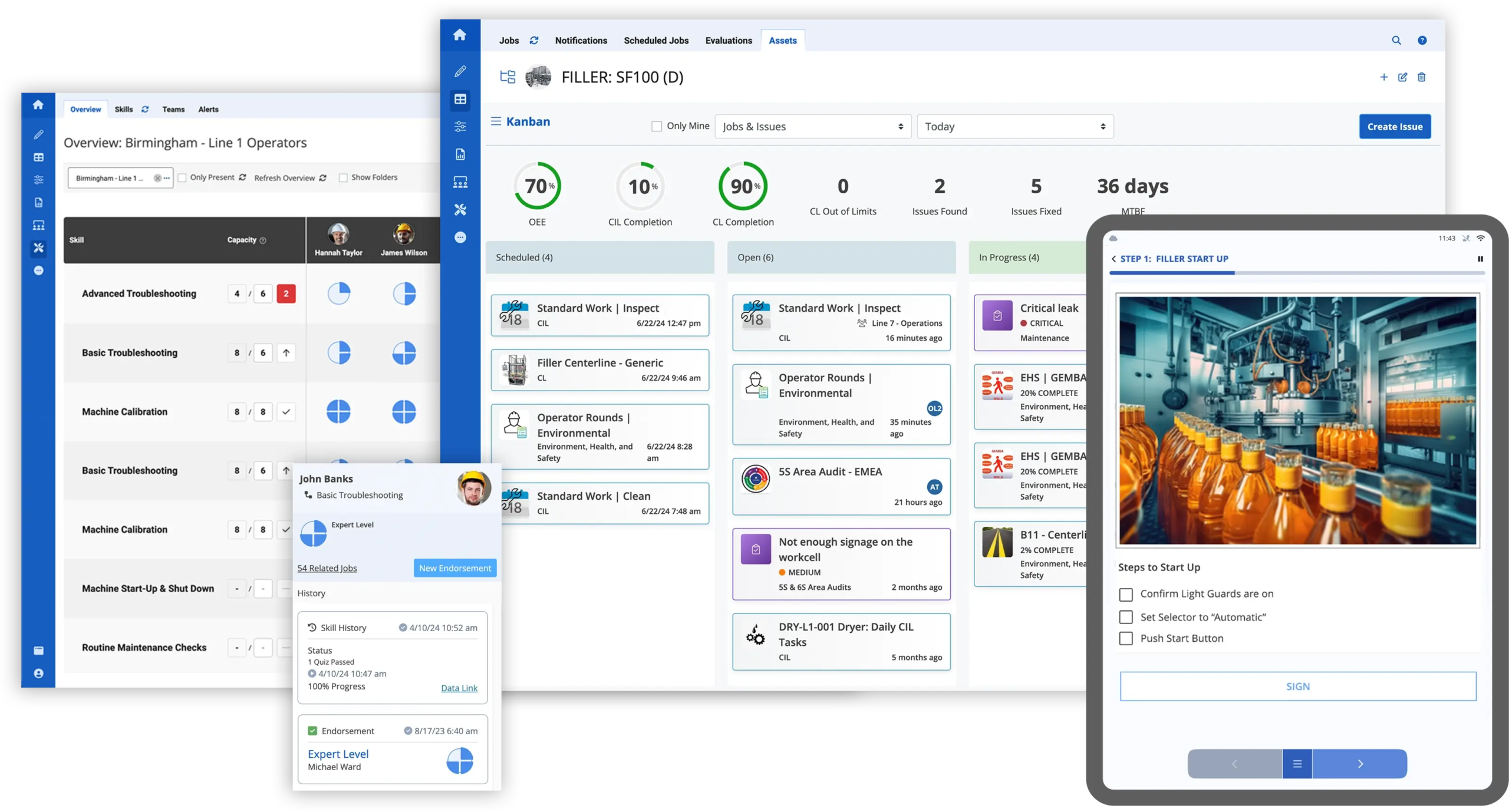
Connected Worker Technology is transforming the way manufacturers approach production efficiency by bridging the gap between frontline workers and digital operations. These platforms equip workers with real-time access to information, interactive digital work instructions, and collaboration tools—right at the point of work. By digitizing tasks, capturing live performance data, and enabling guided workflows, connected worker solutions ensure that every job is done accurately, efficiently, and consistently.

augmentir connected worker platform

With features like AI-driven insights, skills tracking, and remote expert support, Connected Worker platforms help manufacturers identify bottlenecks, reduce errors, and optimize workforce deployment. Tools such as Augmentir go a step further by personalizing guidance based on an individual’s skill level, automatically suggesting improvements, and helping identify opportunities for continuous training and upskilling. Ultimately, Connected Worker Technology empowers teams to work smarter, adapt faster, and drive sustainable gains in production efficiency.

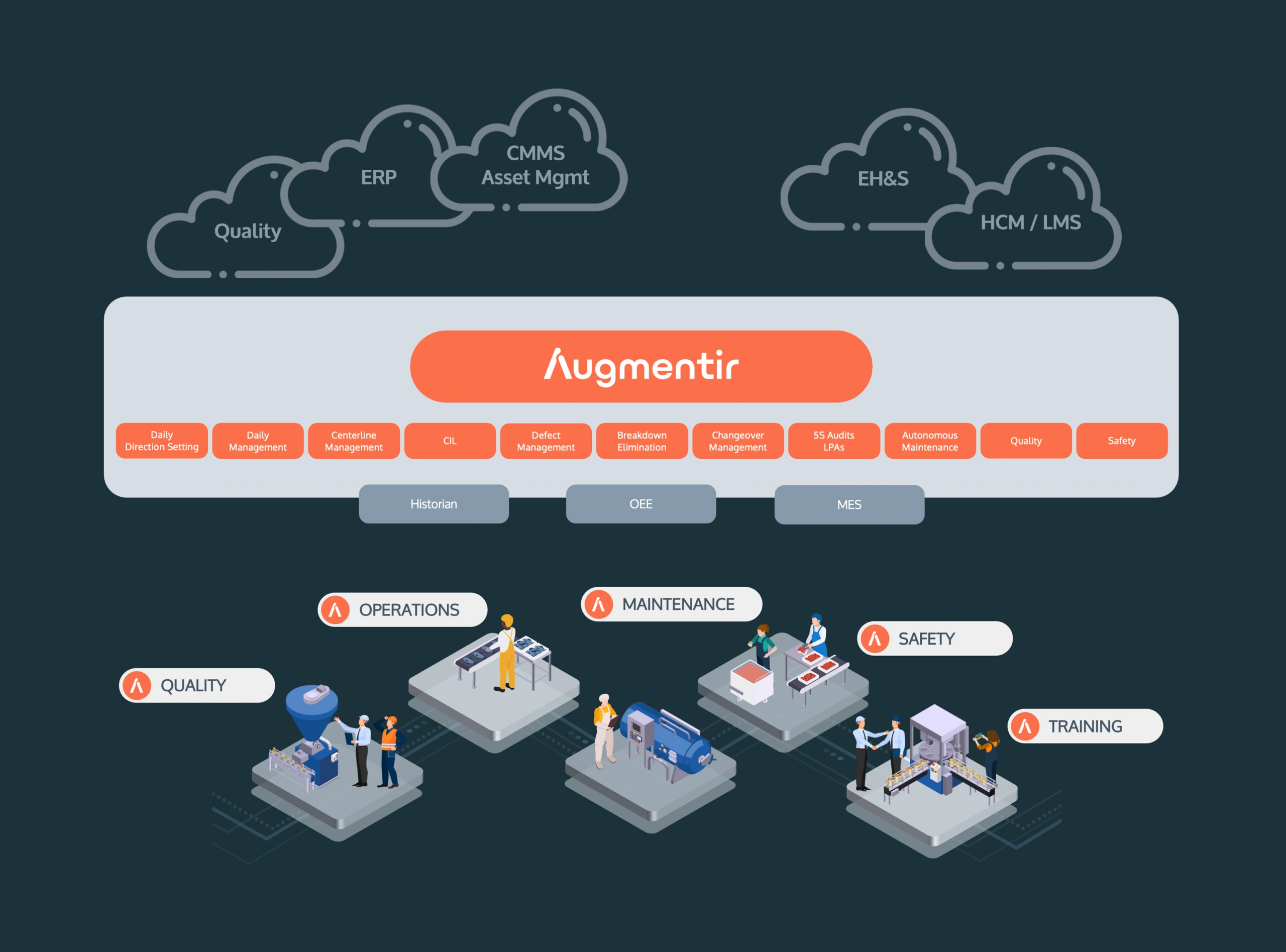
Augmentir serves as a digital frontline operating system for your lean strategy, and helps improve production efficiency. With Augmentir, you can digitize, manage, and optimize all aspects of your frontline operation:

  • Daily Direction Setting (DDS)
  • Daily Management System (DMS)
  • Centerline Management
  • Clean, Inspect, Lubricate processes
  • Defect Management
  • Breakdown Elimination
  • Changeover Management
  • Shift Handover
  • 5S and Layered Process Audits
  • Quality Management on the Shop Floor
  • Safety

augmentir connected worker platform – digital frontline operating system for iws


Contact us today for a live demo.


See Augmentir in Action
Get in Touch for a Personalized Demo

Connected frontline operations platforms are helping manufacturers reduce downtime and provide a foundation for a holistic preventive maintenance strategy.

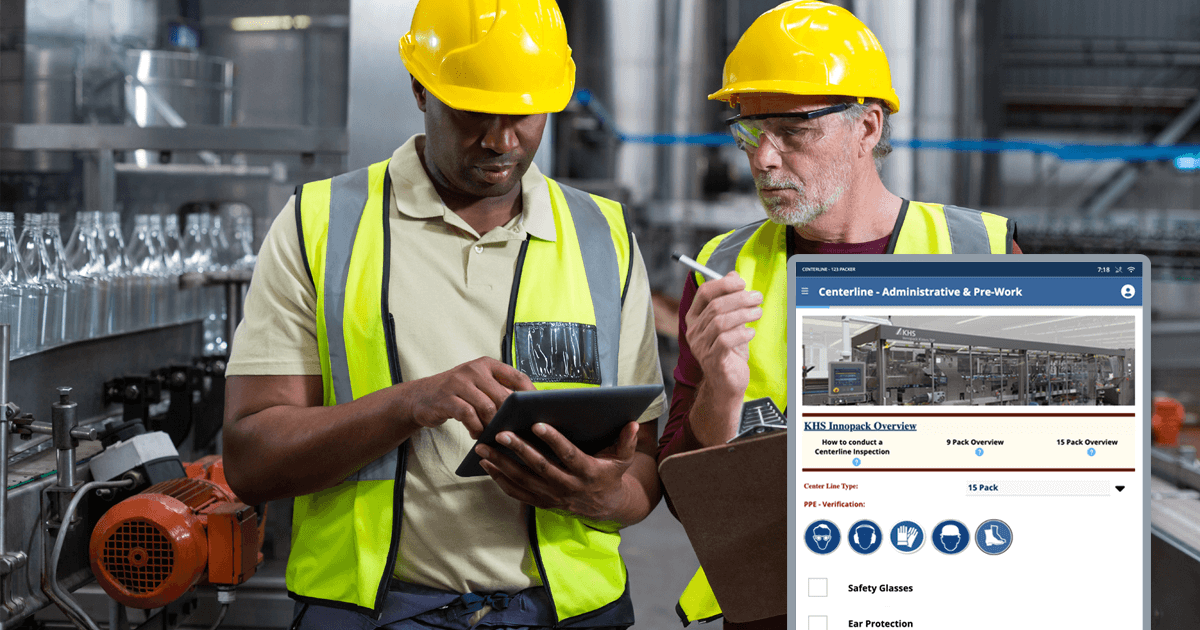
Centerlining in manufacturing is a methodology that uses standardized process settings to assure that all shop floor operations are carried out consistently.

For example, in manufacturing, it pinpoints which machine settings are needed to execute a given process and ensures operators implement those settings to avoid any defects on the shop floor. This works to decrease product and procedure discrepancies by improving machine efficiency.

centerlining in manufacturing

The type of machine configurations that can be centerlined to create quality goods that meet customer expectations range from temperature, speed, and pressure settings to the proper alignment of guard rails. When applied to a procedure, centerlining can substantially increase the number of sellable items, secure uniform product quality, and decrease production costs.

In a nutshell, employing a successful centerlining process can help optimize plant operations and reduce mistakes in product creation.

Learn more about how centerlining can improve everyday operations, and how to centerline a manufacturing process to yield the best output, in the following sections:

Centerlining methodology

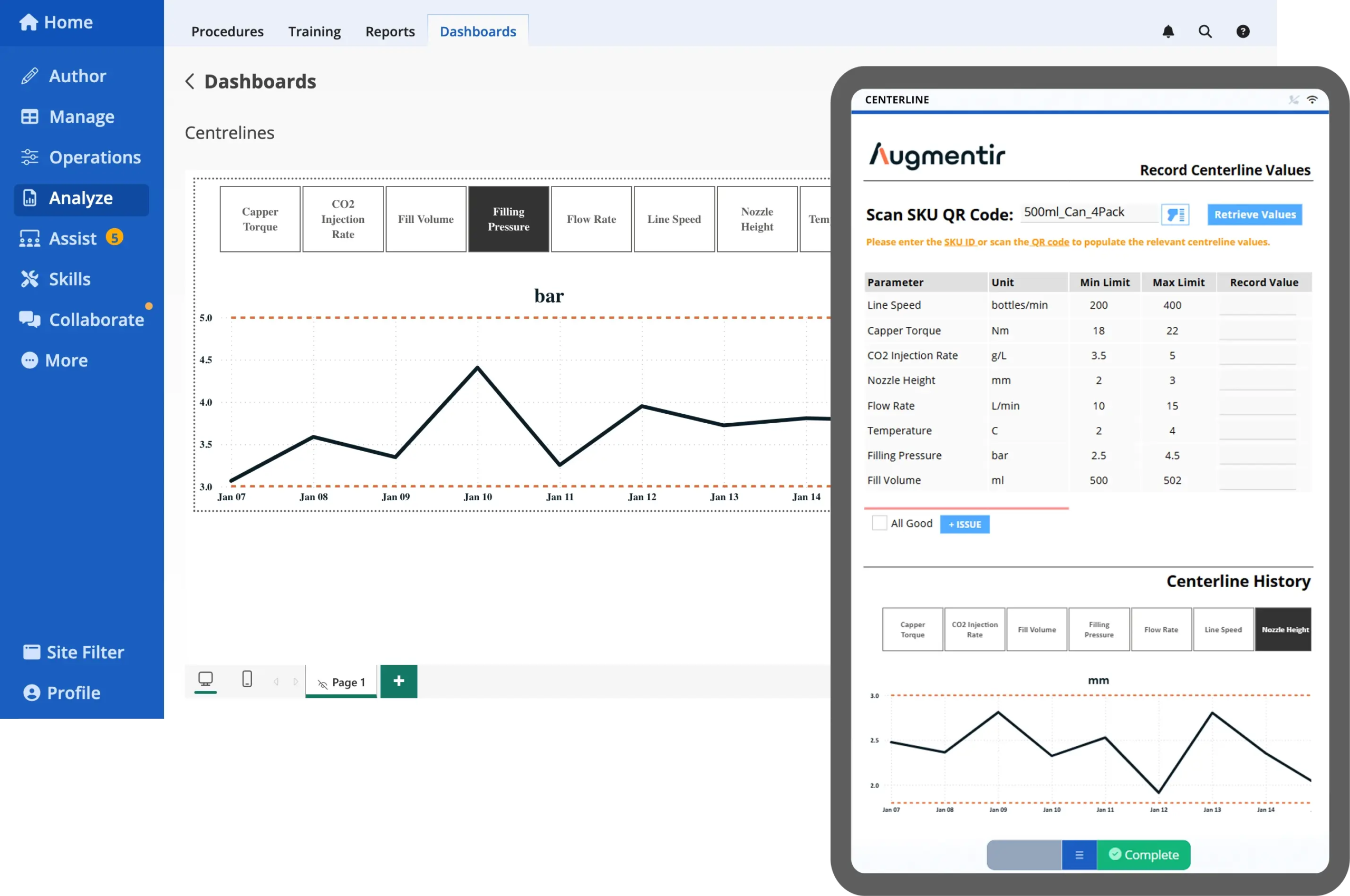
Centerlining works by using specific machine settings per product (pressure, speed, temperature, etc.) to ensure processes are carried out the same way during each assembly line run.

Using the right centerline settings also has a side benefit: it lets operators identify problems as they happen. If workers know which process variables are triggering production delays, they can better control them to boost product quality output.

This can be achieved by creating a statistical process control chart to see which variables are causing interruptions to the assembly line and make any needed changes to the process. Creating a chart can also help workers identify procedures that are affecting the development of goods to ensure continuous improvement.

Centerlining goes hand in hand with total productive maintenance (TPM), a method which utilizes equipment, machine operators, and supporting processes to boost the quality and safety of production protocols.

How manufacturing efficiency can be improved by centerlining

Standardizing the appropriate machine settings can make everyday operations run more smoothly. For example, centerlining the requirements for each product can streamline changeovers, allowing workers to quickly reset their equipment and not lose time when switching to a new product run. This can prevent costly mistakes and reduce waste throughout the shop floor.

It also guarantees that all processes are completed in the same manner. Consistency helps ensure quality, especially when operators are setting up equipment for a production run. Failing to configure the right settings can increase the time for product changeovers and cause product deficiencies.

How to centerline a manufacturing process

Centerlining in manufacturing is a great way to troubleshoot product and procedure variations, oversee operations, and carry out statistical analysis to boost quality assurance and control.

Learn how to centerline a process by following the four steps below.

Step 1: Determine key process variables

It’s crucial to spot process variables that have the greatest effect on product quality to minimize any defects. Potential variables can include pressure, temperature, density, mass, and more.

Step 2: Identify machine settings for each variable

Then, look at which centerline settings can be applied to each process to ensure the creation of quality goods. Again, you’ll want to determine what has worked well in the past and use a statistical process control chart to set variable limits.

Important things to consider are: when the process has worked, which setting was best suited for that procedure, and how the two worked in conjunction with one another.

Step 3: Assess variable impact on production process and product

After you’ve identified the appropriate machine settings, it’s time to monitor how each variable impacts the production process and final product creation. Start by analyzing which assembly line runs yielded the highest production rate, factoring in things like equipment idle time, scrapped parts, rework, etc., to gauge what works and what needs improvement.

It’s vital that you have accurate, clear data to analyze. We recommend digitizing your centerlining process and results to correctly quantify the performance of each variable.

Step 4: Ensure centerline settings are always applied

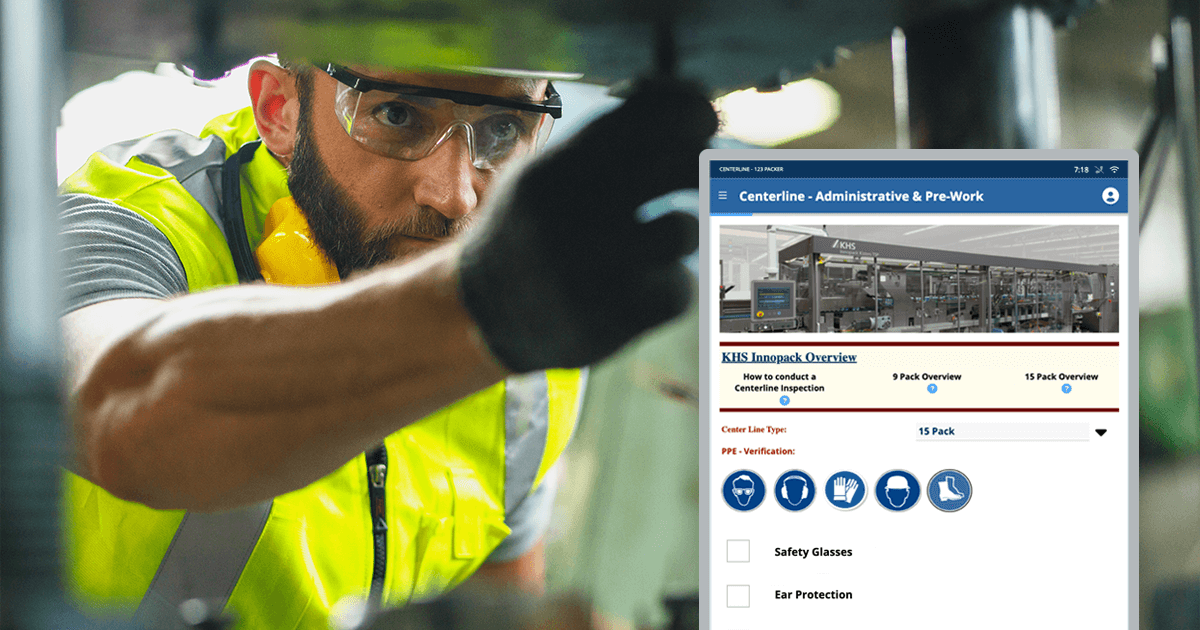
Lastly, make sure that all operators are aware of and educated on how to best implement a centerlining process so that the right settings are applied each time. Failure to do so can result in mistakes and product deficiencies down the line. It’s best to provide all the necessary resources, steps, and training from the get-go to avoid costly errors. Digital work instructions and connected worker tools are a great way to ensure that operators are properly equipped to perform centerlining procedures.

centerlining with augmentir

At this stage, your manufacturing firm should have the proper reporting techniques to evaluate product quality against centerline procedures.

Interested in learning more?

Augmentir is a connected worker solution that allows industrial companies to digitize and optimize all frontline processes that are part of their TPM strategy. The complete suite of tools are built on top of Augmentir’s patented Smart AI foundation, which helps identify patterns and areas for continuous improvement.

augmentir connected worker platform


Connected frontline operations platforms are helping manufacturers reduce downtime and provide a foundation for a holistic preventive maintenance strategy.

Your supply chain turns raw materials into finished products that meet customer expectations. It takes a whole network of people, from suppliers and manufacturers to distributors and partners, working together to produce the best quality products on the market. But how is it possible to build a “world class” supply chain?

According to Harvard Business Review, recent events such as the Covid-19 pandemic have exposed supply chain vulnerabilities and prompted a reevaluation of global approaches to improve resilience. Fortunately, the idea of a supply chain being world-class goes hand in hand with world class manufacturing, and there is a set of guiding principles to follow. Following them will help you successfully operate and manage a manufacturing firm that can remain competitive in the global marketplace.

world class supply chain

In this article, you’ll learn the five steps for building a world class supply chain and how Augmentir can help you transform the process:

  • 5 steps for making your supply chain world class
    • Step 1: Define clear objectives
    • Step 2: Gather necessary data
    • Step 3: Choose a supply chain management system
    • Step 4: Conduct supply chain network analysis
    • Step 5: Refine and improve
  • Elements of world class supply chain management and how Augmentir can help

5 steps for making your supply chain world class

Making your supply chain world class is about meeting or even exceeding customer expectations and delivering top-notch performance every time.

Step 1: Define clear objectives

Start by identifying overarching goals that will create consumer satisfaction. To help define those goals, ask yourself the following questions:

  • How much inventory needs to be stored, and where should it be?
  • Which modes of transportation would best balance out cost versus customer service objectives?
  • Which warehouses should administer which products to people?
  • How many warehouses are needed and what is the role of each?
  • What are the best routes to get products to customers the fastest?

Step 2: Gather necessary data

It’s important to gather the appropriate data to ensure that you’re meeting company-specific goals. For example, you may track data so you can keep an eye on product demand, transportation rates, lead times, and warehouse and inventory expenses.

Step 3: Embrace technology and digitalization

Leverage technology to automate manual tasks, improve visibility, and enhance decision-making. It’s crucial to pick software that addresses all of your production criteria and facilitates your unique business model. Adopt advanced supply chain management systems (SCM), enterprise resource planning (ERP) software, connected worker software, and warehouse management systems (WMS). Explore emerging technologies like blockchain, AI, and robotics to further optimize operations.

Step 4: Conduct supply chain network analysis

Once you’ve picked the perfect supply chain software, it’s time to analyze how well your production processes are faring. Consider evaluating if there are any gaps in product development and how long it takes for goods to be delivered.

Step 5: Refine and continually improve

Carefully examining your supply chain network and processes is a great starting point for becoming world class. But if you don’t make steady strides toward improvement, you’re left at a standstill. Things are constantly evolving in the manufacturing industry, so it’s helpful to check some of the following: production capacity, price fluctuations in raw materials, and any new large customer orders (especially if they were added in a different location).

Encourage a culture of learning, innovation, and continuous improvement within the organization. Promote employee engagement, provide training and development opportunities, and empower employees to contribute ideas for process optimization and supply chain innovation.

Continuous improvement is a must. So revisit your processes regularly, whether that’s monthly, quarterly, or annually.

Elements of world class supply chain management and how Augmentir can help

Implementing a world class supply chain management system can change the way manufacturers handle daily operations.

A world class supply chain usually is:

  • Customer focused: Consumers should be at the forefront of all production activities to ensure that goods are being made and sold in a timely, cost-effective manner.
  • Adaptable to changes: The manufacturing industry is changing fast, so manufacturers have to be responsive to changing customer demands, market factors, and more.
  • Collaborative: An effective supply chain fosters strong relationships among manufacturers, suppliers, distributors, and customers.
  • Highly efficient: Incorporating streamlined production processes, smart tech, and other resources is crucial to stand out among competitors.
  • Innovative: Constantly improving procedures drives growth and innovation.
  • Sustainable: Implementing sustainable techniques for cutting waste and maximizing productivity can lead to significant savings over time.


This is where Augmentir can help. We offer the world’s first AI-powered connected worker solution that advances how manufacturing firms handle day-to-day supply chain and other operations.

manufacturing kpi first time right

Our software lets you provide digital standard operating procedures for how to complete routine tasks and get the most out of worker output and productivity. We’ve helped frontline workers reduce training and rework time by 76%, and increase productivity levels by 36%.

With our software, you can build a world class supply chain that empowers workers across departments to make and deliver products of the highest quality. Request a live demo to learn more on how we’re the right fit for you!

Connected frontline operations platforms are helping manufacturers reduce downtime and provide a foundation for a holistic preventive maintenance strategy.

Downtime in manufacturing refers to a period of time when a production line or machine is not in operation due to maintenance, repairs, or other issues. This can result in a loss of productivity, increased costs, and missed production targets, and it is estimated that in the US alone it costs manufacturers around $1 trillion dollars per year. Not surprisingly, the biggest factors that contribute to unplanned downtime are human error and improper maintenance.

To minimize downtime, manufacturers are turning to digital technology to transform their frontline operations and provide a foundation for a holistic preventive maintenance strategy.

reduce downtime in manufacturing

Reducing downtime with a Connected Frontline Operations Platform

Manufacturers often implement Total Productive Maintenance (TPM) as part of a more comprehensive preventive maintenance approach. TPM is a strategy commonly used in manufacturing and production operations to improve the effectiveness and reliability of equipment, which in turn can increase productivity and reduce downtime.

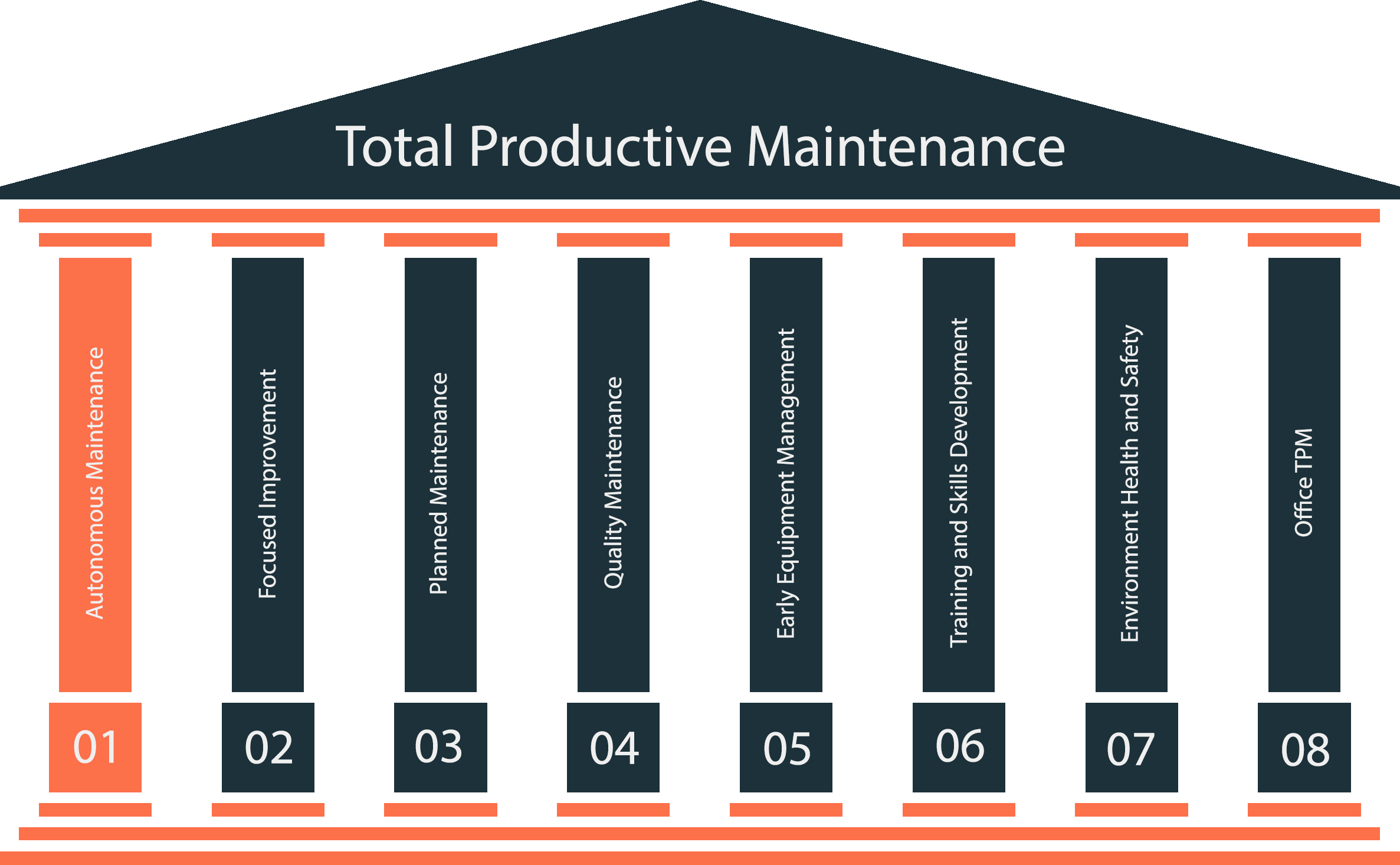
Total productive maintenance strives to reduce workplace losses by placing the responsibility of basic maintenance upkeep on the primary equipment user: the machine operator. This preventive practice consists of “8 pillars” to help improve equipment reliability and elevate worker productivity:

Autonomous Maintenance as pillar of TPM

At the front of this framework is Autonomous Maintenance. Autonomous maintenance is a technique used in TPM that involves giving operators and other frontline employees the responsibility and authority to take care of their own equipment and work areas (e.g cleaning, safety checks, etc.). This can improve employee engagement by giving them a sense of ownership over their work and equipment, as well as a greater understanding of how their actions can impact productivity and quality. Additionally, involving employees in the maintenance process can lead to improved communication and teamwork, which can further enhance engagement.

This is where frontline operations platforms come into play.

Connected frontline operations platforms are digital software tools that can help standardize and improve the way operators perform maintenance tasks. They are used to improve communication, training, collaboration, guidance, and support for the operators.

Reduce machine downtime with Augmentir’s Connected Worker Solution

See how Augmentir can help you implement an effective autonomous maintenance program and optimize your frontline operations.

Get a Demo

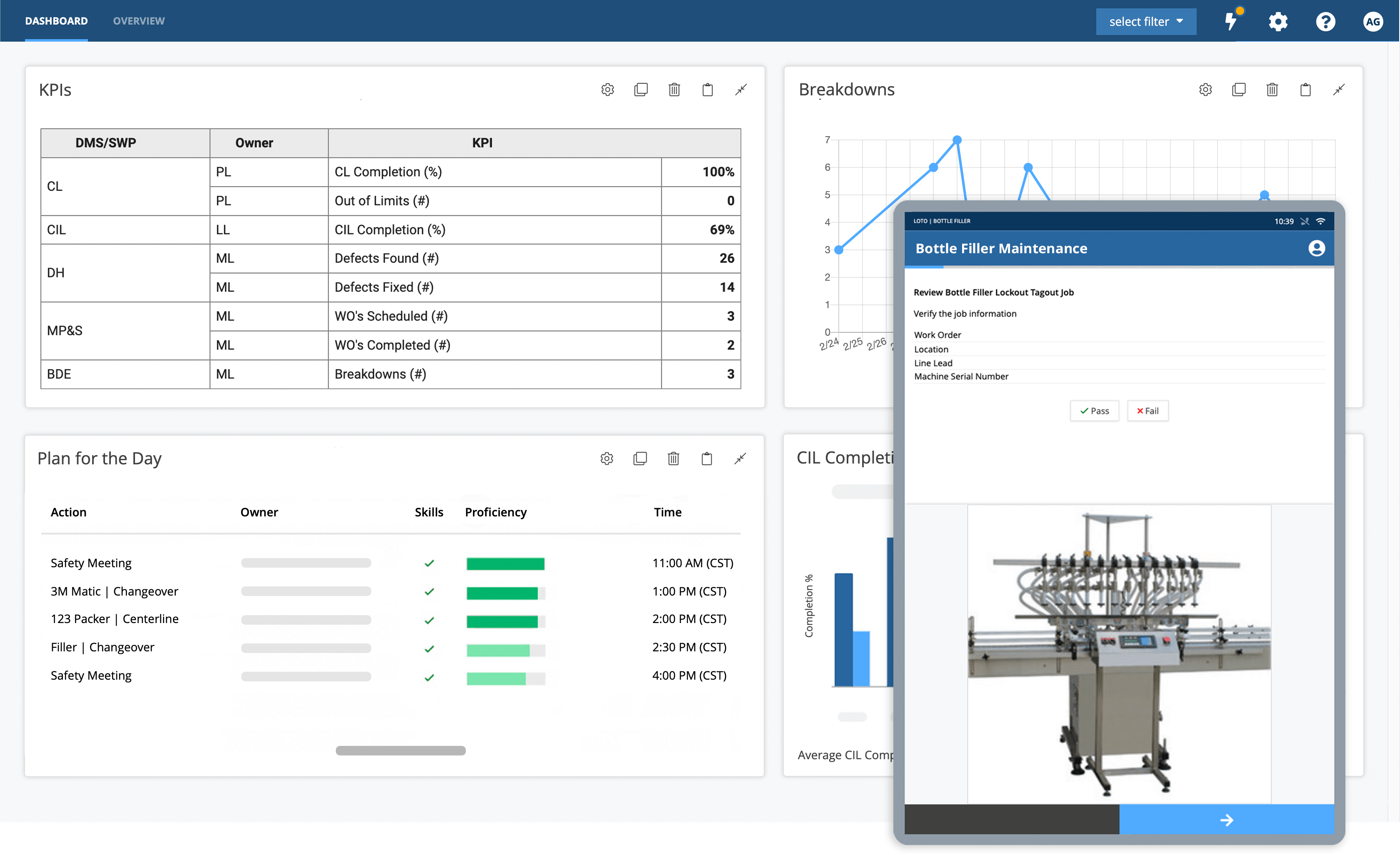
downtime dashboard

Your connected workforce – a key to reducing downtime

Factory workers can have a significant impact on downtime in manufacturing. Whether it’s due to mistakes made by operators, non-optimal scheduling, or lack of communication, your workforce is at the center of your frontline operations. Factory workers can impact downtime in a variety of ways:

  1. Improper operation or maintenance: If factory workers are not properly trained on how to operate and maintain equipment, they may inadvertently cause downtime by making mistakes or not following proper procedures. Modern connected worker tools, like Augmentir’s connected worker solution, are increasingly being used to streamline training and digitize skills tracking to help ensure that the right people with the right skills are on the job.
  2. Safety incidents: Workers who do not follow proper safety procedures can cause accidents that lead to downtime while equipment is repaired or replaced. By digitizing safety procedures, manufacturers can ensure that workers perform the proper steps, and follow the proper protocols before performing a maintenance routine.
  3. Human error: Workers may make mistakes that lead to downtime, such as not properly setting up equipment or not noticing when a machine needs maintenance. Properly training employees on how to maintain and operate equipment can help to minimize downtime due to human error
  4. Quality issues: Workers may produce products that do not meet quality standards, which can lead to downtime while the products are reworked or scrapped.
  5. Lack of proper communication: Having clear and effective communication channels can help to quickly identify and address any issues that arise. Frontline communication tools like Augmentir can help improve communication and digitally record issues to better understand root causes. By identifying the underlying causes of downtime, manufacturers can take steps to prevent similar issues from occurring in the future.
  6. High turnover rate: High turnover rate can lead to a lack of experienced workers and can cause downtime while new employees are trained. While it’s difficult to completely prevent a high turnover rate, you can take measures to both expedite training for new hires, as well as create a more engaged, more empowered workforce. For example, Augmentir’s connected worker solution helps to accelerate new hire training and onboarding, and provides a skills management framework that helps to ensure that workers are excelling at their jobs.

It is important to note that factory workers are a crucial part of the manufacturing process and their role is vital for the success of the business. However, by providing workers with proper training, safety procedures, and communication channels, downtime in manufacturing due to human error can be reduced. Additionally, involving workers in the decision-making process and continuous improvement initiatives, can help to increase their ownership and responsibility towards the equipment, processes, and the whole factory’s performance.

Interested in learning more?

Augmentir is a connected worker solution that allows industrial companies to digitize and optimize all frontline processes that are part of their TPM strategy. The complete suite of tools are built on top of Augmentir’s patented Smart AI foundation, which helps identify patterns and areas for continuous improvement.

manufacturing kpi first time right


The evolution of connected worker software, how industrial transformation leaders are meeting modern challenges with a generation of tools.

Beginning in mid-2022 and now increasing in 2023, there is a significant trend of companies moving away from earlier investments in connected worker software tools to Augmentir’s Connected Worker Platform.

Early adopters and pioneers of V1.0 connected worker tools and technology deserve respect for leading the charge into Industry 4.0 and the concept of a connected workforce. However, we also admire those leaders who realized there are more transformations and improvements to make – such as value in the data from your connected workers and incorporating AI-driven solutions to make sense of that data. These innovative leaders dared to adapt, continue innovating, and replace the connected worker software systems that were not solving enough of the challenges faced by the modern workplace.

darwin in manufacturing

By combining AI-powered software and smart connected worker solutions, manufacturers are able to get next-level results and improve frontline worker productivity, engagement, and safety.

Following in the Footsteps of Industrial Transformation Leaders

According to LNS Research (a leading analyst firm in defining the connected worker space), the business case for connected worker software continues to grow, and solutions that incorporate emerging technologies like AI are leading the way. In fact, LNS states that Industrial Transformation Leaders (IX Leaders) are two times more likely to use AI-enabled advanced analytics capabilities. These leading manufacturers are supporting their frontline operations with AI-based technology for training and skills development, real-time worker performance support, and providing dynamic and personalized content.

Here at Augmentir, we have seen quite a few companies that fall into the category of the courageous, understanding that they needed to continue adapting for their business to thrive.

We have been honored to be recently chosen by several global leaders as their connected worker V2.0 solution, including:

  • one of the largest paint manufacturers in the world
  • one of the largest agricultural companies in the world
  • one of the largest food manufacturers in the world
  • one of the largest manufacturers of batteries in the world

All of these world leaders recognized that their current connected worker software solutions had become insufficient and that they needed a smarter, more complete solution to help them overcome their frontline workforce challenges and current business obstacles.

Here are three key takeaways you can use from these companies that went back to select a new connected worker solution:

  1. Don’t be afraid to make a change that will have a positive impact on your business, even if you are the one who made the initial decision.
  2. If you have experience choosing early connected worker tools, build on that experience. You are ideally situated to identify gaps in processes and improvement needs; and know best which tools to use to address the overall operational needs of the business.
  3. Use your prior experiences to build processes for re-evaluating connected worker solutions from the perspective of already experiencing one fully deployed.

In one example, a global manufacturer invested in an early connected work tool and had been using the tech for nearly 4 years. However, once they decided they needed a new solution, they then went back to evaluate the market for the right tool. They made a list of selection criteria they knew they wanted from this new solution, from that they looked at approximately fifteen (15) connected worker vendors, and from there they narrowed down to the three (3) they ended up testing. They even included having a couple of integrations in their POC as they knew that an integration into their ERP, Quality Management, and Asset Management systems was something they needed, and they had poor experiences previously with vendors overcommitting.

Pro Tip

We suggest anyone evaluating a technology use this same approach – include integrations as part of your Proof-of-Concept to ensure that you are not getting hypothetical answers to hypothetical questions, and that the solution meets your true business needs.

What our customers tell us

Here is what customers are telling us they are looking for in a V2.0 connected worker solution, and the reasons they changed to Augmentir’s Connected Worker Platform:

  1. Ease of Use: Augmentir prioritizes a user-friendly experience. Its intuitive interface and workflow builder makes it easy for employees to adopt and use the tool effectively. This can result in faster onboarding and increased overall productivity.
  2. Augmented, Personalized Work Instructions: Augmentir provides a workflow and content creation environment that allows you to digitize standardized work instructions, and adjust content and in-line training to suit the needs of individual workers.  This optimizes performance and speeds up onboarding time for new employees.
  3. Upskilling and Reskilling: Augmentir’s ability to deliver formal skills and learning in the flow of work means a worker can stay current in their needs, continue to grow in their role, and build a structured career path within their company. This approach appears to be driving increased retention and job satisfaction.
  4. Workforce Optimization: Augmentir’s ability to assess in real time who is available to work on any given day and then balance the skill level best suited for a task with the available workforce offers optimal productivity based upon what you have to work with on any given day.
  5. Digitizing Complex Workflows: Most solutions on the market allow you to digitize simple workflows. With Augmentir, manufacturers can build complex workflows that satisfy use cases that are unique to their business, and extend those workflows to support greater integration into their business processes.
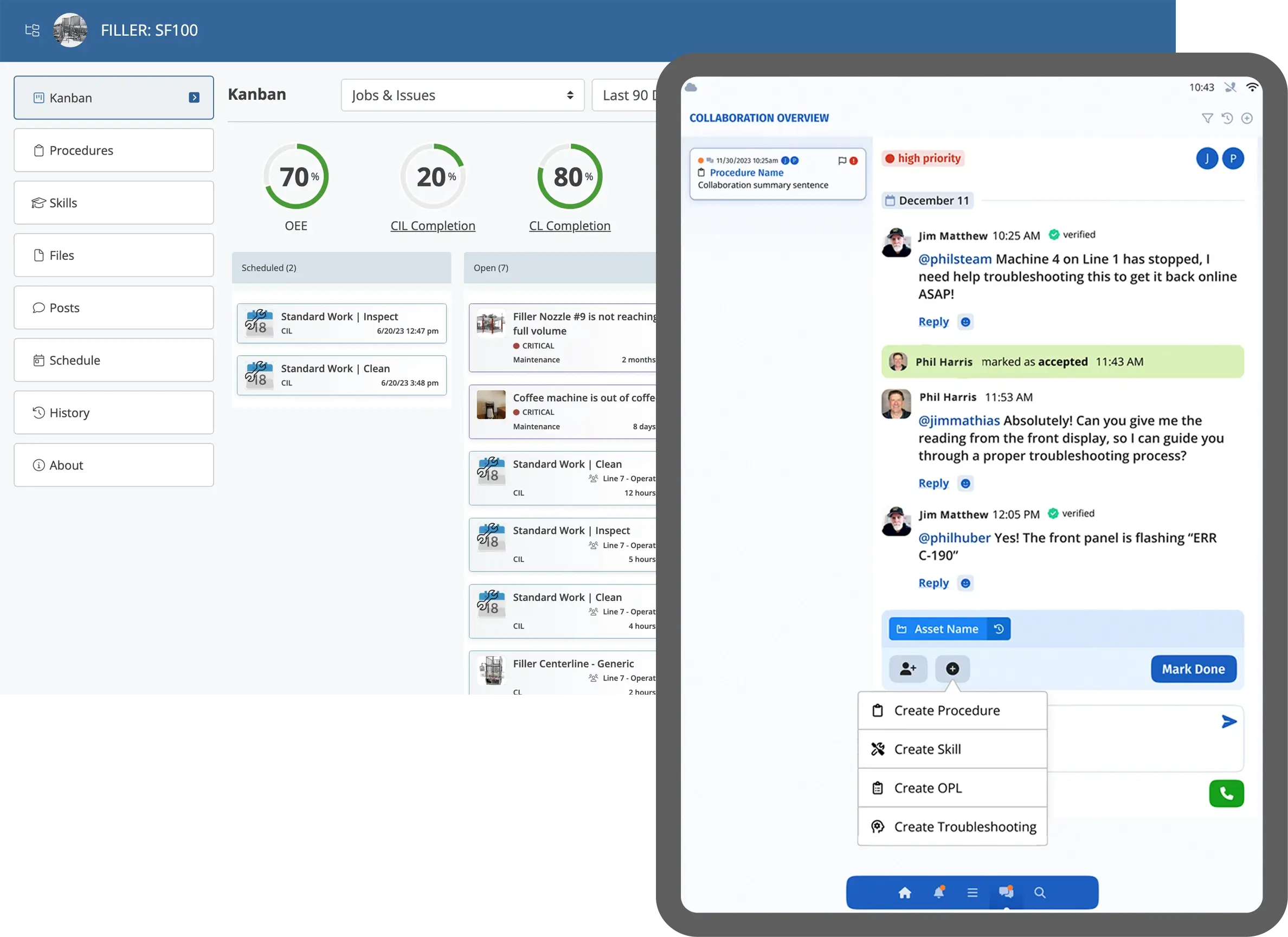
  6. Industrial Collaboration: Augmentir enables remote collaboration among workers and experts. This functionality is particularly useful when experts are not physically present at the job site. Remote experts can guide workers through AR annotations and audio/video communication, fostering knowledge sharing and faster problem resolution.
  7. Continuous Improvement: Augmentir focuses on driving continuous improvement within organizations. It leverages AI to analyze data from worker interactions and identifies areas for improvement. This data-driven approach allows companies to optimize processes, increase productivity, and reduce costs over time.
  8. Integration and Scalability: Augmentir offers integration capabilities with existing enterprise systems, such as enterprise resource planning (ERP) or manufacturing execution systems (MES). This ensures seamless data exchange and workflow integration. Additionally, Augmentir is designed to scale with the organization’s needs, accommodating both small teams and large enterprises.
  9. Analytics and Insights: Augmentir provides robust analytics and reporting features driven by AI-powered solutions and focuses on AI as a core component of Connected Worker V2.0. This allows managers and supervisors to gain valuable insights into worker performance, task completion times, and areas that may require additional training or support. Data-driven analytics can aid in identifying bottlenecks, optimizing processes, and making informed business decisions.
  10. Customization and Flexibility: Augmentir allows organizations to customize their work instructions and workflows to fit their specific needs. This flexibility enables the tool to adapt to different industries, processes, and work environments.


If you are interested in learning for yourself why companies are choosing to change to Augmentir over their current connected worker solution – reach out to book a demo.


See Augmentir in Action
Get in Touch for a Personalized Demo