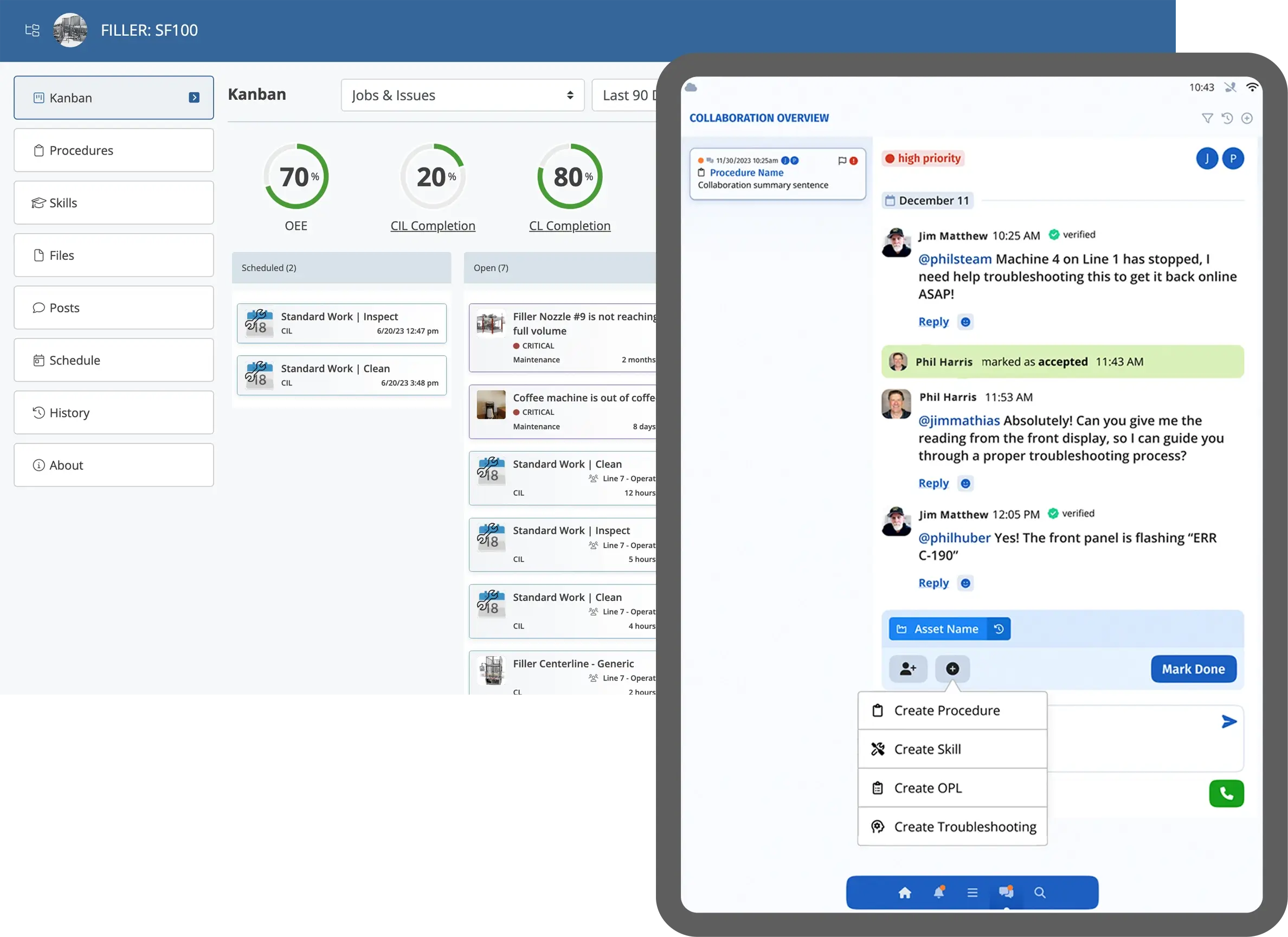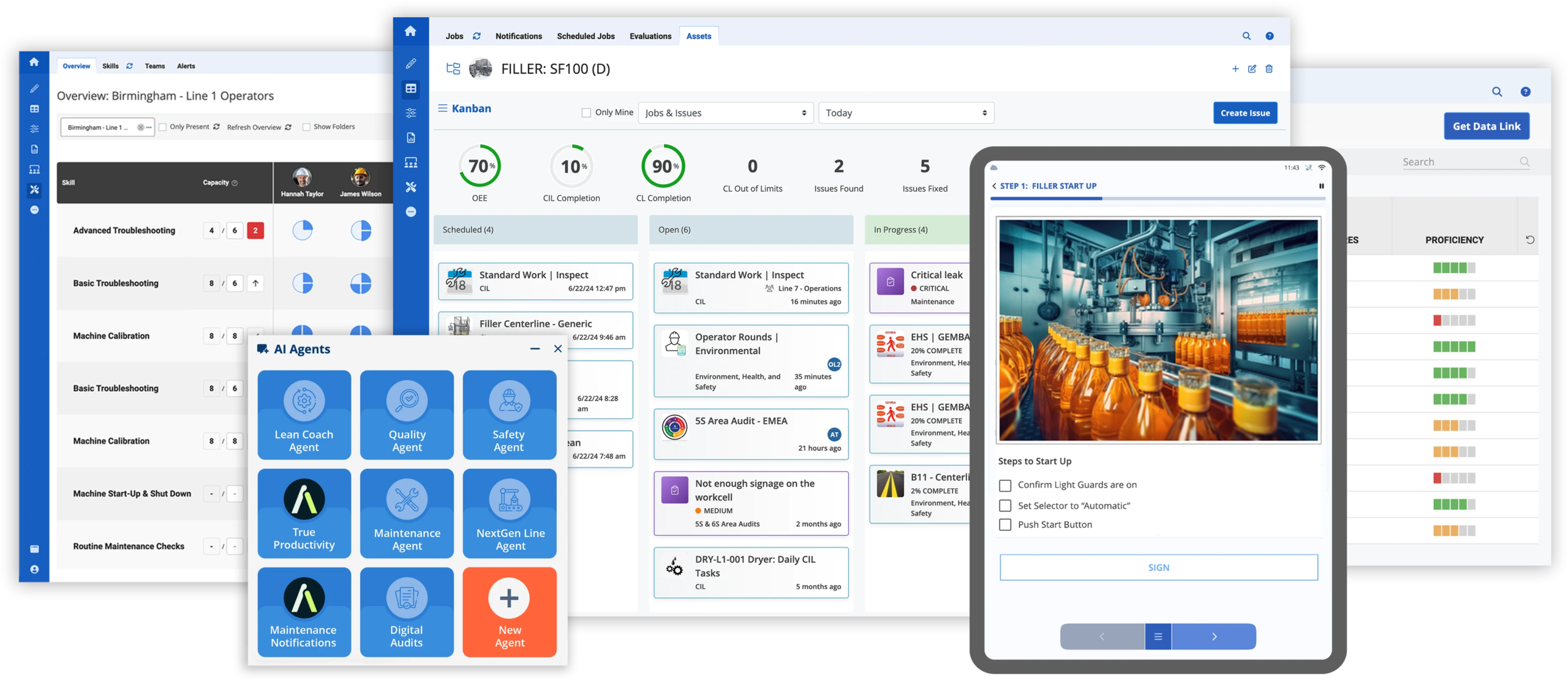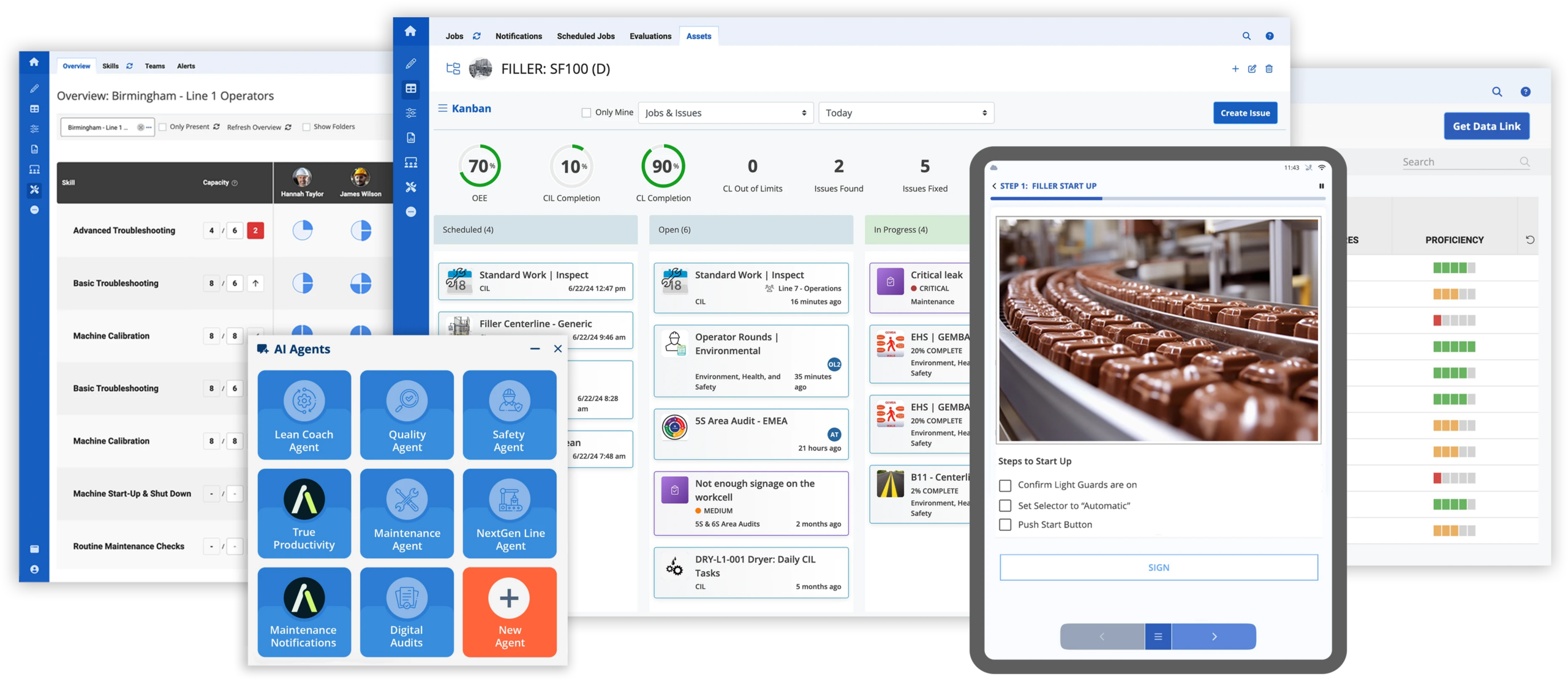
Learn how to digitize your operations and build a paperless factory in this paperless manufacturing guide from Augmentir.

Manually managing and tracking production in manufacturing has become a thing of the past. That’s because manufacturers are adopting a new digital approach: paperless manufacturing.

Paperless manufacturing uses software to manage shop floor execution, digitize work instructions, execute workflows, automate record-keeping and scheduling, and communicate with shop floor employees. More recently, this approach also digitizes skills tracking and performance assessments for shop floor workers to help optimize workforce onboarding, training, and ongoing management. This technology is made up of cloud-based software, mobile and wearable technology, artificial intelligence, machine learning algorithms, and advanced analytics.

More recently, your journey to paperless manufacturing is being accelerated through the availability of generative AI assistants and supporting import tools that can streamline the conversion of existing content into interactive, mobile-ready content for your frontline teams.

paperless manufacturing and digital factory

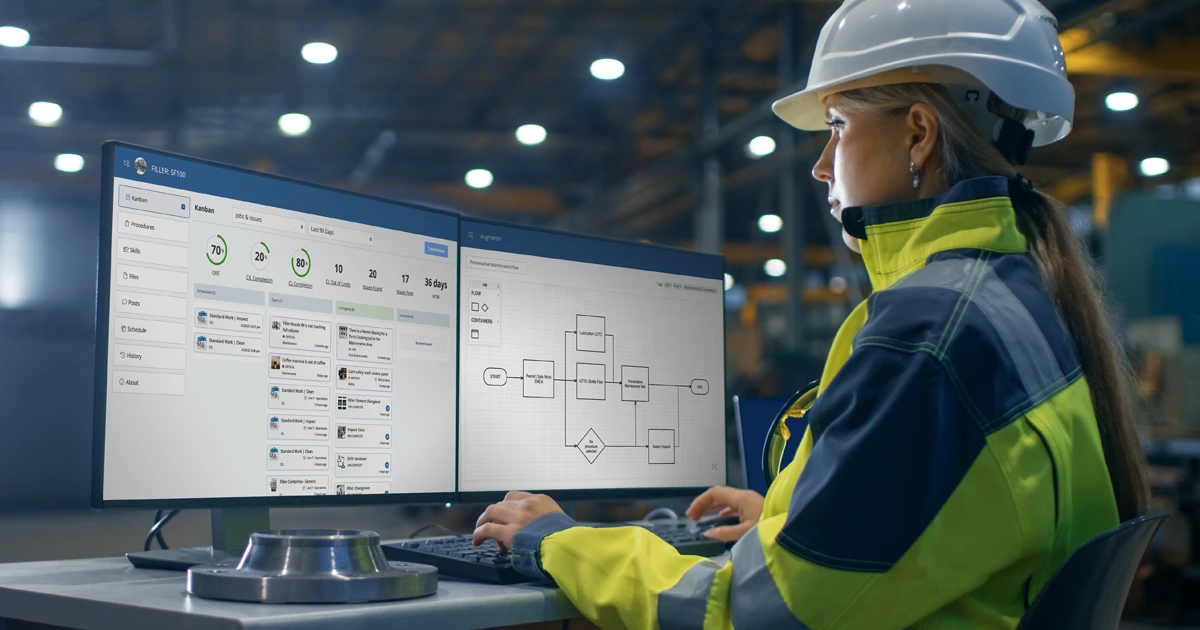
Paperless manufacturing software uses interactive screens, dashboards, data collection, sensors, and reporting filters to show real-time insights into your factory operations. If you want to learn more about paperless manufacturing processes, explore this guide to learn about the following:

What is a paperless factory?

A paperless factory uses AI-powered software to manage production, keep track of records, and optimize jobs being executed on the shop floor. Paperless manufacturing is intended to replace written record-keeping as well as paper-based work instructions, checklists, and SOPs, and keep track of records digitally.

For example, in most manufacturing operations, everything from quality inspections to operator rounds and planned and autonomous maintenance is done on a regular basis to make sure factory equipment is operating properly and quality and safety standards are met. In most manufacturing plants, these activities are done manually with paper-based instructions, checklists, or forms.

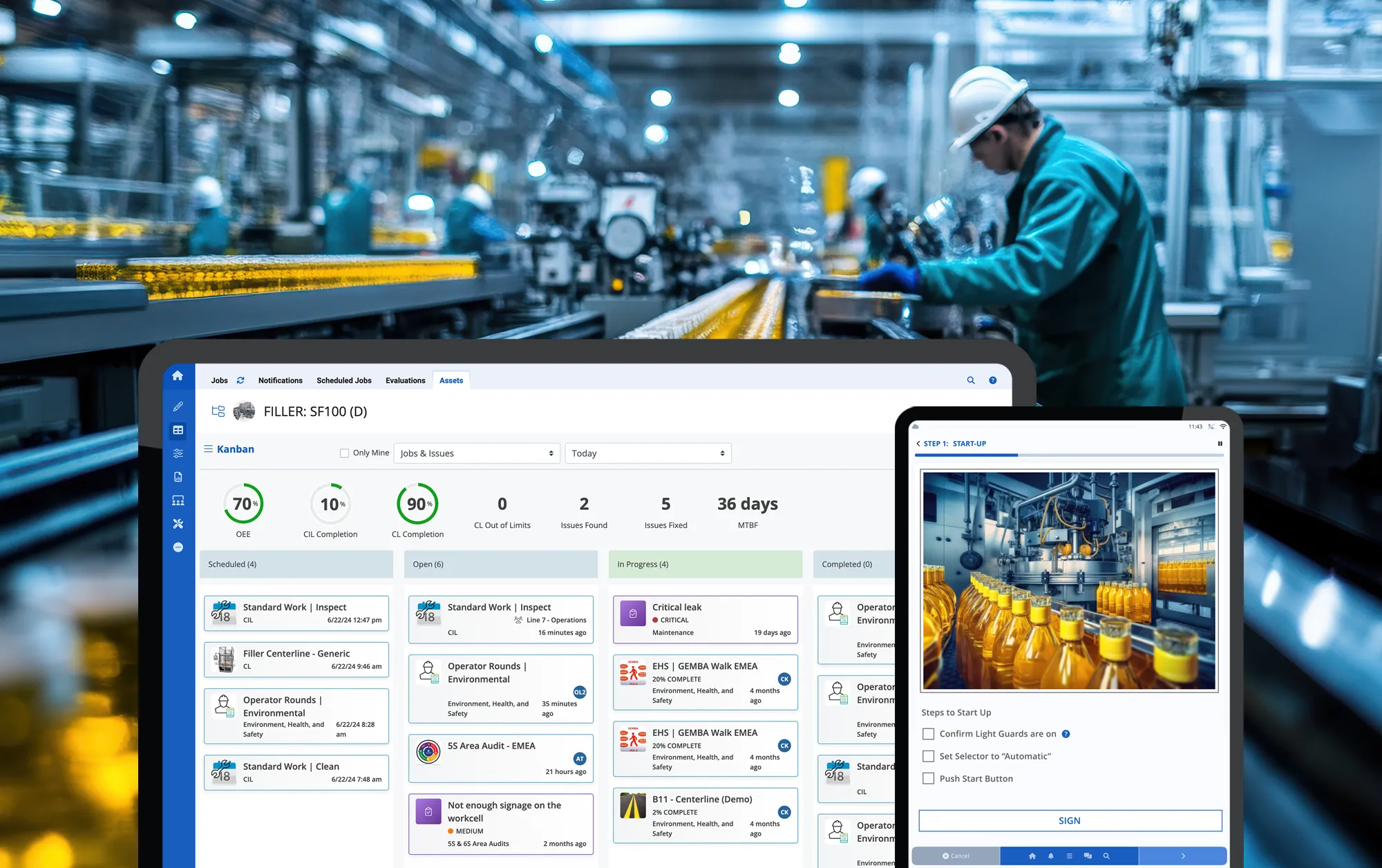
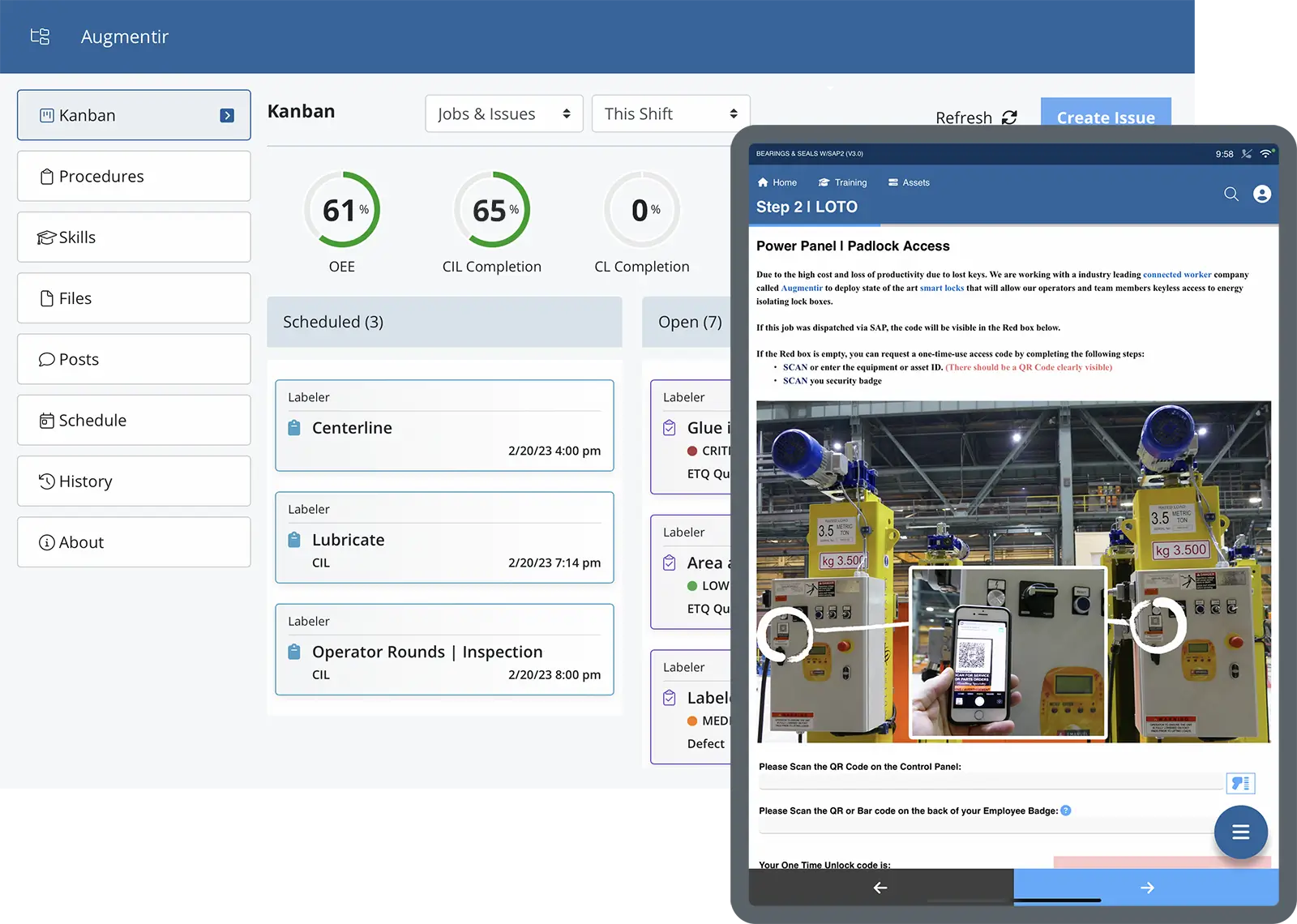
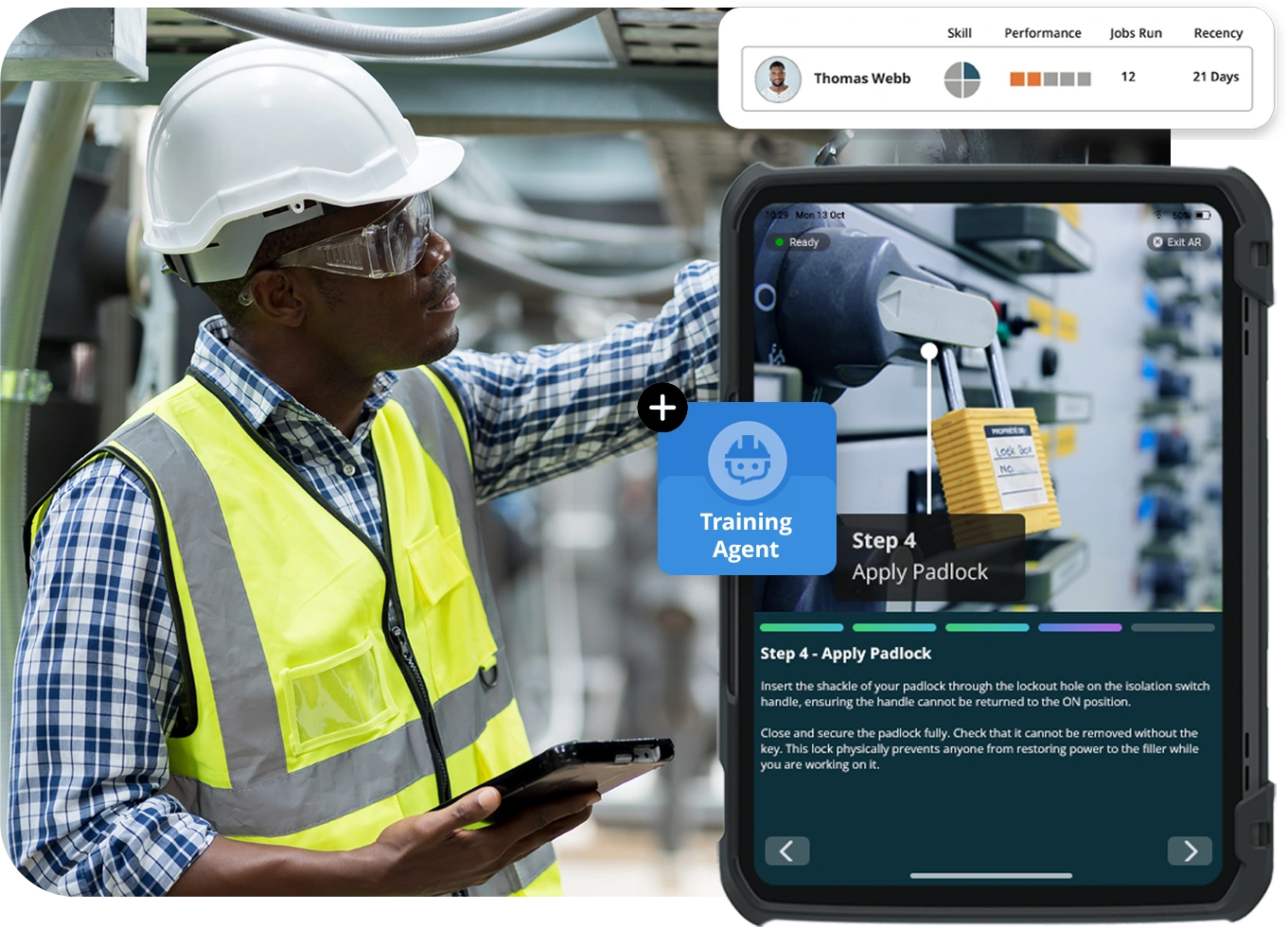
Operators and shop floor workers in paperless factories use software to execute work procedures and see production tasks in ordered sequences, which enables them to implement tasks accordingly. Workers are able to view operating procedures, or digital work instructions, using mobile devices (wearables, tablets, etc.) in real-time.

benefits of digital work instructions

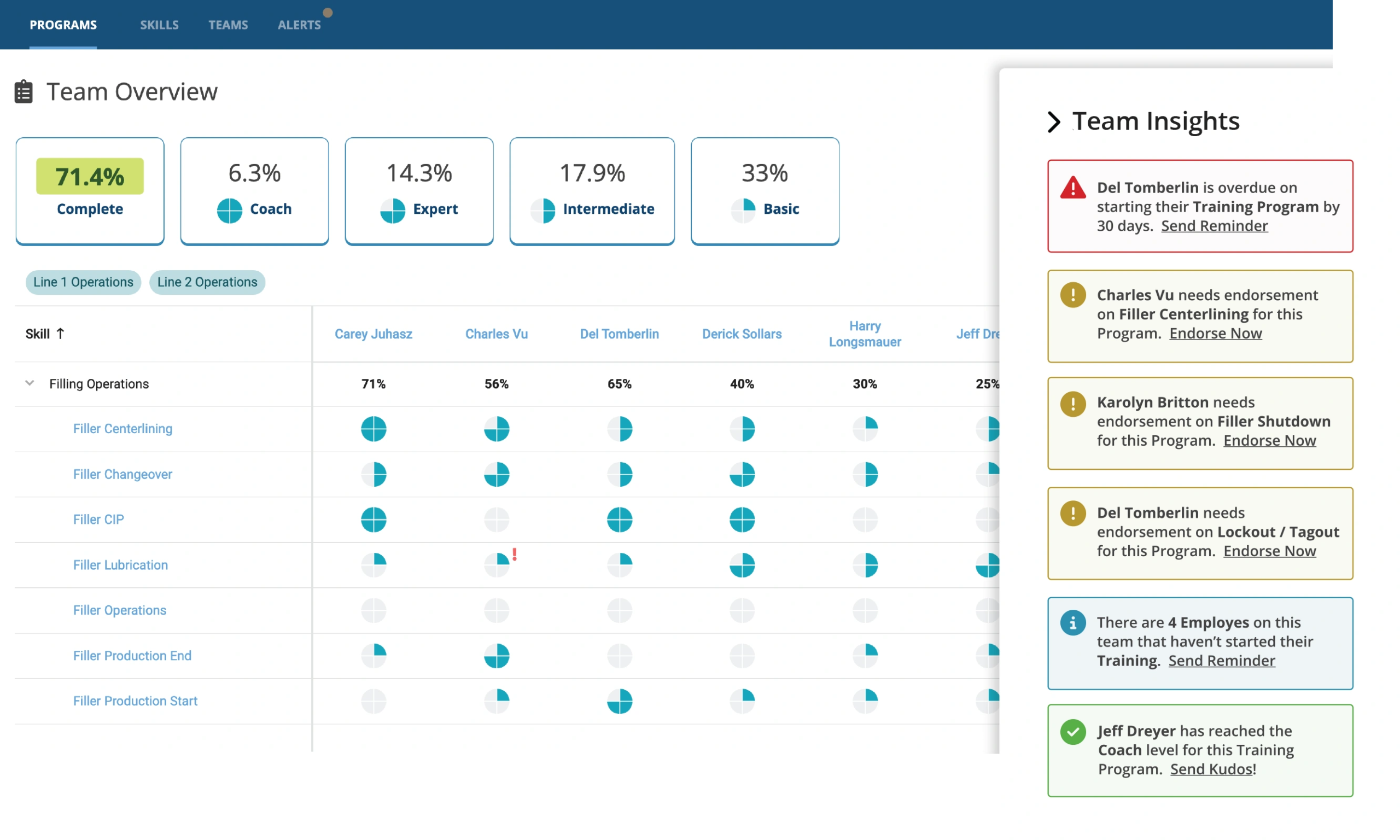
Furthermore, paperless manufacturing incorporates the digitization of shop floor training, skills tracking, certifications, and assessments.  This digital approach uses skills management software helps optimize HR-based processes that were previously managed via paper or spreadsheets, and includes the ability to:

  • Create, track, and manage employee skills
  • Instantly visualize the skills gaps in your team
  • Schedule or assign jobs based on worker skill level and proficiency
  • Close skill gaps with continuous learning
  • Make data-driven drive operational decisions

In addition to improving workforce development and operational efficiency, digital work instructions, training records, and inspection processes can help support ISO 45001 occupational health and safety management systems, improving consistency, traceability, and accountability across safety-related activities.

digital skills management in a paperless factory

What are the benefits of going paperless in manufacturing?

There are a number of reasons for factories to go paperless, from cost-effectiveness to increased productivity and sustainability. A paperless system can revolutionize production processes, workforce management, and business operations.

Here are the top benefits of going paperless:

  1. Accelerate employee onboarding: By digitizing onboarding and moving training into the flow of work, manufacturers can reduce new hire onboarding time by 82%.
  2. Increase productivity: Digitizing manufacturing operations means no more manual, paper-based data collection or record-keeping. Workers have more time to run their equipment, execute shop floor tasks, and find solutions to problems.
  3. Boost data accuracy: People are prone to making mistakes, but shop floor data capture and validation can help offset human error and improve accuracy.
  4. Improved workforce management: Digital skills tracking and AI-based workforce analytics can help optimize production operations and maximize worker output.
  5. Manage real-time operations: Human-machine interface systems eliminate the need for paper, files, and job tickets. This means that workers can analyze inventory and other data in real-time.
  6. Save money: Although going paperless means that the cost of paper is eliminated, the savings extend beyond that. With greater productivity, operations in real-time, and improved production optimization, costs can be reduced in many areas.

How do you go paperless in manufacturing?

Going paperless starts with digitizing activities across the factory floor to increase productivity, and extending that value through a digital connection between the shop floor and enterprise manufacturing systems. We lay out below the four basic steps for how to go paperless in manufacturing:

Step 1: Digitize your existing content with Gen AI and Connected Worker technology.

Paperless manufacturing starts with the use of modern, digital tools that can quickly and easily digitize and convert your existing paper-based content. Tools like Augmentir’s Augie™, a generative AI suite of technologies, helps you import and convert existing content regardless of format. Once converted, Connected Worker solutions that incorporate enhanced mobile capabilities and combine training and skills tracking with connected worker technology and on-the-job digital guidance can deliver significant additional value. A key requirement to start is to identify high-value use cases that can benefit from digitization, such as quality control or inspection procedures, lockout tagout procedures, safety reporting, layered process audits, or autonomous maintenance procedures.

Pro Tip

You can now import existing PDF, Word, or Excel documents (just like the PDF above) directly into Augmentir to create digital, interactive work procedures and checklists using Augie™, a Generative AI content creation tool from Augmentir. Learn more about Augie – your industrial Generative AI Assistant.

A

Step 2: Augment your workers with AI and Connected Worker technology.

AI-based connected worker solutions can help both digitize work instructions and deliver that guidance in a way that is personalized to the individual worker and their performance. AI Bots that leverage generative AI and GPT-like AI models can assist workers with language translation, feedback, on-demand answers, access to knowledge through natural language, and provide a comprehensive digital performance support tool.

As workers become more connected, companies have access to a rich source of job activity, execution, and tribal data, and with proper AI tools can gain insights into areas where the largest improvement opportunities exist.

Step 3: Set up IoT sensors for machine health monitoring.

The industrial Internet of Things (IoT) uses sensors to boost manufacturing processes. IoT sensors are connected through the web using wireless or 4G/5G networks to transmit data right from the shop floor. The use of machine health monitoring tools along with connected worker technology can provide a comprehensive shop floor solution.

Step 4: Connect your frontline to your enterprise.

Digitally connected frontline operations solutions not only enable industrial companies to digitize work instructions, checklists, and SOPs, but also allow them to create digital workflows and integrations that fully incorporate the frontline workers into the digital thread of their business.

The digital thread represents a connected data flow across a manufacturing enterprise – including people, systems, and machines. By incorporating the activities and data from these previously disconnected workers, business processes are accelerated, and this new source of data provides newfound opportunities for innovation and improvement.


Augmentir provides a unique Connected Worker solution that uses AI to help manufacturing companies intelligently onboard, train, guide, and support frontline workers so each worker can contribute at their individual best, helping achieve production goals in today’s era of workforce disruption.

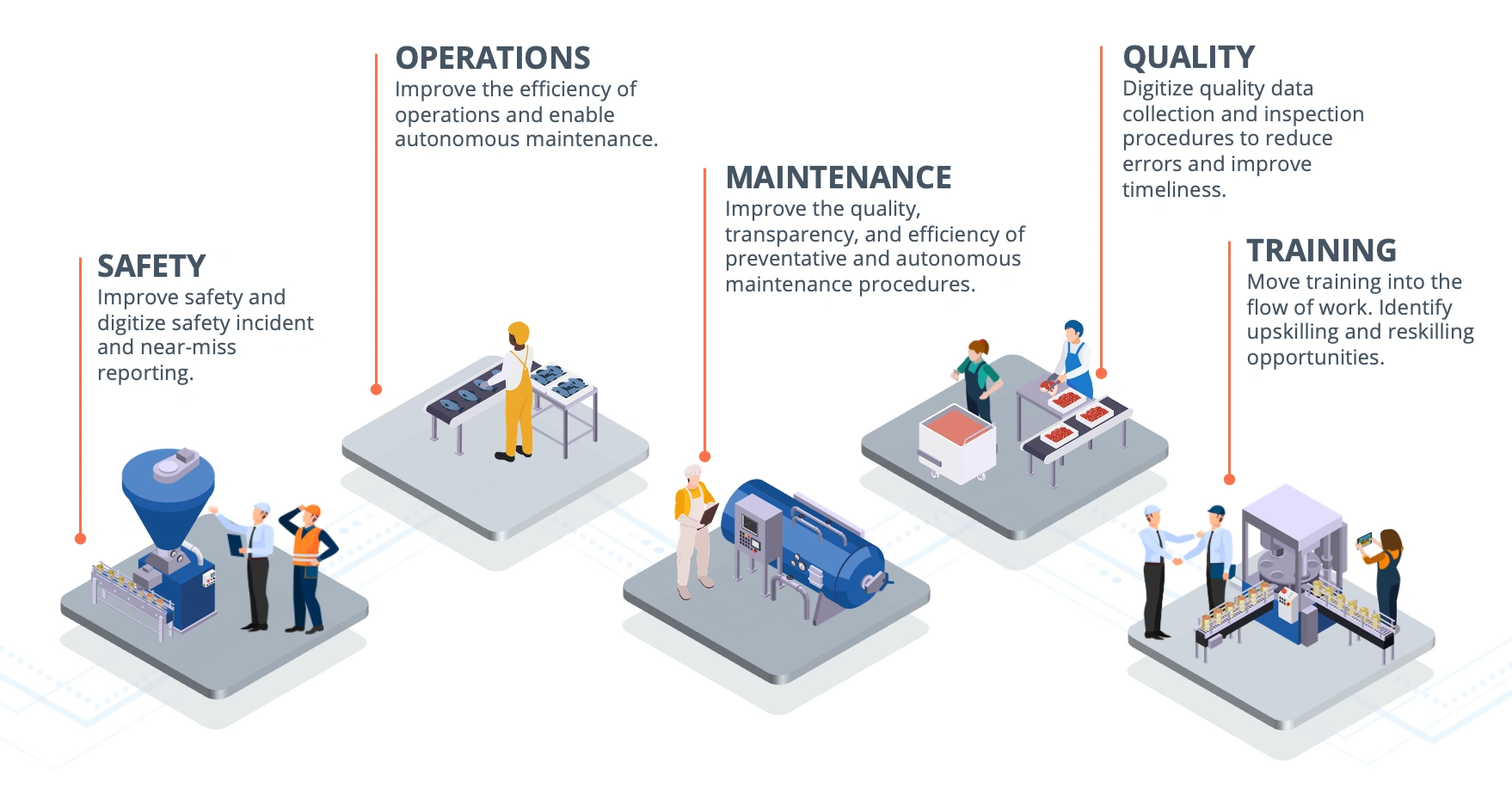
Our solution is a SaaS-based suite of software tools that helps customers digitize and optimize all frontline processes including Autonomous and Preventive Maintenance, Quality, Safety, and Assembly.

paperless factory


Transform how your company runs its frontline operations. Request a live demo today!


See Augmentir in Action
Get in Touch for a Personalized Demo

Frequently Asked Questions (FAQ)

  • What is paperless manufacturing?

    Paperless manufacturing is the use of digital technologies to replace paper-based work instructions, checklists, SOPs, quality records, and production documentation on the shop floor. By digitizing manufacturing processes, companies can improve operational efficiency, reduce errors, increase traceability, and gain real-time visibility into production performance. Modern paperless manufacturing solutions, such as Augmentir's AI-native Connected Worker platform, go beyond simple document digitization by providing intelligent digital workflows, workforce insights, and continuous process optimization.

  • What are the benefits of paperless manufacturing?

    Paperless manufacturing helps reduce paperwork, improve compliance, increase traceability, and streamline operations. With Augmentir, manufacturers also gain workforce insights and AI-driven recommendations to continuously improve performance.

  • How does AI help manufacturers go paperless?

    AI accelerates paperless manufacturing by digitizing processes, optimizing workflows, and providing real-time worker support. Augmentir uses AI to deliver personalized guidance, automate data collection, and help manufacturers achieve faster results from their digital transformation initiatives.

  • What challenges can paperless manufacturing help solve?

    Paperless manufacturing helps solve common challenges such as outdated work instructions, manual data entry, production errors, and limited shop floor visibility. Augmentir's AI-native Connected Worker platform enables manufacturers to digitize workflows, standardize processes, and improve workforce performance across operations.

SOC 2 is showing up in every serious procurement conversation, and for good reason. As connected worker platforms become the system of record for frontline operations, the bar for how that data is handled has to rise with it. Here’s what SOC 2 actually is, what it isn’t, and what to look for when evaluating a vendor.

When manufacturers evaluate a new software platform, the questions are usually about features, integrations, and ROI. But somewhere in the middle of every serious procurement conversation, another question shows up: “Are you SOC 2 compliant?”

It’s a fair question, and it’s becoming a non-negotiable one. As connected worker platforms become the system of record for frontline operations—capturing job instructions, training records, quality data, safety events, and operator performance—the bar for how that data is handled has to rise with it. SOC 2 is one of the clearest signals that a vendor is taking that responsibility seriously.

Here’s what SOC 2 actually is, what it isn’t, and why it matters when you’re putting AI and connected work data at the heart of your operations.

What SOC 2 Actually Means

SOC 2 stands for System and Organization Controls 2. It’s an auditing framework developed by the American Institute of Certified Public Accountants (AICPA) that evaluates how a service organization protects customer data across five Trust Services Criteria: security, availability, processing integrity, confidentiality, and privacy.

A SOC 2 report isn’t a checkbox or a self-attestation. An independent auditor reviews the controls, tests them, and produces a report that customers and prospects can request. There are two types:

  • Type 1 looks at whether the right controls are designed and in place at a specific point in time.
  • Type 2 goes further—it evaluates whether those controls actually operate effectively over a period of time, usually six to twelve months.

Type 2 is the one most enterprise buyers want to see, because it’s evidence that security isn’t just on paper.

Why SOC 2 Matters for Connected Work

Frontline data used to live on clipboards, whiteboards, and the occasional shared drive. That’s changing fast. Modern Connected Worker software captures a remarkable amount of operational and personal information:

  • Standard operating procedures and proprietary work instructions.
  • Skills, certifications, and training records tied to named employees.
  • Quality data, defect rates, and root cause analyses.
  • Safety incidents, near-misses, and corrective actions.
  • AI-generated insights about workforce performance and skill gaps.

That’s sensitive on two fronts. It’s operationally sensitive—competitors would love a look at your best-practice work instructions. And it’s personally sensitive—your operators’ training history and performance data deserves the same care you’d want for your own employment record.

SOC 2 is how a vendor proves they treat that data the way you’d expect: with access controls, encryption, monitoring, incident response, change management, and a long list of other practices that quietly hold the line every day.

What to Look For in a Vendor’s SOC 2 Posture

Not every “SOC 2 compliant” claim means the same thing. When you’re evaluating a platform, a few questions cut through the marketing:

  • Type 1 or Type 2? Type 2 is the stronger signal. It shows the controls have been operating effectively, not just designed.
  • Which Trust Services Criteria are in scope? Security is the minimum. Availability and confidentiality are common additions for connected worker platforms. Privacy is meaningful if you’re handling PII at scale.
  • How recent is the report? SOC 2 Type 2 reports cover a defined audit period. A current report under continuous renewal is what you want.
  • How is AI handled? If the platform includes AI agents or generative features, ask how training data, prompts, and model outputs are isolated and protected. SOC 2 controls should extend to those systems, not stop at the traditional application boundary.
  • What happens when something goes wrong? Ask about incident response timelines, breach notification commitments, and how subprocessors are vetted.

Augmentir Is SOC 2 Compliant

We take this seriously at Augmentir, and we hold ourselves to the same standard we’d want from a partner running operations alongside us.

Augmentir is SOC 2 Type 2 compliant, audited annually by an independent third party. Our program covers the controls that connected worker customers care about most—security, availability, and confidentiality—across the full Augmentir platform, including our AI Agent Studio and the agentic AI capabilities that increasingly sit at the center of frontline work.

In practice, that means encryption in transit and at rest, role-based access controls down to the workflow and data field, continuous monitoring and logging, formal change management, an incident response program tested on a regular cadence, and ongoing risk assessments of the subprocessors we rely on. Our SOC 2 Type 2 report is available to customers and qualified prospects under NDA—reach out to your account team and we’ll get it over.

We don’t treat compliance as a finish line. As our platform evolves and as AI changes how frontline work gets done, the controls evolve with it.

SOC 2 Is the Floor, Not the Ceiling

SOC 2 is foundational, but it isn’t the whole picture. Depending on your industry, you may also care about ISO 27001, GDPR alignment, HIPAA, ITAR, or country-specific data residency requirements. Manufacturing leaders working in regulated environments—food and beverage, pharma, medical devices, aerospace—often need a layered view of compliance that goes well beyond a single report.

The point of SOC 2 isn’t that it covers everything. It’s that it gives you a credible, audited baseline. From there, you can ask the harder questions about how your specific data, in your specific environment, is handled.

Trust Is Earned the Boring Way

Connected worker platforms are increasingly running the operations that keep plants moving. That’s a meaningful amount of trust to place in a vendor, and trust isn’t built with a logo on a website. It’s built with the unglamorous work of access reviews, encryption key rotations, vulnerability scans, vendor risk assessments, and continuous monitoring—the work SOC 2 is designed to verify.

When you’re choosing a partner for connected work, the security conversation deserves the same rigor as the feature conversation. Ask the questions early. Ask to see the report. And expect a vendor who treats this part of the relationship as seriously as you do.

Want to talk through how Augmentir handles security, compliance, and AI governance for connected worker programs? Book a Demo.


See Augmentir in Action
Get in Touch for a Personalized Demo


FAQs for SOC 2

  • What is SOC 2 compliance?

    SOC 2 (System and Organization Controls 2) is an auditing framework developed by the American Institute of Certified Public Accountants (AICPA). It evaluates how a service organization protects customer data across five Trust Services Criteria: security, availability, processing integrity, confidentiality, and privacy. A SOC 2 report is issued by an independent third-party auditor — not self-attested by the vendor.

  • What's the difference between SOC 2 Type 1 and Type 2?

    A SOC 2 Type 1 report evaluates whether a vendor's security controls are properly designed and in place at a single point in time. A SOC 2 Type 2 report goes further: it tests whether those controls actually operate effectively over a defined audit period, typically six to twelve months. Type 2 is the stronger signal and the one most enterprise buyers ask for.

  • Is Augmentir SOC 2 compliant?

    Yes. Augmentir is SOC 2 Type 2 compliant, audited annually by an independent third party. The program covers security, availability, and confidentiality across the full Augmentir Connected Worker platform, including AI Agent Studio and agentic AI capabilities.

New 5 Why Coach, Root Cause Investigator, and Data Analyst Agents add to Augmentir’s growing library of agents and assistants for frontline work – helping operations, quality, maintenance, and CI teams accelerate root cause analysis and continuous improvement.

February 25, 2026 Augmentir, the world’s only Agentic AI platform for connected work, today announced the availability of new out-of-the-box AI agents for manufacturing operations, further expanding the industry’s most comprehensive and fastest-growing suite of industrial AI agents. The new agents — a 5 Why Coach, a Root Cause Investigator, and a Data Analyst — work together as an intelligent digital problem-solving team, empowering industrial organizations to analyze operational data, uncover root causes faster, and accelerate continuous improvement across the factory floor.

Manufacturers today face increasing pressure to improve safety, quality, productivity, and uptime — yet operational data is often siloed, underutilized, or slow to translate into action. The new Augie™ AI Agents address this challenge by delivering structured, AI-driven problem-solving capabilities directly to operations, quality, maintenance, and continuous improvement (CI) teams.

New Augie™ AI Agents Now Available

Root Cause Investigator

Accelerates formal root cause analysis by organizing symptoms, correlating operational signals, and helping teams evaluate contributing factors. The agent produces structured RCA (Root Cause Analysis) outputs aligned with quality systems and continuous improvement workflows.

5 Why Coach

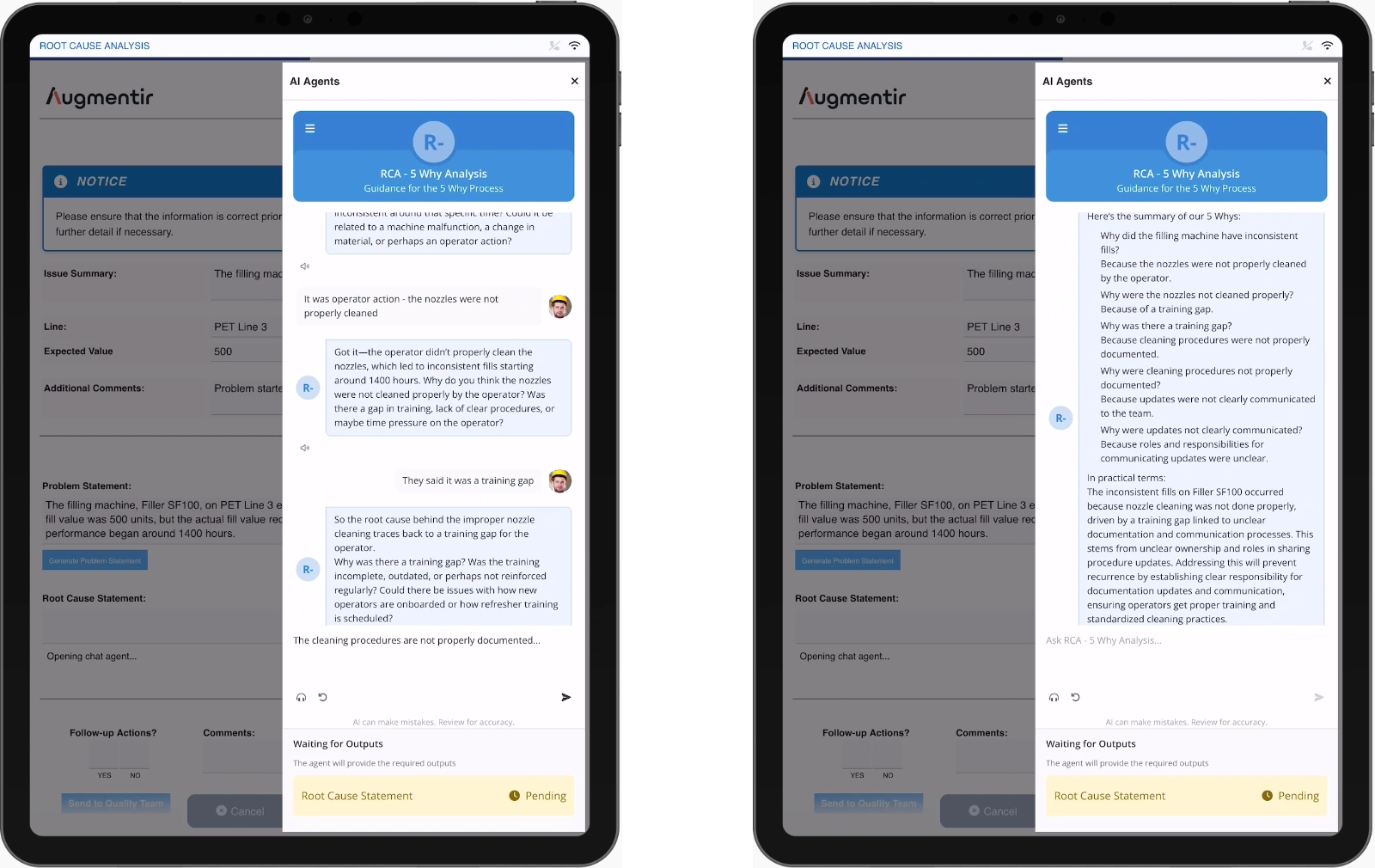
Guides teams through a structured 5 Whys methodology to uncover underlying causes of production, quality, safety, and maintenance issues. The agent captures reasoning, documents evidence, and generates a clear, traceable chain of causality to support corrective and preventive actions.

5 why agent by augmentir

Data Analyst Agent

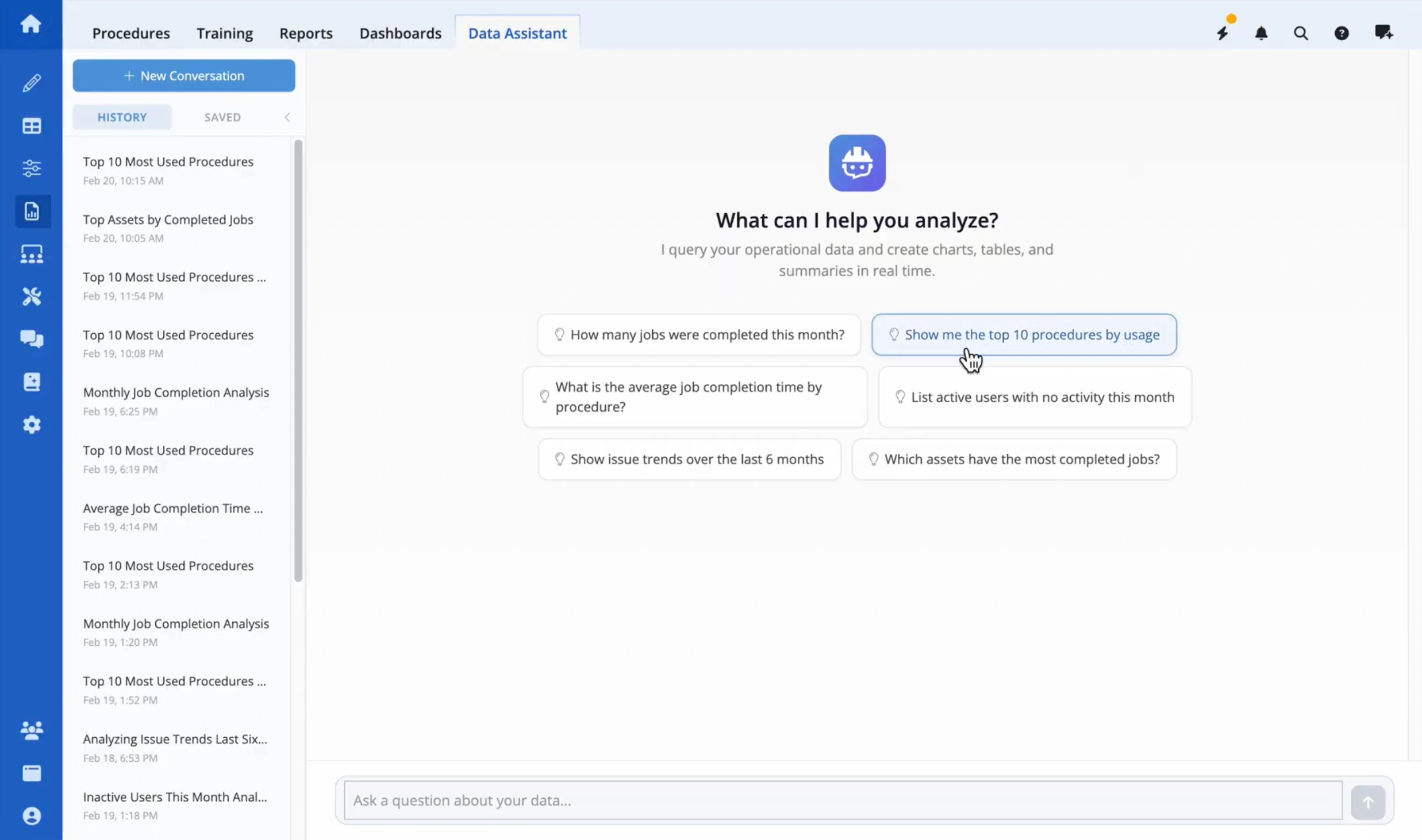
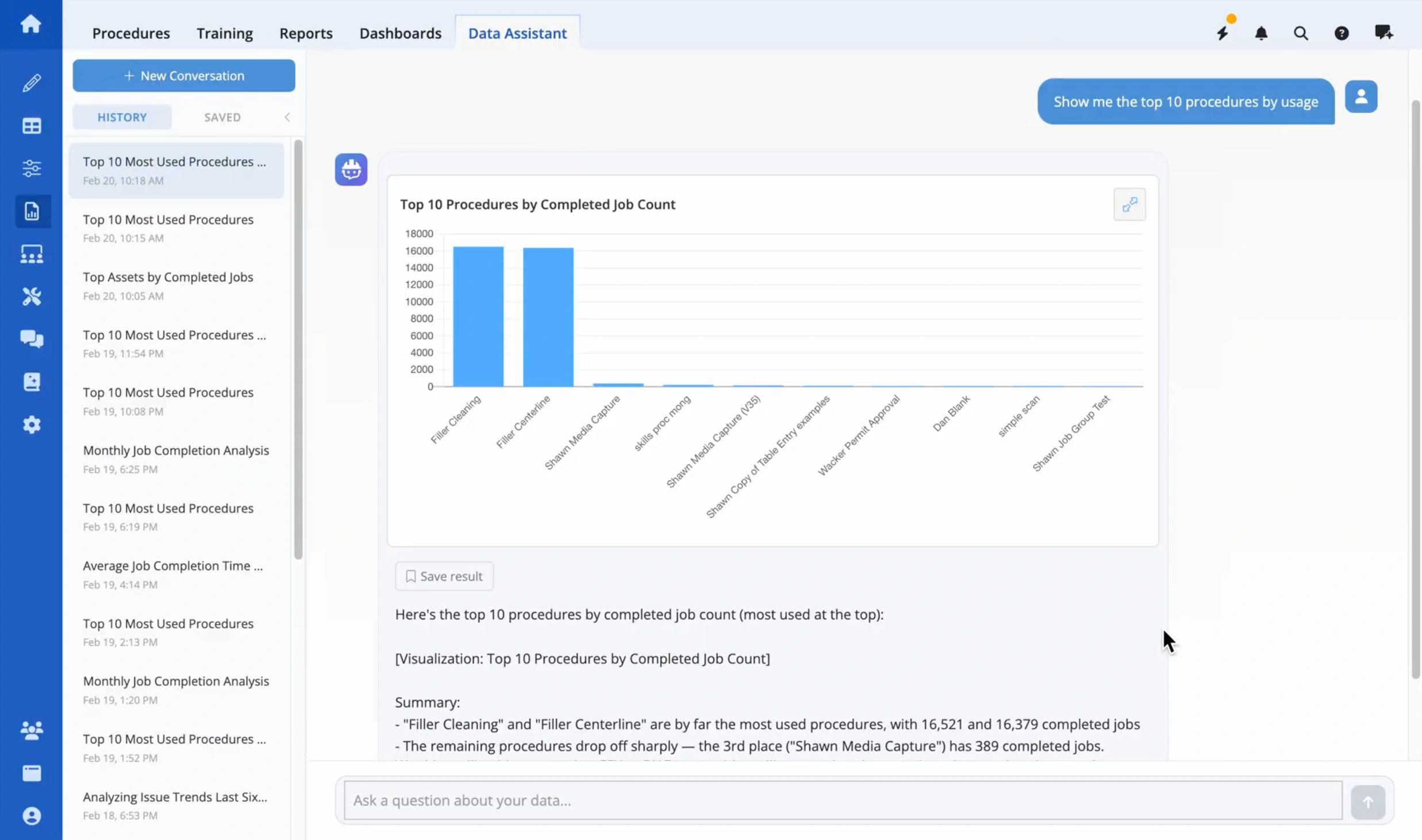
Enables teams to converse with operational and historical data using natural language — eliminating the need to build static reports or rely on specialized analytics expertise. Users can ask questions and instantly explore job and procedure data, issue trends, asset performance, user activity, downtime patterns, and other operational metrics.

augmentir data analyst ai agent

The agent supports interactive drill-downs, generates visualizations and shareable reports on demand, and allows teams to save datasets and dashboards for ongoing monitoring. It maintains conversational context while continuously working from a fresh view of underlying operational data — ensuring insights are timely, accurate, and actionable.

data analyst ai agent by augmentir - generating a operations report

Together, these agents help manufacturers reduce the time between issue detection and resolution — enabling faster decision-making, more consistent problem-solving, and measurable operational gains.

Powered by the Augie™ Industrial AI Suite

The new agents are delivered as part of the Augie Industrial AI Suite and built on Augie Agent Studio, which enables manufacturers to configure, extend, and develop custom AI agents tailored to their unique processes and KPIs.

With Augie Agent Studio, organizations can:

  • Quickly build new Chat AI agents to support every role in their organization
  • Build and Deploy Autonomous Agents to add AI into existing internal workflows
  • Integrate plant-specific data sources and performance metrics
  • Scale best practices consistently across lines, shifts, and facilities

By combining ready-to-deploy AI agents with a flexible development framework, Augmentir enables manufacturers to deploy practical, scalable industrial AI with immediate impact.

“The expansion of the Augie Industrial AI Suite represents a major step forward in bringing purpose-built AI to manufacturing operations,” said Russ Fadel, CEO of Augmentir. “Our Agent Studio democratizes the Agent creation process, letting subject matter experts create new agents that embody their expertise, in hours, not weeks or months. Between Aumentir and its partner network, we expect dozens of new Augmentir Ready agents to be made available in the coming months. The availability of these new AI agents will help teams move beyond reactive troubleshooting and toward proactive, data-driven continuous improvement.”


Interested in learning more?

If you’d like to learn more about Augmentir and our Augie Industrial AI Suite, schedule a demo with one of our product experts.


See Augmentir in Action
Get in Touch for a Personalized Demo

Learn how connected worker technology helps eliminate breakdowns in manufacturing, boosting uptime, efficiency, and operational resilience.

Breakdowns are one of the most significant disruptors in manufacturing operations. Whether caused by mechanical failure, human error, or insufficient maintenance, equipment breakdowns lead to unplanned downtime, lost productivity, and increased operational costs. For manufacturers striving for world-class performance, Breakdown Elimination (BDE) is a foundational pillar of reliability-centered maintenance and operational excellence.

breakdown elimination in manufacturing

In this article, we explore what Breakdown Elimination entails, how Connected Worker technology transforms the approach to managing breakdowns, and how innovative platforms like Augmentir empower frontline teams to drive sustainable improvements.

What is Breakdown Elimination?

Breakdown Elimination is a proactive approach focused on identifying, analyzing, and permanently eliminating the root causes of equipment failures. It is a cornerstone of Total Productive Maintenance (TPM) and Lean Manufacturing, targeting improved Overall Equipment Effectiveness (OEE) through systematic problem-solving and process improvement.

Breakdown elimination directly tackles unplanned stops—one of the Six Big Losses in manufacturing—by reducing equipment failures and boosting uptime. Japanese entrepreneur Seiichi Nakajima developed both TPM and the six big losses as a framework for reducing waste and bringing more value to the customer. Eliminating breakdowns improves availability and helps address other losses tied to performance and quality, making it a key driver of overall efficiency.

Unlike reactive maintenance, where the focus is on fixing machines after failure, BDE emphasizes:

  • Root cause analysis (RCA) to understand underlying issues, using the 5 Whys method
  • Frontline involvement in identifying and solving problems
  • Continuous improvement cycles to prevent recurrence
  • Standardized work to sustain gains

The goal is not only to restore functionality but also to implement corrective and preventive actions that stop the problem from reoccurring. Successful BDE programs often involve cross-functional collaboration between operators, maintenance teams, engineers, and management.

Pro Tip

Using digital tools and connected worker technology can help to support Breakdown Elimination at every stage—from detection to resolution and long-term prevention.

A

The Impact of Breakdown Elimination

Breakdown Elimination drives significant value across manufacturing operations, including:

  • Reduced downtime: Identifying and resolving systemic causes of failure increases equipment availability
  • Increased productivity: With more reliable assets, output levels rise without added costs.
  • Lower maintenance costs: Preventing breakdowns reduces emergency repairs, spare part usage, and overtime.
  • Improved safety: Eliminating frequent equipment failures reduces the risk of accidents and injuries.
  • Better workforce engagement: Empowering frontline workers to solve problems promotes ownership and morale.

Despite its benefits, BDE can be challenging to implement without the right tools. Traditional paper-based systems often slow down data collection, obscure visibility into recurring issues, and hinder real-time collaboration.

Connected Worker Technology and Breakdown Elimination

Enter Connected Worker technology—digital platforms that empower frontline workers with real-time access to information, guidance, and collaboration tools.

Connected worker technology helps operators detect early warning signs—leaks, vibrations, temperature changes, and other small issues—before they escalate into breakdowns. In TPM, these early warning signs are often referred to as “Fuguai” — abnormalities or deviations from standard conditions that can lead to equipment failures if not addressed early.

Connected Worker solutions play a transformative role in enabling Breakdown Elimination by addressing several critical needs in the process:

1. Real-time Data Collection

Connected Worker platforms allow operators and technicians to digitally log breakdown events as they occur. This immediate input ensures that data is accurate, timestamped, and enriched with contextual details (such as photos, sensor data, or video clips), which are crucial for effective root cause analysis.

2. Guided Workflows and Standardization

Digital work instructions and SOPs help standardize responses to breakdowns. When an operator encounters a recurring issue, they can follow an optimized troubleshooting guide, reducing variability and guesswork.

3. Enhanced Communication and Collaboration

Connected Worker tools support real-time communication across departments and shifts. Maintenance teams can be instantly alerted, engineers can review breakdown trends remotely, and best practices can be shared across sites.

4. Analytics and Continuous Improvement

With integrated analytics, Connected Worker platforms enable manufacturers to identify patterns in breakdown data. Heatmaps, Pareto charts, and KPI dashboards highlight systemic issues and help prioritize high-impact improvements.

5. Frontline Empowerment

Operators are no longer passive reporters of problems; they become active participants in problem-solving. Through digital forms, escalation tools, and feedback loops, workers contribute to eliminating the causes of breakdowns permanently.

How Augmentir Supports Breakdown Elimination

Augmentir, a leading Connected Worker platform powered by artificial intelligence (AI), provides a comprehensive suite of tools designed to support Breakdown Elimination at every stage—from detection to resolution and long-term prevention.

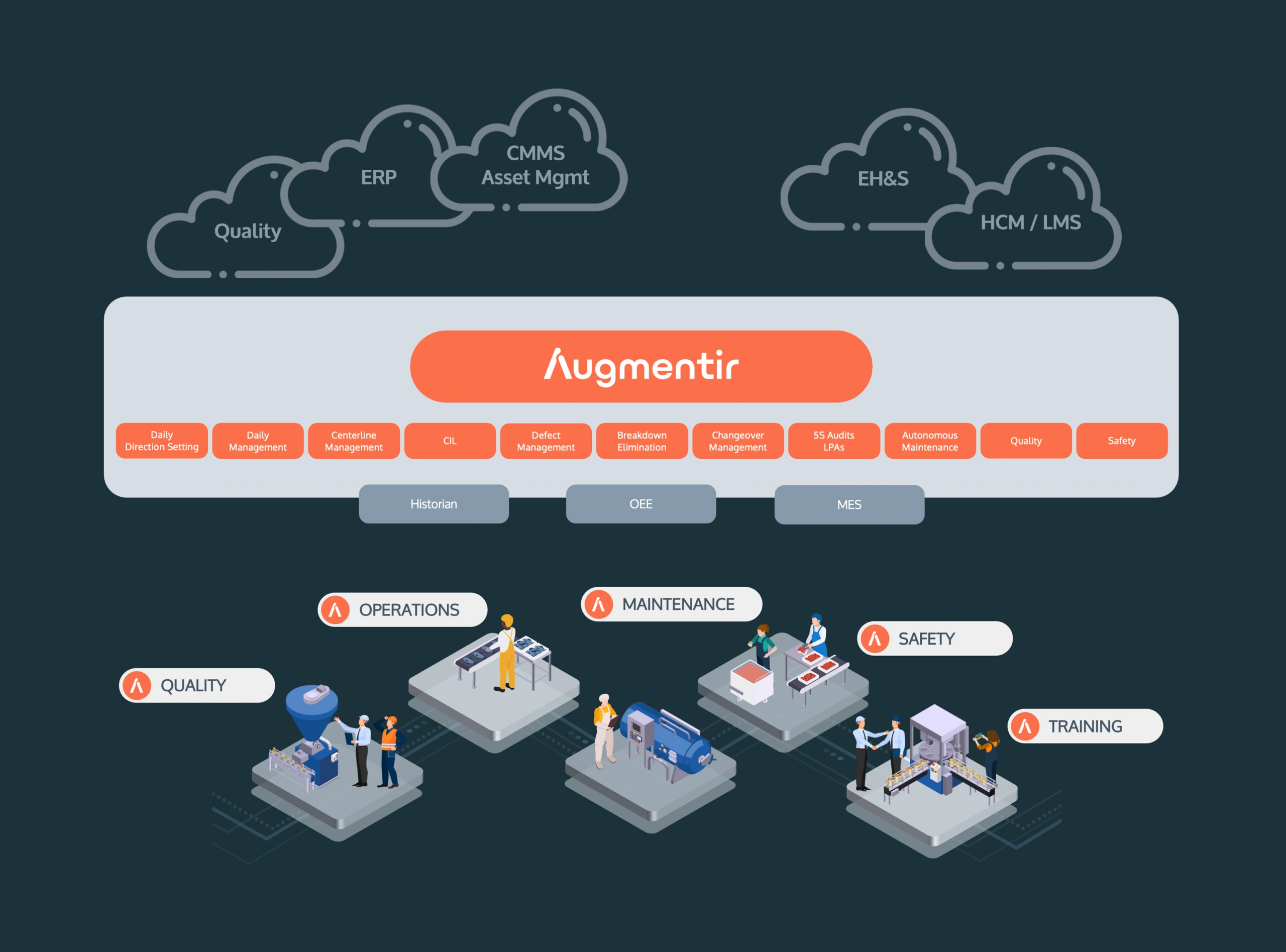
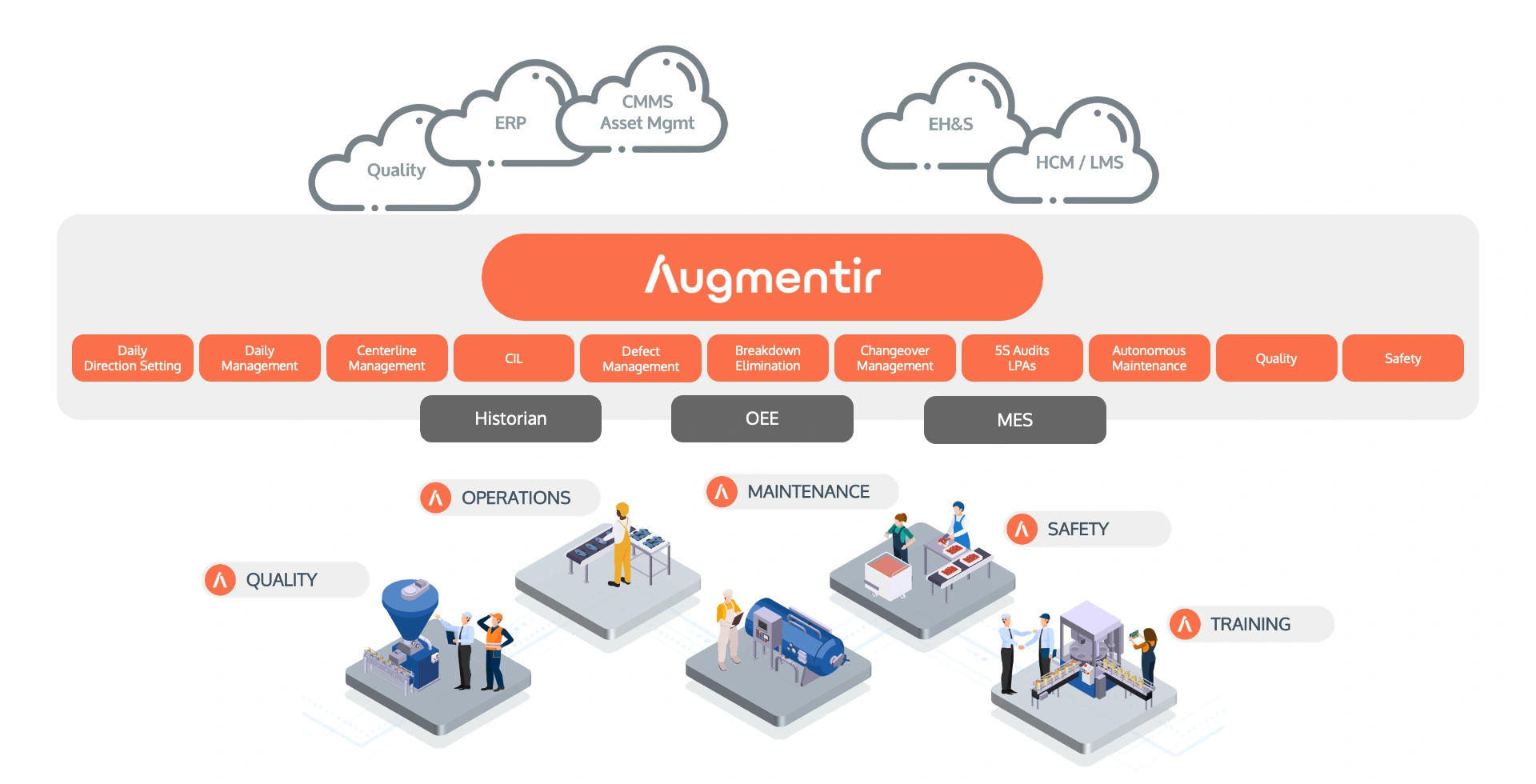
Augmentir serves as a digital frontline operating system for your TPM strategy. With Augmentir, you can digitize, manage, and optimize all aspects of your frontline operation:

  • Daily Direction Setting (DDS)
  • Daily Management System (DMS)
  • Centerline Management
  • Clean, Inspect, Lubricate processes
  • Defect Management
  • Breakdown Elimination
  • Changeover Management
  • Shift Handover
  • 5S and Layered Process Audits
  • Quality Management on the Shop Floor
  • Safety

augmentir connected worker platform – digital frontline operating system for iws

Here’s how Augmentir helps manufacturers eliminate breakdowns:

1. AI-Driven Work Instruction and Guidance

Augmentir’s digital workflows guide workers through inspection, troubleshooting, and maintenance procedures with step-by-step clarity. By digitizing standard operating procedures and enabling smart branching logic, Augmentir ensures the right action is taken at the right time—every time.

When equipment fails, operators can quickly access contextual work instructions based on the specific failure mode, reducing diagnosis time and improving repair accuracy.

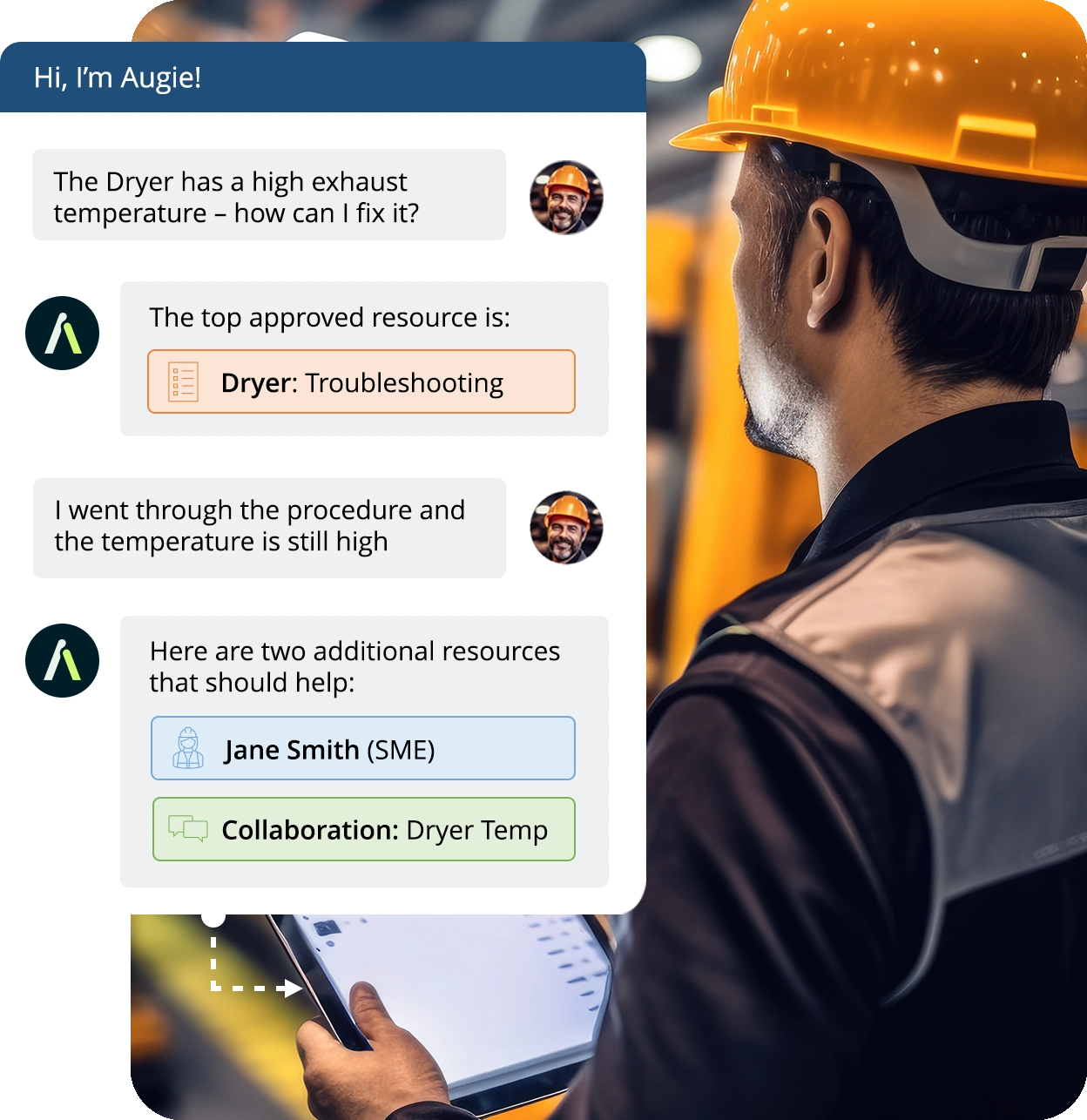
Furthermore, with tools like Augmentir’s Augie – a generative AI assistant for frontline operations, operators can get access to real-time troubleshooting resources and digital guidance.

frontline copilot generative ai for troubleshooting

2. Smart Data Capture

Augmentir enables seamless data capture at the point of work. Operators log downtime events, causes, and corrective actions via mobile devices, tablets, or smart glasses. This data feeds directly into analytics dashboards without manual entry or delays.

Photo and video capture further enriches the data set, providing visual evidence that aids in root cause analysis and training.

3. Continuous Learning with AI Insights

The AI engine in Augmentir analyzes performance data from workers, machines, and processes to identify skill gaps, process inefficiencies, and frequent failure patterns. These insights help prioritize BDE efforts and guide targeted interventions.
For example, if a particular asset experiences frequent minor stops due to operator error, Augmentir can recommend personalized training or suggest procedural adjustments.

4. Cross-Functional Collaboration

Breakdown Elimination often requires input from multiple departments. Augmentir fosters collaboration by enabling real-time communication and task delegation within a single platform. Issues can be escalated, tracked, and resolved collaboratively, reducing mean time to repair (MTTR).

industrial collaboration using augmentir to support breakdown elimination in manufacturing

5. Knowledge Retention and Transfer

Breakdown Elimination requires that lessons learned are captured and shared. Augmentir creates a living knowledge base where best practices, successful fixes, and RCA findings can be stored and retrieved on demand. New hires benefit from instant access to tribal knowledge, improving ramp-up time and reducing repeated failures.


Contact us today for a live demo.


See Augmentir in Action
Get in Touch for a Personalized Demo

Learn how Hunter Industries is transforming workforce training and operational performance using Augmentir’s AI-powered Connected Worker platform to reduce scrap, improve changeovers, and close skills gaps.

Manufacturers today face a familiar but increasingly urgent challenge: how to train, upskill, and support a less-skilled, less-experienced frontline workforce while maintaining productivity, quality, and operational efficiency. As product complexity increases and experienced workers retire, traditional training methods simply can’t keep pace.

hunter industries transforms training with ai

A recent Assembly Magazine feature highlights how Hunter Industries, a global manufacturer of irrigation and outdoor lighting products, is tackling this challenge head-on using Connected Worker technology powered by Augmentir. The results demonstrate how AI-driven digital tools can transform training from a static process into a measurable, performance-driven strategy.

The Challenge: Complex Operations and Workforce Variability

Hunter Industries operates advanced manufacturing processes, including injection molding and extrusion, where changeovers and setup tasks require precision and expertise. Like many manufacturers, Hunter faced variability in skill levels across shifts and facilities. Tribal knowledge, paper-based instructions, and manual tracking made it difficult to standardize execution and measure training effectiveness.

As operations scale and workforce demographics shift, these challenges become more pronounced:

  • Skills gaps between new and experienced workers
  • Inconsistent execution of standard operating procedures
  • Limited visibility into training effectiveness
  • Downtime and scrap caused by human error
  • Difficulty scaling best practices across teams

Hunter recognized that improving frontline performance required more than digitizing documents—it required a connected, intelligent system that could adapt to workers in real time.

The Solution: AI-Native Connected Worker Platform

By implementing Augmentir’s Connected Worker platform, Hunter Industries digitized and transformed how work is delivered, supported, and optimized on the shop floor.

augmentir ai-native connected worker platform

Augmentir combines:

  • Digital work instructions to standardize processes
  • AI-driven insights to personalize guidance
  • Skills tracking and competency management
  • Mobile-first tools for frontline accessibility
  • Remote collaboration capabilities
  • Generative AI tools to accelerate content creation and knowledge capture

Instead of relying on static PDFs or binders, workers now receive contextual, step-by-step digital guidance tailored to their skill level. The system continuously analyzes performance data to identify where workers may need additional support, helping reduce errors before they impact production.

This shift from reactive troubleshooting to proactive workforce optimization represents a significant evolution in how manufacturers manage training and performance.

Improving Training Effectiveness with Real-Time Insight

One of the most impactful outcomes of Hunter’s deployment is improved visibility into training effectiveness.

Traditionally, manufacturers measure training completion—not training impact. Workers attend sessions, complete certifications, and move on. But do those sessions actually translate to better performance on the floor?

With Augmentir, Hunter can now connect training data directly to operational outcomes. Supervisors gain insight into:

  • How quickly workers complete tasks
  • Where errors occur most frequently
  • Which procedures require additional coaching
  • Whether recently trained employees are performing at expected levels

This real-time feedback loop enables continuous improvement. As noted in the Assembly Magazine article, Hunter’s operations training leadership can now evaluate whether training efforts are delivering measurable results.

“The use of Augmentir within our manufacturing operation highlights our commitment to our people and innovation in the workplace,” says Yunior Murillo, operations training manager at Hunter Industries. “Augmentir’s platform allows our technicians to perform at their best while improving efficiency across our manufacturing departments. Additionally, the operational insights provided by Augmentir’s AI allow us to focus our training efforts on individuals that need them most and intelligently guide our technicians in their day-to-day activities.”

By linking workforce development directly to performance metrics, Hunter has transformed training from a cost center into a strategic lever for operational excellence.

Reducing Scrap, Downtime, and Changeover Time

Beyond training visibility, the platform has driven tangible operational gains.

Standardized digital workflows reduce process variation, ensuring that critical steps are followed consistently. Built-in validation and guidance minimize mistakes that previously led to scrap or rework.

In high-impact areas like injection molding changeovers, this consistency is critical. Even small improvements in setup execution can significantly reduce downtime and improve overall equipment effectiveness (OEE).

Since implementing connected worker technology, Hunter has seen:

  • Reduced scrap rates
  • Decreased unplanned downtime
  • Faster and more consistent changeovers
  • Improved execution across shifts

These improvements demonstrate that workforce enablement directly influences production performance.

Capturing and Scaling Institutional Knowledge

Another key advantage of connected worker platforms is knowledge retention.

Manufacturers across the industry are facing a wave of retirements among experienced workers. When that expertise walks out the door, companies risk losing years of operational know-how.

Augmentir enables Hunter to digitize tribal knowledge and embed it directly into workflows. Experienced operators can contribute insights, tips, and best practices that become part of standardized digital instructions.

Generative AI further accelerates this process by helping convert legacy documents and subject-matter expertise into structured, accessible guidance. This ensures knowledge is preserved and easily shared across facilities and teams.

Expanding Beyond Manufacturing

The success of Hunter’s initial deployment is driving expansion into additional operational areas, including maintenance teams.

Connected Worker technology isn’t limited to production lines. Maintenance, quality assurance, safety, and field service teams all benefit from real-time guidance, skills tracking, and AI-driven performance insights.

By extending the platform across functions, Hunter is building a more agile, data-driven workforce ecosystem.

A Blueprint for Modern Manufacturing

Hunter Industries’ success story reflects a broader shift occurring across industrial organizations. Manufacturers are recognizing that operational excellence starts with workforce excellence.

Connected Worker platforms powered by AI allow companies to:

  • Close skills gaps faster
  • Standardize work across distributed teams
  • Improve quality and productivity
  • Capture and retain critical knowledge
  • Continuously optimize frontline performance

Rather than treating training as a one-time event, organizations can create a living, evolving system that adapts to workers and operations in real time.

The Future of Workforce Enablement

As manufacturing becomes more complex and competitive, companies that invest in intelligent workforce tools will be better positioned to scale, innovate, and outperform.

Hunter Industries’ journey illustrates what’s possible when AI, digital workflows, and skills intelligence come together in a unified platform.

At Augmentir, we’re proud to partner with forward-thinking manufacturers who are redefining how frontline work gets done.


See Augmentir in Action
Get in Touch for a Personalized Demo

FAQs About AI for Manufacturing Workforce Training

  • How is Hunter Industries using Connected Worker technology to improve workforce training?

    Hunter Industries is using Augmentir’s AI-powered Connected Worker platform to digitize work instructions, personalize training, and provide real-time guidance to frontline workers. By replacing paper-based processes with intelligent digital workflows, Hunter can standardize execution, close skills gaps, and directly connect training efforts to measurable operational performance.

  • What are the benefits of AI-powered Connected Worker platforms in manufacturing?

    AI-powered Connected Worker platforms, like Augmentir, help manufacturers minimize downtime, improve changeover consistency, and accelerate employee onboarding. These systems provide digital work instructions, skills tracking, and performance analytics that allow companies to continuously optimize frontline workforce performance while improving overall equipment effectiveness (OEE).

  • How can manufacturers measure the effectiveness of workforce training?

    With Augmentir, manufacturers can link training data directly to operational outcomes. Instead of only tracking training completion, organizations gain visibility into task completion times, error rates, procedural adherence, and post-training performance metrics. This real-time feedback loop allows companies to continuously improve training programs based on measurable results.

  • How does Connected Worker technology help capture and retain institutional knowledge?

    Connected Worker platforms like Augmentir allow experienced operators to embed best practices, troubleshooting tips, and tribal knowledge directly into digital workflows. Generative AI tools can convert legacy documents and subject-matter expertise into structured digital work instructions, ensuring critical knowledge is preserved and scalable across shifts, facilities, and teams.

Discover how Hershey’s Digital Lean transformation combines lean principles and connected worker technology to empower frontline teams and drive operational excellence.

In an era where digital transformation is reshaping manufacturing, The Hershey Company offers a compelling roadmap for blending traditional lean principles with modern digital technologies. Through its Digital Lean initiative, Hershey is reimagining daily operations — putting frontline workers at the center of change, reinforcing standardized processes, and building a future-ready digital backbone that enables continuous improvement and operational visibility like never before.

digital lean and operational excellence

Building the Foundation for Digital Lean

Hershey’s Digital Lean journey did not begin with new technology — it began with strengthening the basics of lean execution. Before digitizing operations, the company focused on standardizing lean processes across its manufacturing network to ensure consistency in how work was performed and improved.

According to Will Bonifant, VP of Manufacturing, Engineering, and Supply Chain Strategy, the groundwork focused on three key areas:

  • Standardizing and refining core processes so they were truly lean and repeatable before being digitized.
  • Preparing and engaging the workforce early, ensuring employees understood the purpose of Digital Lean and how new tools would support their daily work rather than disrupt it.
  • Creating a connected digital infrastructure that links systems, data, and people across sites, enabling reliable, real-time visibility into operations.

With these elements in place, Hershey was able to move away from manual, disconnected workflows and toward digitally enabled daily management systems. This shift allowed teams at all levels to access consistent information, identify issues faster, and drive continuous improvement more effectively — defining characteristics of a mature Digital Lean approach.

Connected Workers as a Core Enabler of Digital Lean

Digital Lean at Hershey is already delivering value because it is tightly integrated with connected worker capabilities. As part of this approach, front-line teams are equipped to access information seamlessly, collaborate in real time, and execute work through guided, digital workflows that support lean execution at the point of work.

By embedding connected worker technology directly into its Digital Lean program, Hershey ensures that lean insights don’t stay locked in dashboards or reports — they translate into consistent, actionable behaviors on the plant floor. This alignment reinforces accountability, accelerates problem resolution, and supports continuous improvement across operations.

This approach closely aligns with Augmentir’s philosophy: the future of manufacturing is a human + digital synergy, where technology amplifies worker capability, strengthens lean behaviors, and enables people to perform at their best — every day.

What Digital Lean Looks Like on the Floor

Digital Lean at Hershey isn’t just a tech upgrade — it’s a shift in how work gets executed and improved every day:

Empowered Operators

In the past, operators faced slow, fragmented workflows when problems arose. Today, operators can:

  • Log issues directly via mobile devices,
  • See real-time updates as those issues are resolved,
  • Access performance data that helps them own outcomes on the line.

This enhanced visibility not only speeds problem resolution, but also boosts worker autonomy — a core principle of lean maturity.

Leadership Visibility, Real-Time Actions

Supervisors and plant managers gain a unified view of performance and losses from a single dashboard. This transparency allows them to:

  • Identify bottlenecks and losses quickly,
  • Prioritize corrective actions based on real data,
  • Drive continuous improvement across shifts and sites.

The shift toward digital workflows also means that information no longer lives in silos. Everyone — from operators to executives — benefits from the same accurate, timely insights.

Why Digital Lean Matters for Manufacturers

Hershey’s journey highlights several lessons for operations leaders:

  • Value starts with people first. Digital tools deliver impact only when they support equipped, engaged workers.
  • Standardization enables scale. Ensuring processes are lean before digitizing them reduces frustration and drives sustainable improvements.
  • Data unlocks action. Once lean processes are digitized, real-time insights accelerate problem solving and continuous improvement.

By anchoring digital transformation in lean principles, Hershey is proving that operational excellence and digital innovation are not separate pursuits — they’re mutually reinforcing.

Augmentir: Powering Hershey’s Connected Worker Strategy

As Hershey continues to mature its Digital Lean transformation, sustaining continuous improvement at scale requires more than visibility into performance — it requires connecting digital insights directly to frontline execution. To do this, Hershey leverages Augmentir as its connected worker technology, extending Digital Lean from dashboards into daily work on the factory floor.

augmentir connected worker platform for digital lean in manufacturing

Digital Lean provides the foundation by standardizing processes, digitizing daily management, and enabling real-time performance tracking. Augmentir operationalizes that foundation by connecting people, processes, and data at the point of work. Through AI-driven insights, Augmentir delivers personalized guidance, digital work instructions, and contextual support to operators — ensuring the right information reaches the right worker at the right time.

By using Augmentir as part of its Digital Lean ecosystem, Hershey is able to:

  • Translate insights into action by embedding continuous improvement directly into daily workflows.
  • Empower frontline workers with adaptive, skills-based guidance that evolves as experience and conditions change.
  • Reduce variability and reinforce standard work consistently across lines, shifts, and sites.
  • Capture and scale institutional knowledge to support onboarding, upskilling, and long-term operational resilience.

Within Hershey’s Digital Lean journey, Augmentir represents the critical bridge from visibility to execution — ensuring that digital insights don’t remain isolated in systems, but actively guide how work is performed every day.

As manufacturers move beyond digitizing processes toward truly augmenting human performance, Hershey’s use of Augmentir demonstrates how connected worker technology makes Digital Lean sustainable, scalable, and people-centric — turning continuous improvement into a daily habit rather than a periodic initiative.

Hershey’s Digital Lean transformation is a powerful example of how digital technologies — built on a solid lean foundation — can enhance operational agility, empower frontline workers, and drive measurable business value. As manufacturers navigate the next wave of digital disruption, the key takeaway is clear: start with people and processes, then scale with technology.


See Augmentir in Action
Get in Touch for a Personalized Demo


FAQs About Digital Lean in Manufacturing


  • What is Digital Lean in manufacturing?

    Digital Lean in manufacturing is the integration of traditional lean principles with digital technologies to improve daily operations, visibility, and continuous improvement. It focuses on standardizing processes, digitizing daily management, and empowering frontline workers with real-time data. Platforms like Augmentir make Digital Lean actionable by connecting lean insights directly to frontline execution through AI-driven work instructions, guided workflows, and connected worker tools.

  • How does Digital Lean improve operational excellence?

    Digital Lean improves operational excellence by eliminating manual processes, increasing real-time visibility, and enabling faster problem resolution across the factory floor. When combined with connected worker technology like Augmentir, Digital Lean ensures that insights from dashboards and performance systems are embedded directly into daily work—helping operators, supervisors, and leaders drive consistent, measurable improvement.

  • Why are connected workers essential to Digital Lean success?

    Connected workers are essential to Digital Lean because lean execution happens at the point of work.

    Without connected workers:

    • Insights stay in dashboards
    • Standard work becomes inconsistent

    Augmentir connects workers by delivering real-time guidance, digital standard work, and collaboration tools—ensuring lean behaviors turn into daily action.

  • How does Augmentir support Digital Lean on the factory floor?

    Augmentir supports Digital Lean by turning standardized lean processes into guided digital execution.

    It enables manufacturers to:

    • Deliver AI-powered work instructions
    • Provide contextual, skills-based guidance
    • Reduce variability and errors

    This bridges the gap between Digital Lean visibility and frontline execution.

  • What can manufacturers learn from Hershey’s Digital Lean journey?

    Hershey’s Digital Lean journey shows that successful transformation starts with people and processes.

    Key lessons include:

    • Standardize lean before digitizing
    • Empower frontline teams
    • Embed improvement into daily work

    By using Augmentir, Hershey ensures Digital Lean insights drive real action at scale.

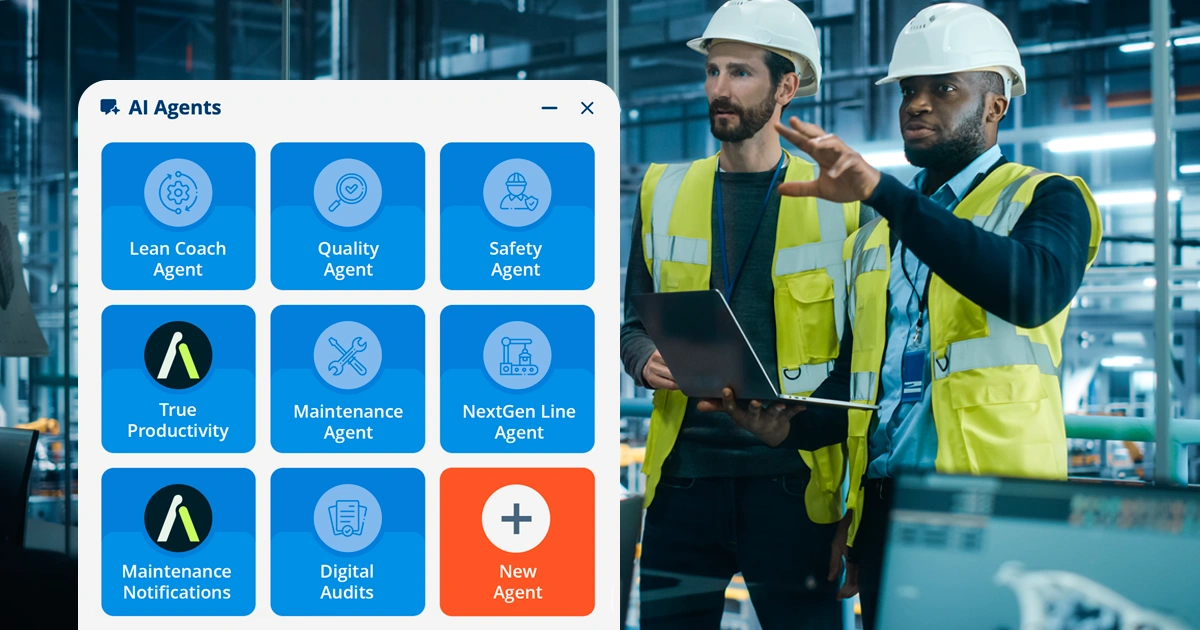
In a recent write-up, Tech-Clarity highlighted how Augmentir is addressing one of manufacturing’s most pressing challenges: enabling a smaller, less experienced frontline workforce to perform at a higher level with intelligent systems and AI agents that operate as “digital workers” alongside human workers on the factory floor.

When respected industry analysts take notice, it’s a strong signal that something meaningful is happening in the market. In a recent write-up, Tech-Clarity highlighted how Augmentir is addressing one of manufacturing’s most pressing challenges: enabling a smaller, less experienced frontline workforce to perform at a higher level with intelligent systems and AI agents that operate as “digital workers” alongside human workers on the factory floor.

industrial ai agents with augmentir

The analysis points to Augmentir’s expanding use of machine learning, generative AI, and agentic AI as key differentiators—driving measurable gains in productivity, training effectiveness, and continuous improvement across global operations.

A Single Pane of Glass for the Frontline

At the core of Augmentir’s approach is a simple but powerful concept: give frontline workers exactly what they need, when they need it—no more, no less. Tech-Clarity notes that Augmentir delivers this through a single, contextual interface that integrates with a broad ecosystem of plant and enterprise systems.

augmentir is the single pane of glass for frontline operations


The platform supports the full spectrum of connected worker needs, including:

  • Digital work instructions and content authoring
  • Skills matrices and knowledge sharing
  • Contextual, personalized training delivered in the flow of work
  • AI Agents that act as “digital workers” within the connected worker platform – operating alongside human frontline workers
  • Embedded analytics and reporting, including Microsoft Power BI

Because Augmentir’s founders come from an augmented reality background, immersive and experiential learning is a native part of the platform rather than an afterthought.

Closing the Loop with True Insights™

What truly differentiates Augmentir, according to Tech-Clarity, is how it closes the loop between frontline execution and continuous improvement. As work is performed, the platform applies machine-learning–driven AI to analyze operational data across tasks, machines, individuals, and cohorts.

These insights—what Augmentir calls True Insights™—surface where performance breaks down and where improvement efforts will have the greatest impact. This could mean refining instructions, improving process efficiency, enhancing safety, or delivering targeted training exactly where it’s needed.

on the job training ojt with augmentir ai agents

Rather than static reporting, Augmentir continuously learns from real work being done on the shop floor.

Expanding into Agentic AI

In early 2025, Augmentir introduced its Industrial AI Agent Studio, building on its existing GenAI assistant, Augie. Tech-Clarity highlights this as a major step forward, enabling customers to create custom, no-code AI agents tailored to their unique operational needs.

industrial ai agent studio - build custom ai agents for manufacturing

These agents extend Augmentir’s capabilities with autonomous digital workers that support key frontline use cases:

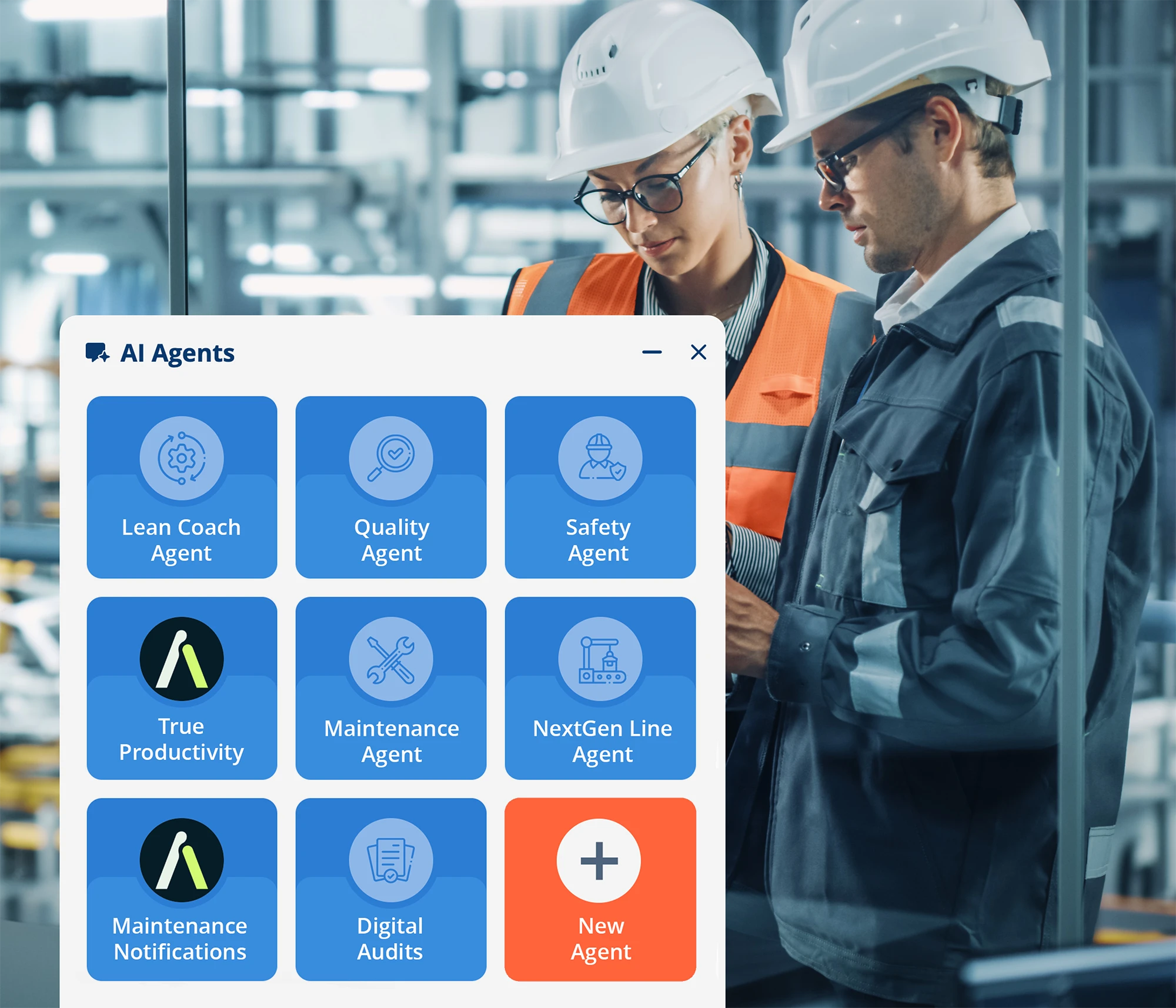
  • Digital Lean Coach: AI agents that fill the role of a Lean coach, helping accelerate lean transformation initiatives.
  • Adaptive Training and Skills Management: AI agents that can act on frontline workers’ skills and training data to support frontline managers by identifying strengths and weaknesses, skills gaps, and recommend training paths.
  • Operations: Operational agents that support more proactive KPI tracking, unparalleled visibility across Operations, Continuous Improvement, and TPM.
  • Safety: AI agents that automatically analyze safety data and activities to provide early warning notifications.
  • Proactive Maintenance Execution: Agents that monitor equipment health and integrate with CMMS to trigger work orders, report issues, or initiate preventive maintenance tasks before failures occur.

Built-In Governance with the 6 Laws of AI Agents

Tech-Clarity also praised Augmentir’s thoughtful approach to AI governance. The platform embeds the company’s 6 Laws of AI Agents, ensuring safety, transparency, and accountability as customers deploy AI at scale:

  1. Transparency in execution
  2. Clear human ownership
  3. AI origin disclosure
  4. Persistent AI disclosure
  5. Human-in-the-loop for impactful actions
  6. No generative AI for life-critical actions

These principles are especially important for industrial environments where trust, safety, and compliance are non-negotiable.

Proven Customer Value at Scale

With customers in more than 70 countries across industries such as food & beverage, pharmaceuticals, chemicals, CPG, and industrial equipment, Augmentir’s impact is already measurable.

Tech-Clarity highlights results reported by customers, including:

  • Up to 31% efficiency gains when standard work is consistently followed
  • 82% reduction in onboarding time, even amid high employee turnover
  • Faster issue resolution and reduced downtime
  • Over 5 million optimized time-and-motion studies conducted on the platform

Notably, Tech-Clarity points out that customers see a 250%–400% performance delta when comparing Augmentir’s AI-driven approach to earlier-generation or non-AI connected worker solutions.

Tech-Clarity’s Take

In their closing assessment, Tech-Clarity emphasizes that Augmentir’s comprehensive use of AI—combined with real operational feedback loops—makes it particularly well suited for organizations looking to accelerate continuous improvement, not just digitize instructions.

They also note that Augmentir’s experienced founding team and growing roster of global enterprise customers speak volumes about market confidence in both the company and its platform.

As Tech-Clarity concludes, organizations evaluating connected frontline worker solutions would be well served to take a close look at Augmentir—and where it’s taking the future of industrial work.


See Augmentir in Action
Get in Touch for a Personalized Demo

Discover how AI Factory Agents from Augmentir are transforming manufacturing with real-time insights, automation, and workforce augmentation.

In the evolving landscape of Industry 4.0, popularized by Klaus Schwab, and now Industry 5.0, manufacturers are under increasing pressure to become more agile, resilient, and efficient. Amid labor shortages, shifting customer expectations, and digital disruption, one of the most transformative tools emerging is Factory Agents: smart, context-aware AI agents capable of autonomously performing tasks, surfacing insights, and augmenting human decision-making.

a digital factory agent in manufacturing

What are Factory Agents?

Factory agents are not physical robots, nor are they just software scripts. They’re intelligent, digital workers — powered by AI — that act on behalf of manufacturing teams to interpret data, automate actions, and optimize workflows. They serve as proactive copilots on the shop floor, embedded into the frontline work environment, continuously learning from human activity and contextual factory data to provide real-time support and operational insights.

These agents can assist with:

  • Recommending optimized workflows
  • Identifying skill gaps or training needs for frontline workers
  • Monitoring process performance and flagging anomalies
  • Automatically capturing tribal knowledge
  • Personalizing work instructions based on the worker’s experience and certification level

In short, factory agents bridge the gap between human intelligence and machine efficiency on the shop floor — and Augmentir is leading the charge.

Augmentir’s AI Agent Studio: Manufacturing Intelligence Made Easy

While agentic AI the concept of AI agents has existed in other sectors, Augmentir is the first to bring a no-code Industrial AI Agent Studio purpose-built for manufacturing. This unique platform allows operations leaders, supervisors, and even non-technical users to create and deploy custom AI agents tailored to specific needs across:

  • Workforce onboarding and training
  • Maintenance and repair operations (MRO)
  • Quality assurance
  • Safety procedures
  • Performance monitoring

industrial ai agent studio - build custom ai agents with augmentir

These agents are powered by proprietary algorithms and generative AI that continuously learn from your workforce and operations data. That means over time, the agents get smarter — making increasingly precise recommendations, automating more tasks, and reducing variability across the shop floor.

The result? An adaptive, intelligent frontline that can respond dynamically to production demands, labor variability, and skill shortages.

Meet Augie: The Face of Next-Gen Industrial AI

At the core of Augmentir’s AI capabilities is Augie — an Industrial Generative AI assistant built specifically for frontline manufacturing environments. Augie acts like a real-time guide and operational partner for shop floor workers, supervisors, and even plant managers.

Here’s what makes Augie different:

  • Context-aware assistance: Augie understands the unique context of your operation — such as a specific piece of equipment, a shift schedule, or a worker’s skill level — to tailor guidance appropriately.
  • Conversational interface: Workers can interact with Augie naturally through chat, enabling real-time Q&A, issue resolution, or step-by-step guidance.
  • Continuous learning: As workers interact with Augie, it learns and improves, capturing undocumented knowledge and institutionalizing best practices across the organization.

industrial ai agent studio operations analyst

Rather than replacing workers, Augie amplifies their capabilities, making everyone on the shop floor more confident, capable, and productive.

Real-World Impact: Augmentir in Action

Companies using Augmentir have reported measurable improvements across multiple KPIs:

  • 20–40% reduction in training time by personalizing learning to individual skill levels
  • 30% improvement in first-time quality through smarter digital work instructions
  • 25% gain in workforce productivity due to real-time guidance and fewer delays
  • Stronger worker retention through empowered learning and growth pathways

In a time when manufacturers are grappling with a skills gap, labor shortages, and increased demand for agility, these outcomes are game-changers.

Why Factory Agents Are Defining the Future of Industrial Work

The traditional shop floor has been defined by rigid systems and static processes. But today’s manufacturers need more flexibility — they need systems that adapt to shifting demand, dynamic labor pools, and constant process change.

AI factory agents offer this adaptability and with Augmentir’s Industrial AI platform, manufacturers can unlock this potential without a massive overhaul or technical burden.

Factory agents represent a new class of industrial tools — intelligent, autonomous, and human-centric. As the first platform to bring this vision to life, Augmentir is not just building tools, but reshaping how manufacturing work gets done.

With Augie and the AI Agent Studio, Augmentir is helping manufacturers step into a new era of operational excellence — where the frontline is not just automated, but truly augmented.

Learn more about how Augmentir’s AI shop floor agents can modernize your operations – contact us today for a live demo.


See Augmentir in Action
Get in Touch for a Personalized Demo