Posts

Augmentir’s Chris Kuntz explores how food and beverage manufacturers are moving from traditional Lean to Digital Lean using connected worker technology and real-time data to shift from reactive to proactive operations.

Augmentir’s VP of Strategic Operations, Chris Kuntz, recently published an article in Food Industry Executive outlining how the food and beverage industry is moving beyond traditional Lean manufacturing and what that shift looks like on the plant floor. Here’s a look at the key themes and why they matter for manufacturers navigating today’s operational pressures.

Why Traditional Lean Is Reaching Its Limits

For decades, Lean manufacturing has been the backbone of operational efficiency in food and beverage, built around principles like waste elimination, continuous improvement, and standardized work. And it has delivered real results. But the operating environment has changed significantly.

Today’s food and beverage manufacturers face a much more complex landscape: consumers are demanding more SKUs, shorter product runs, seasonal varieties, and cleaner labels — all at the same time. Regulatory scrutiny around traceability and food safety has intensified. Supply chains are more volatile. And the workforce itself is shifting, with experienced operators retiring and taking decades of institutional knowledge with them.

Against this backdrop, the traditional tools of Lean — paper logs, manual audits, clipboard-based checklists, and end-of-shift reports — are showing their age. By the time data gets reviewed and decisions get made, the opportunity to intervene has often already passed. The problem isn’t the Lean philosophy itself; it’s the infrastructure it’s been running on.

What Is Digital Lean?

Digital Lean takes the core principles of waste reduction, continuous improvement, and standardized work and adds a layer of real-time data, connected worker technology, and AI-driven intelligence that makes those principles far more actionable.
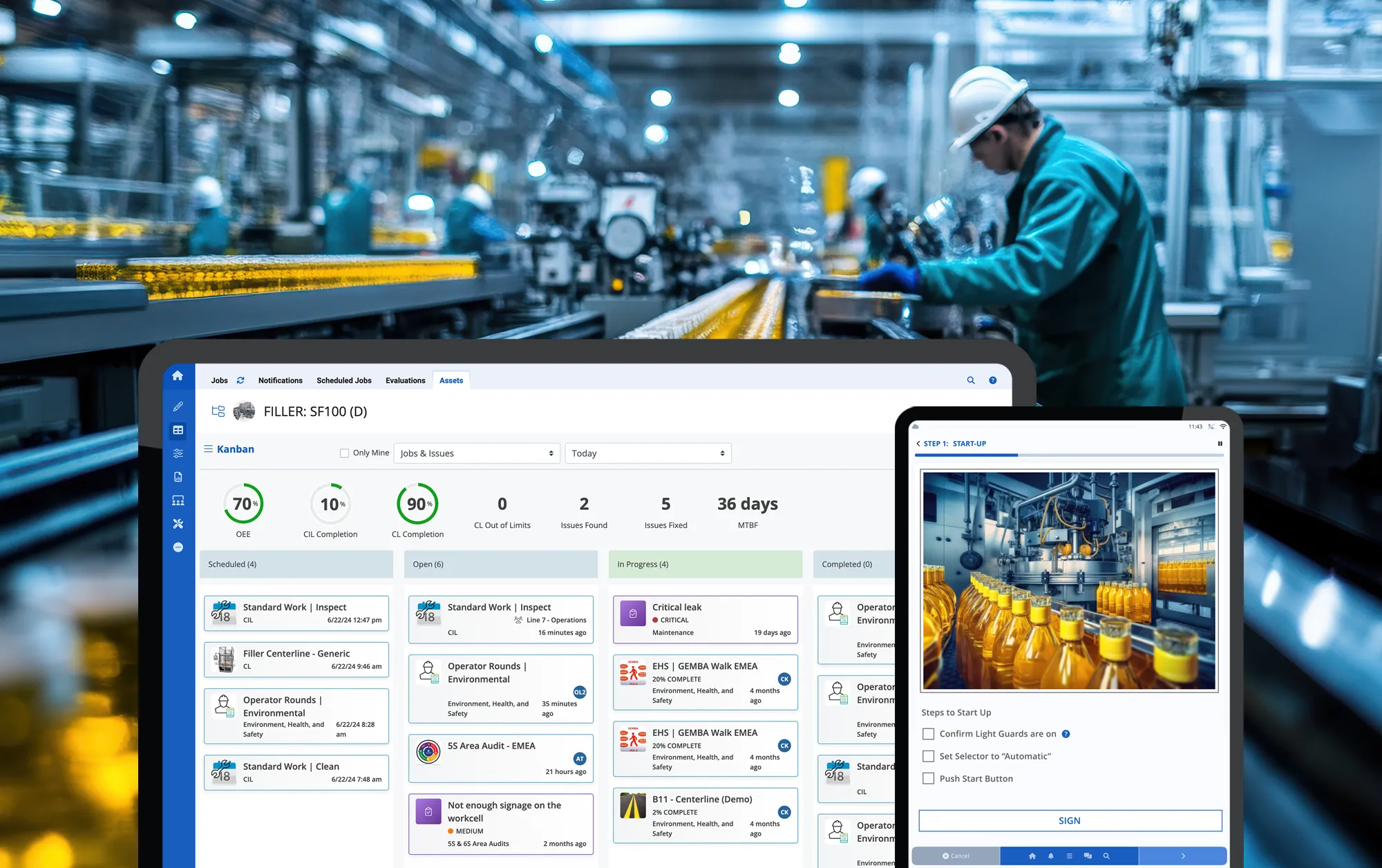
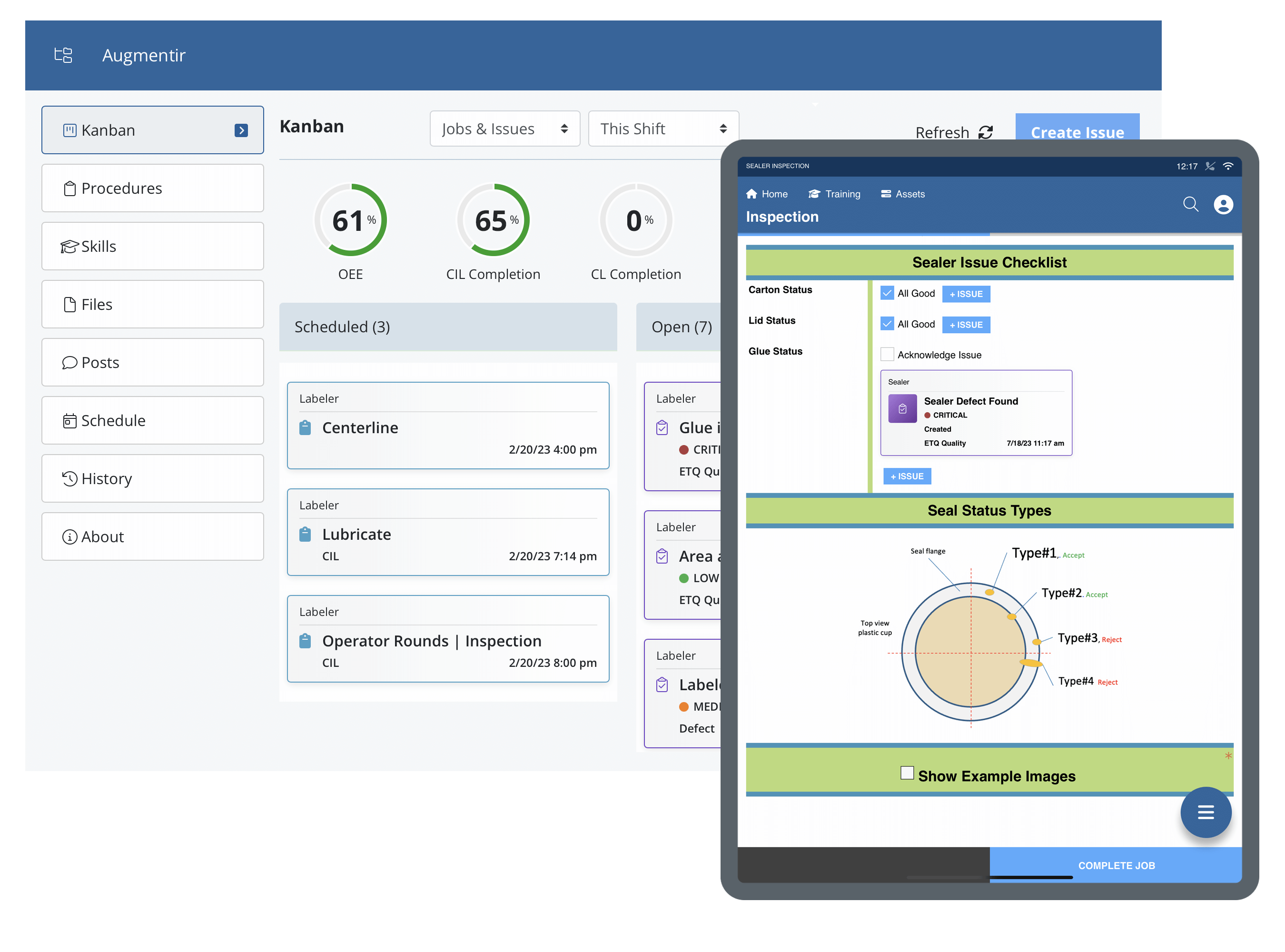
example of digital lean manufacturing software from augmentir

The shift is from retrospective to real-time. Instead of analyzing what went wrong after a shift ends, Digital Lean systems surface problems as they happen and put the right information in front of the right person to act immediately. Instead of relying on the most experienced person on the floor to carry critical process knowledge in their head, adaptive digital work instructions make that knowledge accessible to everyone.

At the center of this model is what Chris Kuntz describes as a “Single Pane of Glass” — a mobile-first, unified platform that integrates with enterprise systems like ERP, breaking down the data silos that have historically separated shop floor operations from business leadership. Frontline workers, supervisors, and executives all gain real-time visibility into the same operational picture, enabling faster, more informed decisions at every level of the organization.

Connected Worker Technology and AI Agents

The technology enabling Digital Lean is a significant departure from legacy systems. Rather than bolt-on software that requires workers to leave the floor to log data, modern connected worker platforms are designed for the frontline. Workers access live data, receive contextual guidance, and log information directly from mobile devices on the line — reducing friction and increasing the accuracy and timeliness of data capture.

AI agents are taking this a step further by acting as always-available digital assistants on the factory floor. These agents can assist workers with troubleshooting equipment issues, surfacing relevant procedures, analyzing real-time operational data, and even supporting autonomous operations in some contexts. The practical effect is that workers, including newer, less experienced employees, can perform at a higher level because they have intelligent support at their fingertips.

Where Digital Lean Makes an Immediate Impact

Quality and compliance: Food manufacturers operate in one of the most heavily regulated industries in the world, where quality deviations can lead to costly recalls, brand damage, and serious public health consequences. Digital Lean replaces many manual quality checks with automated validation and continuous line monitoring. If a pasteurization temperature drifts out of range or a label misaligns, the system triggers an alert or stops the line — before a defective product moves further down the line. Digital checklists built around Lean initiatives like 5S audits, Gemba walks, and centerline management ensure these processes happen consistently, with a complete digital audit trail that makes regulatory inspections far less stressful.

Equipment maintenance and uptime: Unplanned downtime is one of the most expensive problems in food manufacturing, and it’s often made worse by reactive maintenance practices. Digital Lean enables a more proactive approach through autonomous maintenance workflows, AI-assisted troubleshooting, and real-time equipment monitoring. When an issue is detected, workers have immediate access to the right diagnostic information and repair procedures, reducing the time from problem identification to resolution. Over time, the data captured through these workflows also supports better predictive maintenance — moving from “fix it when it breaks” to “fix it before it breaks.”

Changeover agility: High-mix production environments, where manufacturers run dozens of different SKUs and must execute frequent changeovers, are among the most challenging to manage with traditional Lean tools. A changeover that takes 45 minutes instead of 30 doesn’t just waste time; it compounds across hundreds of runs per year. Digital frameworks address this through skills-based, adaptive work instructions that guide operators through complex changeover procedures step by step, adjusting guidance based on the product being run and the operator’s experience level. This reduces errors, speeds up execution, and critically, decouples performance from tribal knowledge.

The Human Element: Empowering the Frontline

One of the most important, yet sometimes overlooked, aspects of Digital Lean is its impact on frontline workers themselves. Digital transformation in manufacturing often gets framed as a story about technology replacing people. Digital Lean tells a different story.

When operators have mobile access to real-time operational data, they become active participants in continuous improvement rather than passive executors of fixed procedures. Real-time metrics let them spot and respond to issues without waiting for a supervisor. Unified communication tools reduce the frustration of trying to escalate problems through disconnected channels. Workers gain a clearer sense of how their actions affect outcomes, which builds accountability and engagement.

Workforce intelligence capabilities extend this further by identifying where individual workers have skills gaps and where upskilling or reskilling opportunities exist. As the workforce evolves, with more younger, digitally native workers entering the floor alongside veterans, these tools help ensure the organization’s collective capability keeps pace with its operational complexity.

Perhaps most importantly, Digital Lean platforms help capture and institutionalize tribal knowledge. When an experienced operator retires after 25 years, the process insights they’ve accumulated don’t have to leave with them. Digital work instructions, captured troubleshooting guides, and documented best practices turn individual expertise into shared organizational assets.

How Augmentir Enables Digital Lean

For food and beverage manufacturers looking to make the transition from traditional Lean to Digital Lean, Augmentir provides the infrastructure to make it real —  on the plant floor.

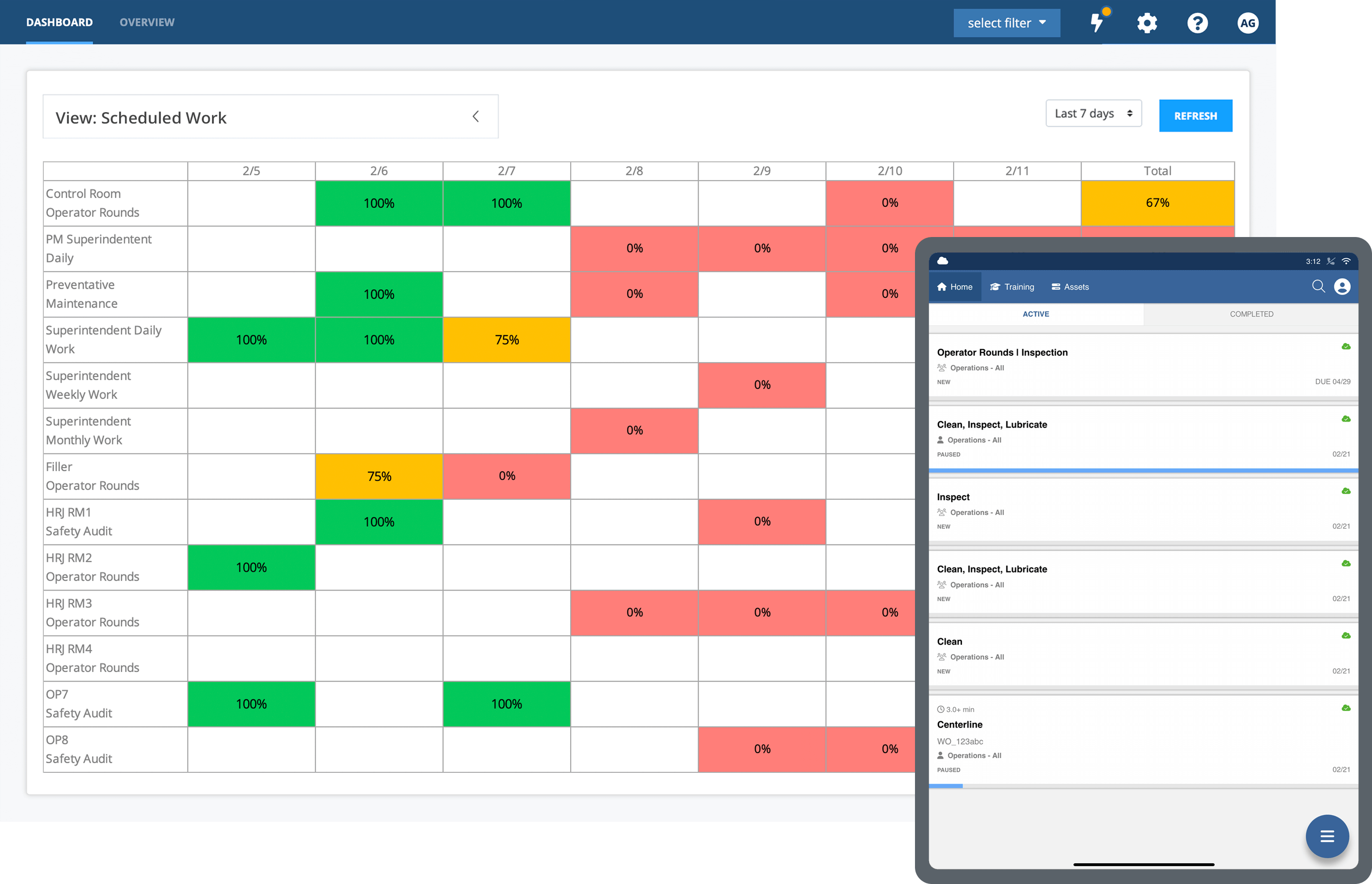
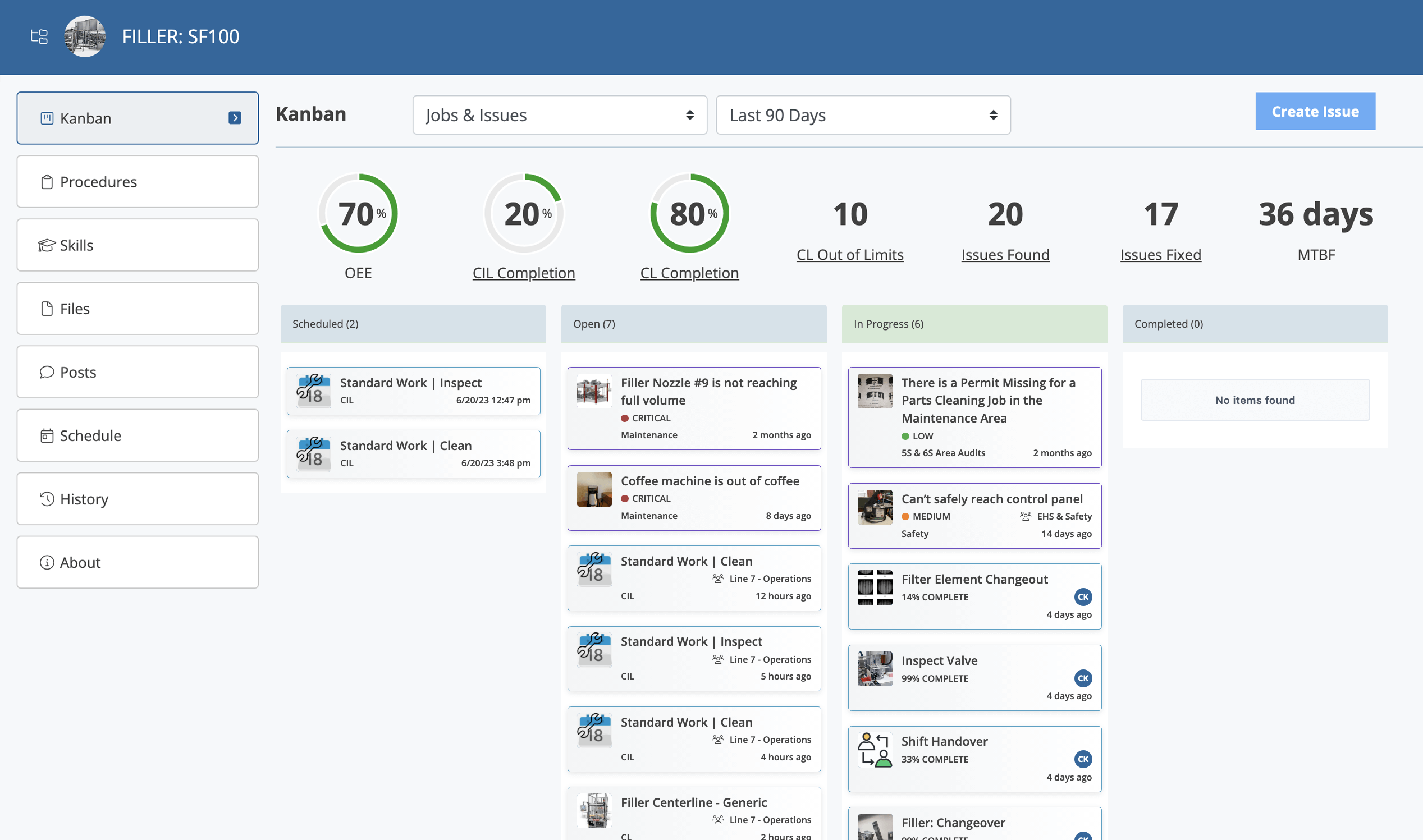
Augmentir’s platform connects workers, processes, and operational data in one unified system, giving manufacturers the “Single Pane of Glass” visibility that Digital Lean requires. Frontline workers get mobile-first access to digital work instructions, real-time quality checklists, and AI-powered guidance all tailored to the individual based on their skills, experience, and the task at hand. Supervisors and leadership gain live dashboards showing exactly what’s happening on the floor, with the ability to identify and act on issues as they emerge rather than after the fact.

Key capabilities that support the Digital Lean journey include:

AI-powered work instructions: Augmentir’s adaptive, skills-based digital work instructions evolve with each worker. New operators get more detailed step-by-step guidance; experienced workers get streamlined views. This reduces errors during changeovers, onboarding, and complex maintenance tasks, without requiring a Lean expert on every shift.

Connected quality and compliance: Digital checklists and inspection workflows replace paper-based processes with automated, audit-ready documentation. Augmentir supports 5S audits, Gemba walks, centerline management, and other Lean quality initiatives, with built-in validation logic and real-time alerts that keep quality from slipping through the cracks.

AI agents on the factory floor: Augmentir’s AI agents act as on-demand digital coworkers, helping frontline staff troubleshoot equipment issues, surface relevant procedures, and capture operational data in real time. This accelerates issue resolution, reduces reliance on scarce expert knowledge, and keeps lines running.

Workforce intelligence: Augmentir tracks individual worker performance and skill development over time, giving operations leaders the visibility to proactively close capability gaps, optimize labor assignments, and build a more resilient workforce. Tribal knowledge gets captured systematically and turned into shared organizational assets rather than lost when tenured employees leave.

Food and beverage manufacturers working with Augmentir are able to move faster on their Digital Lean initiatives because the platform is designed specifically for manufacturing frontlines.

The Competitive Standard Is Shifting

The food and beverage manufacturers that are pulling ahead aren’t just running leaner operations — they’re running smarter ones. By building on modern connected worker infrastructure, they’re closing the gap between what’s happening on the floor and what leadership can see and act on. They’re responding to market shifts faster, managing quality more consistently, and developing a workforce that improves continuously rather than just maintaining the status quo.

The shift to Digital Lean isn’t about replacing the foundational principles that have made Lean effective for decades. It’s about giving those principles the infrastructure they need to deliver at the speed and scale modern food manufacturing demands.


Read the full article on Food Industry Executive. 


See Augmentir in Action
Get in Touch for a Personalized Demo


Frequently Asked Questions (FAQ)

  • What is Digital Lean Manufacturing and how is it different from traditional Lean?

    Digital Lean Manufacturing combines Lean principles with real-time data, AI, and connected worker technology. Unlike traditional Lean, which relies on paper-based processes and manual reporting, Digital Lean enables real-time visibility, faster decision-making, and continuous improvement on the factory floor.

  • How can connected worker technology reduce downtime in food manufacturing?

    Connected worker technology, like Augmentir, reduces downtime by giving operators instant access to AI-guided troubleshooting, digital maintenance procedures, and real-time equipment information. This helps teams resolve issues faster and supports predictive maintenance efforts.

  • How does Augmentir support Lean manufacturing in food and beverage?

    Augmentir helps food and beverage manufacturers digitize Lean processes such as 5S audits, Gemba walks, centerline management, and changeovers. Its AI-powered connected worker platform provides digital work instructions, automated quality checks, and real-time operational insights to improve efficiency and consistency.

  • How does Augmentir help food and beverage manufacturers retain triball knowledge?

    Augmentir captures tribal knowledge through digital work instructions, troubleshooting workflows, and standardized best practices. This helps manufacturers reduce training time, improve workforce consistency, and preserve critical operational expertise as experienced workers retire.

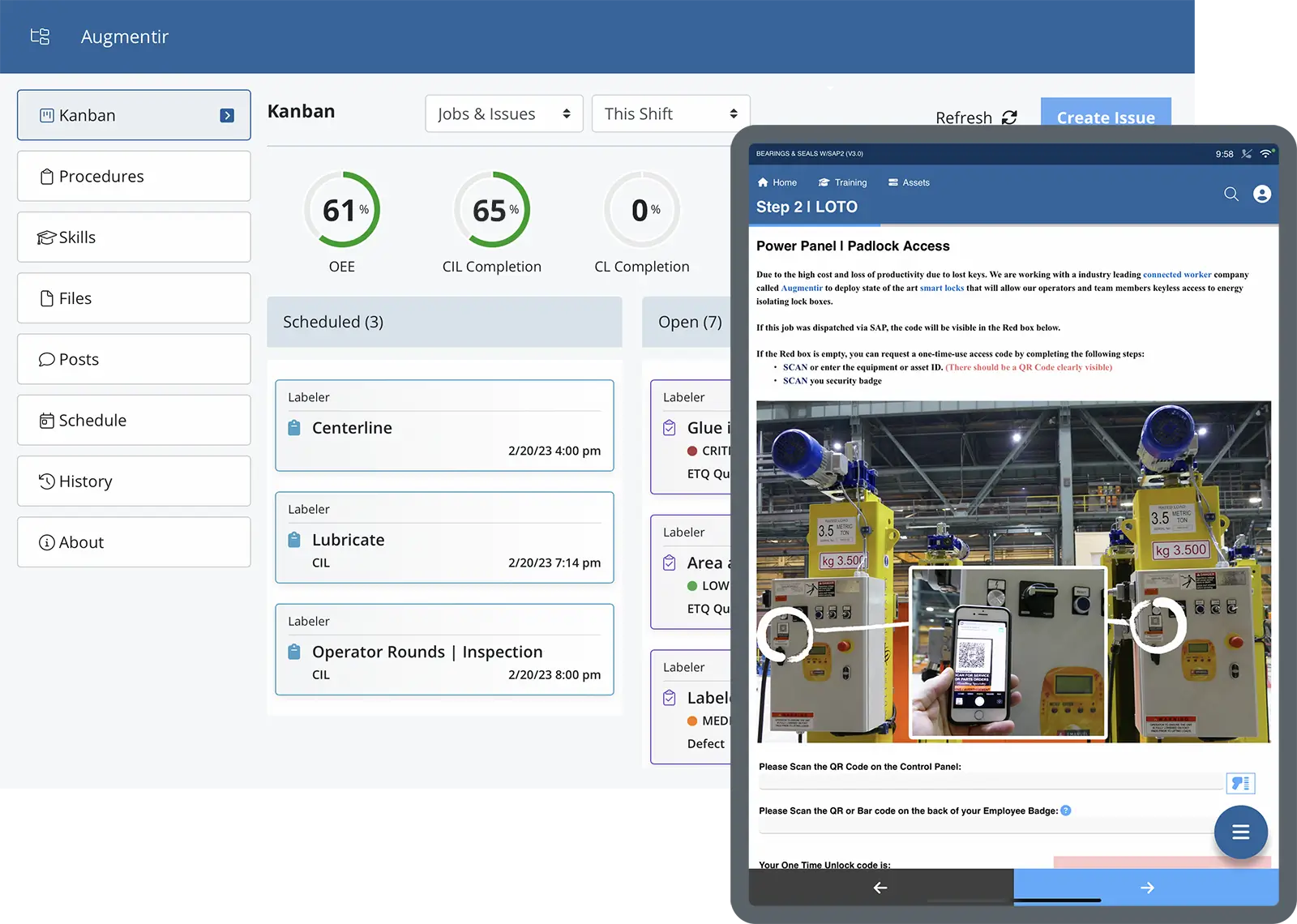
Learn how to reduce changeover time in manufacturing and the benefits of doing so to maximize production processes.

Providing quality products consistently and on time is at the forefront of customer satisfaction. In today’s competitive market, manufacturers must execute production runs quickly and efficiently to meet customer demand. But equipment and workers can’t operate 24/7. Machines must be properly maintained, workstations require cleaning and employees need rest. This is where optimizing changeover time comes in.

Changeover time is the period that it takes for workers to adjust machines or for assembly lines to start the next product run. A changeover usually includes swapping parts, sanitizing equipment, and preparing it for the next cycle. A good rule of thumb is to keep the changeover period down to less than 10 minutes. You can keep track of your organization’s changeover time by capturing how long it takes to produce each product.

Keeping an eye on your changeover time can help you maximize production and improve processes. Learn more about how you can reduce changeover time in manufacturing by exploring the following topics:

Three steps for reducing changeover time

Minimizing changeover time is a key component of lean manufacturing, a production method aimed at minimizing waste while increasing worker productivity. Implementation of this process of quick changeover can help manufacturers maximize uptime and cut down on waste caused by downtime.

Although there are various steps you can take to reduce it, here are some essential steps to help you get started:

Step 1: Assess your present changeover method.

It’s crucial to look at your existing changeover protocol before taking action to modify it. Try to identify which processes need optimization in order to cut down on the time between inventory runs.

Step 2: Implement single-minute exchange of dies (SMED).

Single-minute exchange of dies is a tool used in lean manufacturing to reduce changeover time to single digits. This means that a successful assembly run should be less than 10 minutes.

It’s helpful if workers have some idea of how long each task (such as switching parts, cleaning, etc.) takes during the production process. This awareness can be cultivated the more they familiarize themselves with procedures and day-to-day routines.

Step 3: Create standard changeover procedures.

Creating standard operating procedures (SOPs) and standardizing work can help with the changeover process. If there aren’t centralized procedures, changeover times will vary based on the employee, how long it takes them to clean up, set up and begin a new production run.

It’s important for procedures to contain explicit directions on how to perform successful changeovers. This can include highlighting which equipment needs to be calibrated and other machinery-related tasks.

Pro Tip

Digitizing changeover procedures can offer several benefits that enhance the overall efficiency, safety, and effectiveness of the changeover process. Digital procedures can be accessed by frontline workers through a mobile device or wearable technology, and help improve accessibility, accountability, standardization, as well as provide visual aids to less-experienced workers performing the task.

A

In a nutshell, having clear instructions makes it easier for workers to know what to expect when it’s time for a changeover.

Benefits of reducing changeover time

Reducing changeover time can yield a number of benefits, especially for companies producing a large number of products on a day-to-day basis.

Some of the advantages include:

  • Makes it easier to transition between production processes
  • Creates a more productive work environment
  • Helps to reduce equipment downtime
  • Gets products to customers faster

How digitization can help

Implementing connected worker solutions that digitize and optimize changeover processes can help reduce the time each changeover takes by providing explicit digital instructions customized to any given task, machine, or worker.

benefits of digital work instructions

Digital work instructions are electronic versions of work instructions, quality manuals, or SOPs that provide necessary visual aids and real-time contextual information to help guide workers through complex tasks. These digital work instructions intelligently deliver guidance and streamline changeover processes with images, videos, augmented reality experiences, and live support from colleagues or subject matter experts.

Augmentir is the world’s first AI-powered connected worker platform that helps industrial frontline workers reduce changeover time in manufacturing using smart technology. Learn how world class manufacturers are using Augmentir to drive improvements across their industrial operations – contact us for a demo today!


See Augmentir in Action
Get in Touch for a Personalized Demo

Learn how to improve quality control and assurance in the food industry with digital solutions from Augmentir.

Following quality control (QC) and quality assurance procedures in the food industry is imperative to ensure product quality and consumer satisfaction. Today’s consumers demand safe, reliable goods that meet all quality inspection protocols. The last thing you want is for a product to get recalled because of potential health concerns.

According to Food Manufacturing, quality control is one of the most important aspects of the food and beverage industry. Manufacturers who perform routine inspections of products during each stage of the production process significantly increase their chances of delivering items that are free of health hazards and liabilities. But beyond avoiding these concerns, standardizing and digitizing quality procedures benefits the entire operation.

Ultimately, preventing and catching quality issues can boost product quality, reduce waste, raise profits, increase brand reputation, and avoid media or food safety disasters. Learn more about QC and assurance in the food industry and how to improve it as we discuss:

quality control food industry

Types of quality control measures to take

There are certain QC measures you can take to ensure that all goods meet quality standards, from regular machine inspections to worker training. They fall into two general categories: preventative and reactive.

Preventative (proactive) quality control: Minimizing the number of deficiencies begins with implementing preventative QC solutions. When workers can catch mistakes before they even happen, they prevent product defects. Preventative QC measures should be practiced on a routine basis and can range from inspecting machines and equipment to offering employee training opportunities. By providing workers with real-time information and guidance through mobile, connected worker solutions, manufacturers enable them to make better decisions about product quality, reducing the risk of errors and identifying potential quality issues before products are shipped to customers, reducing the risk of product recalls, and preserving consumer trust.

Reactive quality control: Catching every defect on the production floor is nearly impossible, even if the most fool-proof strategies are taken. That’s why creating a plan of action ahead of a crisis can help solve quality issues as they happen.

What to put in your plan will depend on the potential problems. For example, you can include specific instructions on what to do if machinery breaks down or stops unexpectedly. It’s vital to collect any data at this stage. Analyzing this data can help you improve preventative quality control in the future to make sure the same problems don’t happen again.

Pro Tip

By utilizing AI and modern, digital technologies, companies can connect, engage, and empower frontline workers to drive quality improvements, resolve quality issues faster, and share timely insights with teams across the value chain.

A

Keep in mind that practicing quality control in the food industry should be part of every manufacturing process, from product ideation and development to production and delivery. Problems can develop at any time, so it’s crucial to follow protocols at every stage of production to prevent even the slightest of mistakes.

All workers should also uphold QC and assurance protocols in their everyday tasks to ensure continuous product improvement.

Better organization of equipment can also help workers understand how the action of one affects the other to solve any potential problems. This is another benefit of integrating your asset hierarchy with a connected worker solution. In a nutshell, strong hierarchies are a solid foundation for proper maintenance management and reliability.

How to improve QC and assurance procedures in food production

Effective quality control and assurance procedures prevent defective food products from making their way into grocery stores and homes. That’s why manufacturers should document the quality of their goods at every stage of the operational process. Strategies like first time quality (FTQ), or first time right, plans coupled with smart, connected solutions help decrease product deficiencies and increase customer satisfaction.

Manufacturing firms in the food industry must follow specific requirements set by the Food and Drug Administration (FDA), Good Manufacturing Practices (GMP) system, and the Hazard Analysis and Critical Control Points (HACCP). The guidelines set by these regulatory bodies can give businesses a better idea of how their processes should look and what data they need to collect and report.

Data should be collected for real-time production processes. These vary by product but may range from product chilling and thermal processing to testing raw materials for metal toxins and other chemical deposits.

The following steps provide a roadmap for how to improve quality control in the food industry.

Step 1: Source the correct ingredients

A successful assembly line run begins with finding and using the correct ingredients. Some things to think about when deciding which ingredients to choose: where the raw material was sourced, when, and its condition.

Step 2: Include an approved supplier list

Make sure that each ingredient has an approved supplier list. A good rule of thumb is to include three vendors per ingredient and record the ingredient with each supplier’s name, address, and code number on the list. The more information you include, the better. Having an approved vendor list ensures that all parties are properly vetted by the manufacturing firm and meet its requirements for quality and distribution.

Step 3: Document product and recipe creation

Documenting how each food item is made and its recipe helps set the quality standards for finished goods. This documentation can also be useful when improving product development in the future. Your document should include the types of ingredients used, their codes, batch yield, percentage formula, and more.

Step 4: Catalog production procedures

It’s also critical to log all the details of a production process, including how materials should be delivered, the appropriate conditions for storing food, what order each ingredient should be added to the batch, what tools are needed, and who is in charge of each task.

Note that this step is different from documenting product and recipe development because it includes the actual instructions for carrying out each procedure. For example, a worker may be asked to preheat the oven to a certain temperature as part of ensuring the food is ready for customer distribution.

Step 4: Record real-time processes

Machine operators should record in real-time every detail of how goods are created during actual production. This can include factors like product size, weight, expiration date, equipment conditions, and more.

Step 5: Digitize assurance and inspection processes

AI and smart, connected worker systems help digitize and link inspections and other quality control procedures. This creates an additional layer of defense, protecting customers and preventing quality issues before they can impact production.

How Augmentir helps with quality control and assurance

Augmentir offers a smarter way to improve quality control in the food industry by effectively standardizing and optimizing quality assurance and inspection procedures for all frontline workers. With our smart, connected solutions coupled with AI-powered software, food manufacturers have improved quality control and assurance by:

  • Tracking and analyzing data to identify trends and opportunities for improvements
  • Reducing human error in inspections by standardizing and improving training procedures and processes
  • Transforming connected workers into human sensors who can proactively address quality and safety events that surface during manufacturing operations

standardize and digitize quality assurance procedures


Our AI-powered connected worker solutions, provide digital work instructions to help employees better perform inspection checks and reduce the number of production errors and rework.

These customized solutions also include:

  • Digital standard operating procedures (SOPs) for how to complete assembly line tasks. These step-by-step instructions can greatly improve workflow efficiency, increase regulatory compliance, and reduce mistakes on the shop floor.
  • Digital workflows that convert your paper-based processes to digital work instructions and personalize them to the needs of each worker.
  • Enhanced product traceability to decrease equipment setup time, reduce process inconsistencies, and better meet customer expectations. Our digital instructions help you to easily track materials from the supply chain, inventory, and across every production process.

If you are interested in learning why companies are choosing Augmentir to help improve their quality control and assurance processes, check out our quality use cases – or reach out to schedule a live demo.


See Augmentir in Action
Get in Touch for a Personalized Demo


These virtual events were a great way to connect with manufacturing professionals and discuss some of the industry’s top challenges and topics – workforce transformation, learning and development, lean manufacturing, and autonomous maintenance.

Last week, Augmentir participated as a sponsor in the 2021 American Food Manufacturing Summit. This 3-day virtual event was designed to bring food and beverage manufacturers together to discuss current trends, strategic insights, and best practices in an ever-evolving environment. The event focused on addressing today’s top challenges and future of food processing and manufacturing, specifically around embracing digital transformation and technology for manufacturing excellence. Attendees were able to connect with top industry influencers and learn about different strategies to improve automation, operational excellence, quality, and safety in the food manufacturing industry through open roundtables and 1:1 meetings.

Augmentir’s Enablement Director, Shannon Bennett, hosted an open roundtable discussion on the role digital transformation plays in food and beverage manufacturing, and how technologies like artificial intelligence (AI) and connected worker platforms are helping companies kick-start their digital transformation efforts. During the discussion, Shannon opened the floor to the attendees to discuss the day-to-day challenges they face at their manufacturing organizations and the tools they’re looking into to solve those challenges. 

Solving Manufacturing’s Biggest Challenges with AI and Connected Worker Technology

The roundtable consisted of executives and manufacturing leaders from some of the world’s largest food and beverage companies to smaller family-owned and operated specialty food and beverage manufacturers. Throughout the roundtable, we heard the same challenges and frustrations related to standardization, moving from paper to digital processes, data collection, lack of traceability, and an overall need for digital transformation.

The overarching roundtable discussion was around digital transformation. Food and beverage manufacturers are accelerating the pace of digitization to address their top challenges – the labor crisis, increasing skills gap, and increased pressure for improved production efficiency, changes in consumer demands, and increased regulatory compliance related to food safety.

Moving from Paper to Digital

During our roundtable discussion, most of the manufacturing leaders were in the discovery phase of their modernizing process, where they were beginning to look into digital solutions to solve their challenges around manual processes and efforts to reduce paper. Some of the discussion around paper included issues with quality on the shop floor and wanting to go paperless, easier access to training for employees, lack of traceability (for example, maintenance schedules need more visibility of completion, where issues arise, and more transparency all around), and digitizing information from a quality standpoint.

Digital work instructions reduce the need for paper and deliver information to frontline workers when and where they need it. This provides frontline workers with a standardized way of performing technical work.

Lack of Data-Driven Insights into the Work Being Done

Another key challenge was the lack of insight into how workers were performing their jobs – whether it be in quality, equipment operation, or maintenance. One participant discussed labor challenges in their organization and that when they collect data it often gets lost and when they come back to it, they don’t know or remember why they’ve collected it in the first place.

Connecting workers with digital tools is merely a first step in the process of truly understanding and getting clarity on the work being done. Connected Worker data is inherently noisy, generating misleading signals that traditional business intelligence (BI) tools aren’t designed to handle. This leads to murky or contradictory conclusions that prevent organizations from taking anything but a “one size fits all” approach to work process and workforce investments. Or, even worse, false conclusions are generated about the state of work process and workforce opportunities, leading to targeted investments into the wrong areas.

The discussion shifted to AI as a solution not only bringing clarity to the work being done, but also more generally democratization of the workplace, and giving employees the tools to use data effectively to improve manufacturing operations. AI is designed for purpose to recognize patterns in the noisy data sets generated by a factory workforce, letting your continuous improvement and operations teams focus on what’s really going on.

Training

Employee onboarding and training was also a hot topic of discussion. Many participants spoke about manual processes and how traditional training methods are proving to be ineffective.  Traditionally, there was a clear separation between training and work execution. However, many participants shared that they are starting to re-think how they are training and onboarding their workers, and shifting more towards delivering training at the moment of need. The roundtable participants discussed at length approaches and strategies for re-thinking how training is delivered for today’s workforce.

Build a Modern, Connected Workforce with AI

To address these challenges, the roundtable participants overwhelmingly agreed that digital transformation initiatives for food manufacturing should start by focusing on streamlining data collection and digitizing valuable data. Using an AI-powered connected worker platform to accelerate this effort not only furthers a company’s digital transformation efforts, but also provides a whole new set of data that can provide really interesting insights and optimization opportunities. AI doesn’t remove the human worker from the equation, but rather, takes the human worker and embeds them into the digital operation.


To learn more about how AI is being used to digitize and modernize manufacturing operations, check out our latest eBook – Build a Modern, Connected Workforce with AI.


Learn about the best practices for optimal asset maintenance performance and how to track your assets to ensure that everything is in working condition.

Asset maintenance refers to everything that goes into keeping your manufacturing assets in tip-top shape. With machinery, for example, asset maintenance means conducting frequent inspections and repairs. With office space, this term involves maintaining a clean, safe, and productive workplace. With products, it includes checking finished goods for any deficiencies or errors.

In a nutshell, asset maintenance helps prolong the performance and lifespan of equipment, machinery, goods, and more. Performing this strategy ensures that your essential business resources continue functioning smoothly and properly.

Learn the best practices for increasing asset maintenance performance:

Best practices for optimal asset maintenance performance

Implementing key best practices can improve asset maintenance in manufacturing. We’ve put together five crucial strategies to ensure your manufacturing firm is performing at its best while minimizing costs:

1. Gather as much info as possible

Gathering data on assets can help management make better informed production decisions. Asset tracking is a great technique to accomplish this.

2. Create a preventive maintenance schedule

The data that’s been collected will make it easier to create a preventive maintenance schedule. To create one, start by organizing asset data and analyzing the info you’ve amassed (e.g., how often each item must be checked and maintained). Lastly, prioritize your most important assets and allocate funds to maintain them.

schedule and audit asset maintenance work

3. Train workers

Investing in your employees pays off. Procedural documentation and training will help ensure that all maintenance work is thoroughly performed and recorded. Skills management software can help with ongoing management and tracking of employee skills and training requirements.

4. Apply an inventory tracking system

There is nothing worse than beginning a project only to find out that you don’t have all the moving parts to complete it. An inventory system helps reduce the chances of missing crucial product information and enables you to better track company assets.

5. Track asset maintenance key performance indicators (KPIs)

KPIs such as mean time between failures (MTBF), overall equipment effectiveness (OEE), and work order resolution time can give a performance review on how well your assets are doing. They’re also great at pinpointing which areas could benefit from predictive maintenance, the process of checking for deficiencies to avoid future machine breakdowns.

Pro Tip

Asset management software like Augmentir’s Connected Worker Solution helps you simplify the operations and maintenance of your facility. Manage work and maintenance procedures, skill requirements, training, KPIs, and preventive maintenance schedules all through a visual interface. Connected worker solutions help integrate your CMMS with your shop floor operations.

A

Advantages of asset maintenance

The maintenance of assets in manufacturing consists of regularly inspecting, repairing, and replacing equipment and other assets to confirm that everything is in workable condition.

Advantages of asset maintenance:

  • Enhanced workplace safety
  • Greater equipment reliability
  • Longer machine lifespan
  • Lower maintenance costs
  • Improved productivity
  • Better regulatory compliance

Asset maintenance tools and how Augmentir can help

Manufacturers are encouraged to manage and track assets to limit product flaws, prevent machine failure, and improve overall productivity. However, in today’s digital age, especially with more mobile devices, complex cloud-based technologies, and software updates, handling assets has become much more complicated.

This is where Augmentir’s AI-powered connected worker solution, or asset management software, comes in. Our solution allows manufacturing facilities to better monitor their assets and manage them effectively with easy-to-use customizable dashboards and real-time insights.

Asset maintenance with Augmentir

Ours is the world’s only connected worker suite that provides an overarching view of an asset’s life cycle. Accurate digital asset records can help manufacturers with resource planning. In addition, our tool helps with asset record keeping so that you don’t have to worry about not meeting regulatory compliance requirements.

Though a manufacturing firm could use a spreadsheet to track its assets, our digital solution gives workers the ability to evaluate asset-specific data and make better decisions about how to manage each one.

Transform how your company runs its maintenance operations. Request a live demo today!


See Augmentir in Action
Get in Touch for a Personalized Demo