Learn about autonomous and preventive maintenance, and how they can maximize machine efficiency and worker productivity on the shop floor.

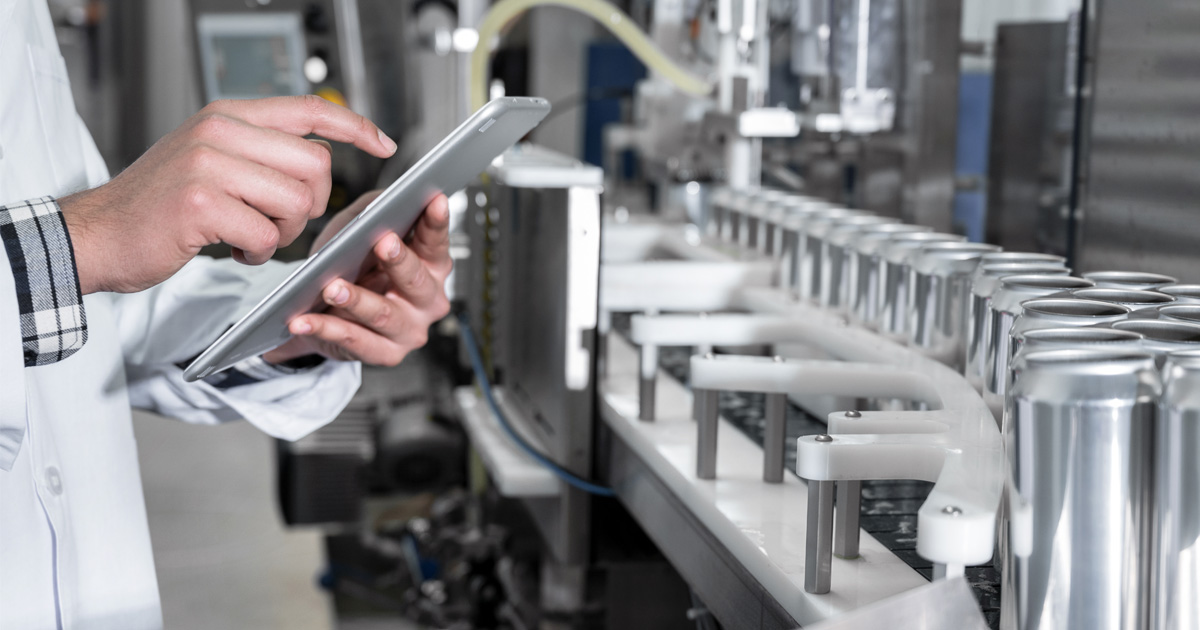
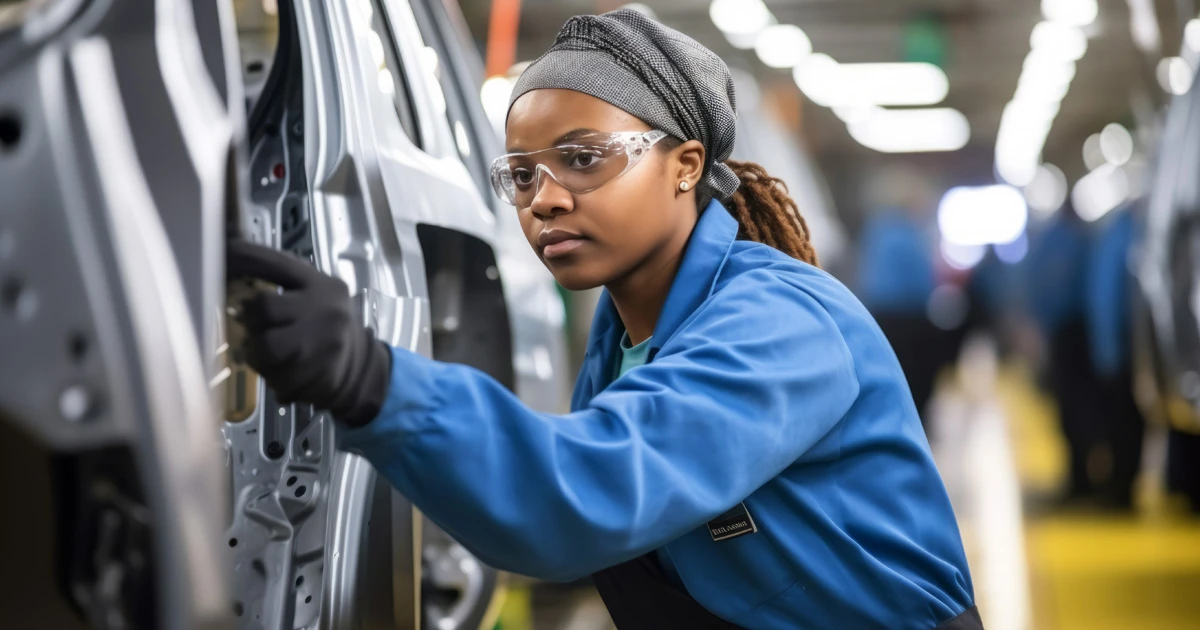
Autonomous and preventive maintenance are two manufacturing strategies for maintaining machinery on the shop floor. The main difference between the two is that autonomous maintenance (AM) places greater responsibility for equipment upkeep on operators, while preventive maintenance (PM) is carried out by maintenance workers. Both autonomous and preventative maintenance strategies benefit from smart, connected worker technologies, although in different ways.

autonomous vs preventive maintenance

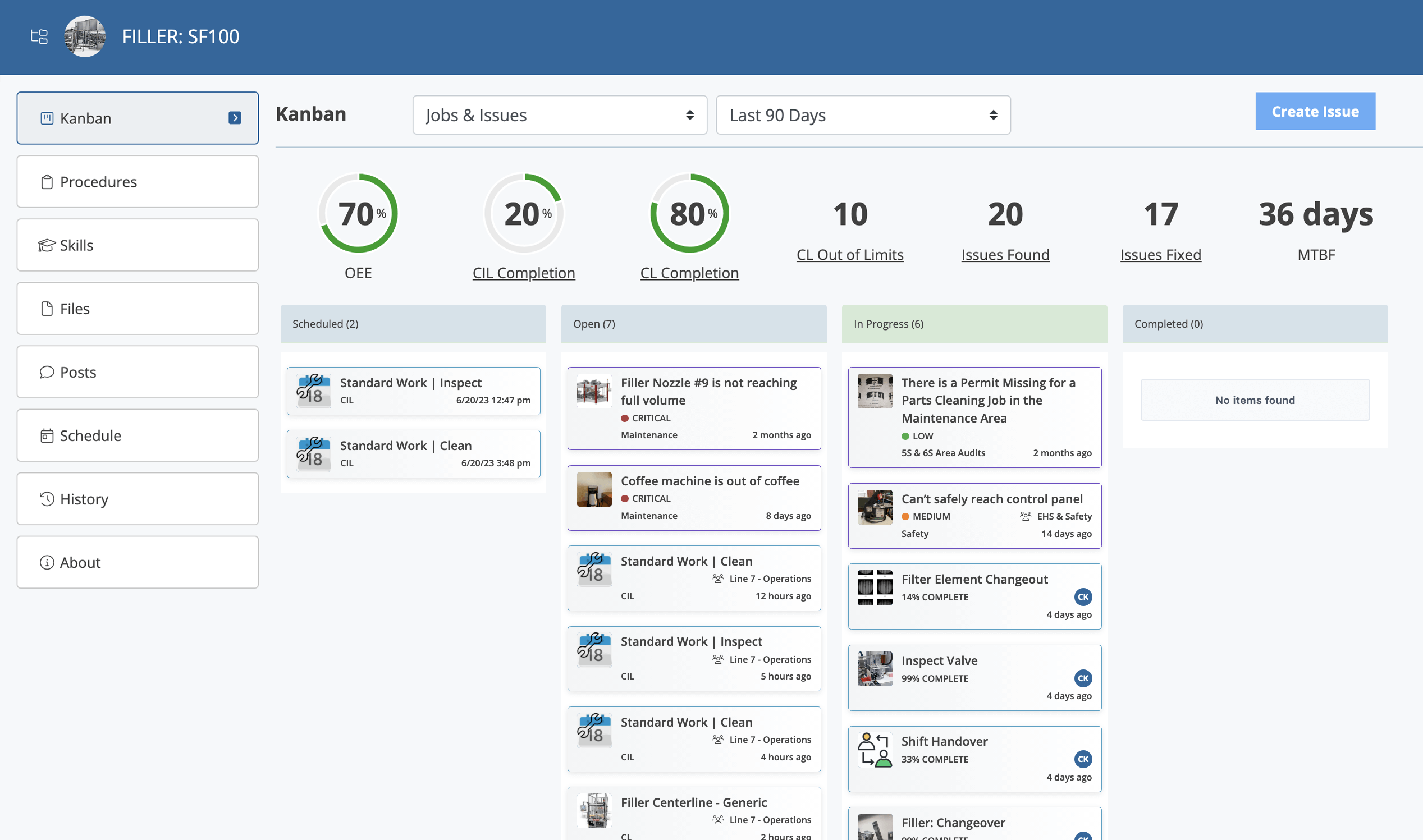
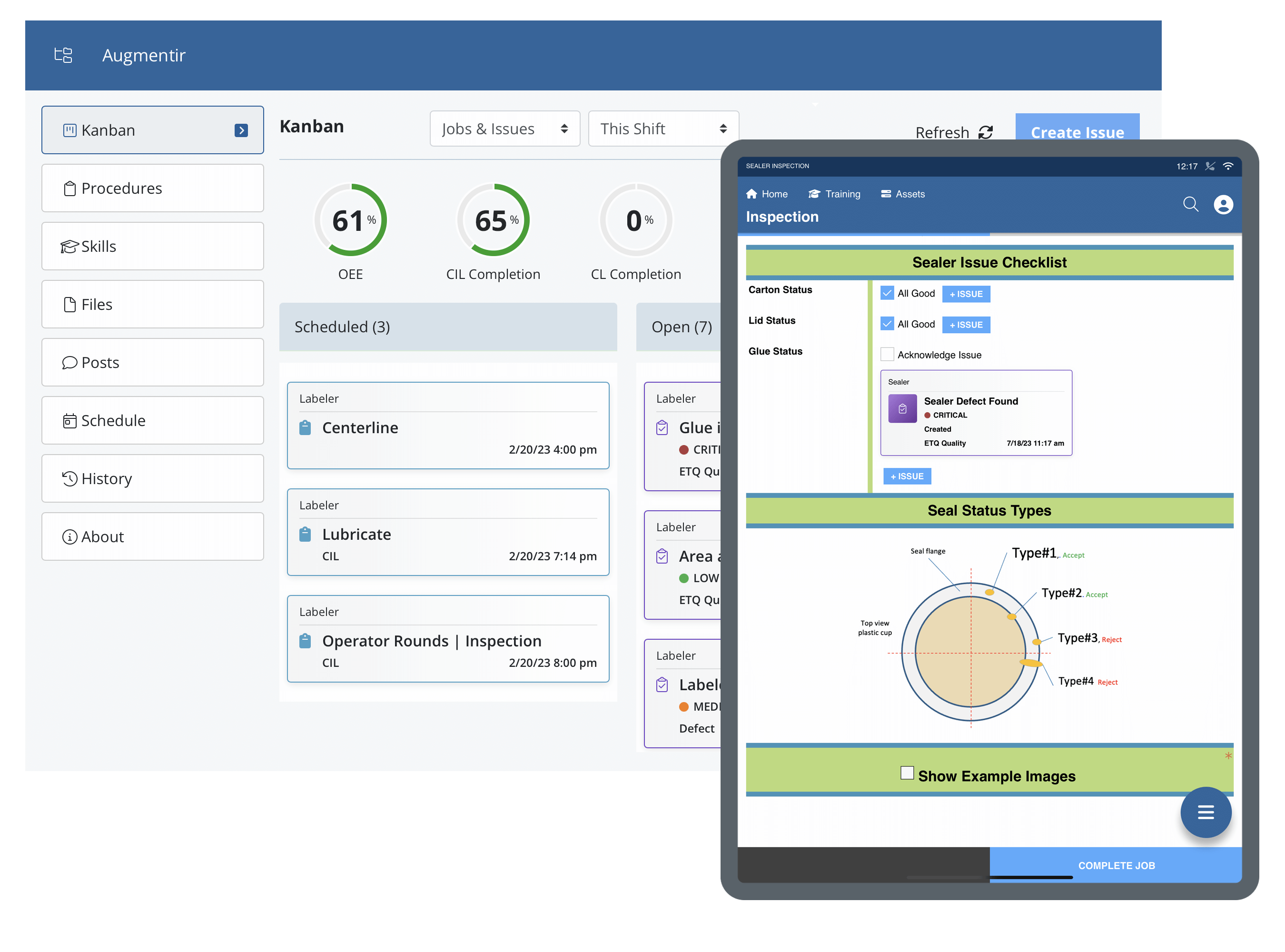
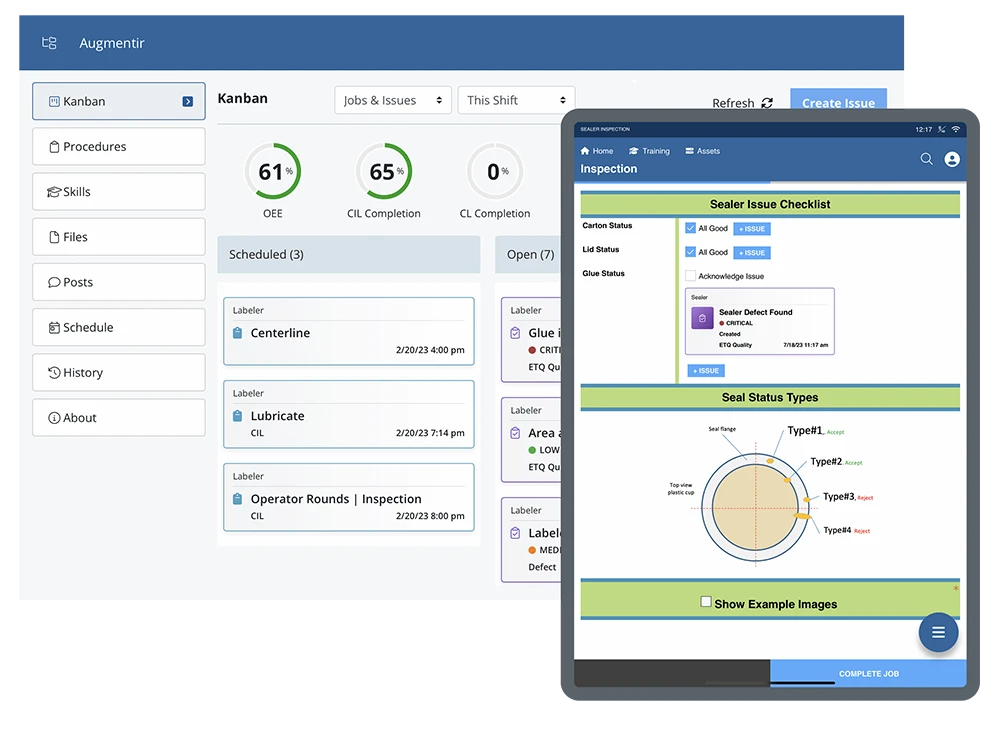
AM, for example, focuses on training machine operators to be the point of reference for cleaning, inspecting, and making minor repairs on the spot. This approach aims to empower operators to take the initiative in monitoring their equipment and identifying issues early on. By introducing smart, connected worker technology, like Augmentir’s suite of connected worker tools and closed-loop autonomous maintenance solution, manufacturing leaders can give operators more control over inspections and help intelligently guide and support operators, resulting in minimized machine downtime.

PM, on the other hand, consists of scheduling regular maintenance activities like part replacement, lubrication, and calibration. Workers tasked with PM ensure equipment remains in tip-top condition, which helps to prevent future breakdowns. The goals of this strategy are to avoid machine downtime and reduce the need for unplanned repairs. Smart, connected worker solutions improve the quality, transparency, and efficiency of both autonomous and preventive maintenance and repair procedures by standardizing and optimizing maintenance procedures.

You can learn more about autonomous and preventive maintenance by exploring the following sections:

What’s autonomous maintenance and its advantages?

Autonomous maintenance involves machine operators tackling basic equipment upkeep tasks to ensure that everything runs smoothly on the production floor.

When implemented, AM can yield a number of benefits:

  • Reduced equipment downtime: Conducting routine upkeep activities can prevent breakdowns and limit the need for unplanned maintenance.
  • Greater machine reliability: Operators who are trained to maintain their own equipment are more likely to pinpoint problems before they lead to machine failure.
  • Prolonged lifespan of machinery: Equipment that is maintained will last longer and require fewer repairs or replacements.
  • More operator involvement: Operators who take an active role in preserving their machinery feel empowered.
  • Increased safety: It’s easier to troubleshoot potential hazards before they turn into accidents when operators frequently inspect and maintain their equipment.
  • Cost-effectiveness: Reducing unplanned maintenance can save manufacturers significant money over time.

When coupled with smart, connected worker technology and AI-driven analytics, AM’s benefits are further enhanced. Digitizing autonomous maintenance processes increases standard work adherence, clears defects faster, and improves auditability. Connected worker technology enables operators to share knowledge and gives them access to the resources they need right when they need them.
autonomous maintenance


What’s preventive maintenance and its benefits?

Preventive maintenance focuses on performing routine equipment upkeep tasks at scheduled intervals. The goal is to avert equipment failure and limit unplanned downtime or repairs.

The benefits of having dedicated workers perform preventive maintenance are:

  • Enhanced machine reliability: Regular maintenance increases the odds of identifying and fixing problems before they turn into mechanical failures.
  • Decreased downtime: Conducting routine upkeep at scheduled times can decrease unplanned maintenance and increase production efficiency.
  • Greater compliance: PM can help manufacturers better comply with regulatory requirements to prevent unnecessary penalties for non-compliance.
  • Better planning protocols: Recruiting specialized maintenance personnel with extensive training on machine upkeep and repair can lead to better planning and allocation of resources.
  • Increased safety: Training workers on basic maintenance techniques ensures that deficiencies are addressed in a timely manner to avoid any injury.

PM’s impact is improved when used alongside smart, connected worker solutions that allow for digital work instructions and remote collaboration to effectively and efficiently guide technicians. Additionally, by digitizing and automating maintenance notifications, organizations can improve communications, speed up maintenance procedures, and minimize machine downtime.

How to implement AM

Applying autonomous maintenance to everyday maintenance tasks can mitigate potential machine disasters. Organizations can take this even further by creating “smart” autonomous maintenance processes and implementing advanced connected worker solutions with AI-driven insights. This gives operators improved control over maintenence process and expert guidence through a searchable asset hierarchy, maintenance history, and troubleshooting database.

The seven steps of effective AM implementation:

  • Boost operator expertise: It’s important to train operators on the machines themselves and how to perform maintenance tasks. This type of training can be made more effective through AI-based insights that integrate skills management into the flow of work and identify workforce development opportunities for upskilling and reskilling.
  • Conduct initial cleaning, inspection, and repairs: Operators should execute regular maintenance activities to avoid unplanned downtime. Furthermore, with connected worker solutions, operators can use mobile devices to digitally track and manage issues and activities as well as automate maintenance notifications further reducing overall downtime and avoiding unplanned downtime.
  • Eliminate causes of contamination: Routine cleaning and inspection minimize sources of contamination such as improper calibration and defective equipment. This alone can help prevent unexpected machine breakdowns. By building smart workflows into the autonomous maintenance process, manufacturers can schedule and assign standard work procedures (such as routine cleaning and calibration) digitally that have built-in work reporting for better visualization and auditing.
  • Define standards for cleaning, lubricating, and inspecting: Nailing down how to clean, lubricate, tighten and inspect, and how often to perform these upkeep duties, can help keep equipment in pristine condition. Smart digitization can standardize these practices across all manufacturing operations, giving organizations a global best practices standard to measure standard work adherence, clear defects more quickly, and improve auditability.
  • Perform inspection and monitoring: Operators who are trained on maintenance processes can carry out maintenance tasks independently and without error. With smart skills management and AI-enhanced workforce development, organizations can reduce training time and provide individualized guidance and support to workers when and where needed.
  • Standardize visual maintenance: Incorporate visual aids that help operators better understand equipment and labeling. For example, written procedures could contain a diagram showing how fluids should flow in a particular machine. Continuous learning and personalized insights via connected worker solutions are able to take this one step further and integrate things like instructional videos, interactive diagrams, and even remote experts into the flow of work to improve operational excellence and productivity.
  • Work towards continuous improvement: It’s imperative to strive for continuous improvement in maintaining machinery. Operators who are constantly learning and evolving are more productive and empowered with better decision-making capabilities through actionable, AI-driven insights.

Learn more on how to implement autonomous maintenance and the seven steps involved, or get in touch with us for a personalized demo to see Augmentir’s Autonomous Maintenance solution in action.

See Augmentir in Action
Get in Touch for a Personalized Demo


How to implement PM

According to Forbes, when implemented correctly, preventive maintenance ensures that upkeep is performed at a set time to prevent unexpected machine deficiencies. Smart, connected frontline worker solutions are able to improve preventative maintenance procedures through smart communication, scheduled notifications and improved collaboration.

Eight steps for implementing preventive maintenance:

  • Establish project scope: Gauge which machinery will be inspected and which maintenance tasks are needed to be done at specific intervals.
  • Pinpoint upkeep requirements: Set requirements for which tasks are crucial for each piece of equipment. Tasks could vary from lubrication and calibration to inspections and part replacements.
  • Create maintenance schedule: Create a set schedule for carrying out PM tasks that’s based on equipment requirements, production schedules, and planned downtime.
  • Allocate worker responsibilities: Assign which tasks each maintenance worker is expected to fulfill.
  • Provide necessary resources: Give staff the proper tools, equipment, and supplies to execute PM tasks (e.g., lubricants, replacement parts, testing equipment, etc.).
  • Define metrics: Establish metrics for gauging the efficiency of PM (e.g., downtime, equipment reliability, maintenance costs, etc.).
  • Create training programs: Hands-on training and how-to instructions can help maintenance workers better understand how to perform upkeep tasks.
  • Monitor performance and adjust: Measure how well your PM efforts are doing and revise if necessary. This may mean updating procedures, adjusting maintenance schedules, or creating more training opportunities.

All of these steps are able to be standardized and optimized through connected worker solutions. Augmentir’s suite of connected worker tools delivers in-line training and support at the point of work, provides a searchable database to allow workers access to knowledge when and where needed, gives workers individualized guidance and support, connects teams for better collaboration, and more. This approach helps standardize and optimize maintenance processes and notifications as well as training, offering a better, more efficient adoption process for both frontline workers and management from start to finish, and giving everyone the proper tools for successful manufacturing operations.


If you are interested in learning for yourself why companies are choosing Augmentir to help digitize and optimize their autonomous and preventive maintenance programs – reach out to book a demo.

 

See Augmentir in Action
Get in Touch for a Personalized Demo


Learn about what an asset hierarchy is and how it can help with asset maintenance and equipment reliability.

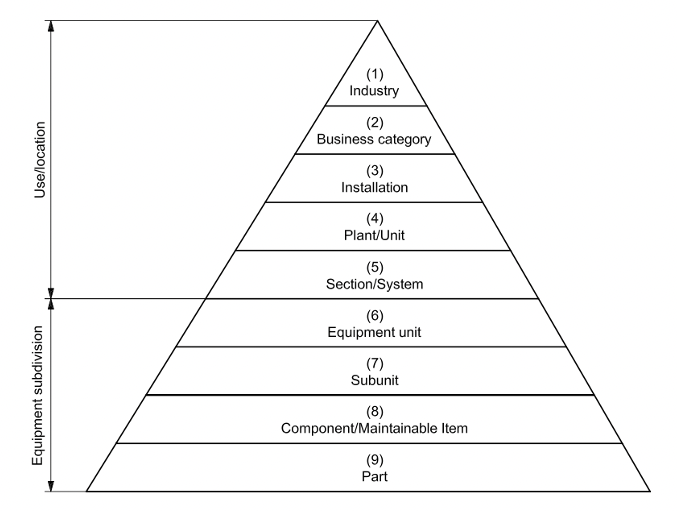
An asset hierarchy outlines all of a business’s top equipment, machines, and components visually to help the business plan, execute and track maintenance activities. Asset hierarchies are usually in the shape of a pyramid, similar to an organizational chart. And since every operation is different, it’s likely you won’t have the same hierarchy as your competitor.

The benefits of an asset hierarchy include accurate maintenance planning, faster failure root cause analysis, and improved cost tracking. By implementing an asset hierarchy in conjunction with a frontline operations system, such as a connected worker solution, manufacturers can benefit by dramatically improved maintenance planning and execution. This article answers the following questions to help you learn more:

asset hierarchy improves maintenance

What is an asset hierarchy?

An asset hierarchy is an index of your most critical equipment, machines, and parts to better understand how these assets work together and monitor their maintenance needs. For example, building and maintaining your manufacturing business’s hierarchy can help you track and identify root causes of failure in your equipment.asset hierarchy and taxonomy - iso standard

This taxonomy is often represented as a pyramid, based on the ISO 14224 standard, which was developed for the collection and exchange of
reliability and maintenance data for equipment. Initially developed for the Petroleum, Petrochemical, and Natural Gas industry, this taxonomy for equipment and failure data can apply to any manufacturing environment, and has become the de-facto standard for every other industry.

Asset hierarchies are typically built and maintained within an organization’s EAM (Enterprise Asset Management) or CMMS (Computerized Maintenance Management System), which tracks asset maintenance and condition data, as well as maintenance schedules. Increasingly, EAMs, CMMS, and asset hierarchy information are being integrated with digitized frontline operations systems to improve maintenance planning and execution.

Pro Tip

It’s not enough to simply define your asset hierarchy with your EAM or CMMS. Innovative manufacturing companies are now extending this by integrating their asset hierarchies with connected worker solutions, which help digitize and optimize the actual work being done by frontline maintenance teams, improving maintenance execution.

A

Better organization of equipment can also help workers understand how the action of one affects the other to solve any potential problems. This is another benefit of integrating your asset hierarchy with a connected worker solution. In a nutshell, strong hierarchies are a solid foundation for proper maintenance management and reliability.

What is asset maintenance?

While maintenance is generally synonymous with repair, in effective manufacturing facilities, maintaining equipment can prevent the need for repairs. Asset maintenance is an umbrella term for everything that goes into keeping your assets in tip-top shape.

For example, asset maintenance in manufacturing machinery may mean frequent inspections to prevent breakdowns and repairs. Your space as a whole relies on this type of maintenance to ensure everything is running smoothly, from equipment to everyday production processes.

Lastly, this term makes daily manufacturing processes more productive to manage. That’s because effective asset management tells you where assets are located, how they are used, and when changes were made to them.

How does an asset hierarchy improve asset maintenance?

An asset hierarchy and asset maintenance work in conjunction with one another. This visual tool gives workers a better idea of what each asset is and the dependencies between them.

Knowing what each asset is can help you schedule preventative inspections and tasks. If any problems arise, you can more easily identify all the working parts, find the root cause and fix it.


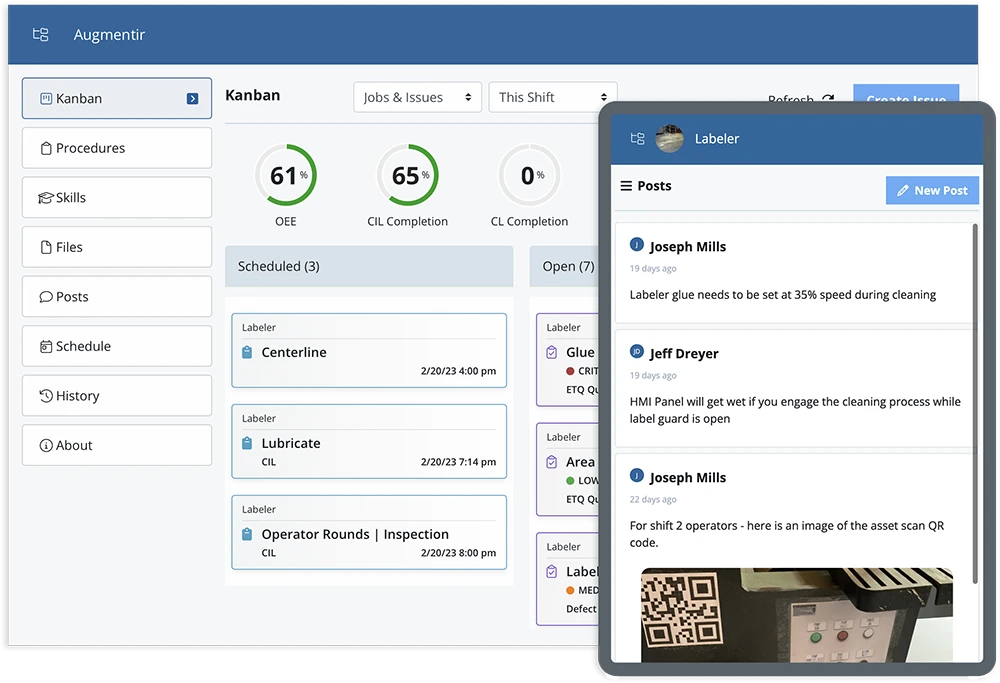
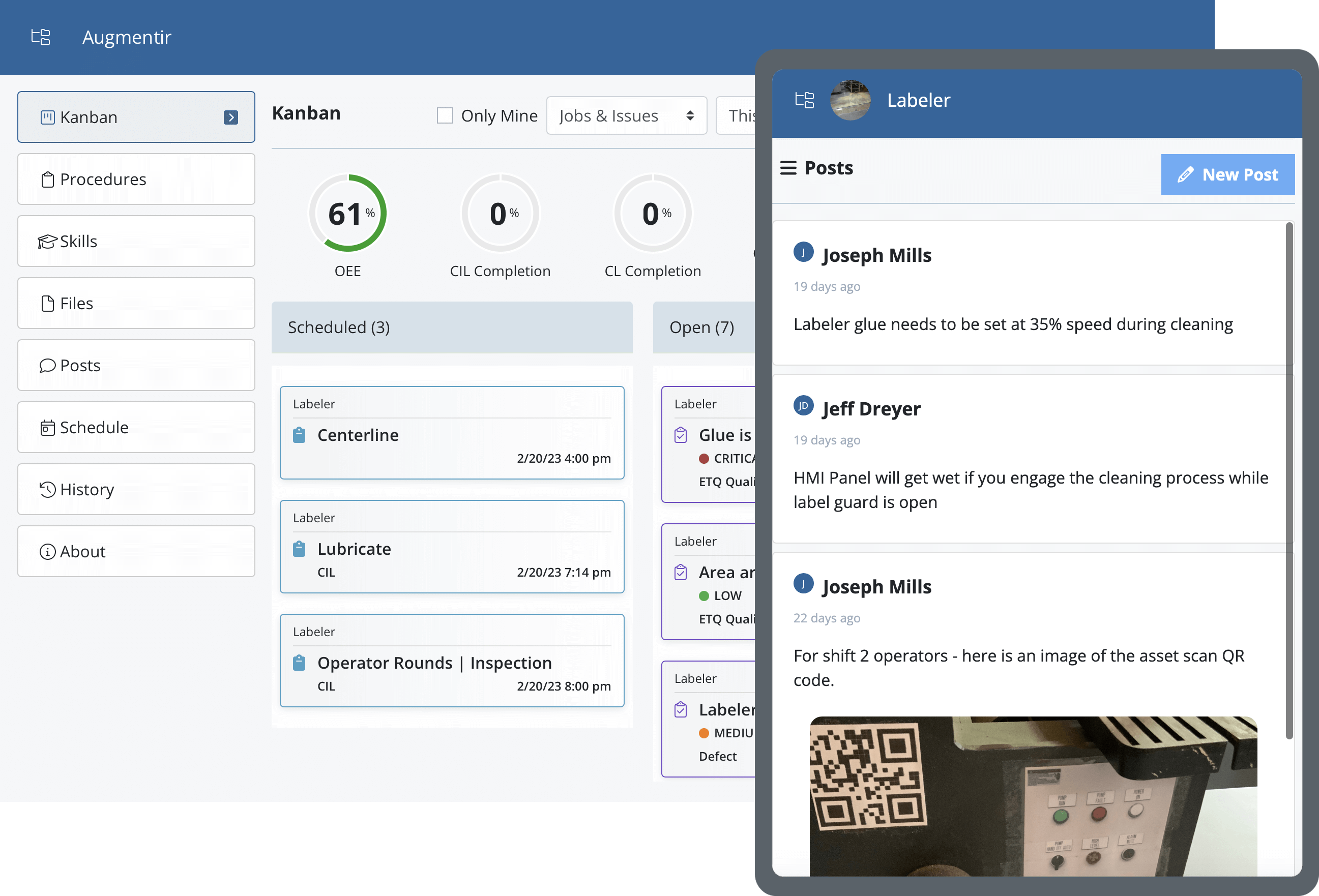
Augmentir’s AI-powered asset management software helps you simplify the operations and maintenance of your facility by integrating your asset hierarchy and maintenance data within a frontline operations system. Through Augmentir, organizations can benefit from a complete view of asset management, all through a visual mobile interface. Each asset contains a complete view of:

  • Kanban board for all asset activities
  • Work and maintenance procedures
  • Skills required for operation and maintenance
  • Collaboration related to the asset
  • Associated documentation
  • CIL/Standard Work schedule
  • History of all activities on the asset

Asset management with Augmentir

Augmentir’s asset management capabilities include an out-of-the-box autonomous maintenance solution, which gives equipment operators more control over equipment cleaning, inspections, and lubrications (CIL) to improve CIL completion rate, resulting in minimized machine downtime.

Request a live demo today to learn why companies are choosing Augmentir to help standardize and digitize their maintenance activities.


See Augmentir in Action
Get in Touch for a Personalized Demo


Learn how to improve quality control and assurance in the food industry with digital solutions from Augmentir.

Following quality control (QC) and quality assurance procedures in the food industry is imperative to ensure product quality and consumer satisfaction. Today’s consumers demand safe, reliable goods that meet all quality inspection protocols. The last thing you want is for a product to get recalled because of potential health concerns.

According to Food Manufacturing, quality control is one of the most important aspects of the food and beverage industry. Manufacturers who perform routine inspections of products during each stage of the production process significantly increase their chances of delivering items that are free of health hazards and liabilities. But beyond avoiding these concerns, standardizing and digitizing quality procedures benefits the entire operation.

Ultimately, preventing and catching quality issues can boost product quality, reduce waste, raise profits, increase brand reputation, and avoid media or food safety disasters. Learn more about QC and assurance in the food industry and how to improve it as we discuss:

quality control food industry

Types of quality control measures to take

There are certain QC measures you can take to ensure that all goods meet quality standards, from regular machine inspections to worker training. They fall into two general categories: preventative and reactive.

Preventative (proactive) quality control: Minimizing the number of deficiencies begins with implementing preventative QC solutions. When workers can catch mistakes before they even happen, they prevent product defects. Preventative QC measures should be practiced on a routine basis and can range from inspecting machines and equipment to offering employee training opportunities. By providing workers with real-time information and guidance through mobile, connected worker solutions, manufacturers enable them to make better decisions about product quality, reducing the risk of errors and identifying potential quality issues before products are shipped to customers, reducing the risk of product recalls, and preserving consumer trust.

Reactive quality control: Catching every defect on the production floor is nearly impossible, even if the most fool-proof strategies are taken. That’s why creating a plan of action ahead of a crisis can help solve quality issues as they happen.

What to put in your plan will depend on the potential problems. For example, you can include specific instructions on what to do if machinery breaks down or stops unexpectedly. It’s vital to collect any data at this stage. Analyzing this data can help you improve preventative quality control in the future to make sure the same problems don’t happen again.

Pro Tip

By utilizing AI and modern, digital technologies, companies can connect, engage, and empower frontline workers to drive quality improvements, resolve quality issues faster, and share timely insights with teams across the value chain.

A

Keep in mind that practicing quality control in the food industry should be part of every manufacturing process, from product ideation and development to production and delivery. Problems can develop at any time, so it’s crucial to follow protocols at every stage of production to prevent even the slightest of mistakes.

All workers should also uphold QC and assurance protocols in their everyday tasks to ensure continuous product improvement.

Better organization of equipment can also help workers understand how the action of one affects the other to solve any potential problems. This is another benefit of integrating your asset hierarchy with a connected worker solution. In a nutshell, strong hierarchies are a solid foundation for proper maintenance management and reliability.

How to improve QC and assurance procedures in food production

Effective quality control and assurance procedures prevent defective food products from making their way into grocery stores and homes. That’s why manufacturers should document the quality of their goods at every stage of the operational process. Strategies like first time quality (FTQ), or first time right, plans coupled with smart, connected solutions help decrease product deficiencies and increase customer satisfaction.

Manufacturing firms in the food industry must follow specific requirements set by the Food and Drug Administration (FDA), Good Manufacturing Practices (GMP) system, and the Hazard Analysis and Critical Control Points (HACCP). The guidelines set by these regulatory bodies can give businesses a better idea of how their processes should look and what data they need to collect and report.

Data should be collected for real-time production processes. These vary by product but may range from product chilling and thermal processing to testing raw materials for metal toxins and other chemical deposits.

The following steps provide a roadmap for how to improve quality control in the food industry.

Step 1: Source the correct ingredients

A successful assembly line run begins with finding and using the correct ingredients. Some things to think about when deciding which ingredients to choose: where the raw material was sourced, when, and its condition.

Step 2: Include an approved supplier list

Make sure that each ingredient has an approved supplier list. A good rule of thumb is to include three vendors per ingredient and record the ingredient with each supplier’s name, address, and code number on the list. The more information you include, the better. Having an approved vendor list ensures that all parties are properly vetted by the manufacturing firm and meet its requirements for quality and distribution.

Step 3: Document product and recipe creation

Documenting how each food item is made and its recipe helps set the quality standards for finished goods. This documentation can also be useful when improving product development in the future. Your document should include the types of ingredients used, their codes, batch yield, percentage formula, and more.

Step 4: Catalog production procedures

It’s also critical to log all the details of a production process, including how materials should be delivered, the appropriate conditions for storing food, what order each ingredient should be added to the batch, what tools are needed, and who is in charge of each task.

Note that this step is different from documenting product and recipe development because it includes the actual instructions for carrying out each procedure. For example, a worker may be asked to preheat the oven to a certain temperature as part of ensuring the food is ready for customer distribution.

Step 4: Record real-time processes

Machine operators should record in real-time every detail of how goods are created during actual production. This can include factors like product size, weight, expiration date, equipment conditions, and more.

Step 5: Digitize assurance and inspection processes

AI and smart, connected worker systems help digitize and link inspections and other quality control procedures. This creates an additional layer of defense, protecting customers and preventing quality issues before they can impact production.

How Augmentir helps with quality control and assurance

Augmentir offers a smarter way to improve quality control in the food industry by effectively standardizing and optimizing quality assurance and inspection procedures for all frontline workers. With our smart, connected solutions coupled with AI-powered software, food manufacturers have improved quality control and assurance by:

  • Tracking and analyzing data to identify trends and opportunities for improvements
  • Reducing human error in inspections by standardizing and improving training procedures and processes
  • Transforming connected workers into human sensors who can proactively address quality and safety events that surface during manufacturing operations

standardize and digitize quality assurance procedures


Our AI-powered connected worker solutions, provide digital work instructions to help employees better perform inspection checks and reduce the number of production errors and rework.

These customized solutions also include:

  • Digital standard operating procedures (SOPs) for how to complete assembly line tasks. These step-by-step instructions can greatly improve workflow efficiency, increase regulatory compliance, and reduce mistakes on the shop floor.
  • Digital workflows that convert your paper-based processes to digital work instructions and personalize them to the needs of each worker.
  • Enhanced product traceability to decrease equipment setup time, reduce process inconsistencies, and better meet customer expectations. Our digital instructions help you to easily track materials from the supply chain, inventory, and across every production process.

If you are interested in learning why companies are choosing Augmentir to help improve their quality control and assurance processes, check out our quality use cases – or reach out to schedule a live demo.


See Augmentir in Action
Get in Touch for a Personalized Demo


Learn how manufacturing data collection can boost your bottom line and how to improve your gathering data techniques.

As manufacturing operations continue to modernize and evolve it is clear that without big data they won’t be able to sustain themselves. More and more manufacturers are looking to the tremendous capabilities and insights that digitized information can provide.

Shop floor data collection enables businesses to better measure, standardize, and optimize their production processes. It’s more important than ever before to have information that provides real-time insights for measurable progress.

Accurate reporting is more sustainable if management deploys a work culture and production infrastructure that supports digitized manufacturing data collection with connected worker platforms and solutions.

We discuss more about collecting data and how to improve it in the following sections:

manufacturing data collection

Examples of data collection in manufacturing

Data collection has many uses in a variety of situations for a wide array of manufacturing roles, from operators and engineers to plant managers and even leadership.

For example:

  • Plant managers use production dashboards to better gauge where operators need support, such as when a piece of equipment isn’t working.
  • Operators use machine interfaces that show the status of machine processes, part counts, and other measurable data to ensure they are meeting production targets.
  • Quality managers use production line data to identify and proactively address quality issues.
  • Engineers use collected data to check for any bottlenecks and adjust processes if necessary.
Pro Tip

Frontline workers often witness safety, quality, or maintenance issues on the factory floor. They are effectively a “human sensor” on the manufacturing process and can readily identify issues that need to be addressed. Today, recording data and resolving those issues is most often a manual and paper-based process. As such, there is minimal data collection, latency in resolving the issue, and little-to-no feedback to the frontline worker on resolution.

Equipping workers with mobile and digital tools can help optimize shop floor data collection.

A

Which data to keep an eye on

Data generated on the shop floor can vary depending on the nature of work, the type of devices and technologies used, and the area of operation. Much of this data is of use to manufacturers and can be used to improve production processes.

Useful types of data for manufacturers that we recommend keeping an eye on are:

Inventory data: This type of data helps manufacturers keep track of product inventory. With it they can better gauge what items need to be restocked or which ones aren’t bringing any value to the customer as well as improve forecasting ability and more.

Quality and Inspection data: Ensuring product quality is a priority in manufacturing. Collecting data related to quality control, product inspection, and identifying defects or deviations from the desired standards is crucial to maintaining high-quality products and operations.

Machine data: Optimizing a production process can become difficult if you don’t know the status of your equipment. Manufacturing data collection can be digitized to analyze machine quality and performance, equipment runtime and downtimes, or other machine-related problems. Sensors monitor machine use and downtime, maintenance time, cycle time, and more. Studying this collected data helps identify where production can be improved to optimize efficiency.

Using AI, manufacturers can filter out the “white noise” data (or data that is of no use) to derive actionable insights more effectively than with traditional methods. Automating, standardizing, and digitizing manufacturing processes also improves manufacturing data collection procedures, making them streamlined, accurate, and reliable.

How to improve production data collection

Manufacturing data collection is transforming the way businesses handle their operational decisions. However, it can also pose setbacks to your production line if you gather inaccurate data.

Manufacturers must implement data collection systems that are easy to understand and navigate. You’re risking inconsistent data collection and reporting when you install a system with complicated functions and navigation tools. This can be avoided by focusing on people-centric, intuitive, and user-friendly systems that fit into the everyday flow of work for the frontline workforce.

quality manufacturing data collection

Implementing a unified system alone won’t improve data collection. Solutions that incorporate enhanced mobile capabilities and provide a truly connected enterprise are able to facilitate and optimize data collection efforts.

Examples of some useful smart, connected solutions to improve manufacturing data collection are:

  • Personalized, Digital Work Instructions: these intelligently deliver personalized digital work instructions matched to the needs of each worker in order to deftly guide them through and streamline day-to-day operations.
  • Connected Asset Management: these tools help simplify operations and maintenance of facilities, manage work and maintenance procedures, collaboration, and more.
  • Skills Management: these systems create visibility into workforce capability and optimize training programs, track individual and team progress, and initiate more targeted training and upskilling.

In addition to all the benefits listed above, these smart, connected worker tools are able to empower frontline workers with improved data-driven decision-making abilities that aid in safety, quality, and productivity efforts.

Benefits of digitizing shop floor data collection

Production data collection can make all the difference to a company’s success and give them a competitive edge. Smart, connected worker solutions enhance collection processes, allowing for real-time data collection, streamlined communication and collaboration between frontline workers.

Data-driven strategies can help with:

  • Creating better maintenance procedures based on real-time insights and equipment conditions
  • Optimizing worker productivity by minimizing production errors
  • Reducing downtime by providing real-time feedback
  • Developing higher quality products that increase customer satisfaction
  • Cutting supply chain costs due to better forecasting and waste reduction techniques

Implementing accurate, connected worker solutions can take your data collection efforts to the next level. That’s where Augmentir can help. We are the world’s only AI-driven, people-centric smart connected worker solution to standardize and optimize data collection using groundbreaking AI analytics technology.

See how our AI-focused connected worker solutions are driving results and improving data collection and data-driven decision-making across manufacturing operations – schedule a demo now.


See Augmentir in Action
Get in Touch for a Personalized Demo


It’s vital that customers receive products that are free of defects. Learn 5 steps for improving production quality and how the right software can help.

Unexpected product quality issues can be a hassle to manage, especially when staff is stuck with processing time-consuming complaints, replacements, and refunds. Even worse, the impact on your bottom line can be substantial.

Manufacturers risk a significant cut to their profit margins when quality standards are not followed during the production process. To improve quality on the shop floor, plant managers need to pinpoint the root cause of quality issues.

Explore this article to learn how to start boosting your industrial processes today:

improve production quality in manufacturing


What is Production Quality

Production quality, or manufacturing quality, measures how well a manufacturing process develops products to fit design specifications. Manufacturers must devise a plan for how they want specific items to appear and function before creating them. This can include things like colors, durability, range of motion, measurements, and more. How well a product is made will depend on meeting these conditions.

After the design is planned, a number of factors can affect production quality, including:

  • Equipment/machines
  • Materials
  • Batch size
  • Human mistakes
  • Environmental issues
Pro Tip

Frontline workers often witness quality issues on the factory floor. They are effectively a “human sensor” in the manufacturing process and can readily identify issues that need to be addressed. Today, recording data and resolving those quality issues is most often a manual and paper-based process. As such, there is minimal data collection, latency in resolving the issue, and little-to-no feedback to the frontline worker on resolution.

Equipping workers with mobile and digital tools can help optimize production quality.

A

5 steps to improve production quality

Although there may not be one single method for improving manufacturing quality, there are steps you can take to maximize success.

Here are five steps that should be part of your strategy.

Step 1: Assess your current workflow.

Start by reviewing your existing manufacturing processes. We encourage management to ask the following questions as part of their review:

  • What quality benchmarks do you hope to achieve for each product?
  • How much money have you lost from material, energy waste, and wasted time due to quality problems?
  • What is your margin for improvement?
  • What quality standards are implemented in the creation of products?
  • Is your equipment inter-connected with different databases, or just a single database?

We recommend connecting your factory devices to one central database with a cloud-based, connected worker solution that operations management can use to create, assign, manage, and monitor the work being done. This kind of software can help streamline operational processes and track results in real-time.

Step 2: Remove unneeded processes.

Once you’ve accessed your current workflow and set up a connected worker solution to collect frontline worker data, we recommend coupling it with AI-powered analytics that can derive actionable insights. Then you can use these actionable, data-led insights to see which processes are adding value and which ones are not.

quality manufacturing data collection

Step 3: Boost worker training.

It’s important to maintain regular employee training and skills development programs to ensure workers are staying on top of industry best practices, equipment upkeep, and product knowledge. AI-powered connected worker solutions make learning more accessible, engaging, and effective.

Step 4: Create quality goals.

Developing quality goals is a great way to measure product benchmarks, production time, material usage, labor cost, working hours, and more. By digitizing and standardizing quality processes, you’ll be able to see which manufacturing processes are adding to your bottom line and which can be eliminated to bring value to the customer.

Step 5: Cut production waste.

Cutting waste from your production run can improve your business’s supply chain management. Connected worker solutions can identify which processes aren’t needed to reduce waste. It also gives real-time visibility into your supply chain to help you manage supply problems, optimize manufacturing processes, and adjust production schedules.

FAQs about improving production quality

How can the quality of the manufacturing industry be improved?

Measuring your current production processes to see which methods work can help improve product quality and increase the value of goods manufacturers make. You can strengthen the processes related to production by digitizing and automating them. Implementing a connected worker solution that offers real-time insights helps ensure that all goods meet quality standards and compliance criteria.

How do you ensure product quality in manufacturing?

There are a number of factors that can ensure product quality in manufacturing. We recommend following the five steps listed above to minimize defects as well as improve workflow and output.

What are 5 ways to improve production quality?

Assessing your current workflow, eliminating needless production processes, boosting work training, creating quality goals, and cutting production waste can all help improve production quality (see list above for a full description of each, as well as how implementing a connected worker solution can boost their overall impact).

Why is quality improvement important in manufacturing?

Enhancing production quality in manufacturing is a must as the industry moves towards fully connected enterprises, digital transformation, and automation. Businesses risk huge profit losses when quality standards are neglected in the creation of each product.

Digitize and Improve Production Quality with Augmentir

By digitizing and standardizing quality protocols, organizations can maintain compliance through an auditable and verifiable quality management system that gives workers access to the correct procedures as they need them with expert guidance. This ensures that tasks are performed in a standard manner to avoid errors on the production floor, reduce defects, and decrease resources lost to rework.

Refining your manufacturing methods can be difficult without the right technology. Augmentir’s AI-based connected worker solution makes streamlining and optimizing your production and quality procedures easier than ever before. Get in touch for a live demo today and learn why manufacturers are choosing Augmentir to help standardize and digitize quality processes!


See Augmentir in Action
Get in Touch for a Personalized Demo


Learn how to write manufacturing SOPs and the benefits of having standard operating procedures in a manufacturing operation.

Standard operating procedures, or SOPs, will change the way you run your manufacturing operations.

SOPs are imperative to a properly organized management structure. They are step-by-step guidelines workers must follow when carrying out tasks to standardize work and are designed to meet industry regulations.

Essentially, they provide general info about assignments, including the tools, methods, or machinery needed to complete projects. SOPs indicate what the task is, who will perform it, how it should be completed, and when it should be completed.

manufacturing sop

For example, manufacturers may write SOPs for employee training to reduce risk and injury. Leadership may also use procedures to assign goals and measure employee performance.

Read on to find out more about the benefits of manufacturing SOPs and how to write them by exploring the following topics:

Advantages of Implementing Standard Operating Procedures

According to Forbes, a comprehensive SOP keeps workers on the same page and improves efficiency and accuracy. Without documented procedures, there is no way to set proper standardized processes and workers might try to complete jobs in non-standard methods, which leads to disruptions in the production processes and causes all sorts of quality issues in a manufacturing environment. Thankfully, SOPs work to prevent that from happening.

Some of the advantages of using SOPs include:

  • Meets regulatory compliance: Product inspectors constantly ask to review SOPs when conducting audits. These serve as the point of reference for whether specific measures followed meet industry guidelines.
  • Standardizes tasks: The point of written procedures is to establish a standard way of completing tasks. They enable tasks to be performed in the same way across the company.
  • Improves accountability and tracking: SOPs define who is responsible for a work order, maintenance check or inspection. This reporting can improve accountability across departments. If a task wasn’t completed accordingly or a procedure was missed, management can take necessary steps to prevent it from happening again.
Pro Tip

Digitized SOPs can further improve tracking and traceability features, helping manufacturers comply with regulations and quality standards. With digital SOPs it becomes easier to maintain records of every step in the production process, including who performed each task and when.

A

How to write a manufacturing SOP

Writing a comprehensive set of SOPs can help workers perform tasks in the safest and most efficient way possible. Although there isn’t an official way to write procedures, you can follow certain steps to make them more effective:

Step 1: Establish a goal.

It’s important to think about what you want your SOP to accomplish. Regardless if you’re starting a new process or improving an existing one, figuring out the end goal will make it easier to complete the document.

Step 2: Pick a format.

There are different formats you can use to write your document: step-by-step, hierarchical, narrative, etc. We recommend the sequential step-by-step format for its straightforwardness.

Step 3: Write the procedures.

Make sure your procedures are clear, concise, current, consistent, and complete.

Step 4: Review and update.

It’s important to review your SOP for any discrepancies and update them if necessary. Consider asking fellow leaders knowledgeable in procedure creation to read them over.

Why SOPs are Important in Manufacturing

Compliance with manufacturing SOPs is crucial for a number of reasons, including:

  • Prevents accidents and ensures worker safety
  • Promotes worker consistency
  • Improves product quality
  • Protects your business’s reputation

SOPs are a critical component of manufacturing operations because they provide a structured framework for achieving consistent quality, safety, and efficiency in the production process. They help manufacturers meet regulatory requirements, reduce errors, and ensure that employees are trained to perform tasks consistently and safely.

Digitizing Manufacturing SOPs with Connected Worker Solutions

Using connected worker technologies to create digital SOPs can significantly improve their impact on manufacturing by enhancing accessibility, effectiveness, and overall utility.

Through digitization and smart, connected worker technology manufacturers can improve SOPs with features like real-time access, remote collaboration and guidance, data-driven insights, workflow automation, enhanced training, traceability and compliance, and more. Essentially, with these advanced technologies, manufacturing organizations can augment and support their workers with optimized processes and SOPs creating an environment of continuous improvement.

Augmentir offers customized AI-powered connected worker solutions that transform how you write and create manufacturing standard operating procedures. Request a live demo today to learn more about why leading manufacturers are choosing our solutions to improve their manufacturing processes.


See Augmentir in Action
Get in Touch for a Personalized Demo

Watch Augmentir’s presentation at Learning & HR Tech 2024 and see how Generative AI Copilots transform learning and development in manufacturing.

Generative AI in learning and development has started to shape the future of HR across the board including attracting, developing, engaging, and retaining talent.

AI has revolutionized how organizations approach:

  • Talent acquisition – for smarter recruiting
  • Talent development – for skills analysis and performance evaluations
  • Worker relations – capitalizing on its ability to personalize employee relations
  • Workforce planning – leveraging its ability to make sense of data to perform more accurate forecasting and capacity planning
  • People analytics – using AI to make sense of employee data from an engagement and skills optimization standpoint
  • Performance management – relying on it for benchmarking and progress evaluation
  • HR operations – leveraging AI’s ability to automate and support onboarding and offboarding processes
  • Learning and development – using AI in everything from content creation to delivering personalized and adaptive content

generative ai learning copilots

However, Generative AI in learning and development has yet to make a significant impact on employees where it matters the most – in the flow of work.

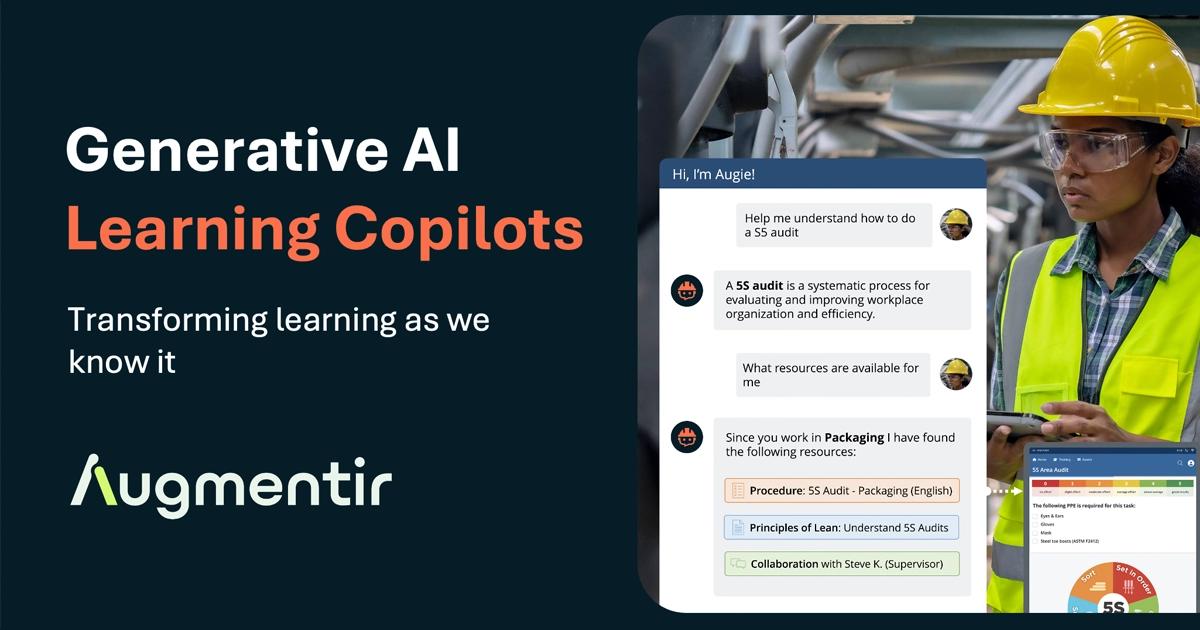
This is where Generative AI learning copilots and AI-powered connected worker solutions come in. Together these technologies are transforming learning for frontline workers, improving onboarding, enabling learning in the flow of work, and driving more efficient upskilling and reskilling.

Watch our full presentation from Learning and HR Tech 2024 “Generative AI Learning Copilots: Transforming Learning as We Know It”, on-demand below.

Key Highlights:

  • Generative AI in learning and development has started to shape the future of HR across the board including attracting, developing, engaging, and retaining talent.
  • Deskless workers make up 80% of all workers globally and are underserved from a learning and development perspective, with 78% feeling they don’t have the right amount of training to succeed.
  • Generative AI Learning Copilots can generate training content, translate languages, provide real-time feedback, give on-demand guidance and answers, and serve as a digital performance support tool.

Generative AI Learning Copilots for Deskless Workers

Deskless workers, often referred to as “frontline workers”, generally do not sit in front of a desk and make up about 80% of all workers globally, they are on the front lines – in factories, at retail counters, construction sites, hospitals, and more.

While frontline workers and activities have undergone dramatic changes over the past few years, they are still woefully underserved from a learning and development standpoint.

  • 78% of frontline workers feel they don’t have the right amount of training to succeed at work
  • 65% want information on-demand and “in the flow of work”
  • Only 12% of HR operations leaders are actually satisfied with their L&D processes in support of their frontline employees

The reality is that traditional onboarding and training practices have been proven to be ineffective, however, much like AI has historically been used to improve the efficiency and output of machines, we can do the same with our frontline workforce.

AI learning and development tools and GenAI assistants can help:

  • Identify areas for content improvement, and implement those improvements
  • Measure training effectiveness
  • Create personalized, job-relevant training and curriculums
  • Measure and improve workforce effectiveness

Managing Manufacturing Workforce Challenges with GenAI Learning Copilots

The workforce crisis in manufacturing is accelerating and at the forefront of the minds of operations and HR leaders.

In fact, even if every skilled worker in America were employed, there would still be 35% more unfilled job openings in the manufacturing sector than skilled workers capable of filling them. Deloitte predicts that the skilled labor crisis will cost manufacturers upwards of $1 trillion by 2030.

In 2019, the average tenure in manufacturing was 20 years, the average time in position was 7 years, and the average 90-day retention rate was 90%. As of 2023, however, the average tenure is 3 years, the average time in position is 9 months, and the average 90-day retention rate was 50%.

These are representative of drastically different manufacturing realities. The workforce of 2019 is not coming back, and neither will productivity, unless organizations make significant investments and strides in supporting frontline workers with the appropriate tools and training. Luckily, smart connected worker and generative AI technologies offer a path forward.

Generative AI helps manufacturers answer:

  • What is the skills inventory of the team that is in attendance today?
  • Who can/should perform this work?
  • Who would benefit the most from targeted training?
  • Where should they focus on for process improvement?
  • What type of training would give them the biggest return?
  • What training materials need Improvement?

Generative AI-powered copilots and digital assistants can take this further, allowing frontline manufacturing workers access to vast amounts of knowledge in the flow of work when they need it most, helping to predict and prevent skills gaps before they impact production, and to design efficient and personalized development curriculums to shorten the time it takes for workers to be effective and competent in their positions.

Interested in learning more?

If you’d like to learn more about Augmentir and see how our AI-powered connected worker platform improves onboarding, training, skills management, and other learning and development aspects across organizations, schedule a demo with one of our product experts.


See Augmentir in Action
Get in Touch for a Personalized Demo

Learn why integrations are key to the success of connected worker platforms, what systems should be integrated, and the benefits of a fully integrated connected worker solution.

Unlocking the potential of connected worker platforms becomes a game-changer when integrated with enterprise systems, giving them a live, closed loop connection to frontline processes and operations. This creates a truly connected enterprise that links diverse systems with the frontline workforce, paving the way for heightened efficiency, productivity, and safety.

connected worker platform integrations

However, a majority of connected worker platforms overlook the fact that connectivity doesn’t end with simply linking workers to their platform. They fail to recognize the immense benefits that live connections to enterprise systems of record bring to frontline business processes and activities.

Manufacturing success hinges on the seamless integration of connected worker platforms with legacy and enterprise systems to provide adequate support to frontline workers, giving them access to data and knowledge that can boost their efficiency and keep them safe.

Read below for more information on connected worker platform integrations; what they entail, which enterprise systems are essential for integration, and how AI-powered technology improves impact on frontline manufacturing activities.

Connected Worker Integrations: More than just an API

In manufacturing, it is critical that connected worker platforms are integrated with various enterprise systems to streamline operations and ensure that workers have the data and information they need at their fingertips. As critical as this is, most connected worker vendors believe that providing an open API is sufficient, and even boast that they integrate to enterprise systems, when in fact they place this burden on their customers.

Having an API is not enough

There are several not-so-obvious aspects to connected worker platform integrations, including:

  • Connected worker integrations with enterprise applications, even streamlined ones, have essential requirements such as logic that needs to be written, customized, run, and supported. Most, if not all, of this logic is initiated by the connected worker platform, propagating events and data from shop floor processes to the associated enterprise system of record.
  • Connected worker platforms with just an “API” require all of this functionality to be developed, hosted, and supported externally. The responsibility is then on the customer to build a custom product and select and support the hosting environment. This effort (building, hosting, and support) can cost between $50K and $150K to build and test, and then another $50K – $150K annually for 5 x 9 support. And, the customer is responsible for maintaining an SLA acceptable to the business (99.9% being typical).
Pro Tip

It’s critical that connected worker platforms include “platform-as-a-service” (Paas) capabilities that provide the ability to write, support, and execute both standard and custom integrations. These can be done by the platform provider, the customer, as well as third-party system vendors and system integrators. Providing PaaS capabilities puts the responsibility on the vendor for operating the integration service, and maintaining SLAs, geo-redundancy, disaster recovery, and privacy and security. In short, just saying “we have an API” places an undue burden on customers, and prevents building the sustainable connected enterprise necessary to remain competitive in today’s global economy.

A

Which Enterprise Systems Should You Integrate

In any industrial environment, connected worker platforms should be integrated with various systems to support operations, help with cooperation and communication, and gain valuable insights into frontline manufacturing processes. These integrations streamline activities, improve efficiency, and provide a unified digital environment that empowers frontline workers.

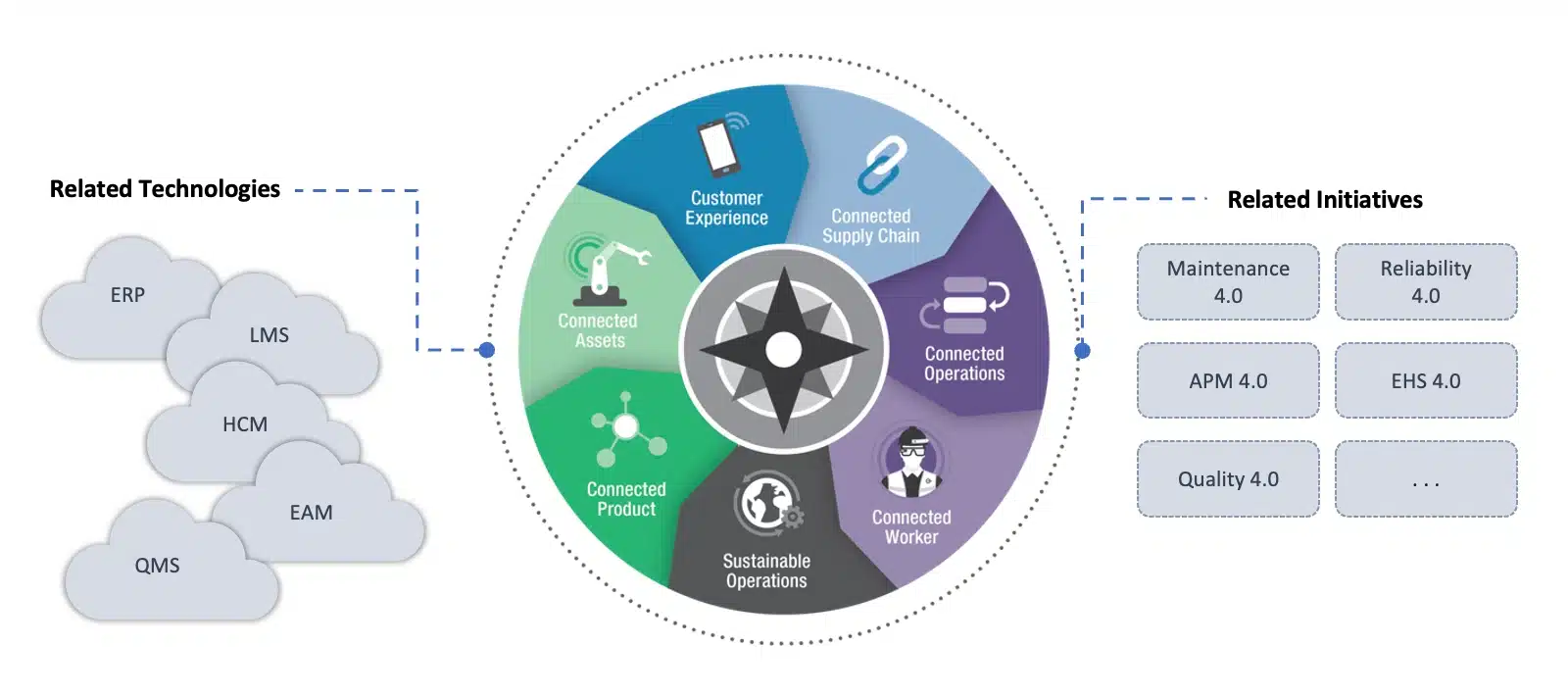
This concept of a connected enterprise spans several initiatives within an organization: assets and equipment, the products being manufactured, the end customer, operations, workers, and the entire supply chain, and is highlighted below using the Industrial Transformation (IX) Reference Architecture from LNS Research.

connected worker enterprise system integration

Examples of enterprise management systems of record that are key to connected worker success and should be integrated are:

  • ERP (Enterprise Resource Planning)
  • EAM (Enterprise Asset Management)
  • HCM (Human Capital Management)
  • HR, Training, and LMS (Learning Management System)
  • QMS (Quality Management Systems)
  • MES (Manufacturing Execution System)
  • CMMS (Computerized Maintenance Management System)
  • Supply Chain Management

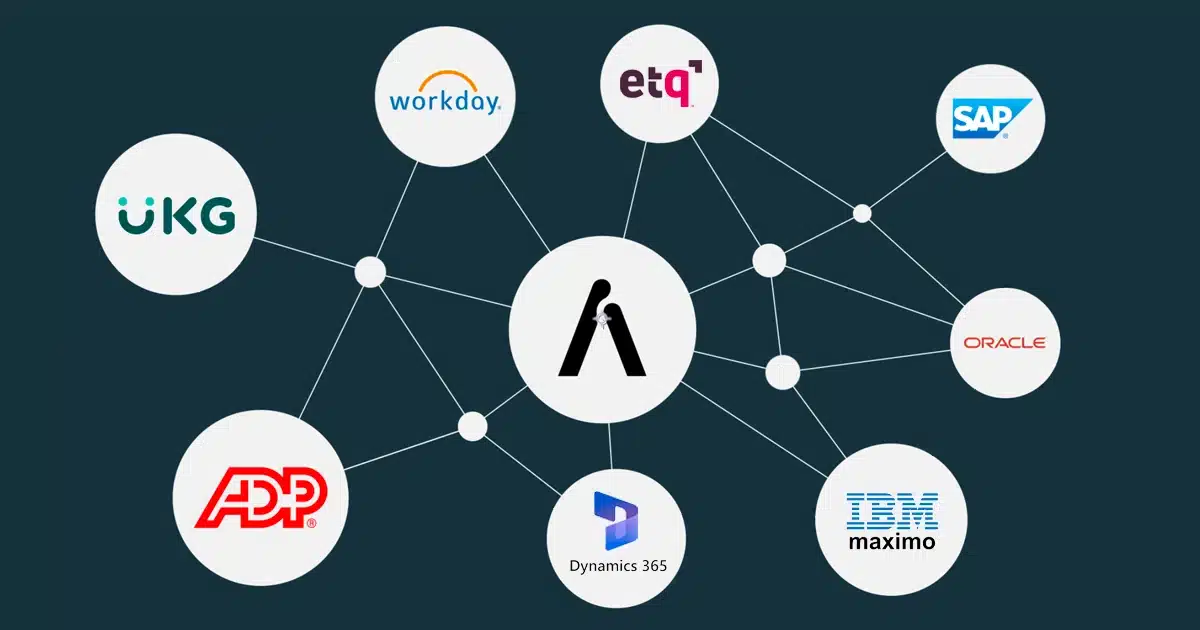
Enterprise systems such as ETQ, Workday, UKG, SAP, Oracle, IBM Maximo, Microsoft Dynamics 365, Salesforce, and ADP provide transformational value for a manufacturing company if they can be connected into frontline operations. By integrating connected worker platforms with these systems, manufacturers can create an interconnected environment that supports frontline workers and drives operational excellence. Ultimately, integration enhances collaboration, workforce visibility, decision-making processes, and overall operational efficiency, making connected worker platforms an indispensable component for manufacturing organizations.

Improving Integration Success Through Augmentir

At Augmentir, we see integrations differently than other connected worker platforms. Our rich history of building integrations in the manufacturing space enabled us to design a connected worker solution that easily, bi-directionally, and securely integrates the enterprise systems of record to create closed loop processes involving the frontline workforce.

Augmentir has internal PaaS services to run connectors that we build and support for popular enterprise applications like SAP, Salesforce, ETQ, Oracle, IBM Maximo, and more. Additionally, our PaaS enables custom integrations to be built and executed for custom, and niche applications. All third-party integrations running in the Augmentir connected worker platform carry the same SLA and geo-redundant support. By facilitating connected worker platform integrations with enterprise systems in this way, we have provided leading manufacturers with increased workforce visibility, improved productivity, digitized and standardized processes, enhanced training and collaboration, and more.

augmentir enterprise integration

Furthermore, because we are the leading AI-powered connected worker provider, we have brought innovative generative AI technologies such as AI-driven analytics, machine learning algorithms, NLP, predictive maintenance, and industrial AI copilots to improve connected worker integrations with enterprise systems, providing real-time guidance, enabling predictive analysis, and enhancing communication and collaboration among workers.

Schedule a demo to learn more about our AI-powered connected worker solutions and how they are drastically improving frontline processes, training, and manufacturing activities.


See Augmentir in Action
Get in Touch for a Personalized Demo