Watch Augmentir’s presentation at Learning & HR Tech 2024 and see how Generative AI Copilots transform learning and development in manufacturing.

Generative AI in learning and development has started to shape the future of HR across the board including attracting, developing, engaging, and retaining talent.

AI has revolutionized how organizations approach:

  • Talent acquisition – for smarter recruiting
  • Talent development – for skills analysis and performance evaluations
  • Worker relations – capitalizing on its ability to personalize employee relations
  • Workforce planning – leveraging its ability to make sense of data to perform more accurate forecasting and capacity planning
  • People analytics – using AI to make sense of employee data from an engagement and skills optimization standpoint
  • Performance management – relying on it for benchmarking and progress evaluation
  • HR operations – leveraging AI’s ability to automate and support onboarding and offboarding processes
  • Learning and development – using AI in everything from content creation to delivering personalized and adaptive content
generative ai learning copilots

However, Generative AI in learning and development has yet to make a significant impact on employees where it matters the most – in the flow of work.

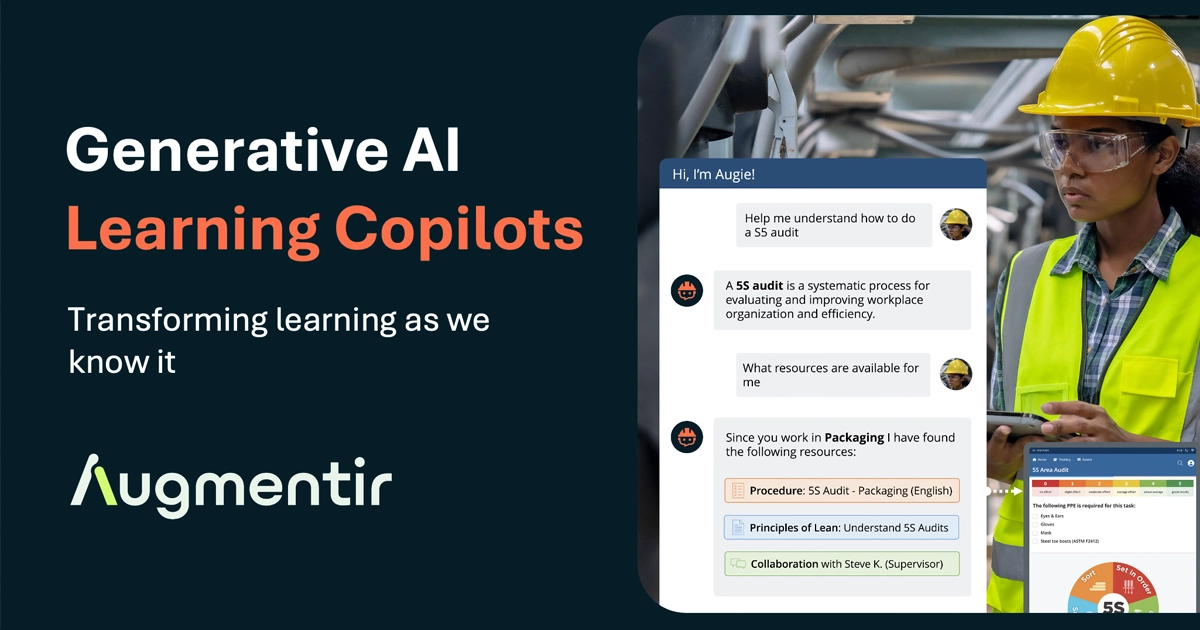
This is where Generative AI learning copilots and AI-powered connected worker solutions come in. Together these technologies are transforming learning for frontline workers, improving onboarding, enabling learning in the flow of work, and driving more efficient upskilling and reskilling.

Watch our full presentation from Learning and HR Tech 2024 “Generative AI Learning Copilots: Transforming Learning as We Know It”, on-demand below.

Key Highlights:

  • Generative AI in learning and development has started to shape the future of HR across the board including attracting, developing, engaging, and retaining talent.
  • Deskless workers make up 80% of all workers globally and are underserved from a learning and development perspective, with 78% feeling they don’t have the right amount of training to succeed.
  • Generative AI Learning Copilots can generate training content, translate languages, provide real-time feedback, give on-demand guidance and answers, and serve as a digital performance support tool.

Generative AI Learning Copilots for Deskless Workers

Deskless workers, often referred to as “frontline workers”, generally do not sit in front of a desk and make up about 80% of all workers globally, they are on the front lines – in factories, at retail counters, construction sites, hospitals, and more.

While frontline workers and activities have undergone dramatic changes over the past few years, they are still woefully underserved from a learning and development standpoint.

  • 78% of frontline workers feel they don’t have the right amount of training to succeed at work
  • 65% want information on-demand and “in the flow of work”
  • Only 12% of HR operations leaders are actually satisfied with their L&D processes in support of their frontline employees

The reality is that traditional onboarding and training practices have been proven to be ineffective, however, much like AI has historically been used to improve the efficiency and output of machines, we can do the same with our frontline workforce.

AI learning and development tools and GenAI assistants can help:

  • Identify areas for content improvement, and implement those improvements
  • Measure training effectiveness
  • Create personalized, job-relevant training and curriculums
  • Measure and improve workforce effectiveness

Managing Manufacturing Workforce Challenges with GenAI Learning Copilots

The workforce crisis in manufacturing is accelerating and at the forefront of the minds of operations and HR leaders.

In fact, even if every skilled worker in America were employed, there would still be 35% more unfilled job openings in the manufacturing sector than skilled workers capable of filling them. Deloitte predicts that the skilled labor crisis will cost manufacturers upwards of $1 trillion by 2030.

In 2019, the average tenure in manufacturing was 20 years, the average time in position was 7 years, and the average 90-day retention rate was 90%. As of 2023, however, the average tenure is 3 years, the average time in position is 9 months, and the average 90-day retention rate was 50%.

These are representative of drastically different manufacturing realities. The workforce of 2019 is not coming back, and neither will productivity, unless organizations make significant investments and strides in supporting frontline workers with the appropriate tools and training. Luckily, smart connected worker and generative AI technologies offer a path forward.

Generative AI helps manufacturers answer:

  • What is the skills inventory of the team that is in attendance today?
  • Who can/should perform this work?
  • Who would benefit the most from targeted training?
  • Where should they focus on for process improvement?
  • What type of training would give them the biggest return?
  • What training materials need Improvement?

Generative AI-powered copilots and digital assistants can take this further, allowing frontline manufacturing workers access to vast amounts of knowledge in the flow of work when they need it most, helping to predict and prevent skills gaps before they impact production, and to design efficient and personalized development curriculums to shorten the time it takes for workers to be effective and competent in their positions.

Interested in learning more?

If you’d like to learn more about Augmentir and see how our AI-powered connected worker platform improves onboarding, training, skills management, and other learning and development aspects across organizations, schedule a demo with one of our product experts.

 

See Augmentir in Action
Get in Touch for a Personalized Demo

Learn why integrations are key to the success of connected worker platforms, what systems should be integrated, and the benefits of a fully integrated connected worker solution.

Unlocking the potential of connected worker platforms becomes a game-changer when integrated with enterprise systems, giving them a live, closed loop connection to frontline processes and operations. This creates a truly connected enterprise that links diverse systems with the frontline workforce, paving the way for heightened efficiency, productivity, and safety.

connected worker platform integrations

However, a majority of connected worker platforms overlook the fact that connectivity doesn’t end with simply linking workers to their platform. They fail to recognize the immense benefits that live connections to enterprise systems of record bring to frontline business processes and activities.

Manufacturing success hinges on the seamless integration of connected worker platforms with legacy and enterprise systems to provide adequate support to frontline workers, giving them access to data and knowledge that can boost their efficiency and keep them safe.

Read below for more information on connected worker platform integrations; what they entail, which enterprise systems are essential for integration, and how AI-powered technology improves impact on frontline manufacturing activities.

Connected Worker Integrations: More than just an API

In manufacturing, it is critical that connected worker platforms are integrated with various enterprise systems to streamline operations and ensure that workers have the data and information they need at their fingertips. As critical as this is, most connected worker vendors believe that providing an open API is sufficient, and even boast that they integrate to enterprise systems, when in fact they place this burden on their customers.

Having an API is not enough

There are several not-so-obvious aspects to connected worker platform integrations, including:

  • Connected worker integrations with enterprise applications, even streamlined ones, have essential requirements such as logic that needs to be written, customized, run, and supported. Most, if not all, of this logic is initiated by the connected worker platform, propagating events and data from shop floor processes to the associated enterprise system of record.
  • Connected worker platforms with just an “API” require all of this functionality to be developed, hosted, and supported externally. The responsibility is then on the customer to build a custom product and select and support the hosting environment. This effort (building, hosting, and support) can cost between $50K and $150K to build and test, and then another $50K – $150K annually for 5 x 9 support. And, the customer is responsible for maintaining an SLA acceptable to the business (99.9% being typical).
Pro Tip

It’s critical that connected worker platforms include “platform-as-a-service” (Paas) capabilities that provide the ability to write, support, and execute both standard and custom integrations. These can be done by the platform provider, the customer, as well as third-party system vendors and system integrators. Providing PaaS capabilities puts the responsibility on the vendor for operating the integration service, and maintaining SLAs, geo-redundancy, disaster recovery, and privacy and security. In short, just saying “we have an API” places an undue burden on customers, and prevents building the sustainable connected enterprise necessary to remain competitive in today’s global economy.

A

Which Enterprise Systems Should You Integrate

In any industrial environment, connected worker platforms should be integrated with various systems to support operations, help with cooperation and communication, and gain valuable insights into frontline manufacturing processes. These integrations streamline activities, improve efficiency, and provide a unified digital environment that empowers frontline workers.

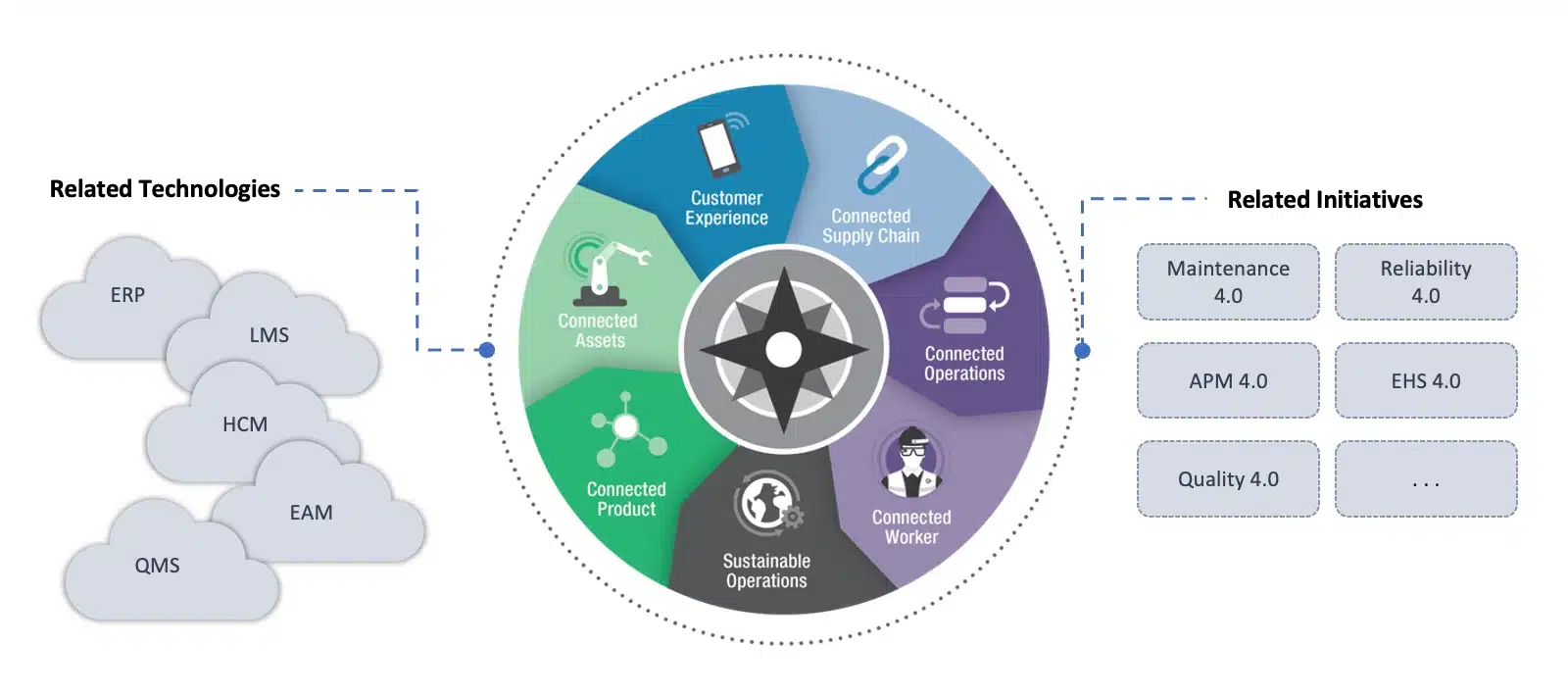
This concept of a connected enterprise spans several initiatives within an organization: assets and equipment, the products being manufactured, the end customer, operations, workers, and the entire supply chain, and is highlighted below using the Industrial Transformation (IX) Reference Architecture from LNS Research.

connected worker enterprise system integration

Examples of enterprise management systems of record that are key to connected worker success and should be integrated are:

  • ERP (Enterprise Resource Planning)
  • EAM (Enterprise Asset Management)
  • HCM (Human Capital Management)
  • HR, Training, and LMS (Learning Management System)
  • QMS (Quality Management Systems)
  • MES (Manufacturing Execution System)
  • CMMS (Computerized Maintenance Management System)
  • Supply Chain Management

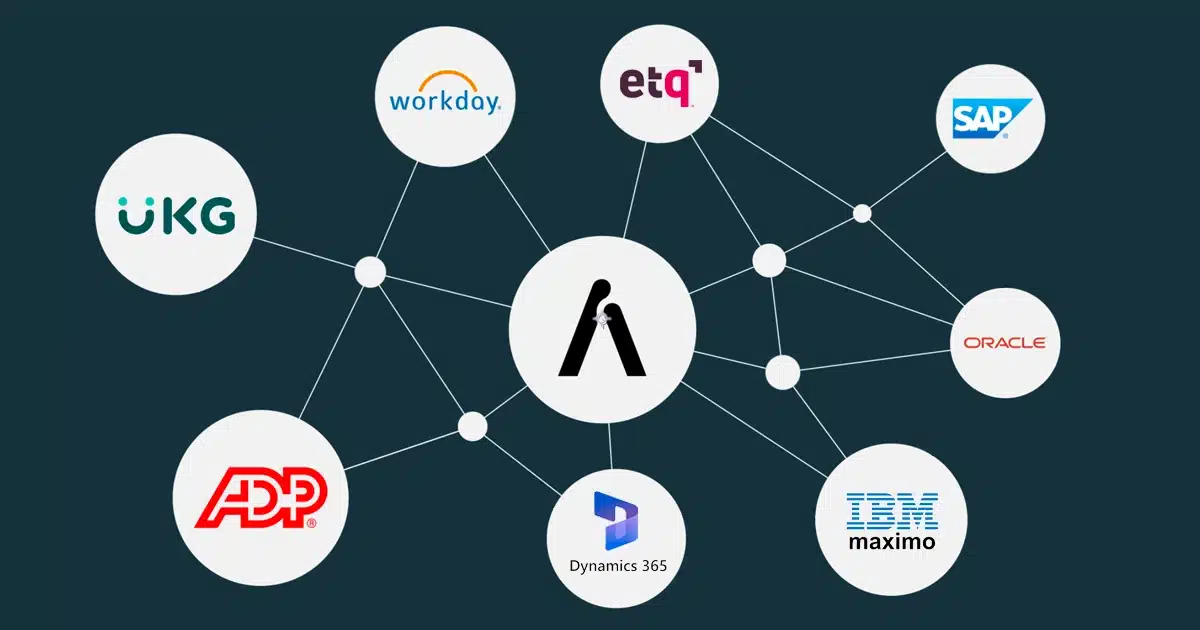
Enterprise systems such as ETQ, Workday, UKG, SAP, Oracle, IBM Maximo, Microsoft Dynamics 365, Salesforce, and ADP provide transformational value for a manufacturing company if they can be connected into frontline operations. By integrating connected worker platforms with these systems, manufacturers can create an interconnected environment that supports frontline workers and drives operational excellence. Ultimately, integration enhances collaboration, workforce visibility, decision-making processes, and overall operational efficiency, making connected worker platforms an indispensable component for manufacturing organizations.

Improving Integration Success Through Augmentir

At Augmentir, we see integrations differently than other connected worker platforms. Our rich history of building integrations in the manufacturing space enabled us to design a connected worker solution that easily, bi-directionally, and securely integrates the enterprise systems of record to create closed loop processes involving the frontline workforce.

Augmentir has internal PaaS services to run connectors that we build and support for popular enterprise applications like SAP, Salesforce, ETQ, Oracle, IBM Maximo, and more. Additionally, our PaaS enables custom integrations to be built and executed for custom, and niche applications. All third-party integrations running in the Augmentir connected worker platform carry the same SLA and geo-redundant support. By facilitating connected worker platform integrations with enterprise systems in this way, we have provided leading manufacturers with increased workforce visibility, improved productivity, digitized and standardized processes, enhanced training and collaboration, and more.

augmentir enterprise integration

Furthermore, because we are the leading AI-powered connected worker provider, we have brought innovative generative AI technologies such as AI-driven analytics, machine learning algorithms, NLP, predictive maintenance, and industrial AI copilots to improve connected worker integrations with enterprise systems, providing real-time guidance, enabling predictive analysis, and enhancing communication and collaboration among workers.

Schedule a demo to learn more about our AI-powered connected worker solutions and how they are drastically improving frontline processes, training, and manufacturing activities.


See Augmentir in Action
Get in Touch for a Personalized Demo

Digitally enable frontline workers through UKG and Augmentir’s innovative partnership, leveraging AI and smart connected worker technologies.

Augmentir and UKG complement each other by providing an integrated mobile solution that digitally empowers frontline workers and drives operational excellence in manufacturing.

ukg frontline workforce connected with augmentir

UKG is a leading global provider of cloud-based human capital management and workforce management solutions for organizations to drive better business outcomes, improve HR effectiveness, streamline payroll processes, and enhance employee experience. Together with Augmentir – the leading AI-powered connected worker platform designed to digitize and optimize processes for frontline industrial workers, UGK digitally enables frontline workers to improve real-time communication, digital task management and standard work, training and knowledge sharing, and more.

Continue reading below to learn more about the benefits Augmentir and UKG bring to frontline workers and how together we are ushering in a new era of human capital management and an augmented connected frontline workforce.

Benefits of Connected Human Capital Management

Integrating Augmentir’s connected worker platform with UKG’s workforce management solutions offers several key benefits for empowering and enabling frontline workers:

  • Workforce Management Integration: Augmentir’s AI-powered connected worker platform integrates with UKG’s workforce management solutions allowing frontline workers to access scheduling, time tracking, and other UKG features directly within Augmentir’s platform. Workers can view schedules and manage workforce processes seamlessly through Augmentir’s user interface.
  • Real-time Communication and Collaboration: Augmentir and UKG offer tools for real-time communication and collaboration among frontline teams. Providing knowledge-sharing capabilities for frontline teams, and enabling seamless real-time communication, collaboration, and access to workforce information improves frontline adaptability and decision-making allowing for faster response and issue resolution.
  • Training and Skills Development: Augmentir and UKG facilitate training and upskilling of frontline workers. Augmentir’s platform delivers personalized digital work instructions and training content, while UKG provides learning and knowledge-sharing platforms. Together, they create a comprehensive training ecosystem for frontline staff.
  • Operational Insights and Continuous Improvement: Augmentir’s AI-based operational insights help identify opportunities for improving worker skills and driving continuous improvement. When coupled with UKG’s workforce analytics capabilities, organizations gain deeper visibility into their frontline operations to optimize productivity and processes.

Together, Augmentir and UKG create a powerful technology ecosystem that connects, empowers, and drives operational excellence for frontline workers across various industries by unifying their complementary digital workplace offerings.

Collaborating for the Augmented Connected Workforce of the Future

With UGK’s robust human capital management solutions integrated with Augmentir’s AI-powered connected worker platform, organizations enable an augmented connected workforce that is future-ready and equipped with the right tools for success.

UKG offers comprehensive workforce management solutions like UKG PRO, which includes features for scheduling, time tracking, payroll, and HR management. Augmentir allows companies to easily digitize complex frontline workflows and deliver personalized digital work instructions matched to each worker’s proficiency level. This ensures workers receive tailored guidance in the flow of work. Together, they give organizations a unified approach that augments and supports frontline workers by leveraging AI, real-time communication, comprehensive training solutions, and data-driven insights to ultimately drive improvements in productivity, efficiency, and better business outcomes overall.

Leading manufacturers that have deployed our augmented connected worker solution have seen impressive results such as:

  • 75% reduction in new hire training/onboarding time
  • 27% reduction in machine downtime using Autonomous Maintenance
  • 32% improvement in worker productivity

Furthermore, over 5,500 manufacturers globally leverage UKG solutions to create great employee work experiences, improve productivity, enhance compliance, increase operational performance, and more. By integrating UKG’s robust workforce management solutions with Augmentir’s AI-powered connected worker platform, organizations can create an Augmented Connected Workforce that is more efficient, productive, and engaged.

AI-Driven Connected Workforce Management Solution

AI-driven connected workforce management solutions like those offered by UKG and Augmentir provide several benefits for manufacturing operations including Intelligent Staffing and Talent Acquisition, Predictive Workforce Planning, Strategic Scheduling and Resource Optimization, Personalized Employee Development, and Increased Productivity and Cost Savings.

AI empowers manufacturers to forecast workforce needs accurately by analyzing frontline workforce data alongside historical data, market trends, and business objectives. AI-driven scheduling algorithms optimize Lean Daily Management by considering employee availability, skills, preferences, and other capabilities. This minimizes scheduling conflicts, reduces overtime costs, and ensures fair workload distribution while enabling real-time adjustments.

Additionally, with AI and connected technology manufacturing learning and development professionals can personalize employee training programs based on individual performance data and identify skills gaps for targeted upskilling or reskilling efforts. By leveraging AI, machine learning, digital workflows, and data-driven insights, modern workforce management solutions empower organizations to build a more efficient, agile, and connected frontline workforce capable of adapting to changing demands.

Interested in learning more?

If you’d like to learn more about how Augmentir and UKG work together to create a powerful digital ecosystem that streamlines operations, improves communication, and empowers frontline workers with the tools and information they need, schedule a demo with one of our product experts.
 

See Augmentir in Action
Get in Touch for a Personalized Demo

Recently, the Augmentir team was excited to support WebexOne as a gold sponsor. It was great to participate in such an inspiring event, where collaboration and hybrid work were key themes throughout the sessions.

Recently, the Augmentir team was excited to support WebexOne as a gold sponsor. It was great to participate in such an inspiring event, where collaboration and hybrid work were key themes throughout the sessions.

During the event, our team had an opportunity to speak with industry leaders to discuss their top challenges and how Augmentir and Cisco together are helping shape the future of work in the manufacturing industry.

Shaping the Future of Work

Augmentir’s partnership with Cisco was built to address some of the top challenges in the industrial sector today. During the WebexOne event, Augmentir showcased how the Webex remote collaboration tool, Expert on Demand, and our AI-Powered Connected Worker Platform together deliver a unique combination of technology and tools necessary to help increase safety, quality, and productivity for frontline workers performing industrial jobs in manufacturing and service.

These themes were prevalent throughout the WebexOne event – using technology to unlock human potential and elevate today’s workforce.

Elevating Workforce Performance

Many of the themes discussed during the event focused on today’s changing workforce, and the unique needs of the “deskless” workers, who have been underserved by technology.  This is especially true in manufacturing, where businesses face a growing skilled labor shortage, retention, and worker engagement challenges, all while lacking the appropriate digital tools and data to effectively train and continually support their workers.

Augmentir’s suite of AI-powered connected worker tools help industrial companies understand their diverse workforce at an individual level, enabling them to reduce the effort it takes to onboard, guide, and support their workforce.

  • Improve job quality – Drive quality improvements by moving from paper-based to interactive digital work instructions augmented with rich media, contextual data, and mixed reality experiences, ensuring your workers always have the correct information on hand to make error-free and safe decisions.
  • Improve Worker Safety – In addition to running on any mobile phone or tablet, Augmentir and Webex are supported on the voice-enabled RealWear HMT-1 and HMT-1Z1 industrial headsets, offering hands-free operation that can be used in nearly any industrial environment. This helps workers stay focused on the task at hand to improve safety and efficiency.
  • Reduce operational costs – Identify areas where the largest improvements can be made within your workforce and across your organization with insights from Augmentir’s AI.

Elevating Hybrid Work and Collaboration in Manufacturing

Hybrid work and collaboration were also central themes during the event, and both are core to Augmentir’s combined solution with Cisco. Augmentir’s digital workflow tools enable rapid creation and delivery of augmented work instructions to help guide workers in day-to-day tasks. This value is extended with Cisco Webex Expert on Demand, which gives workers the ability to quickly connect and collaborate with remote experts wherever they are located.

Cisco also announced Webex Hologram during the WebexOne event. This new augmented reality meeting solution was noted by Jeet Patel, Executive Vice President and General Manager of Cisco Security and Collaboration, as an “industry first” – combining Webex meeting functionality with augmented reality (AR) hardware to create immersive 3D holograms of participants during meetings.

The Stakes Have Never Been Higher

As you can tell, WebexOne was a successful 2-day event with great conversations around collaboration and hybrid work. As Jeet Patel stated during the event, “The stakes have never been higher” in regards to your workforce and working smarter and more efficiently. It’s time to elevate your workforce with Augmentir’s AI-powered Connected Worker solution.

For equipment manufacturers, the traditional approach to installing, maintaining, and servicing their equipment has become increasingly challenging due to the current travel limitations and changing nature of work caused by COVID-19. Industrial OEMs are turning to AI-powered Connected Worker technology to transform how they service and support their customers and ensure field service continuity during […]

For equipment manufacturers, the traditional approach to installing, maintaining, and servicing their equipment has become increasingly challenging due to the current travel limitations and changing nature of work caused by COVID-19. Industrial OEMs are turning to AI-powered Connected Worker technology to transform how they service and support their customers and ensure field service continuity during this unprecedented time.

Connected Worker technology combines augmented reality (AR) with artificial intelligence and machine learning (AI/ML), allowing equipment manufacturers to improve the safety, quality, and productivity of their workforce both during the COVID-19 crisis and beyond. 

Our vision at Augmentir is to transform connected worker technology with artificial intelligence and our software is the first of its kind to do so. Whether you have your own service force or work through a dealer network, equipment manufacturers can use Augmentir’s Connected Worker software platform to:

  • Enable your customers and 3rd party service companies to install, maintain, and repair equipment using easy to understand Augmented Guided Instructions
  • Provide remote and virtual support through integrated Remote Assist collaboration tools
  • Use AI-driven “True Opportunities” to shed light on inefficiencies and service, repair, maintenance process improvement opportunities within your direct service force, dealer networks, and customers

Connected worker software helps manufacturing and service teams improve safety, quality, and productivity across a range of use cases.

Manufacturing

  • Guided Instructions for Assembly, QA, MRO (maintenance, repair and operation): Personalized work instructions deliver the right level of guidance, based on worker proficiency, along with 80% reduction in training and authoring times.
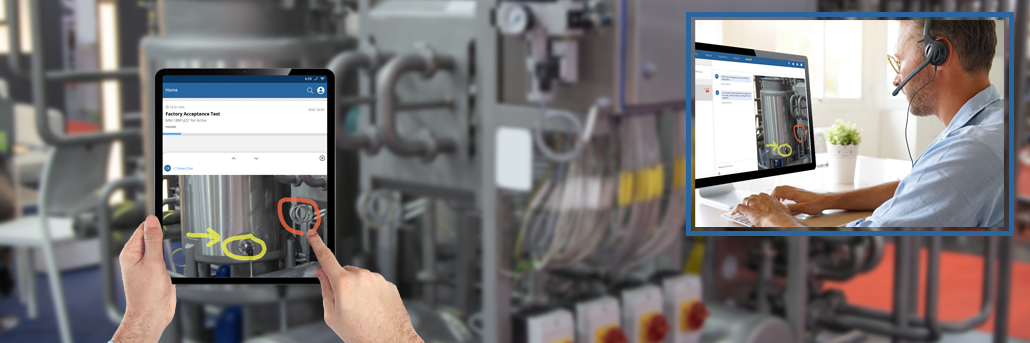
  • Remote Assist for Engineering Support: Integrated remote assistance tools provide industrial- level collaboration and support remote problem solving, QA checks, remote factory acceptance tests, while greatly enhancing efficiency.
  • AI-driven Continuous Improvement: Granular data collection on every job drives insights into Scrap, First Pass Yield, Production Bottlenecks and AI- based True Opportunities.

Service

  • Guided Instructions for Repair, Warranty & Recall: Improves quality and efficiency by moving from paper- based to digital work instructions while providing enhanced insights into compliance and operations.
  • Remote Assist Supports a Multi-tier Service Network: Integrated remote assistance provides a level of remote and virtual support to customers and dealers that they have never had before.
  • AI-driven Continuous Improvement: Day after day, year after year, AI-driven True Opportunities find ways to improve your processes, procedures, and worker skills.

It’s critical that we recognize this time as a major turning point in the way frontline workers interact and perform daily operations. Manufacturers will continue to face challenges in a post-COVID world and connected worker technology will allow them to keep their workers safe and businesses operating.


AI-powered technology may be the missing puzzle piece for today’s workforce crisis.

It wouldn’t be fair to attribute all of manufacturing’s current labor shortage woes to the pandemic–there are a lot of factors contributing to this frustrating situation, and many of them were looming long before we ever heard of COVID-19. Did it make things worse? Probably. And the forecast doesn’t look very sunny if you believe what analysts have to say about it. However, despite the current crisis, there is hope yet for manufacturing, specifically in the form of AI and Connected Worker Technology.

Sure, the face of the workforce has changed dramatically. The pool of potential laborers has shrunk. Businesses are being forced to hire people traditionally considered under-qualified. And that leads to a whole host of other complications, including a drop in operational efficiency, a rise in safety issues, and more. The pessimists out there would only see the threat to the global market these challenges pose–the manufacturing industry makes between 11 and 12 percent of the US economy after all.

Good thing we’re optimists at heart! Behind every challenge is an opportunity, as far as we’re concerned. And when it comes to this challenging labor market in particular, we see a huge opportunity for businesses to work with what they’ve got, and still reach operational goals. We have the potential to assess how every worker performs on the job, regardless of the experience and skill set they bring on day one, and use that information to improve individual and enterprise-wide performance. Puts a new light on the labor shortage, doesn’t it?

You can’t fix what you can’t see.

We know using data is important to directing and improving operations–that’s business best practices 101. But insights drawn are only as good as the data itself. And even though there can’t be many businesses out there who haven’t yet jumped on the digital transformation bandwagon, we suspect a lot still rely on outdated data collecting and reporting mechanisms. Those digital spreadsheets had their moment, but we’ve got better options now. Maybe you opted for a Bluetooth software program or distributing a digital survey for your workers. But even with those innovations, what do these data indicators really tell you? Is this reliable and usable information? We didn’t think so either.

Imagine what you could do with real-time data, rather than a summary of operational KPIs at the end of set periods? Even better–imagine capturing the performance metrics of each individual worker rather than their self-generated assessments and observations and having the potential to use that knowledge to improve their skill set and operational proficiency. That’s when data becomes intelligence. And that intelligence has the potential to become so valuable to your enterprise that you’ll wonder how you ever operated without it.

Not convinced you could benefit from data at that level of individual performance? Let us draw an analogy we think you’ll appreciate.

Think of each worker as a newly licensed driver; what happens after passing the road test?

Remember the day you got your driver’s license? We spent hours, if not days and weeks practicing behind the wheel, eagerly waiting to be evaluated by a driving instructor. And let’s be honest, plenty of us winged it, too. Either way, once you show them you can do a three-point-turn and know to stop at the flashing pedestrian crossing sign, everyone walks away with the proof of their proficiency–a driver’s license. 

Then what happened? Nothing. Maybe a celebratory high-five and then eventually years of driving. In one, five, or ten years, what do we know about each person’s capabilities? Unless they’ve wracked up a stack of tickets for traffic violations, we don’t know anything. For all we know, they haven’t sat behind the steering wheel since passing. There is no mechanism to re-assess whether drivers are highly skilled or at-risk of creating an accident in operations.

Now what if we looked at our frontline workers through that lens? You know when they were hired that they could perform X, Y and Z. Some could do even more. But what about after that? What if you could assign an AI-based driver instructor to follow each new driver around for ongoing assessment and intervention in the moment of need?

Put smart connected worker technology in the passenger seat

Adopting connected worker technology powered by artificial intelligence (AI) increases the reliability and credibility of data by analyzing employee performance in ‘real-time.’ That individualized data can be used to connect workers with a company’s digital library of training tools and resources, having an immediate impact on operational proficiency and cultivating a healthy learning environment for workers.

Connected worker technology that leverages AI offers self-guided learning processes when opportunities are identified, reduces human error and improves safety, provides updates on pressing issues and equipment failures and access to a variety of applications. Who wouldn’t want to work for an organization like this? One that offers a high probability of job satisfaction and encourages personal skill development? A culture like that can help the operation on many levels, from reducing operational costs to attracting new employees. 

What now? There is only one connected worker solution that can provide this level of intelligence on your workforce–contact us to learn more about how Augmentir can benefit your business and ask for a demo!

These virtual events were a great way to connect with manufacturing professionals and discuss some of the industry’s top challenges and topics – workforce transformation, learning and development, lean manufacturing, and autonomous maintenance.

October was an exciting month in the virtual manufacturing world! Augmentir had the pleasure of participating in several virtual events including the American Manufacturing Summit, Gartner Supply Chain Symposium/Xpo, and the Enterprise Wearable Technology Summit (EWTS). Each of these virtual events were a wonderful way to connect with manufacturing professionals and discuss some of the industry’s top challenges and topics – workforce transformation, learning and development, lean manufacturing, and autonomous maintenance. 

EWTS

The Enterprise Wearable Technology Summit (EWTS) is the longest-running and most comprehensive event dedicated to the business and industrial applications of wearables, including AR/VR/MR glasses and headsets, body-worn sensors, and exoskeletons. This year’s event took place in four bite-sized conference days (every Wednesday from October 6-27, 2021), with community, networking and additional content drops throughout the rest of the month. This unique format allowed for great networking as well as some very valuable sessions. In one of the polls, 32% said that Remote onboarding and training was the top use case for immersive/wearable technology at their company.  

American Manufacturing Summit

The American Manufacturing Summit is a leadership focused meeting designed to bring global manufacturing, operations, engineering, quality and supply chain leaders together to discuss current trends, strategic insights, and best practices in an ever-evolving manufacturing environment. Dave Landreth, Augmentir’s Head of Customer Strategy, had the opportunity to lead a fire-side chat in discussing how Artificial Intelligence and Connected Worker technologies are key pillars of the Industrial Workforce Transformation. We also enjoyed the 1:1 meetings that took place as part of the American Manufacturing Summit. 

Gartner Supply Chain Symposium/Xpo

The Gartner supply chain conference offers attendees a one-stop-shop to access research-backed sessions, get expert advice and problem-solve with colleagues. The main focus of this event is to address the strategic needs of CSCOs and supply chain executives and showcase new technologies that adapt to the ever-changing environment in which they’re operating.

Sessions from the event dealt with purpose-driven supply chains and learnings from the pandemic for the healthcare supply chain, risk assessment and global trade, top trends for smart manufacturing, the future of quality management and supply chain planning, and resolving the dichotomy of logistics outsourcing. 

Key announcements from the virtual manufacturing events:

Continuous improvement, connected worker technology, AI, and data-driven technology were among the top trends from these events. Manufacturing organizations are looking for Connected worker software, like Augmentir, to integrate frontline workers and improve productivity, training, and quality. In addition, as we continue to work remotely and see more supply chain disruptions, AI-based, data-driven technology will be essential to building flexible factories that address these challenges and allow for continuous improvement.

By now, most of us have heard the phrase – “the global pandemic has changed the way we work”. This has proven to be true for all industrial companies, where the changing workplace dynamics, increased safety, and supply chain disruptions have forced companies to rethink how they support their workforce and empower them to perform […]

AR-based remote assistance for frontline workers - start your digital journey with Augmentir

By now, most of us have heard the phrase – “the global pandemic has changed the way we work”. This has proven to be true for all industrial companies, where the changing workplace dynamics, increased safety, and supply chain disruptions have forced companies to rethink how they support their workforce and empower them to perform at high levels of safety, quality, and productivity.

Many companies have shifted and adopted remote work policies to offset travel limitations and ensure safety. According to Gartner, despite the shift to remote work, there are still nearly 2 billion frontline or field workers in the global workforce. Most of these frontline jobs cannot be done remotely, yet these workers still need access to digital information, guidance, training, and support, which was previously given in person.

Bringing Remote Assistance Tools to the Frontline

Unfortunately, typical office videoconferencing and virtual collaboration tools (e.g. Zoom, Microsoft Teams), which are designed for desktop-based knowledge workers, are not always appropriate for the workplace of the frontline – workers on factory floors or healthcare facilities, engineers on oil rigs, or field service technicians out in the field.

Industrial connected worker solutions that include augmented reality (AR) based remote assistance are uniquely suited for the operating environments that frontline workers participate in, and for the mobile and wearable devices they use. These industrial solutions combine live video streaming with augmented reality to create a powerful collaboration tool for frontline teams.

Value Across a Range of Industrial Use Cases

  • Remote Support for Direct or Dealer Field Technicians – Remote expert guidance and assistance tools now enable support for service teams, allowing technicians that are on-site to perform maintenance and repair procedures with improved safety, quality and efficiency with the help from virtual subject matter experts.
  • Remote Support for Customers –  For companies that are unable to offer on-site service technicians, remote assistance tools provide the ability for customers to be more self sufficient and provide an improved level of self-service. Remote assist tools allow customers to connect with subject matter experts to safely and efficiently perform routine service and maintenance routines.
  • Remote assistance tools are also being used for internal manufacturing collaboration, where many companies are using remote assistance tools to virtually connect frontline workers in factories with remote subject matter experts (SMEs) to improve troubleshooting and support workers during changeover, maintenance, or other operational processes.
  • Manufacturers are also extending remote assistance tools out to OEMs and 3rd party SMEs for remote equipment maintenance, virtual factory and site acceptance tests, and troubleshooting when they are unable to travel onsite.

A Digitally Connected Workforce

Now is the time to consider remote assistance and collaboration solutions, and to begin on your journey towards digitizing and connecting your frontline workforce. In addition, with integrated digital workflows, frontline workers can be guided to independently complete jobs safely and correctly. AI & Human Feedback capture tribal knowledge, while AI is used for continuous improvement efforts. These technologies are proving to be practical and effective ways to close skill gaps and transform training efforts – allowing your frontline workers to work safely and efficiently in today’s new normal.


Learn more about how connected worker solutions that include augmented reality (AR) based remote assistance are uniquely suited for the frontline workforce. Check out our comprehensive guide and checklist of requirements for evaluating and selecting augmented reality (AR) based industrial Remote Assistance solutions.