You may already have researched how to implement an autonomous maintenance program, which generally includes seven steps. (If not, then we suggest you review our article on how to implement autonomous maintenance first.) Here, we want to supplement that and recommend seven ways to improve your AM implementation. We hope this helps you avoid the difficulties that some companies experience.
Step 1: Don’t skip cleaning the machines.
Following a regular cleaning procedure helps moving parts continue working at their best. Cleaning machines also gives workers the opportunity to discover and address any defects or mechanical wear and tear before they can cause malfunctions.
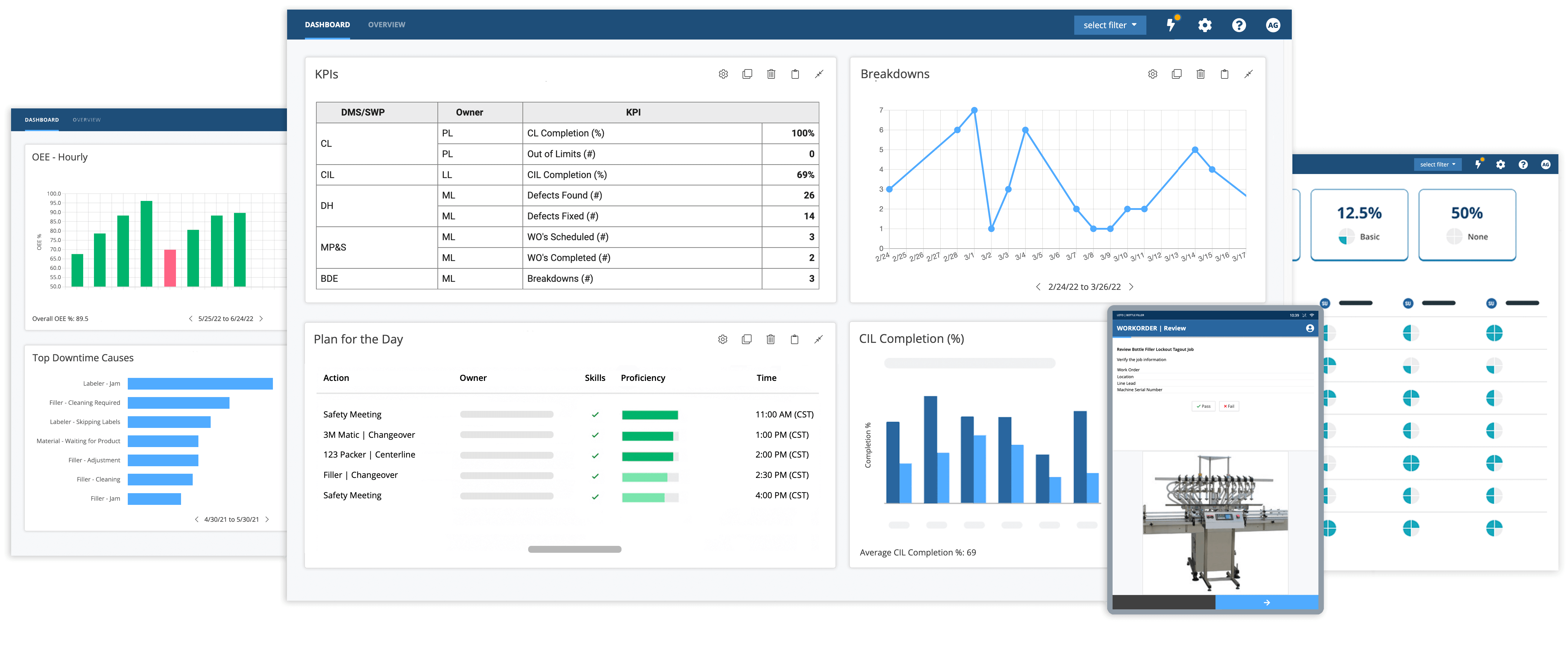
A connected worker solution makes this easier by helping operators upload defect details and quickly find ways to resolve them. An operator, for example, can take a picture of their machine and input any issues into the connected worker software. The system will then suggest work instructions based on what’s wrong.
Step 2: Eliminate any equipment defects.
Eliminate any equipment defects as soon as possible. This may consist of removing the source of the defect, containing the source so it doesn’t spread, or improving cleaning protocols if the first two options aren’t needed.
Step 3: Standardize your clean, inspect and lubricate (CIL) methods.
No one wants the same defects to keep reoccurring. That’s why it’s crucial to standardize all clean, inspect, lubricate (CIL) practices per machine.
One way to do this is by implementing a connected worker solution. It can help improve this process by outlining which CIL tasks to focus on. For example, the system may include pictures, videos and step-by-step instructions on how to successfully complete each task.
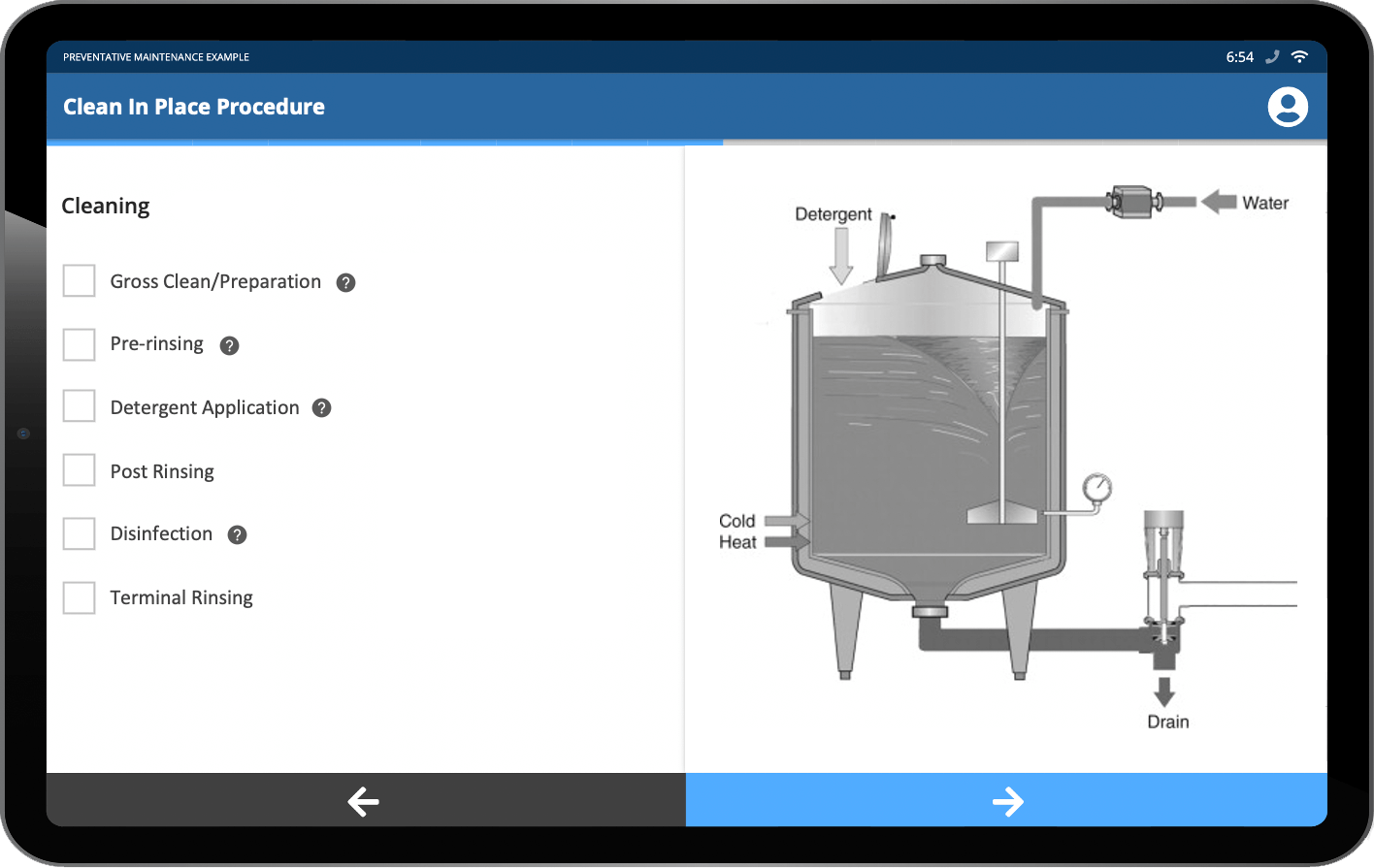
From the management perspective, a connected worker solution can give supervisors a better idea of which jobs were completed and how long it took to finish them. This data can also help leadership identify which areas need improving on.
Step 4: Provide operator training.
Although this is step one of autonomous maintenance installation procedures, many companies forget to continue to train operators, both to keep their knowledge fresh and to prepare new or rotated employees to take over maintenance tasks.
That’s why it’s vital to continue training machine operators on how to identify and fix issues. These trainings involve operators learning how to inspect their machines using digital step-by-step work instructions. The point is to train operators to take over basic maintenance tasks typically handled by maintenance technicians.
Step 5: Transfer machine inspections from technicians to operators.
This step consists of transferring the routine equipment-related inspections from maintenance technicians to machine operators. Taking over this duty can help operators become more knowledgeable on their machines. It can also help decrease equipment malfunctions and downtime. Most beneficial of all, it frees up technicians to focus on more pressing tasks.
Step 6: Tidy up workstations.
Do not overlook organizing workstations. If a workstation is messy, it can be hard to know when a defective product has left the assembly line. A tidy space can make it easier to spot any questionable products.
Step 7: Take ownership of equipment.
Autonomous maintenance should build your workers’ sense of ownership over the equipment they use. As operators take complete responsibility for their equipment, they will continue to monitor it and make improvements daily. They will also have gained enough knowledge to tackle any new defects and sources of contamination with ease.
At this point, very few machine malfunctions and accidents should occur on the shop floor.