Posts

Discover key strategies to boost production efficiency in manufacturing—maximize output, cut waste, and improve operations with smart, practical solutions.

In today’s competitive industrial landscape, production efficiency in manufacturing is a critical factor that directly impacts profitability, customer satisfaction, and long-term business success. To achieve production efficiency, the actual output must match the optimal standard output, which involves minimizing waste, reducing downtime, optimizing labor, and ensuring consistent quality at every step of the manufacturing process.

production efficiency in manufacturing

Introduction to Production Efficiency

Production efficiency refers to the ability of a manufacturing process to produce the maximum output with the given resources, while minimizing waste and reducing costs. It is a key concept in economics and operational analysis, essential for businesses to remain competitive in the market. Achieving production efficiency involves optimizing processes, reducing waste, and improving productivity to achieve higher profitability and competitiveness. By focusing on improving production efficiency, manufacturers can increase their production capacity, reduce costs, and enhance product quality. This, in turn, leads to increased customer satisfaction and loyalty, as high-quality products are delivered consistently and on time.

What is Production Efficiency in Manufacturing?

Production efficiency refers to the ability of a manufacturing operation to produce goods using the least amount of resources—time, materials, and labor—without compromising on quality. An efficient production line runs smoothly, minimizes bottlenecks, and ensures equipment and workforce are fully utilized. To measure production efficiency, metrics such as Overall Equipment Effectiveness (OEE), cycle time, yield rates, and labor productivity are used.

Pro Tip

Using digital tools, AI-powered analytics, and connected worker platforms are revolutionizing how factories operate. These technologies provide visibility into operations, uncover hidden inefficiencies, and support agile decision-making.

A

Why is Production Efficiency Important?

In manufacturing, even small inefficiencies can lead to significant cost overruns, missed deadlines, and quality issues. Improving production efficiency is essential for maximizing output while minimizing input—helping manufacturers stay competitive, agile, and profitable in an ever-evolving market. Manufacturing efficiency, on the other hand, focuses specifically on optimizing the effectiveness of manufacturing processes, workforce deployment, and overall productivity on the shop floor. Efficient production processes enable manufacturers to do more with less, which not only boosts the bottom line but also enhances the overall customer experience.

Here are some of the key benefits:

Lower Operational Costs

By reducing machine downtime, optimizing labor, and minimizing material waste, companies can optimize processes to significantly cut overhead costs and improve profitability.

Reduced Waste and Rework

Quality control ensures that products are made right the first time, decreasing scrap rates and minimizing costly rework caused by defects or human error.

Shorter Lead Times

Streamlined workflows and fewer production delays, coordinated through efficient production schedules, mean faster turnaround times, allowing manufacturers to fulfill orders more quickly and meet tight delivery schedules.

Better Resource Utilization

Whether it’s labor, machinery, or raw materials, efficient production ensures every resource is used to its full potential throughout the entire production cycle—maximizing value and reducing idle time.

Higher Customer Satisfaction

Consistently delivering high-quality products on time builds trust with customers and strengthens relationships, leading to repeat business and positive brand reputation. Manufacturers improve efficiency by leveraging modern technologies and real-time data analytics, which helps streamline processes, reduce downtime, and enhance productivity.

Greater Competitiveness in the Market

Manufacturers that improve efficiency can offer better prices, respond faster to market changes, and innovate more effectively—gaining a clear edge over less agile competitors.

Ultimately, production efficiency is not just about internal gains—it’s a strategic advantage that drives growth, scalability, and long-term success.

Key Strategies to Improve Production Efficiency

Here are some proven strategies to improve production efficiency:

1. Implement Lean Manufacturing Principles to Drive Continuous Improvement

Lean manufacturing methodologies focus on improving efficiency by eliminating waste (or “muda”) from every aspect of the production process. Tools such as 5S Audits, Kaizen, and value stream mapping help identify inefficiencies and areas for continuous improvement.

2. Invest in Autonomous Maintenance and TPM

Encouraging operators to handle basic maintenance tasks—such as Clean, Inspect, Lubricate (CIL)—as part of an Autonomous Maintenance and Total Productive Maintenance (TPM) strategy minimizes equipment downtime, improves machine efficiency, and ensures machines run at peak performance.

3. Leverage Digital Work Instructions and Connected Worker Tools

Modern digital approaches like digitizing standard operating procedures (SOPs) and adopting connected worker tools helps ensure consistency, reduce errors, and make it easier to train workers by providing accurate data.
improve production efficiency in manufacturing with augmentir

In a recent survey conducted by LNS Research, more than 70% of the most profitable manufacturers are currently utilizing in Future of Industrial Work (FOIW) initiatives and connected worker technology, with the vast majority of them seeing meaningful progress and delivered corporate value through these workforce initiatives. Connected Worker platforms like Augmentir enable manufacturers to create AI-powered workflows that guide frontline workers through each task efficiently and accurately.

3. Use Real-Time Data and Analytics to Track Key Performance Indicators

Data-driven decision-making is critical for efficiency. Historical data can provide insights into the maximum output achieved by a facility under full capacity, which can help in defining standard outputs accurately. Real-time monitoring of machine performance, operator productivity, and process quality helps identify issues quickly and supports predictive maintenance strategies.

4. Streamline Workforce Management

Matching the right tasks to the right workers based on skills, experience, and availability reduces errors and idle time for any manufacturing company. Smart workforce tools can track training, performance, and certification to ensure optimal labor allocation.

Critical Components of Production Efficiency

Equipment Efficiency

Equipment efficiency is a critical component of production efficiency, as it directly impacts the overall productivity and effectiveness of the manufacturing process. Equipment efficiency refers to the ability of machinery and equipment to operate at optimal levels, with minimal downtime and maintenance. To achieve equipment efficiency, manufacturers can implement regular maintenance schedules, invest in modern and efficient equipment, and provide training to operators to ensure they are using the equipment correctly. By improving equipment efficiency, manufacturers can reduce waste, minimize downtime, and increase overall production efficiency. This not only enhances the reliability of the production process but also ensures that machinery operates at peak performance, contributing to higher output and better product quality.

Capacity Utilization

Capacity utilization is a key performance indicator (KPI) that measures the extent to which a manufacturing facility is using its available capacity to produce goods. It is calculated by dividing the actual output by the maximum potential output and is expressed as a percentage. Capacity utilization is essential for production efficiency, as it helps manufacturers identify areas of inefficiency and optimize their production processes. By improving capacity utilization, manufacturers can increase their production capacity, reduce costs, and improve product quality. High capacity utilization indicates that a manufacturing facility is effectively using its resources, leading to more efficient operations and better alignment with market demand.

Inventory Management

Inventory management is a critical component of production efficiency, as it directly impacts the availability of raw materials and finished goods. Effective inventory management involves managing the flow of goods, services, and related information from raw materials to end customers. By implementing efficient inventory management systems, manufacturers can reduce waste, minimize stockouts, and improve overall production efficiency. Inventory management involves tracking inventory levels, managing supply chains, and optimizing inventory turnover to ensure that the right products are available at the right time. This not only helps in meeting customer demand promptly but also reduces the costs associated with excess inventory and stockouts, contributing to a more streamlined and efficient production process.

Workforce Management

Workforce management (WFM) is a critical component of production efficiency because it directly impacts how well human resources are aligned with operational goals. Here are the key reasons why:

  • Optimal Staffing: WFM ensures the right number of workers with the right skills are available when needed, reducing overstaffing (which increases costs) and understaffing (which leads to delays or quality issues).
  • Productivity Monitoring: Through tracking attendance, breaks, and output, WFM helps identify performance gaps and opportunities to improve workflow or training.
  • Cost Control: Efficient labor scheduling and time management reduce overtime expenses, idle time, and unplanned labor costs.
  • Compliance and Risk Management: Proper WFM systems help companies stay compliant with labor laws, union rules, and safety standards, reducing legal and financial risk.
  • Employee Engagement: Transparent scheduling, fair workload distribution, and career development through performance data can boost morale and reduce turnover, which supports consistent productivity.
  • Forecasting and Planning: WFM tools use historical data to predict future labor needs based on demand, helping operations run smoothly during peak and off-peak periods.

Connected worker platforms are a vital solution for workforce management because they digitize and streamline the way organizations engage with their frontline employees, enabling real-time communication, task coordination, and data capture. These platforms empower workers by providing instant access to schedules, training, and support tools, while giving managers visibility into performance and resource needs. By collecting operational data at the source, they support better forecasting, faster decision-making, and improved compliance with safety and regulatory standards. Ultimately, they enhance agility, reduce inefficiencies, and ensure that the workforce is aligned with evolving production demands.

Improving Production Efficiency with Augmentir

Modern manufacturing is increasingly driven by digital transformation. Tools like Industrial IoT (IIoT), AI-powered analytics, and connected worker platforms are revolutionizing how factories operate. These technologies provide visibility into operations, uncover hidden inefficiencies, and support agile decision-making.

Connected Worker Technology is transforming the way manufacturers approach production efficiency by bridging the gap between frontline workers and digital operations. These platforms equip workers with real-time access to information, interactive digital work instructions, and collaboration tools—right at the point of work. By digitizing tasks, capturing live performance data, and enabling guided workflows, connected worker solutions ensure that every job is done accurately, efficiently, and consistently.
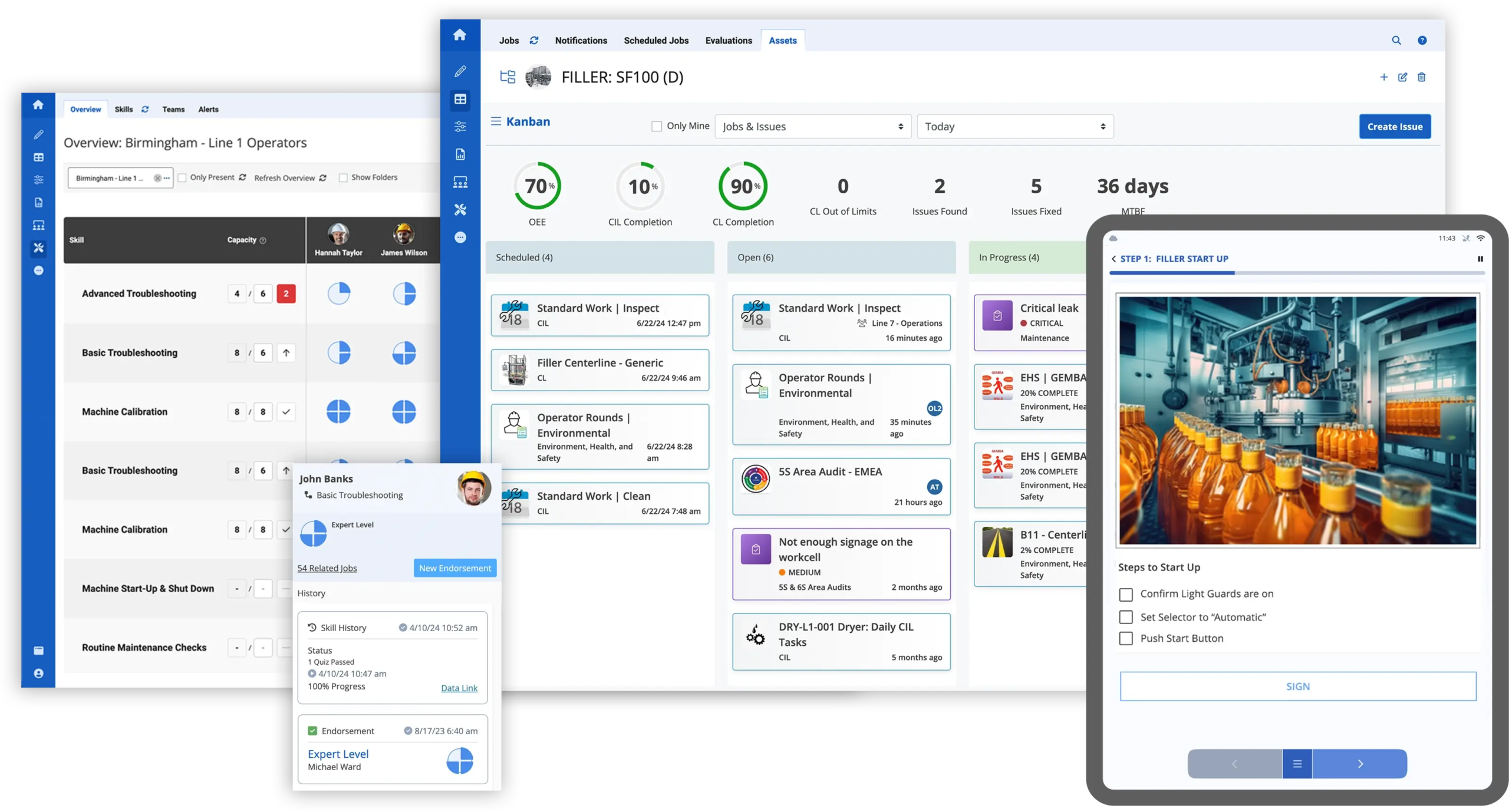
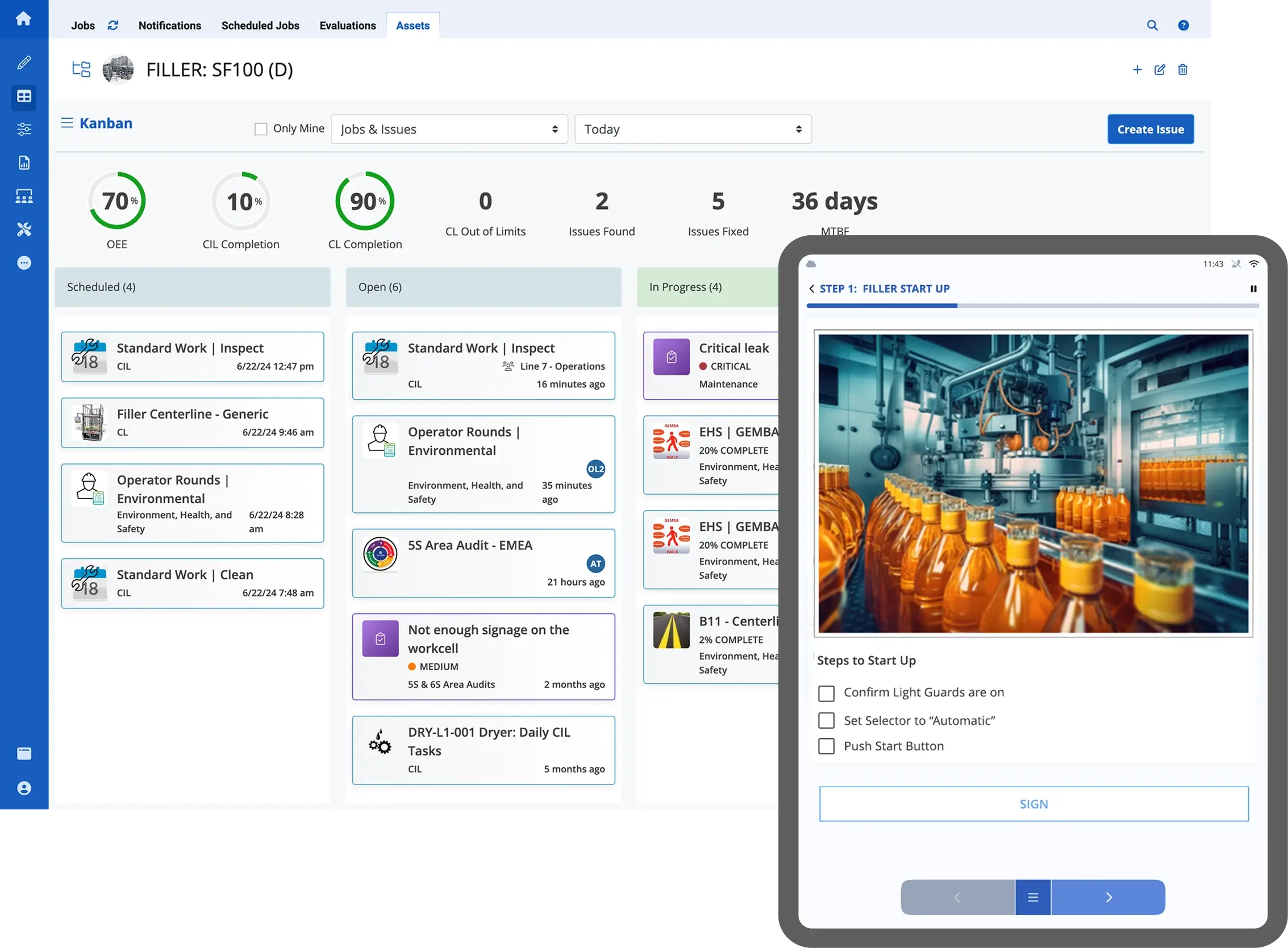
augmentir connected worker platform

With features like AI-driven insights, skills tracking, and remote expert support, Connected Worker platforms help manufacturers identify bottlenecks, reduce errors, and optimize workforce deployment. Tools such as Augmentir go a step further by personalizing guidance based on an individual’s skill level, automatically suggesting improvements, and helping identify opportunities for continuous training and upskilling. Ultimately, Connected Worker Technology empowers teams to work smarter, adapt faster, and drive sustainable gains in production efficiency.

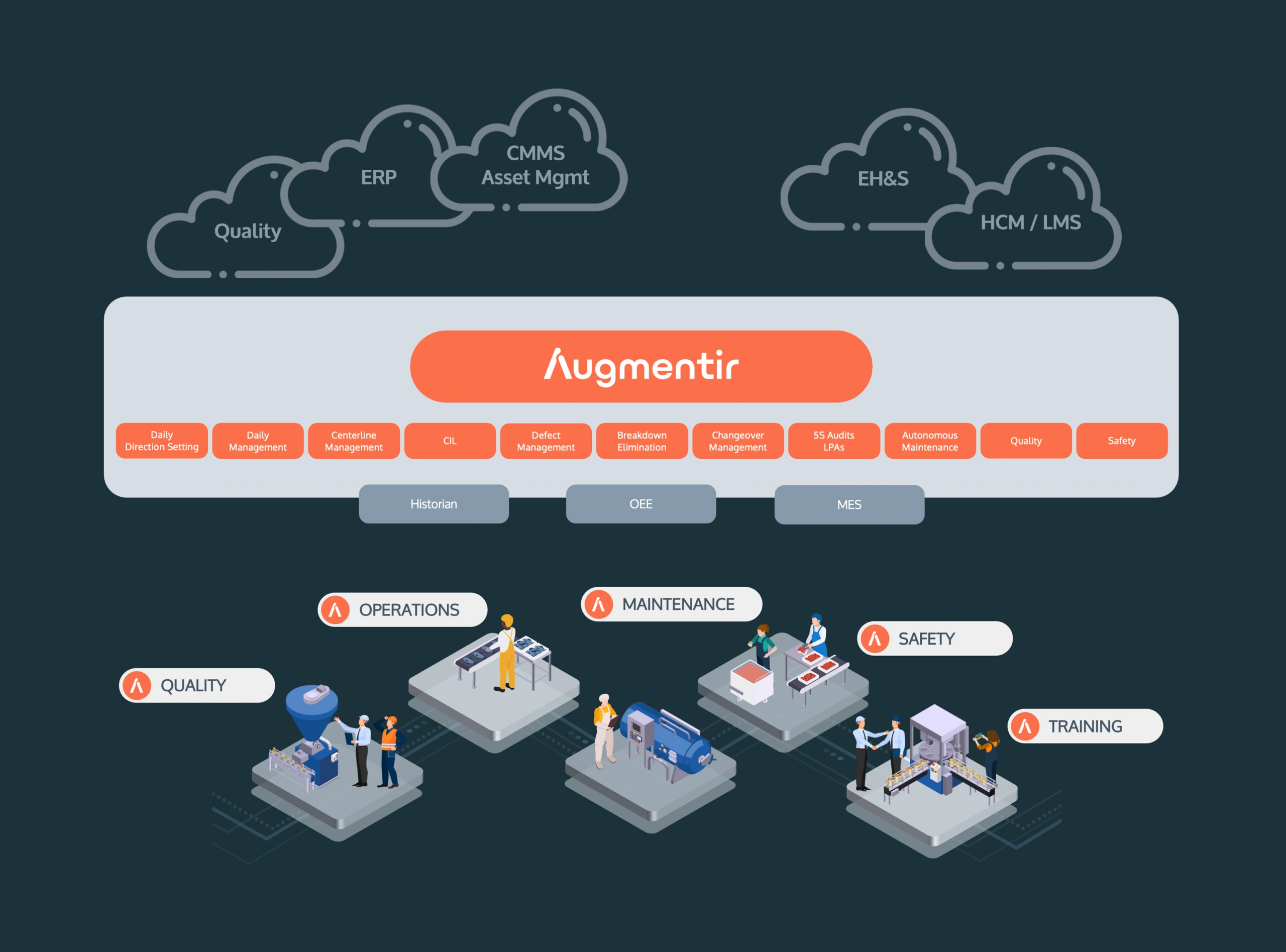
Augmentir serves as a digital frontline operating system for your lean strategy, and helps improve production efficiency. With Augmentir, you can digitize, manage, and optimize all aspects of your frontline operation:

  • Daily Direction Setting (DDS)
  • Daily Management System (DMS)
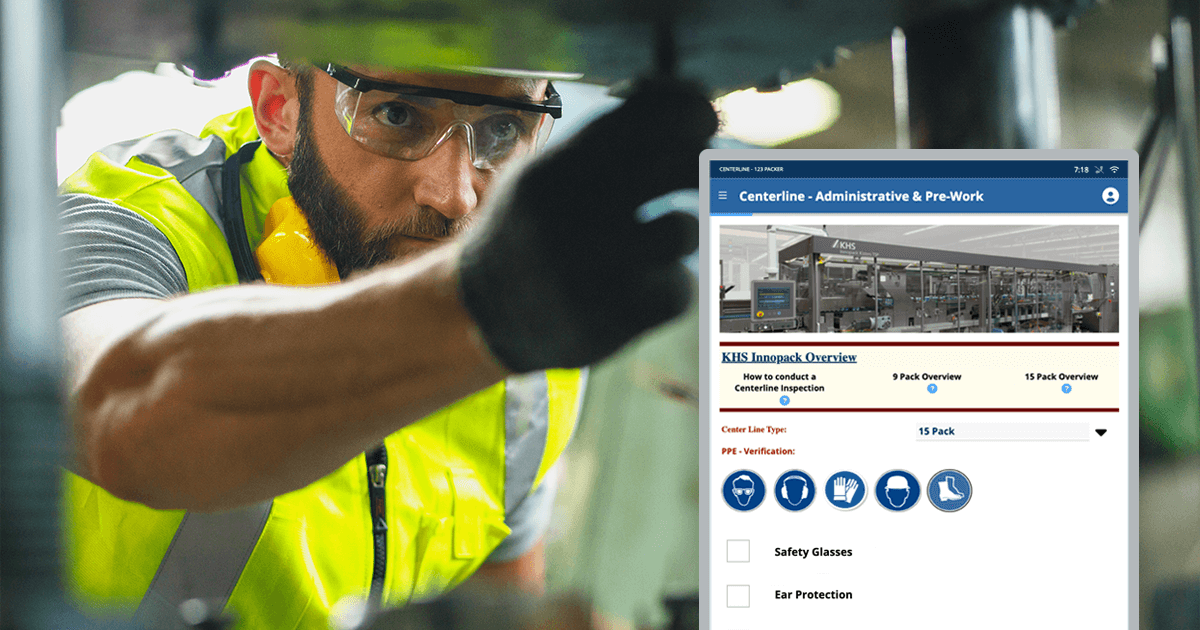
  • Centerline Management
  • Clean, Inspect, Lubricate processes
  • Defect Management
  • Breakdown Elimination
  • Changeover Management
  • Shift Handover
  • 5S and Layered Process Audits
  • Quality Management on the Shop Floor
  • Safety

augmentir connected worker platform – digital frontline operating system for iws


Contact us today for a live demo.

 

See Augmentir in Action
Get in Touch for a Personalized Demo

Connected frontline operations platforms are helping manufacturers reduce downtime and provide a foundation for a holistic preventive maintenance strategy.

Downtime in manufacturing refers to a period of time when a production line or machine is not in operation due to maintenance, repairs, or other issues. This can result in a loss of productivity, increased costs, and missed production targets, and it is estimated that in the US alone it costs manufacturers around $1 trillion dollars per year. Not surprisingly, the biggest factors that contribute to unplanned downtime are human error and improper maintenance.

To minimize downtime, manufacturers are turning to digital technology to transform their frontline operations and provide a foundation for a holistic preventive maintenance strategy.

reduce downtime in manufacturing

Reducing downtime with a Connected Frontline Operations Platform

Manufacturers often implement Total Productive Maintenance (TPM) as part of a more comprehensive preventive maintenance approach. TPM is a strategy commonly used in manufacturing and production operations to improve the effectiveness and reliability of equipment, which in turn can increase productivity and reduce downtime.

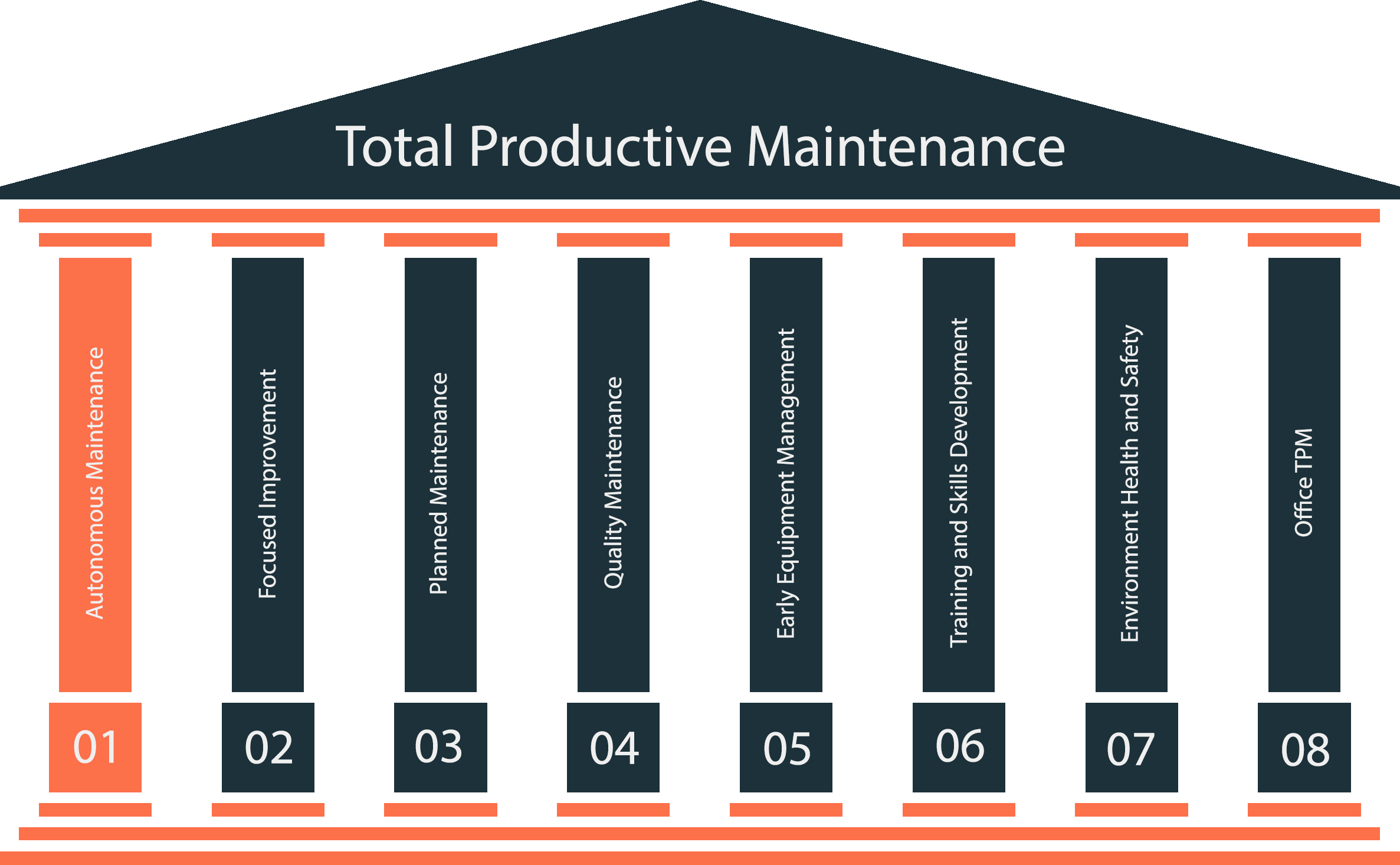
Total productive maintenance strives to reduce workplace losses by placing the responsibility of basic maintenance upkeep on the primary equipment user: the machine operator. This preventive practice consists of “8 pillars” to help improve equipment reliability and elevate worker productivity:

Autonomous Maintenance as pillar of TPM

At the front of this framework is Autonomous Maintenance. Autonomous maintenance is a technique used in TPM that involves giving operators and other frontline employees the responsibility and authority to take care of their own equipment and work areas (e.g cleaning, safety checks, etc.). This can improve employee engagement by giving them a sense of ownership over their work and equipment, as well as a greater understanding of how their actions can impact productivity and quality. Additionally, involving employees in the maintenance process can lead to improved communication and teamwork, which can further enhance engagement.

This is where frontline operations platforms come into play.

Connected frontline operations platforms are digital software tools that can help standardize and improve the way operators perform maintenance tasks. They are used to improve communication, training, collaboration, guidance, and support for the operators.

Reduce machine downtime with Augmentir’s Connected Worker Solution

See how Augmentir can help you implement an effective autonomous maintenance program and optimize your frontline operations.

Get a Demo

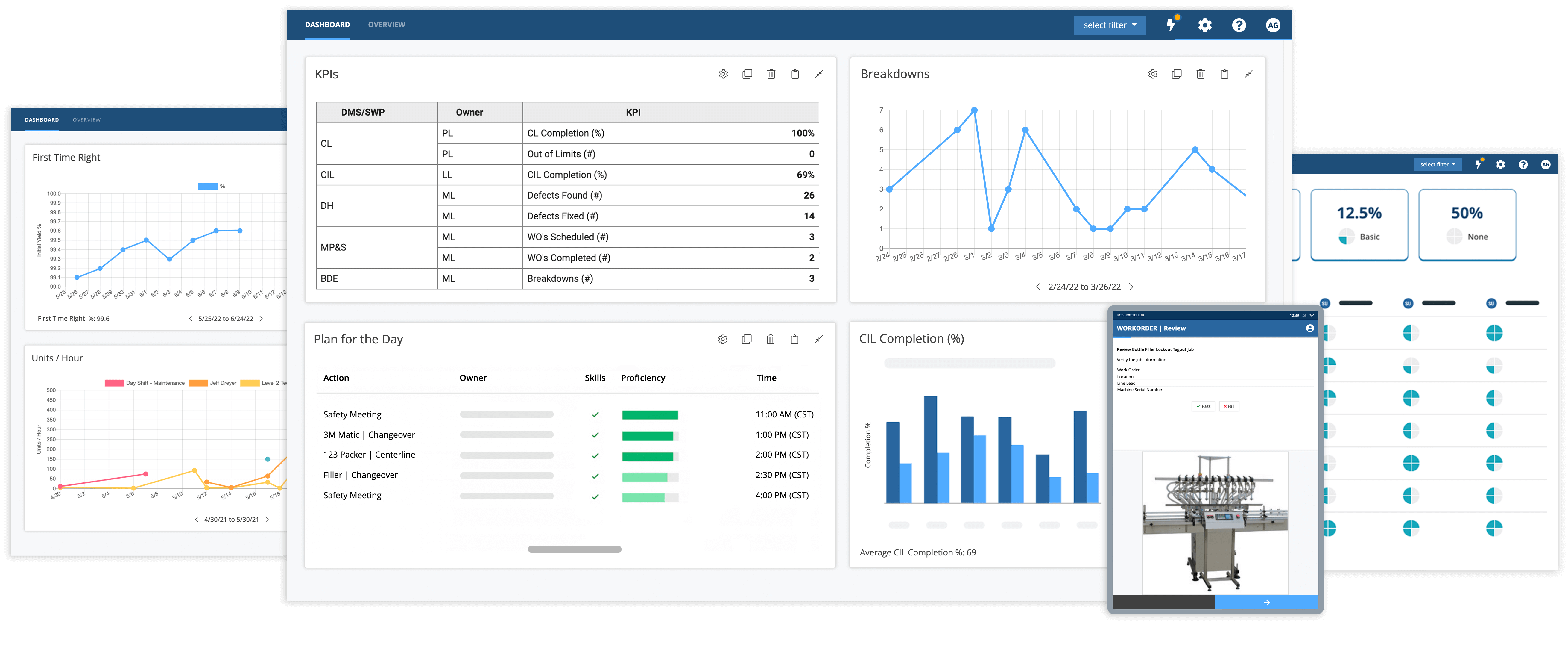
downtime dashboard

Your connected workforce – a key to reducing downtime

Factory workers can have a significant impact on downtime in manufacturing. Whether it’s due to mistakes made by operators, non-optimal scheduling, or lack of communication, your workforce is at the center of your frontline operations. Factory workers can impact downtime in a variety of ways:

  1. Improper operation or maintenance: If factory workers are not properly trained on how to operate and maintain equipment, they may inadvertently cause downtime by making mistakes or not following proper procedures. Modern connected worker tools, like Augmentir’s connected worker solution, are increasingly being used to streamline training and digitize skills tracking to help ensure that the right people with the right skills are on the job.
  2. Safety incidents: Workers who do not follow proper safety procedures can cause accidents that lead to downtime while equipment is repaired or replaced. By digitizing safety procedures, manufacturers can ensure that workers perform the proper steps, and follow the proper protocols before performing a maintenance routine.
  3. Human error: Workers may make mistakes that lead to downtime, such as not properly setting up equipment or not noticing when a machine needs maintenance. Properly training employees on how to maintain and operate equipment can help to minimize downtime due to human error
  4. Quality issues: Workers may produce products that do not meet quality standards, which can lead to downtime while the products are reworked or scrapped.
  5. Lack of proper communication: Having clear and effective communication channels can help to quickly identify and address any issues that arise. Frontline communication tools like Augmentir can help improve communication and digitally record issues to better understand root causes. By identifying the underlying causes of downtime, manufacturers can take steps to prevent similar issues from occurring in the future.
  6. High turnover rate: High turnover rate can lead to a lack of experienced workers and can cause downtime while new employees are trained. While it’s difficult to completely prevent a high turnover rate, you can take measures to both expedite training for new hires, as well as create a more engaged, more empowered workforce. For example, Augmentir’s connected worker solution helps to accelerate new hire training and onboarding, and provides a skills management framework that helps to ensure that workers are excelling at their jobs.

It is important to note that factory workers are a crucial part of the manufacturing process and their role is vital for the success of the business. However, by providing workers with proper training, safety procedures, and communication channels, downtime in manufacturing due to human error can be reduced. Additionally, involving workers in the decision-making process and continuous improvement initiatives, can help to increase their ownership and responsibility towards the equipment, processes, and the whole factory’s performance.

Interested in learning more?

Augmentir is a connected worker solution that allows industrial companies to digitize and optimize all frontline processes that are part of their TPM strategy. The complete suite of tools are built on top of Augmentir’s patented Smart AI foundation, which helps identify patterns and areas for continuous improvement.

manufacturing kpi first time right


Learn how to write manufacturing SOPs and the benefits of having standard operating procedures in a manufacturing operation.

Standard operating procedures, or SOPs, will change the way you run your manufacturing operations.

SOPs are imperative to a properly organized management structure. They are step-by-step guidelines workers must follow when carrying out tasks to standardize work and are designed to meet industry regulations.

Essentially, they provide general info about assignments, including the tools, methods, or machinery needed to complete projects. SOPs indicate what the task is, who will perform it, how it should be completed, and when it should be completed.

manufacturing sop

For example, manufacturers may write SOPs for employee training to reduce risk and injury. Leadership may also use procedures to assign goals and measure employee performance.

Read on to find out more about the benefits of manufacturing SOPs and how to write them by exploring the following topics:

Advantages of Implementing Standard Operating Procedures

According to Forbes, a comprehensive SOP keeps workers on the same page and improves efficiency and accuracy. Without documented procedures, there is no way to set proper standardized processes and workers might try to complete jobs in non-standard methods, which leads to disruptions in the production processes and causes all sorts of quality issues in a manufacturing environment. Thankfully, SOPs work to prevent that from happening.

Some of the advantages of using SOPs include:

  • Meets regulatory compliance: Product inspectors constantly ask to review SOPs when conducting audits. These serve as the point of reference for whether specific measures followed meet industry guidelines.
  • Standardizes tasks: The point of written procedures is to establish a standard way of completing tasks. They enable tasks to be performed in the same way across the company.
  • Improves accountability and tracking: SOPs define who is responsible for a work order, maintenance check or inspection. This reporting can improve accountability across departments. If a task wasn’t completed accordingly or a procedure was missed, management can take necessary steps to prevent it from happening again.
Pro Tip

Digitized SOPs can further improve tracking and traceability features, helping manufacturers comply with regulations and quality standards. With digital SOPs it becomes easier to maintain records of every step in the production process, including who performed each task and when.

A

How to write a manufacturing SOP

Writing a comprehensive set of SOPs can help workers perform tasks in the safest and most efficient way possible. Although there isn’t an official way to write procedures, you can follow certain steps to make them more effective:

Step 1: Establish a goal.

It’s important to think about what you want your SOP to accomplish. Regardless if you’re starting a new process or improving an existing one, figuring out the end goal will make it easier to complete the document.

Step 2: Pick a format.

There are different formats you can use to write your document: step-by-step, hierarchical, narrative, etc. We recommend the sequential step-by-step format for its straightforwardness.

Step 3: Write the procedures.

Make sure your procedures are clear, concise, current, consistent, and complete.

Step 4: Review and update.

It’s important to review your SOP for any discrepancies and update them if necessary. Consider asking fellow leaders knowledgeable in procedure creation to read them over.

Why SOPs are Important in Manufacturing

Compliance with manufacturing SOPs is crucial for a number of reasons, including:

  • Prevents accidents and ensures worker safety
  • Promotes worker consistency
  • Improves product quality
  • Protects your business’s reputation

SOPs are a critical component of manufacturing operations because they provide a structured framework for achieving consistent quality, safety, and efficiency in the production process. They help manufacturers meet regulatory requirements, reduce errors, and ensure that employees are trained to perform tasks consistently and safely.

Digitizing Manufacturing SOPs with Connected Worker Solutions

Using connected worker technologies to create digital SOPs can significantly improve their impact on manufacturing by enhancing accessibility, effectiveness, and overall utility.

Through digitization and smart, connected worker technology manufacturers can improve SOPs with features like real-time access, remote collaboration and guidance, data-driven insights, workflow automation, enhanced training, traceability and compliance, and more. Essentially, with these advanced technologies, manufacturing organizations can augment and support their workers with optimized processes and SOPs creating an environment of continuous improvement.

Augmentir offers customized AI-powered connected worker solutions that transform how you write and create manufacturing standard operating procedures. Request a live demo today to learn more about why leading manufacturers are choosing our solutions to improve their manufacturing processes.


See Augmentir in Action
Get in Touch for a Personalized Demo

Learn about the best practices for optimal asset maintenance performance and how to track your assets to ensure that everything is in working condition.

Asset maintenance refers to everything that goes into keeping your manufacturing assets in tip-top shape. With machinery, for example, asset maintenance means conducting frequent inspections and repairs. With office space, this term involves maintaining a clean, safe, and productive workplace. With products, it includes checking finished goods for any deficiencies or errors.

In a nutshell, asset maintenance helps prolong the performance and lifespan of equipment, machinery, goods, and more. Performing this strategy ensures that your essential business resources continue functioning smoothly and properly.

Learn the best practices for increasing asset maintenance performance:

Best practices for optimal asset maintenance performance

Implementing key best practices can improve asset maintenance in manufacturing. We’ve put together five crucial strategies to ensure your manufacturing firm is performing at its best while minimizing costs:

1. Gather as much info as possible

Gathering data on assets can help management make better informed production decisions. Asset tracking is a great technique to accomplish this.

2. Create a preventive maintenance schedule

The data that’s been collected will make it easier to create a preventive maintenance schedule. To create one, start by organizing asset data and analyzing the info you’ve amassed (e.g., how often each item must be checked and maintained). Lastly, prioritize your most important assets and allocate funds to maintain them.

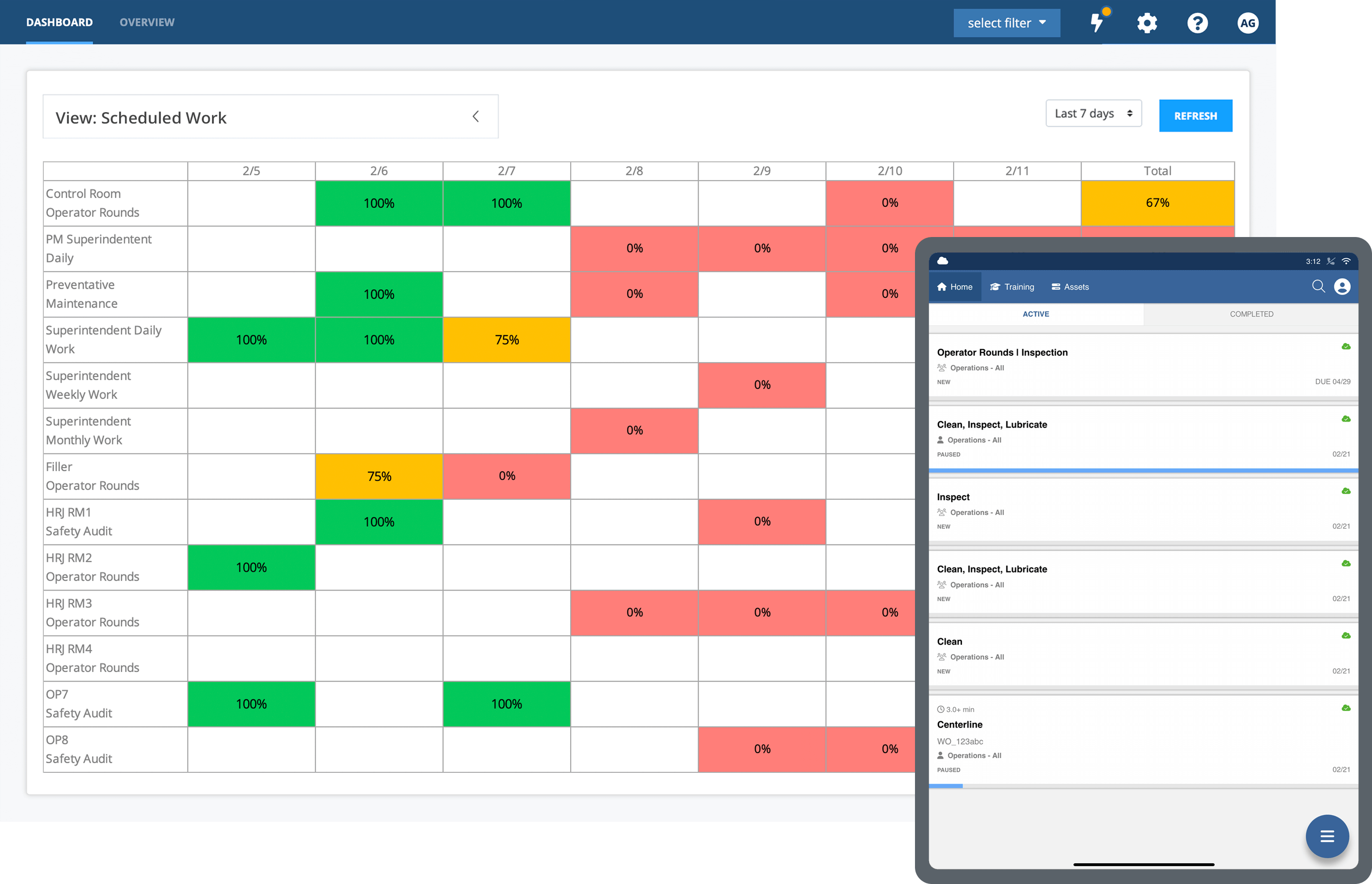
schedule and audit asset maintenance work

3. Train workers

Investing in your employees pays off. Procedural documentation and training will help ensure that all maintenance work is thoroughly performed and recorded. Skills management software can help with ongoing management and tracking of employee skills and training requirements.

4. Apply an inventory tracking system

There is nothing worse than beginning a project only to find out that you don’t have all the moving parts to complete it. An inventory system helps reduce the chances of missing crucial product information and enables you to better track company assets.

5. Track asset maintenance key performance indicators (KPIs)

KPIs such as mean time between failures (MTBF), overall equipment effectiveness (OEE), and work order resolution time can give a performance review on how well your assets are doing. They’re also great at pinpointing which areas could benefit from predictive maintenance, the process of checking for deficiencies to avoid future machine breakdowns.

Pro Tip

Asset management software like Augmentir’s Connected Worker Solution helps you simplify the operations and maintenance of your facility. Manage work and maintenance procedures, skill requirements, training, KPIs, and preventive maintenance schedules all through a visual interface. Connected worker solutions help integrate your CMMS with your shop floor operations.

A

Advantages of asset maintenance

The maintenance of assets in manufacturing consists of regularly inspecting, repairing, and replacing equipment and other assets to confirm that everything is in workable condition.

Advantages of asset maintenance:

  • Enhanced workplace safety
  • Greater equipment reliability
  • Longer machine lifespan
  • Lower maintenance costs
  • Improved productivity
  • Better regulatory compliance

Asset maintenance tools and how Augmentir can help

Manufacturers are encouraged to manage and track assets to limit product flaws, prevent machine failure, and improve overall productivity. However, in today’s digital age, especially with more mobile devices, complex cloud-based technologies, and software updates, handling assets has become much more complicated.

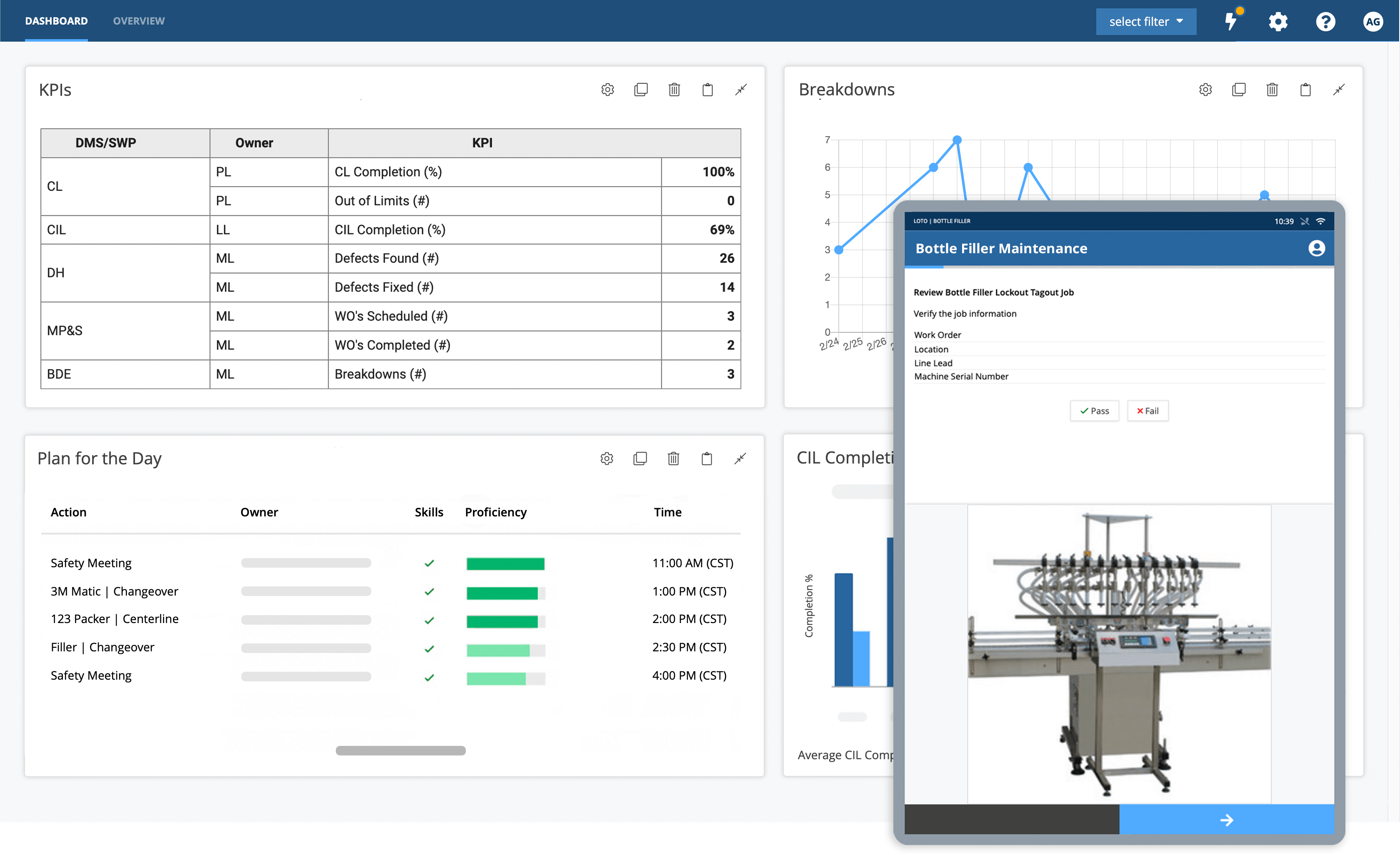
This is where Augmentir’s AI-powered connected worker solution, or asset management software, comes in. Our solution allows manufacturing facilities to better monitor their assets and manage them effectively with easy-to-use customizable dashboards and real-time insights.

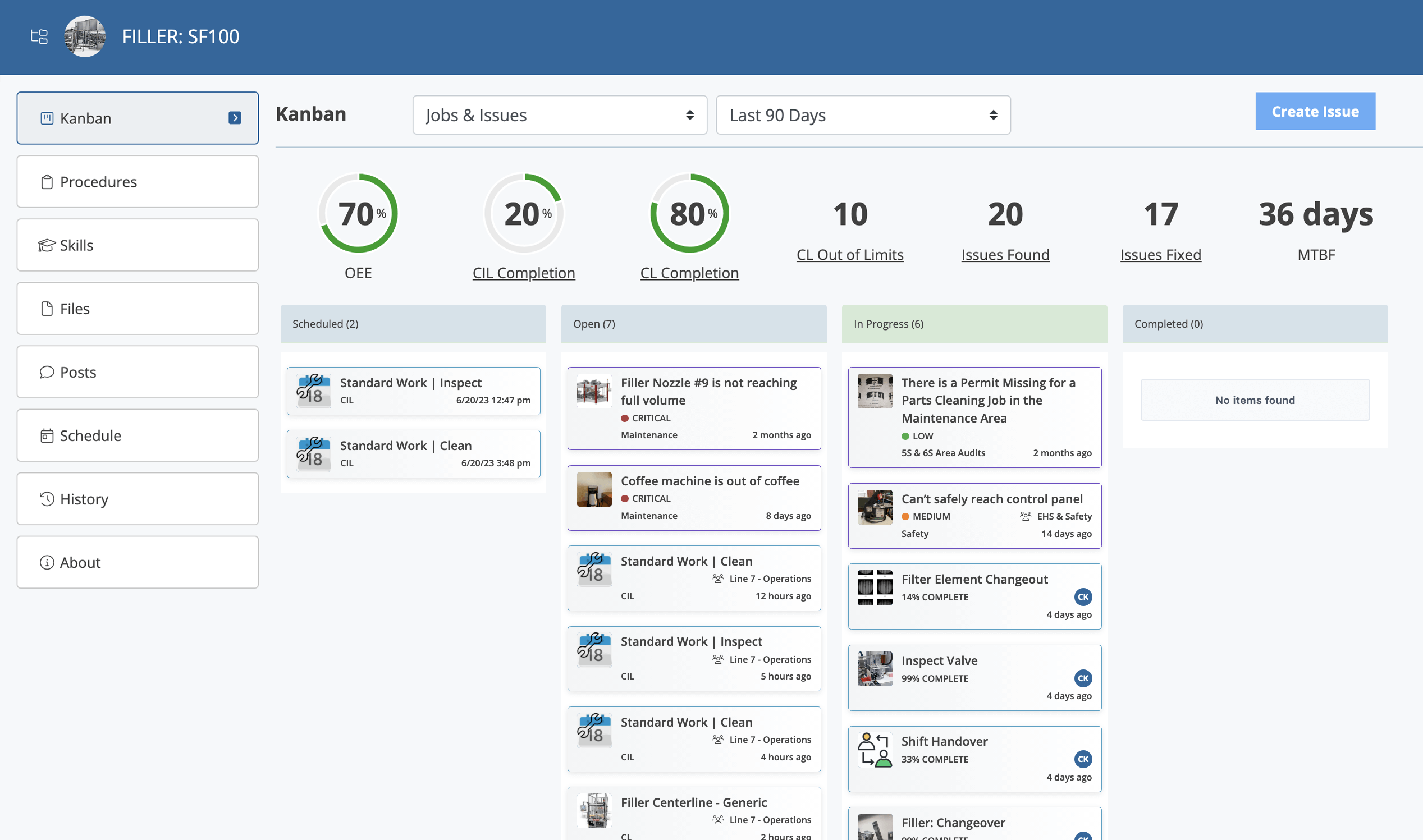
Asset maintenance with Augmentir

Ours is the world’s only connected worker suite that provides an overarching view of an asset’s life cycle. Accurate digital asset records can help manufacturers with resource planning. In addition, our tool helps with asset record keeping so that you don’t have to worry about not meeting regulatory compliance requirements.

Though a manufacturing firm could use a spreadsheet to track its assets, our digital solution gives workers the ability to evaluate asset-specific data and make better decisions about how to manage each one.

Transform how your company runs its maintenance operations. Request a live demo today!


See Augmentir in Action
Get in Touch for a Personalized Demo