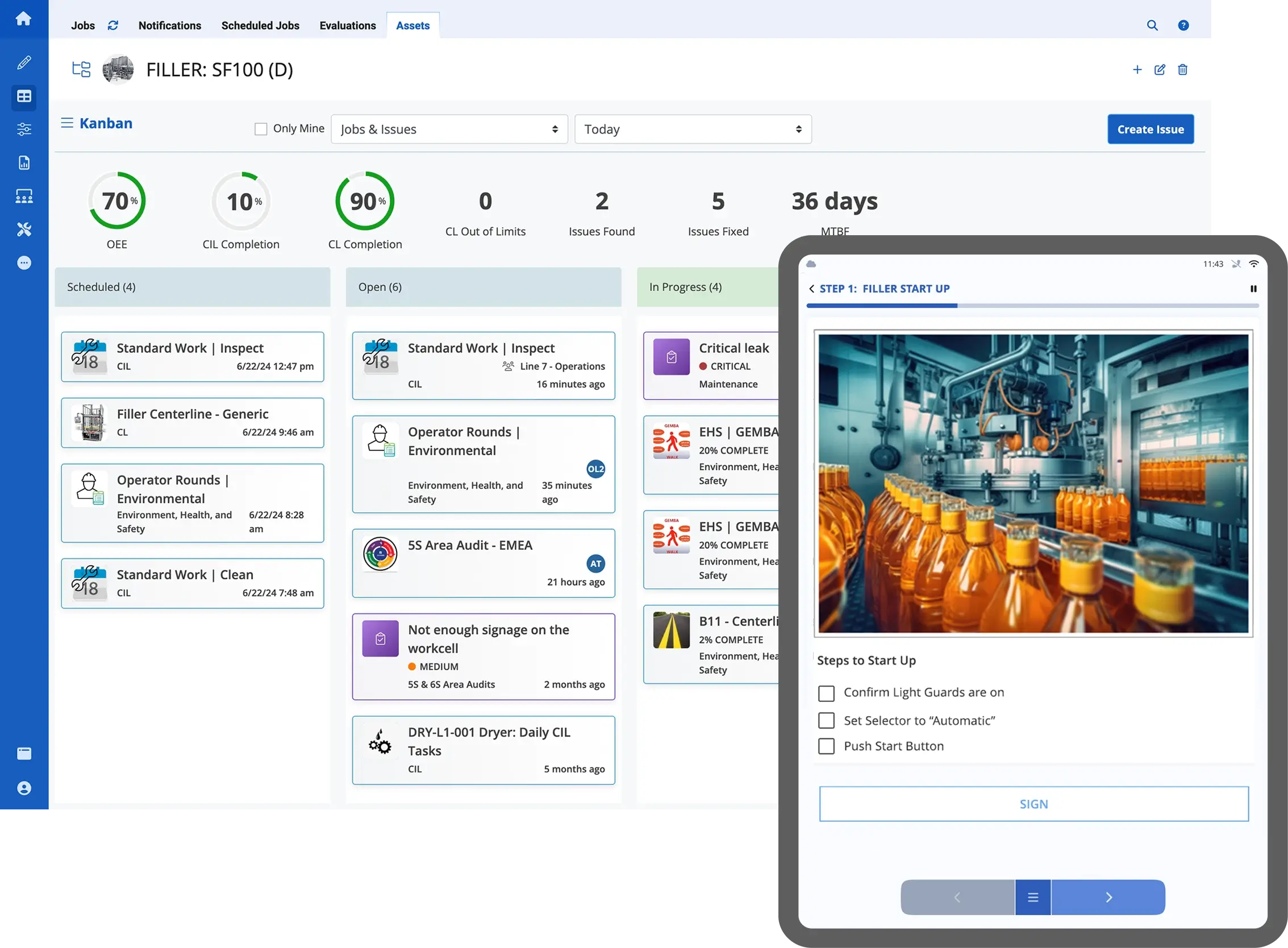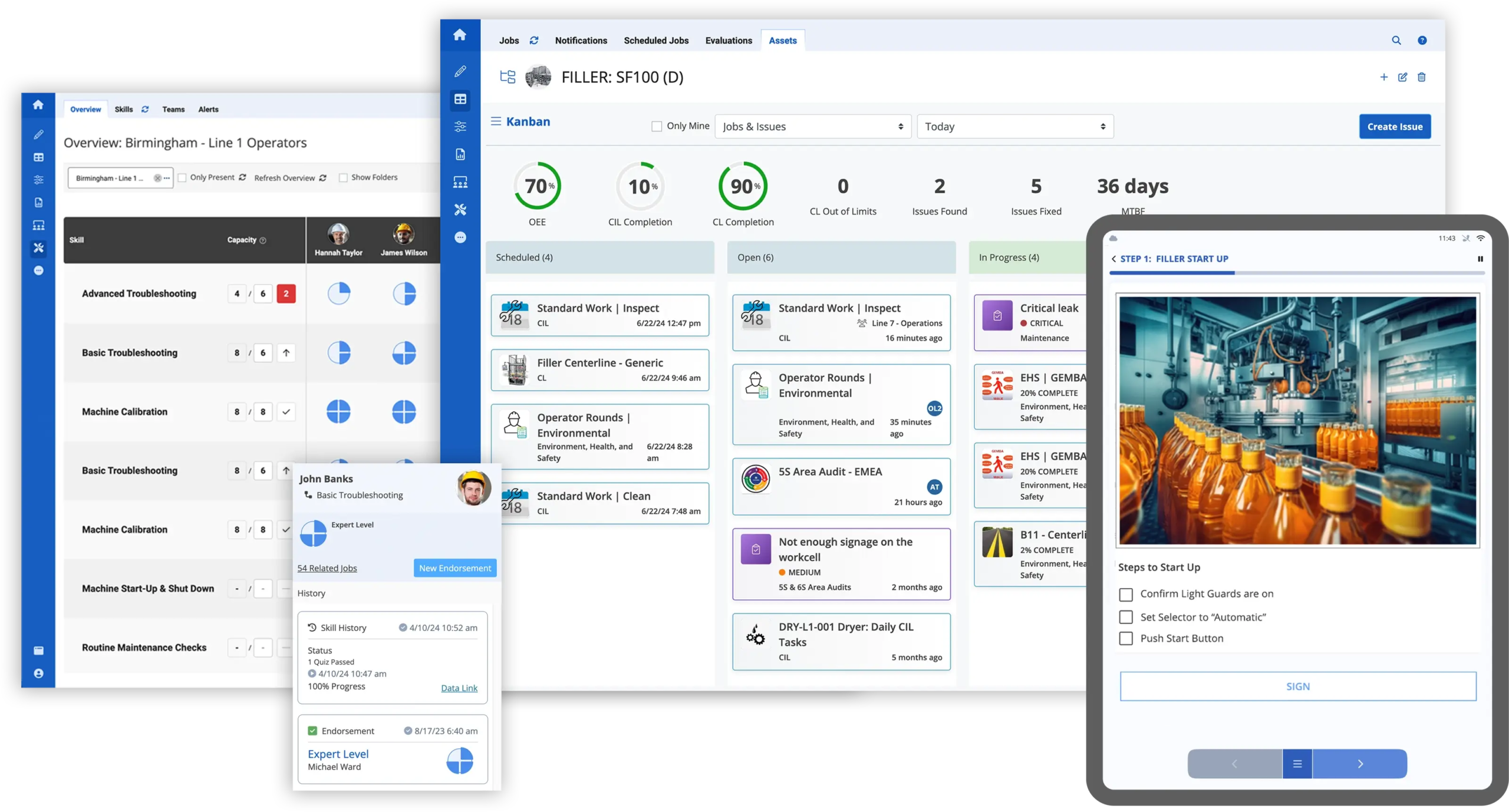
In conversations with our customers, a recurring theme emerges when discussing their transition to digital processes: the largest cost and burden often lies in the time and effort required to digitize existing paper-based materials.

Is your manufacturing operation still clinging to outdated paper-based processes? It’s time to face the facts: paper is holding you back. The effort spent managing paper trails, outdated Standard Operating Procedures (SOPs), and inconsistent training materials isn’t just inconvenient—it’s a direct drain on your productivity, efficiency, and bottom line.
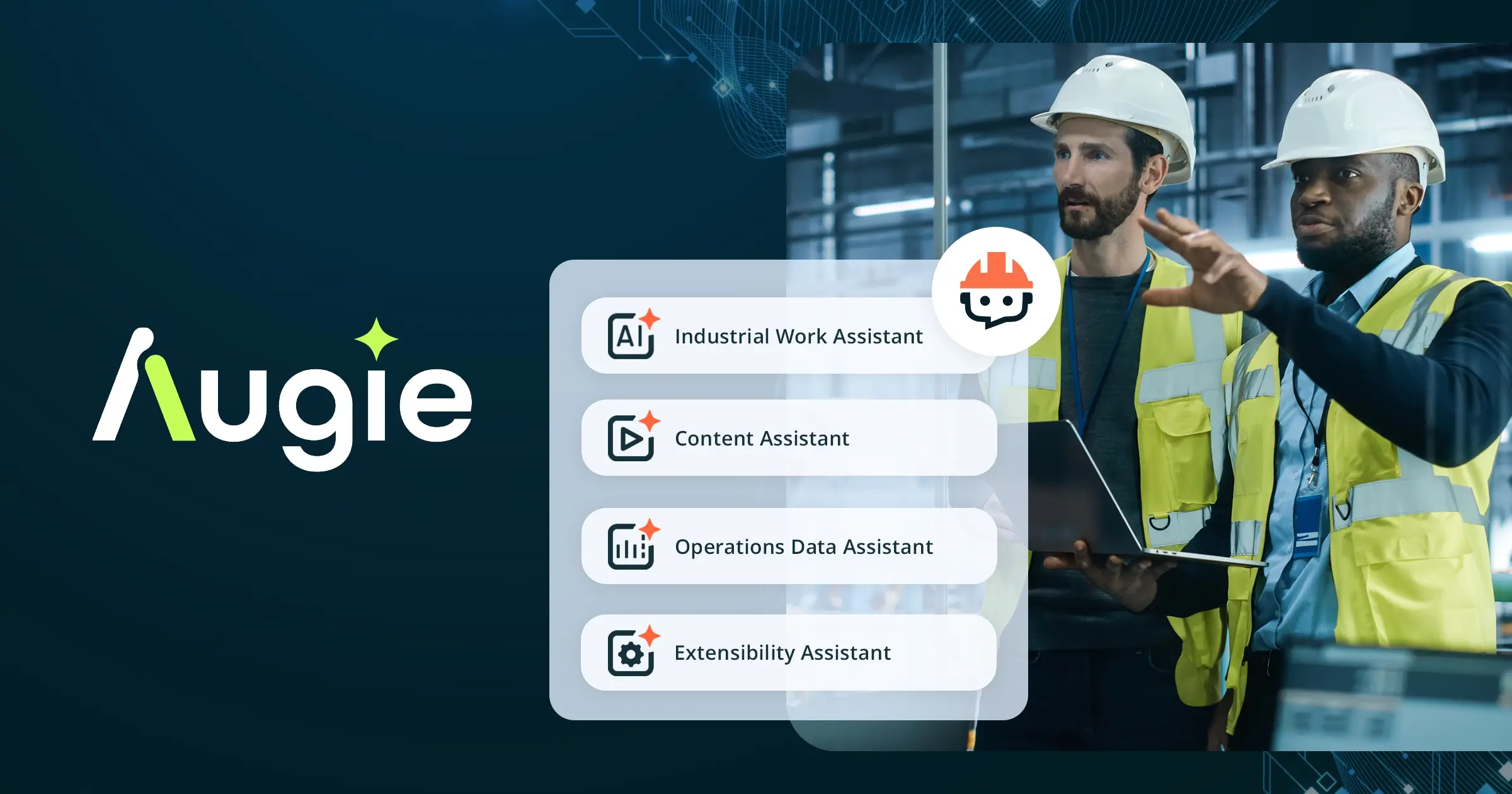
paperless shop floor with augie industrial generative ai suite

Generative AI (GenAI) offers a transformative way to digitize content, automating the conversion of paper-based materials like SOPs, work instructions, and checklists into structured, editable digital formats. It can enhance content by improving clarity, integrating visuals, translating languages, and customizing workflows. This significantly reduces manual effort and accelerates transitions to cost-effective digital systems.

Read below to learn more about the challenges of content digitization, the potential benefits of going paperless, and how Augie, a Generative AI solution from Augmentir, is empowering manufacturing companies to accelerate their digital transformation.

The Benefits of a Paperless Shop Floor

A paperless shop floor in manufacturing offers numerous benefits, including enhanced efficiency by eliminating time-consuming manual paperwork and reducing errors. It provides real-time access to digital work instructions, improving accuracy and productivity for frontline workers. Digitization supports better compliance with safety and quality standards while enabling faster updates to workflows.

Additionally, going paperless reduces environmental impact by minimizing waste, aligns with sustainability goals, and fosters a connected, data-driven environment where insights from real-time data can drive continuous improvement and innovation.

Here are the top benefits of going paperless:

  1. Accelerate employee onboarding: By digitizing onboarding and moving training into the flow of work, manufacturers can reduce new hire onboarding time by 82%.
  2. Increase productivity: Digitizing manufacturing operations means no more manual, paper-based data collection or record-keeping. Workers have more time to run their equipment, execute shop floor tasks, and find solutions to problems.
  3. Boost data accuracy: Humans are prone to making mistakes, but shop floor data capture and validation can help offset human error and improve accuracy.
  4. Improved workforce management: Digital skills tracking and AI-based workforce analytics can help optimize production operations and maximize worker output.
  5. Manage real-time operations: Human-machine interface systems eliminate the need for paper, files, and job tickets. This means that workers can analyze inventory and other data in real-time.
  6. Save money, minimize waste: Although going paperless means that the cost of paper is eliminated, the savings extend beyond that. With greater productivity, operations in real-time, and improved production optimization, costs and waste can be reduced in many areas, aligning with corporate sustainability goals.

Challenges

Going paperless in manufacturing isn’t without challenges, and ignoring them can stall your progress.

Standard Operating Procedures (SOPs), work instructions, and checklists are typically built over years, representing a significant repository of organizational knowledge. Converting these into digital formats while maintaining accuracy and accessibility can be daunting. Digitizing years’ worth of SOPs, work instructions, and checklists can feel overwhelming, but staying stuck in outdated systems costs more in the long run. Resistance from workers who are comfortable with paper-based processes can slow adoption, and if your digital tools aren’t intuitive, you risk alienating your team. Integration with existing systems is no small task, and if you’re not prioritizing data security, you’re leaving your operation vulnerable. Overcoming these hurdles is essential to stay competitive.

This is where Generative AI and Augie can provide transformational value.

Generative AI has transformative potential for digitizing content by automating the conversion of paper-based materials into structured, digital formats. It can analyze and extract information from documents like SOPs, work instructions, or checklists, quickly translating them into editable, standardized templates. GenAI also enables content enhancement, such as rewriting for clarity, integrating visuals, language translation, or adapting content for specific workflows. By accelerating the digitization process and reducing manual effort, GenAI empowers organizations to transition to digital systems more efficiently and cost-effectively.

Your Paperless Shop Floor with Augie

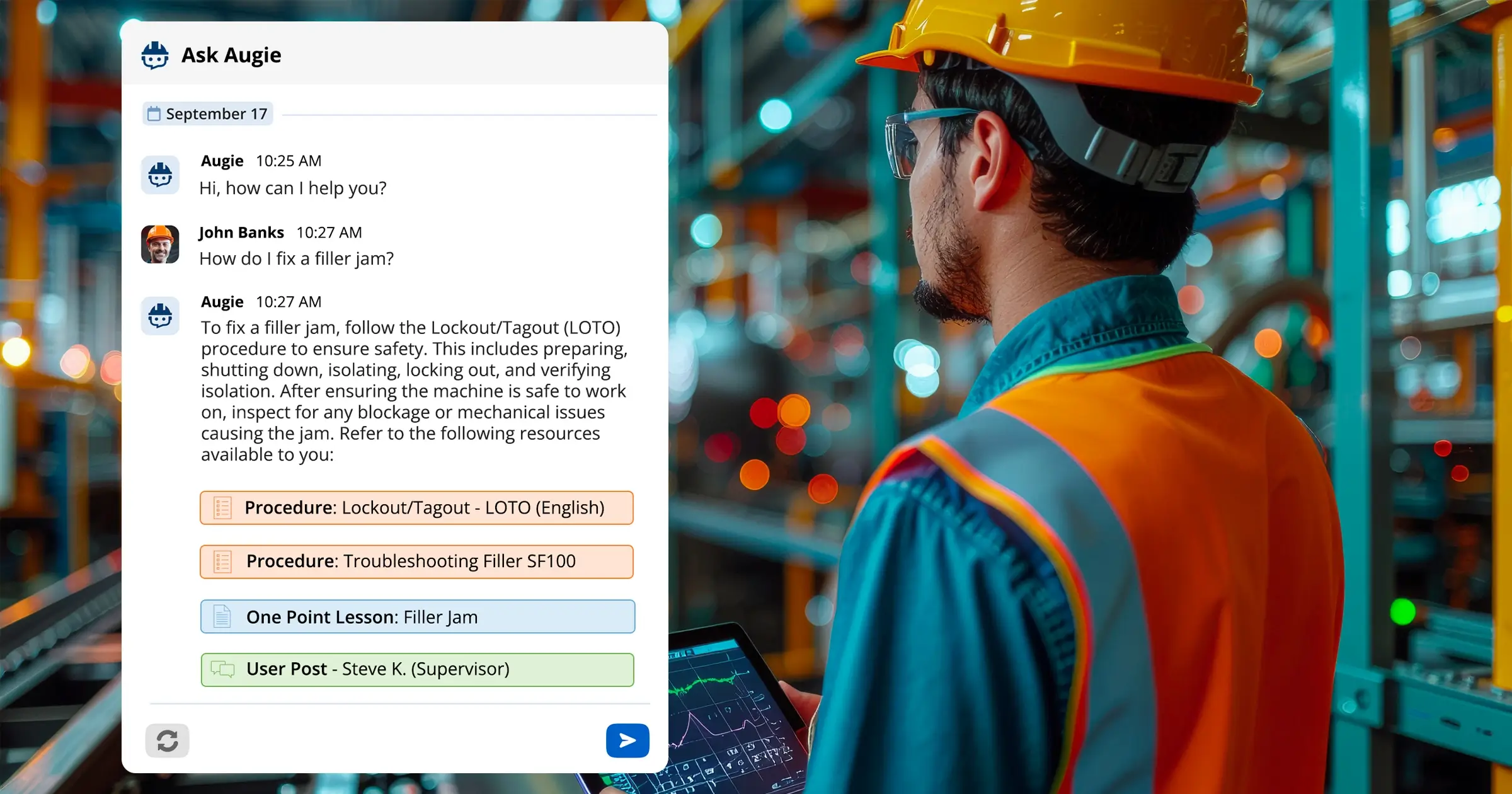
Augie, a suite of Industrial Generative AI tools from Augmentir, revolutionizes industrial digital transformation by combining advanced AI capabilities with practical, human-centric applications. Augie uses generative AI and the power of advanced Large Language Models (LLMs) to transform digital content creation, create adaptive workflows, provide real-time worker guidance, and analyze data to deliver actionable insights.
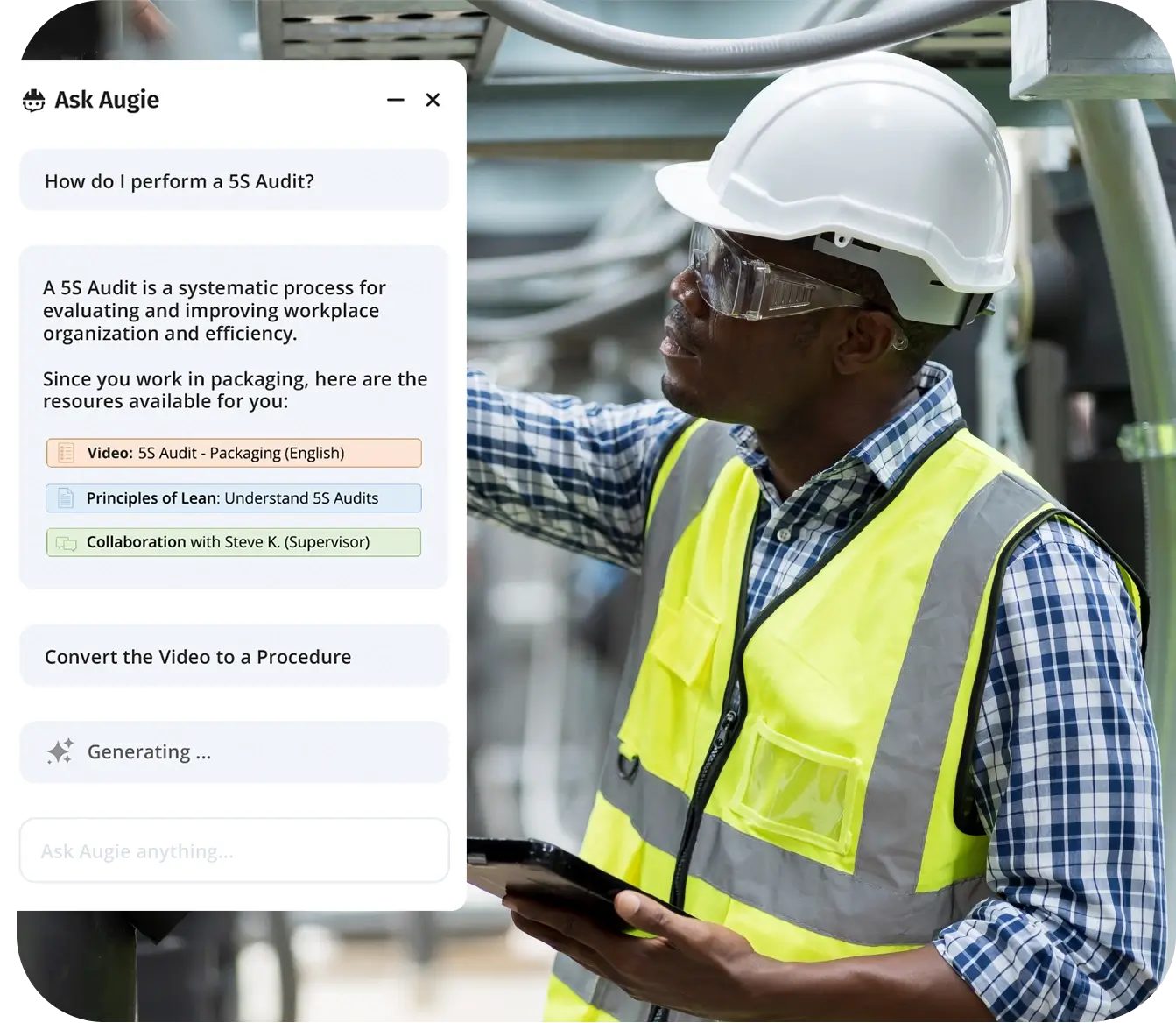
augie convert content paperless shop floor


Augie is a powerful tool for accelerating the transition from paper-based to digital operations in manufacturing and industrial settings. Quickly generate standard work procedures from Excel, Word, PDFs, images, or videos. The Augie Content Assistant takes your existing content and generates digital smart forms, checklists, and digital work instructions. Augie automatically analyzes SOPs, work instructions, and other documents to create clear, simplified training modules. It generates interactive quizzes to reinforce key concepts and adapts learning materials to individual skill levels, ensuring workers engage with relevant content.
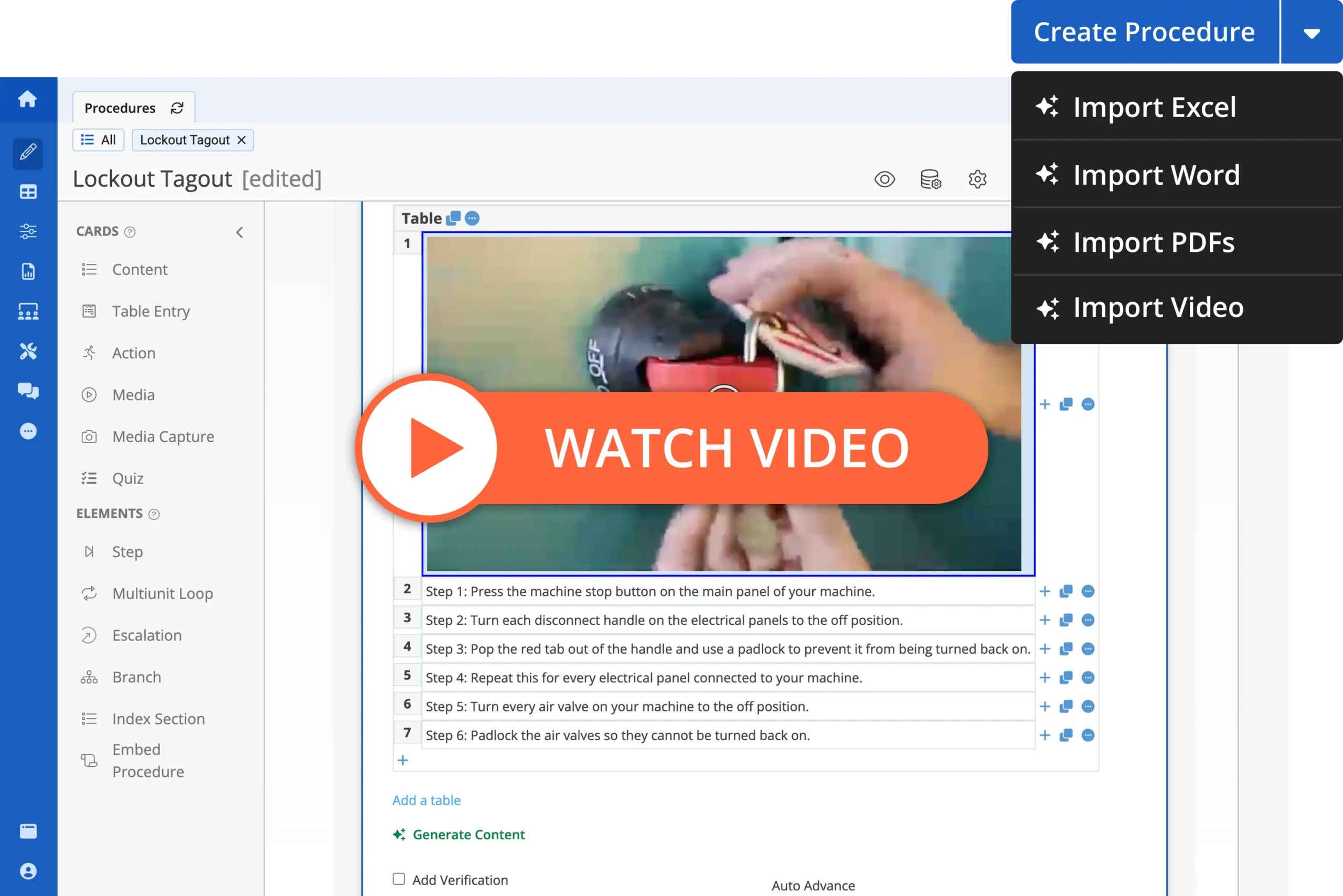
augie gen ai content assistant - convert video to procedure

With Augie, you can move past the inefficiencies of paper-based frontline work. Augie transforms your paper-based workflows into dynamic digital tools in just days, streamlining processes, reducing errors, and equipping your workforce to excel in today’s fast-paced environment.


“

Augie has been instrumental in helping us quickly transform our existing paper-based SOPs and training documents into interactive digital work instructions and learning tools. We’ve reduced our digitization effort from months down to days. This has streamlined our processes, reduced errors, and accelerated the upskilling of our workforce.

Digital Transformation Lead
Fortune 100 Food & Beverage Manufacturer


Digitizing isn’t just an upgrade—it’s a step toward smarter, more competitive operations. Augie optimizes content for frontline workers, provides real-time feedback, and eliminates barriers like language gaps or compliance issues. Paper simply can’t keep up with the actionable insights and adaptability that Augie offers.

Drive Manufacturing Efficiency with a Paperless Shop Floor

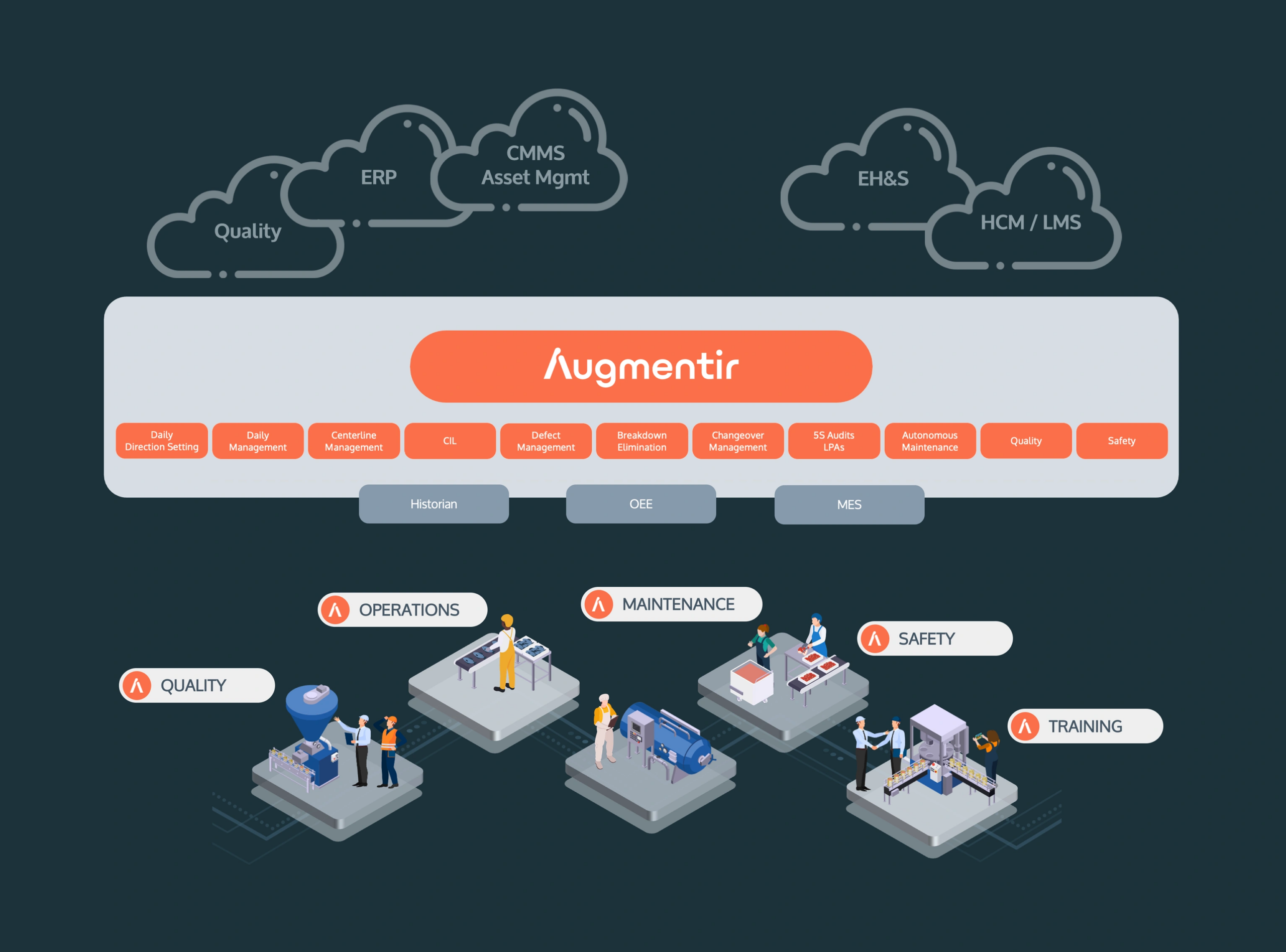
Augie revolutionizes the connected worker journey by offering a robust suite of AI tools that grow alongside organizational needs. It begins by transforming static, paper-based processes into dynamic, interactive workflows, enhancing accessibility and efficiency for frontline workers. As operations become digitally connected, Augie uses real-time data to identify inefficiencies, optimize workflows, and drive continuous improvement.

The Augie Industrial Gen AI Suite transforms every stage of the Connected Worker Journey.
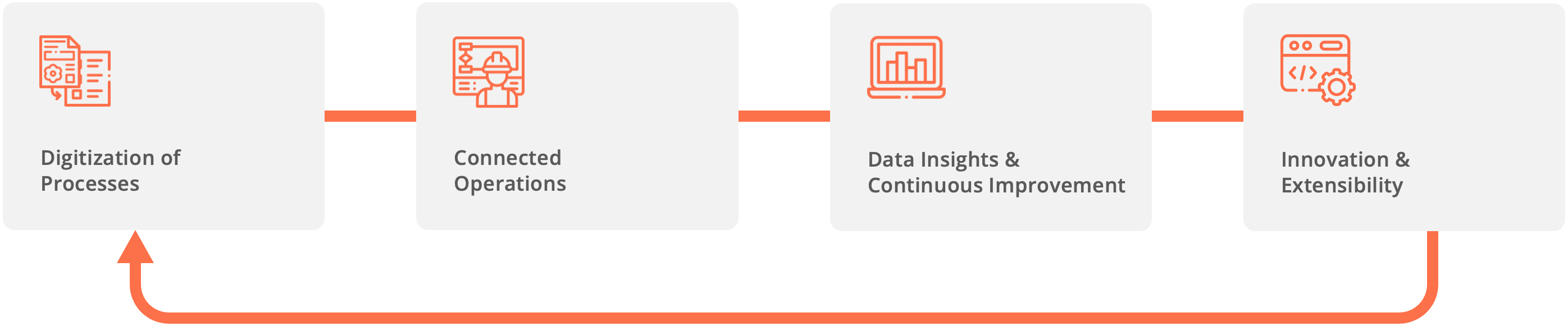
 

augie transforms your connected worker journey

With its seamless integration capabilities, Augie creates a scalable ecosystem, enabling innovation and adaptability. This comprehensive approach empowers organizations to modernize operations and build a foundation for sustained success and growth.


Ready to Learn More?

If you’re ready to modernize and future-proof your operations, Augie is here to help you take the leap into a truly paperless shop floor. If you’re serious about building a resilient, efficient operation, it’s time to stop making excuses and start taking action. Augie isn’t just a tool—it’s the future of manufacturing. Step into a paperless shop floor and see the difference for yourself.

 

See Augmentir in Action
Get in Touch for a Personalized Demo

Discover key strategies to boost production efficiency in manufacturing—maximize output, cut waste, and improve operations with smart, practical solutions.

In today’s competitive industrial landscape, production efficiency in manufacturing is a critical factor that directly impacts profitability, customer satisfaction, and long-term business success. To achieve production efficiency, the actual output must match the optimal standard output, which involves minimizing waste, reducing downtime, optimizing labor, and ensuring consistent quality at every step of the manufacturing process.

production efficiency in manufacturing

Introduction to Production Efficiency

Production efficiency refers to the ability of a manufacturing process to produce the maximum output with the given resources, while minimizing waste and reducing costs. It is a key concept in economics and operational analysis, essential for businesses to remain competitive in the market. Achieving production efficiency involves optimizing processes, reducing waste, and improving productivity to achieve higher profitability and competitiveness. By focusing on improving production efficiency, manufacturers can increase their production capacity, reduce costs, and enhance product quality. This, in turn, leads to increased customer satisfaction and loyalty, as high-quality products are delivered consistently and on time.

What is Production Efficiency in Manufacturing?

Production efficiency refers to the ability of a manufacturing operation to produce goods using the least amount of resources—time, materials, and labor—without compromising on quality. An efficient production line runs smoothly, minimizes bottlenecks, and ensures equipment and workforce are fully utilized. To measure production efficiency, metrics such as Overall Equipment Effectiveness (OEE), cycle time, yield rates, and labor productivity are used.

Pro Tip

Using digital tools, AI-powered analytics, and connected worker platforms are revolutionizing how factories operate. These technologies provide visibility into operations, uncover hidden inefficiencies, and support agile decision-making.

A

Why is Production Efficiency Important?

In manufacturing, even small inefficiencies can lead to significant cost overruns, missed deadlines, and quality issues. Improving production efficiency is essential for maximizing output while minimizing input—helping manufacturers stay competitive, agile, and profitable in an ever-evolving market. Manufacturing efficiency, on the other hand, focuses specifically on optimizing the effectiveness of manufacturing processes, workforce deployment, and overall productivity on the shop floor. Efficient production processes enable manufacturers to do more with less, which not only boosts the bottom line but also enhances the overall customer experience.

Here are some of the key benefits:

Lower Operational Costs

By reducing machine downtime, optimizing labor, and minimizing material waste, companies can optimize processes to significantly cut overhead costs and improve profitability.

Reduced Waste and Rework

Quality control ensures that products are made right the first time, decreasing scrap rates and minimizing costly rework caused by defects or human error.

Shorter Lead Times

Streamlined workflows and fewer production delays, coordinated through efficient production schedules, mean faster turnaround times, allowing manufacturers to fulfill orders more quickly and meet tight delivery schedules.

Better Resource Utilization

Whether it’s labor, machinery, or raw materials, efficient production ensures every resource is used to its full potential throughout the entire production cycle—maximizing value and reducing idle time.

Higher Customer Satisfaction

Consistently delivering high-quality products on time builds trust with customers and strengthens relationships, leading to repeat business and positive brand reputation. Manufacturers improve efficiency by leveraging modern technologies and real-time data analytics, which helps streamline processes, reduce downtime, and enhance productivity.

Greater Competitiveness in the Market

Manufacturers that improve efficiency can offer better prices, respond faster to market changes, and innovate more effectively—gaining a clear edge over less agile competitors.

Ultimately, production efficiency is not just about internal gains—it’s a strategic advantage that drives growth, scalability, and long-term success.

Key Strategies to Improve Production Efficiency

Here are some proven strategies to improve production efficiency:

1. Implement Lean Manufacturing Principles to Drive Continuous Improvement

Lean manufacturing methodologies focus on improving efficiency by eliminating waste (or “muda”) from every aspect of the production process. Tools such as 5S Audits, Kaizen, and value stream mapping help identify inefficiencies and areas for continuous improvement.

2. Invest in Autonomous Maintenance and TPM

Encouraging operators to handle basic maintenance tasks—such as Clean, Inspect, Lubricate (CIL)—as part of an Autonomous Maintenance and Total Productive Maintenance (TPM) strategy minimizes equipment downtime, improves machine efficiency, and ensures machines run at peak performance.

3. Leverage Digital Work Instructions and Connected Worker Tools

Modern digital approaches like digitizing standard operating procedures (SOPs) and adopting connected worker tools helps ensure consistency, reduce errors, and make it easier to train workers by providing accurate data.

improve production efficiency in manufacturing with augmentir

In a recent survey conducted by LNS Research, more than 70% of the most profitable manufacturers are currently utilizing in Future of Industrial Work (FOIW) initiatives and connected worker technology, with the vast majority of them seeing meaningful progress and delivered corporate value through these workforce initiatives. Connected Worker platforms like Augmentir enable manufacturers to create AI-powered workflows that guide frontline workers through each task efficiently and accurately.

3. Use Real-Time Data and Analytics to Track Key Performance Indicators

Data-driven decision-making is critical for efficiency. Historical data can provide insights into the maximum output achieved by a facility under full capacity, which can help in defining standard outputs accurately. Real-time monitoring of machine performance, operator productivity, and process quality helps identify issues quickly and supports predictive maintenance strategies.

4. Streamline Workforce Management

Matching the right tasks to the right workers based on skills, experience, and availability reduces errors and idle time for any manufacturing company. Smart workforce tools can track training, performance, and certification to ensure optimal labor allocation.

Critical Components of Production Efficiency

Equipment Efficiency

Equipment efficiency is a critical component of production efficiency, as it directly impacts the overall productivity and effectiveness of the manufacturing process. Equipment efficiency refers to the ability of machinery and equipment to operate at optimal levels, with minimal downtime and maintenance. To achieve equipment efficiency, manufacturers can implement regular maintenance schedules, invest in modern and efficient equipment, and provide training to operators to ensure they are using the equipment correctly. By improving equipment efficiency, manufacturers can reduce waste, minimize downtime, and increase overall production efficiency. This not only enhances the reliability of the production process but also ensures that machinery operates at peak performance, contributing to higher output and better product quality.

Capacity Utilization

Capacity utilization is a key performance indicator (KPI) that measures the extent to which a manufacturing facility is using its available capacity to produce goods. It is calculated by dividing the actual output by the maximum potential output and is expressed as a percentage. Capacity utilization is essential for production efficiency, as it helps manufacturers identify areas of inefficiency and optimize their production processes. By improving capacity utilization, manufacturers can increase their production capacity, reduce costs, and improve product quality. High capacity utilization indicates that a manufacturing facility is effectively using its resources, leading to more efficient operations and better alignment with market demand.

Inventory Management

Inventory management is a critical component of production efficiency, as it directly impacts the availability of raw materials and finished goods. Effective inventory management involves managing the flow of goods, services, and related information from raw materials to end customers. By implementing efficient inventory management systems, manufacturers can reduce waste, minimize stockouts, and improve overall production efficiency. Inventory management involves tracking inventory levels, managing supply chains, and optimizing inventory turnover to ensure that the right products are available at the right time. This not only helps in meeting customer demand promptly but also reduces the costs associated with excess inventory and stockouts, contributing to a more streamlined and efficient production process.

Workforce Management

Workforce management (WFM) is a critical component of production efficiency because it directly impacts how well human resources are aligned with operational goals. Here are the key reasons why:

  • Optimal Staffing: WFM ensures the right number of workers with the right skills are available when needed, reducing overstaffing (which increases costs) and understaffing (which leads to delays or quality issues).
  • Productivity Monitoring: Through tracking attendance, breaks, and output, WFM helps identify performance gaps and opportunities to improve workflow or training.
  • Cost Control: Efficient labor scheduling and time management reduce overtime expenses, idle time, and unplanned labor costs.
  • Compliance and Risk Management: Proper WFM systems help companies stay compliant with labor laws, union rules, and safety standards, reducing legal and financial risk.
  • Employee Engagement: Transparent scheduling, fair workload distribution, and career development through performance data can boost morale and reduce turnover, which supports consistent productivity.
  • Forecasting and Planning: WFM tools use historical data to predict future labor needs based on demand, helping operations run smoothly during peak and off-peak periods.

Connected worker platforms are a vital solution for workforce management because they digitize and streamline the way organizations engage with their frontline employees, enabling real-time communication, task coordination, and data capture. These platforms empower workers by providing instant access to schedules, training, and support tools, while giving managers visibility into performance and resource needs. By collecting operational data at the source, they support better forecasting, faster decision-making, and improved compliance with safety and regulatory standards. Ultimately, they enhance agility, reduce inefficiencies, and ensure that the workforce is aligned with evolving production demands.

Improving Production Efficiency with Augmentir

Modern manufacturing is increasingly driven by digital transformation. Tools like Industrial IoT (IIoT), AI-powered analytics, and connected worker platforms are revolutionizing how factories operate. These technologies provide visibility into operations, uncover hidden inefficiencies, and support agile decision-making.

Connected Worker Technology is transforming the way manufacturers approach production efficiency by bridging the gap between frontline workers and digital operations. These platforms equip workers with real-time access to information, interactive digital work instructions, and collaboration tools—right at the point of work. By digitizing tasks, capturing live performance data, and enabling guided workflows, connected worker solutions ensure that every job is done accurately, efficiently, and consistently.

augmentir connected worker platform

With features like AI-driven insights, skills tracking, and remote expert support, Connected Worker platforms help manufacturers identify bottlenecks, reduce errors, and optimize workforce deployment. Tools such as Augmentir go a step further by personalizing guidance based on an individual’s skill level, automatically suggesting improvements, and helping identify opportunities for continuous training and upskilling. Ultimately, Connected Worker Technology empowers teams to work smarter, adapt faster, and drive sustainable gains in production efficiency.

Augmentir serves as a digital frontline operating system for your lean strategy, and helps improve production efficiency. With Augmentir, you can digitize, manage, and optimize all aspects of your frontline operation:

  • Daily Direction Setting (DDS)
  • Daily Management System (DMS)
  • Centerline Management
  • Clean, Inspect, Lubricate processes
  • Defect Management
  • Breakdown Elimination
  • Changeover Management
  • Shift Handover
  • 5S and Layered Process Audits
  • Quality Management on the Shop Floor
  • Safety

augmentir connected worker platform – digital frontline operating system for iws


Contact us today for a live demo.


See Augmentir in Action
Get in Touch for a Personalized Demo

Explore how Augmentir uses AI to personalize manufacturing training, boost performance, and deliver real-time support and content creation.

In today’s fast-paced manufacturing environment, staying competitive means more than just upgrading equipment—it requires investing in people. But traditional workforce training methods haven’t kept up. Static instruction manuals, one-size-fits-all onboarding programs, and outdated SOPs often fall short of preparing workers for the dynamic challenges of the modern factory floor.

ai in manufacturing training

Enter artificial intelligence (AI). From analyzing worker performance to delivering personalized training and real-time support, AI is transforming how manufacturers develop and empower their frontline workforce. Solutions like Augmentir are at the forefront of this shift, using advanced analytics, machine learning, and generative AI to create more effective, agile, and personalized training ecosystems.

Here’s how AI is reshaping manufacturing training across four critical areas.

1. Smarter Upskilling and Reskilling Through Performance Analytics

One of AI’s most valuable contributions to manufacturing training is its ability to turn raw performance data into actionable insight. Every worker interaction—how long a task takes, whether they need help, how often they make mistakes—tells a story. Traditionally, these insights were anecdotal at best. With AI, they’re measurable and immediately useful.

Platforms like Augmentir use AI to analyze real-time worker performance data and automatically surface trends and gaps. Suppose a maintenance technician consistently struggles with certain procedures. The system flags this, allowing supervisors to deliver targeted retraining or create a learning path that addresses the weak areas. Likewise, workers who consistently perform well might be fast-tracked for cross-training or more advanced roles.

the difference between skills development and training in manufacturing

This approach enables continuous learning and ongoing upskilling and reskilling, not just during onboarding or annual reviews, but every day. By matching training efforts with actual needs—based on data, not guesswork—companies can build more agile, responsive workforces that are always learning and improving.

2. Personalized Work Instructions for Every Skill Level

Manufacturing is not a one-size-fits-all environment—so why should training be?

AI can help tailor work instructions and learning experiences to the individual. With Augmentir, for example, AI dynamically adjusts work instructions and guidance based on a worker’s experience, proficiency, and even recent performance. This personalization helps new employees ramp up faster and allows seasoned workers to bypass unnecessary detail and focus on what matters most.

For a novice, instructions might include step-by-step visual aids, safety warnings, and prompts for supervisor sign-off. A veteran might receive a streamlined checklist with optional references. The experience becomes smoother and more relevant for each person, improving accuracy and reducing the time it takes to perform tasks.

using ai to improve manufacturing trainingThis kind of adaptive guidance is especially valuable in high-mix, low-volume environments or where production processes change frequently. Workers stay productive while learning in the flow of work—a win for both efficiency and engagement.
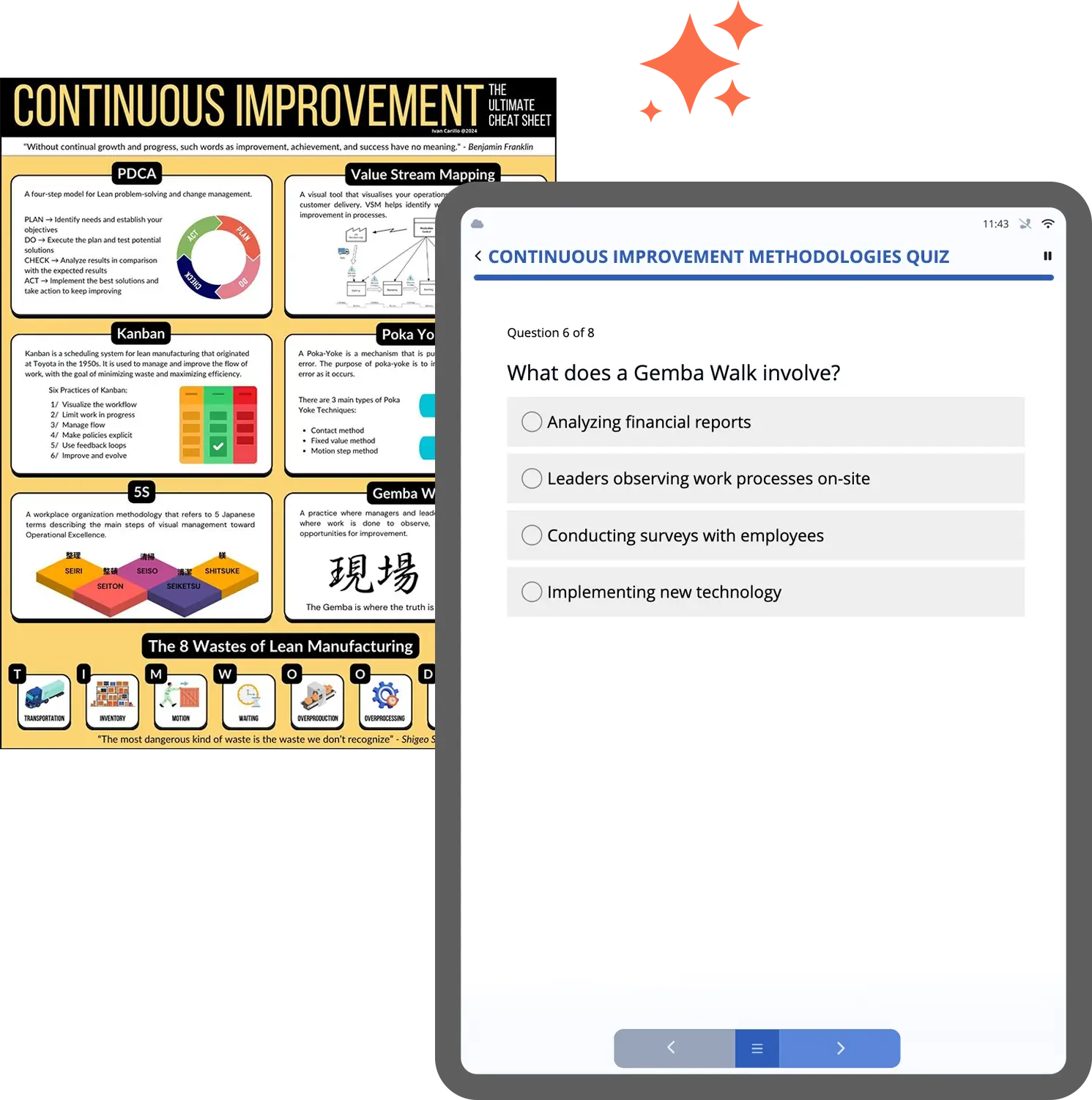
3. On-the-Job Support with Generative AI Factory Assistants

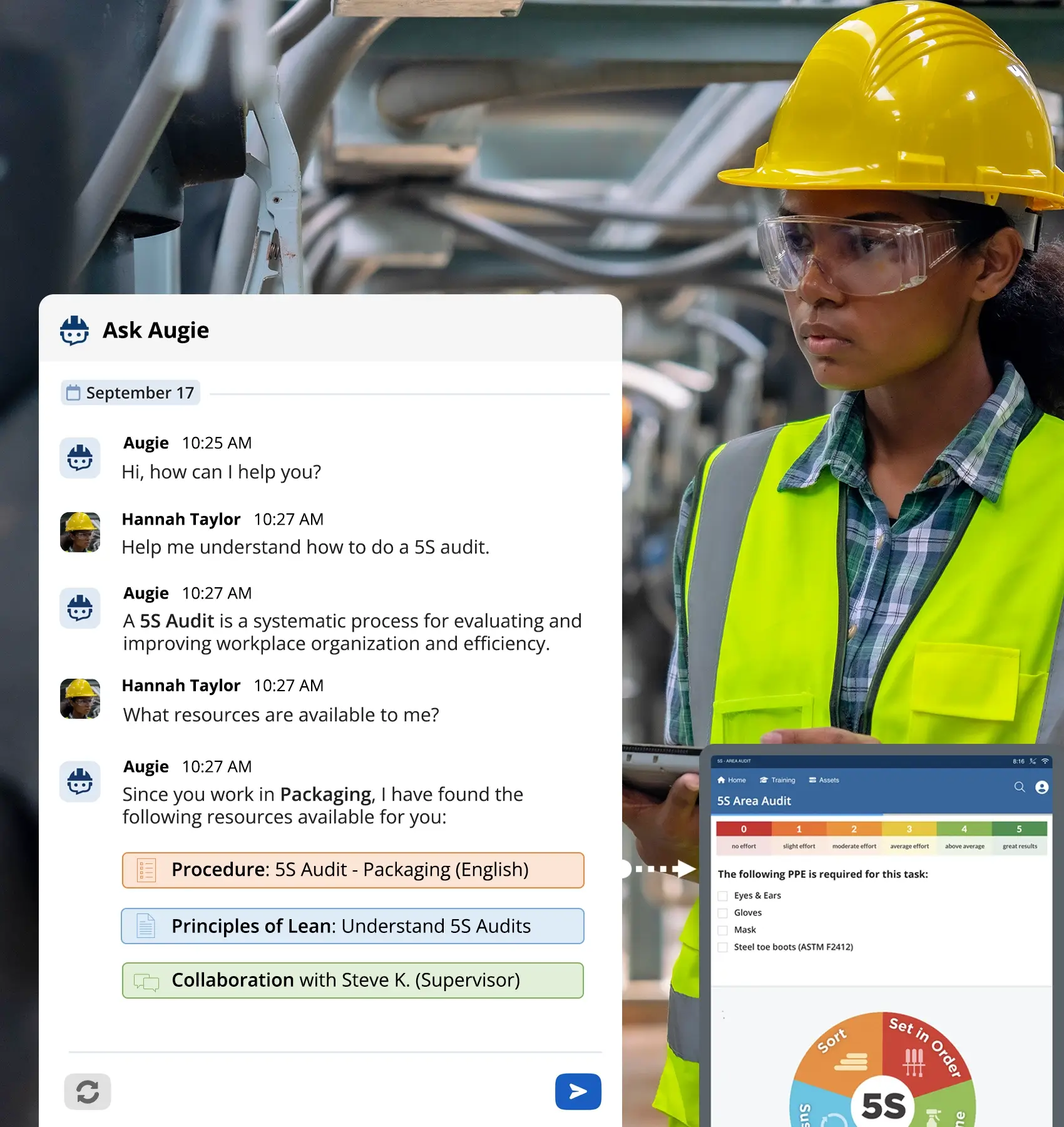
Even the best training can’t prepare workers for every situation they’ll encounter. That’s where generative AI assistants—often called copilots—come in.

Imagine a frontline operator faced with an unfamiliar error code on a CNC machine. Instead of stopping work, digging through documentation, or calling a supervisor, they can ask an AI assistant integrated into their work app or wearable device. The assistant quickly provides context-aware help: maybe it’s a diagnostic procedure, a video walkthrough, or a simple checklist.

This is not science fiction—it’s happening now. With tools like Augmentir’s Augie, workers get real-time guidance, support, and training while they work, tailored to the exact task and situation. These industrial generative AI assistants learn and improve with each interaction, so the more they’re used, the better they get at helping.

augie generative ai assistant for manufacturing standard work

This not only boosts productivity but also reduces downtime, prevents errors, and improves worker confidence. AI copilots act like a mentor in your pocket—one that’s always available, always up to date, and always ready to help.

4. Rapid Content Creation with Generative AI Tools Like Augie

A major pain point in manufacturing training has always been content creation. Writing SOPs, training manuals, and onboarding documents is time-consuming, and keeping them current is a constant challenge—especially when processes, tools, or equipment change.

That’s where generative AI tools like Augmentir’s Augie come in.

Augie helps training teams and subject matter experts create up-to-date, accurate, and engaging content in a fraction of the time it used to take. You can input a few notes, a video walkthrough, or an old manual, and Augie will generate structured work instructions, training modules, or even interactive checklists. This democratizes content creation—now anyone from a line lead to a maintenance engineer can contribute training content without needing to be a technical writer.

augie industrial copilot generative ai assistant for training and quiz creation

More importantly, because Augie is part of the same ecosystem, the training content it generates can be immediately pushed into the hands of workers—embedded in digital workflows, accessible via AI assistants, or served up dynamically based on user behavior.

This means your training stays fresh, relevant, and aligned with the reality on the ground. No more outdated manuals. No more lag between process changes and training updates.

The Big Picture: AI as a Training Multiplier

What ties all these innovations together is a shift from static, one-time training to ongoing, personalized support—enabled by AI.

  • AI makes training smarter by identifying who needs help and where.
  • It makes training faster by delivering content that matches each worker’s needs.
  • It makes training more effective by embedding it directly into the flow of work.
  • And it makes training more scalable by automating content creation and support delivery.

In short, AI becomes a force multiplier for training. It empowers workers to get better faster, managers to lead more effectively, and companies to stay agile in a constantly changing world.

Looking Ahead

The manufacturing skills gap isn’t going away anytime soon. In fact, it’s projected that millions of manufacturing jobs could go unfilled over the next decade due to a shortage of trained workers. Traditional training methods simply can’t scale to meet this challenge.

But AI can.

By weaving intelligence into every layer of the training experience—from data analytics to real-time support—platforms like Augmentir offer a new blueprint for workforce development. It’s faster, smarter, more engaging, and ultimately, more human.

Because at the end of the day, it’s not about replacing people with AI—it’s about helping people thrive alongside it.


See Augmentir in Action
Get in Touch for a Personalized Demo

Learn how skills tracking enhances work allocation and workforce utilization to improve productivity in manufacturing.

Employee skills tracking is an excellent way to stay ahead of the curve in today’s ever-changing manufacturing landscape. Leaders can use this talent management strategy to close worker competency gaps, increase effective training, and hire qualified prospects.

Putting an emphasis on employee skills can also help manufacturers prioritize work allocation and workforce utilization. But what exactly do these two terms mean and how do they relate to tracking skills in manufacturing?

Work allocation is the process of assigning resources and roles to meet the objectives of a given task or production facility. Workforce utilization, meanwhile, refers to how a company or organization effectively utilizes its workforce to meet its operational goals and objectives.

skills tracking and workforce utilization in manufacturing

To keep up with competition, manufacturers should not only try to recruit the best possible hires, but also allocate work in an effective way to retain staff, satisfy customers, and boost profits.

Ultimately, keeping track of skills is a beneficial way to organize a company’s resources to attain sustainable business goals. Implementing a connected worker solution and digitizing skills management processes through smart manufacturing technologies is an effective way for organizations to instantly visualize the skills gaps in teams as well as track workforce skills and quickly assess both team and individual readiness.

Learn more about digital skills tracking and how it improves work allocation and workforce utilization below:

Skills tracking defined

Skills tracking helps ensure that all workers have the necessary expertise to complete tasks to their fullest potential. Basically, it closes the gap between the competencies employees already have and ones they need to further develop.

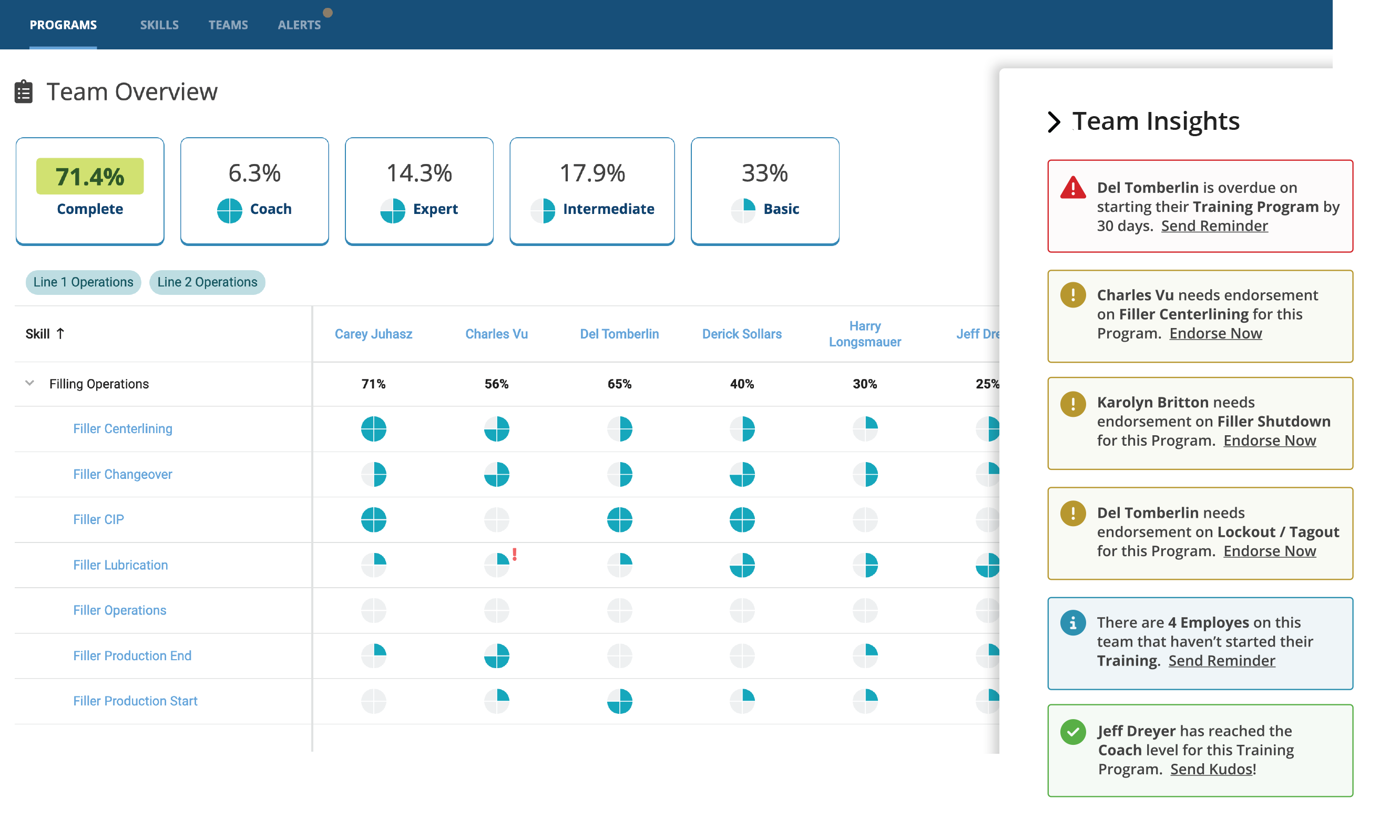
Every manufacturing firm has a unique set of job requirements and expectations. Tracking worker skills on a regular basis helps a company identify training needs and build workers’ knowledge so that they can meet expected targets. Skills management and tracking software help manufacturers identify and track employee expertise. You can map skills from a centralized library to individual workers, analyze the performance of your teams, and fill any skill gaps that exist.

skills tracking software

In a nutshell, measuring employee proficiencies can boost retention, decrease the amount of time spent on tasks, and improve overall productivity.

Benefits of tracking skills to improve work allocation

Through digitization and effective skills tracking, manufacturing firms can best allocate work to team members based on expertise, credentials, and actual ability. For example, an operator who has more than 10 years of experience using computer-controlled equipment may be a better fit to handle complex machinery than an entry-level worker who lacks that training.

Additionally, with a centralized digital repository managers have a better idea of each employee’s current skills level and potential areas of improvement. Then they can close any skill gaps through training opportunities. In return, workers who receive the necessary training are more likely to thrive in their roles and be productive.

In summary, measuring worker skills can help improve work allocation by:

  • Hiring or assigning current employees to the correct jobs and tasks
  • Facilitating worker development through mentorship and training
  • Retaining high-quality employees

How tracking skills boosts workforce utilization

Workforce utilization refers to how much of an employee’s time is devoted to billable work. Tracking skills can improve this, in turn boosting productivity and profits.

When you measure how efficiently employees are doing their jobs and how well a business manages its resources, you can assure that tasks are done well and see continuous increase in revenue. Think about how many hours of each staff member’s workweek need to be billable to remain profitable and whether they are on track. With a digitized tracking system, manufacturers are able to automate and streamline this process reducing errors, improving productivity, and ensuring success.

Pro Tip

Through the use of smart, connected worker solutions and AI-based workforce insights organizations can deliver continuous, on-the-job learning based on skill tracking and real job performance, promoting reskilling and upskilling efforts enterprise wide.

To summarize, tracking skills can help enhance workforce utilization by:

  • Setting profitable rates for services based on worker output and time billed
  • Compensating employees fairly
  • Gauging whether staff is being overworked or underutilized

By digitizing these tracking processes and implementing AI-driven support, organizations can also visualize, track and offset employee burnout. By taking highly granular connected worker data and using AI to filter out the unnecessary portions, industrial operations are able to not only improve tasks and productivity but better support and empower frontline workers.

Ways to track workforce skills

Tracking employee skills is a great way to improve worker performance and productivity by matching the right person with the right assignment.

One way to track an employee’s skills is through a skills matrix, which is a grid that maps staff credentials and qualifications. A skills matrix helps managers strategize and oversee current and wanted skills for a team, position, department, and more. Similarly, a job cover matrix is used to map employees to tasks, roles, or jobs, ensuring adequate coverage and identifying skill gaps. A skills matrix (as well as a job cover matrix) is usually managed using a spreadsheet, but there are alternatives to skill matrices. For example, cloud-based skills management software can help identify and track employee competence and correlate it with actual job performance. The software can also help managers filter employee databases by skills to assemble teams or assign work based on specific qualifications.

skills matrix

Leadership can also track competencies through a skills taxonomy. Taxonomies help classify and organize skills into groups to better understand which skills employees have and which they should learn. Essentially, these structured lists help management identify and track skills to better allocate resources and worker training opportunities.

Lastly, a skills-tracking application can include AI-based software to identify and measure worker expertise and actual job performance. This is an excellent method for intelligently assigning work through skills mapping, optimizing training programs, and more. With AI-based insights and connected worker technology, organizations can bridge the gap between the training room and the shop floor, integrating training into the flow of work and creating an environment of continuous learning.

Skills management with Augmentir

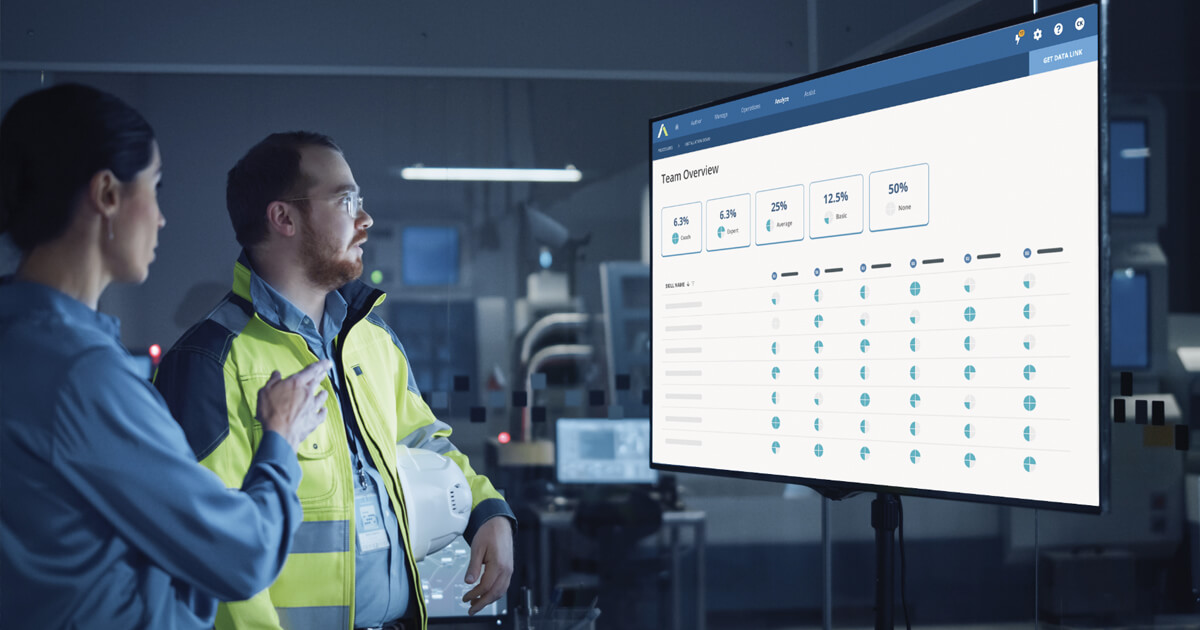
Augmentir offers top-notch solutions to easily track and manage your frontline’s skillset. Our connected worker solution provides customized dashboards to streamline processes to improve workforce management, skills management, and deliver in-line training and support at the point of work, closing skills gaps at the moment of need.

If you are interested in learning how Augmentir can help improve your skills management, skills tracking, and workforce development – request a live demo.


See Augmentir in Action
Get in Touch for a Personalized Demo


Today’s dynamic and changing manufacturing workforce needs continuous learning and performance support to effectively sustain and deliver effective on-the-job performance.

Every day we hear about the growing manufacturing “Skills Gap” associated with the industrial frontline workforce. The story is that 30% of workers are retiring in the near future and they are taking their 30+ years of tribal knowledge with them, creating the need to quickly upskill their more junior replacements. In an attempt to solve the knowledge gap issues, an entire generation of companies set out to build “Connected Worker” software applications, however, they all relied on the existing training, guidance, and support processes – the only true difference with this approach has been the creation of technology that takes your paper procedures and puts them on glass.

Along with tribal knowledge and tacit knowledge leaving, today’s workforce is also more dynamic and diverse than previous generations. The 30-year dedicated employees are no longer the norm. The average manufacturing worker tenure is down 17% in the last 5 years and the transient nature of the industrial worker is quickly accelerating. An outgrowth of the COVID pandemic brings forth the Great Resignation, where workers are quitting in record numbers, and worker engagement is down almost 20% in the last 2 years. 

This new manufacturing workforce is changing in real-time – who shows up, what their skills are, and what jobs they need to do is a constantly moving target. The traditional “one size fits all” approach to training, guidance, and performance support is fundamentally incapable of enabling today’s workers to function at their individual peak of safety, quality and productivity. 

Digitizing work instructions is a great start to helping close the manufacturing skills gap, but alone, it won’t help completely solve the problem. We must go a step further to overcome the lack of a skilled and qualified manufacturing workforce. 

Enter the 2nd generation of Connected Worker software, one based on a data-driven, AI-supported approach that helps train, guide, and support today’s dynamic workforces by combining digital work instructions, remote collaboration, and advanced on-the-job training capabilities. 

These 2nd generation connected worker solutions are designed to capture highly granular data streaming from connected frontline workers. These platforms are built from the ground up on an artificial intelligence (AI) foundation. AI algorithms are ideal for analyzing large amounts of data collected from a connected workforce. AI can detect patterns, find outliers, cleanse data and find correlations and patterns that can be used to identify opportunities for improvement and creates a data-driven environment that supports continuous learning and performance support.

This approach aligns perfectly with the dynamic, changing nature of today’s workforce, and is ideally suited to support their 5 Moments of Need, a framework for gaining and sustaining effective on-the-job performance.

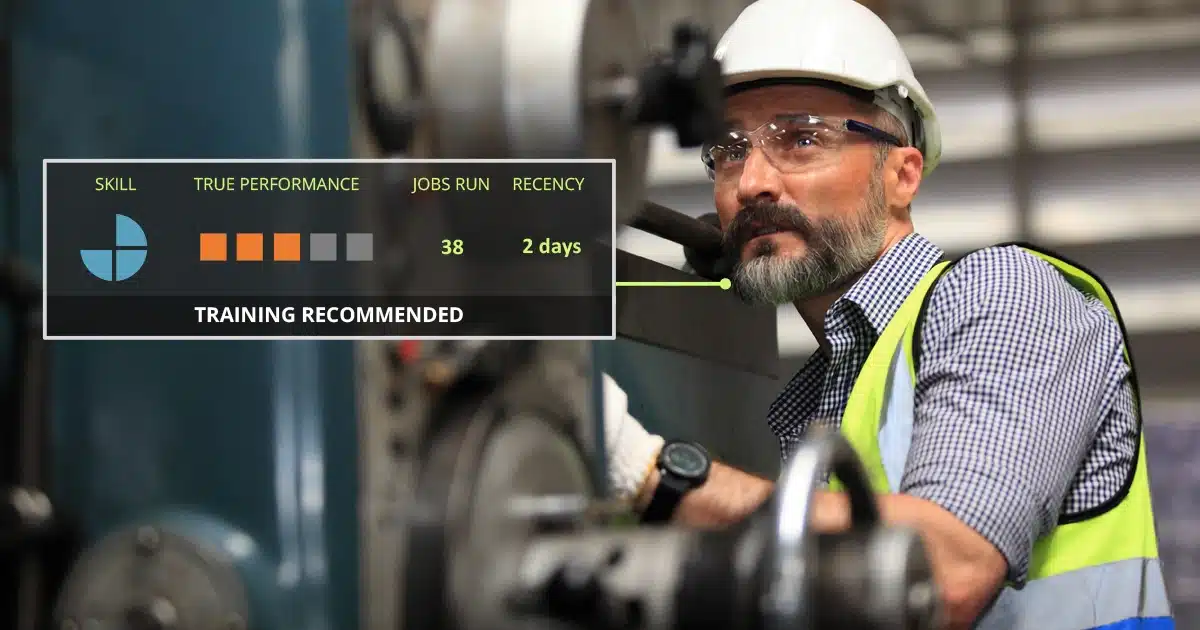
For example, Augmentir’s AI-powered connected worker platform leverages anonymized data from millions of job executions to significantly improve and expand its ability to automatically deliver in-app AI insights in the areas of productivity, safety, and workforce development. These insights are central to Augmentir’s True Proficiency™ scoring, which helps to objectively baseline each of your team members for their level of proficiency at every task so organizations can optimize productivity and throughput, intelligently schedule based on proficiency and skill-levels, and personalize the level of guidance and support to meet the needs of each member of the workforce.

This provides significant benefits to Augmentir customers, who leverage Augmentir’s AI in conjunction with the platform’s digital workflow and remote collaboration capabilities, allowing them to deliver continuous improvement initiatives centered on workforce development. These customers are able to utilize the insights generated from Augmentir’s AI to deliver objective performance reviews, automatically identify where productivity is lagging (or has the potential to lag), increase worker engagement, and deliver highly personalized job instructions based on worker proficiency.

Traditionally, there was a clear separation between training and work execution, requiring onboarding training to encompass everything a worker could possibly do, extending training time and leading to inefficiencies. Today, with the ability to deliver training at the moment of need, onboarding can focus on everything a worker will probably do, identifying and closing skills gap in real-time and significantly reducing manufacturing onboarding times. In one particular case, Bio-Chem Fluidics was able to reduce onboarding time for new employees by up to 80%, while simultaneously achieving a 21% improvement in job productivity across their manufacturing operation.

As workers become more connected, companies have access to a new rich source of activity, execution, and tribal data, and with proper AI tools can gain insights into areas where the largest improvement opportunities exist. Artificial Intelligence lays a data-driven foundation for continuous improvement in the areas of performance support, training, and workforce development, setting the stage to address the needs of today’s constantly changing workforce.

Connected frontline operations platforms are helping manufacturers reduce downtime and provide a foundation for a holistic preventive maintenance strategy.

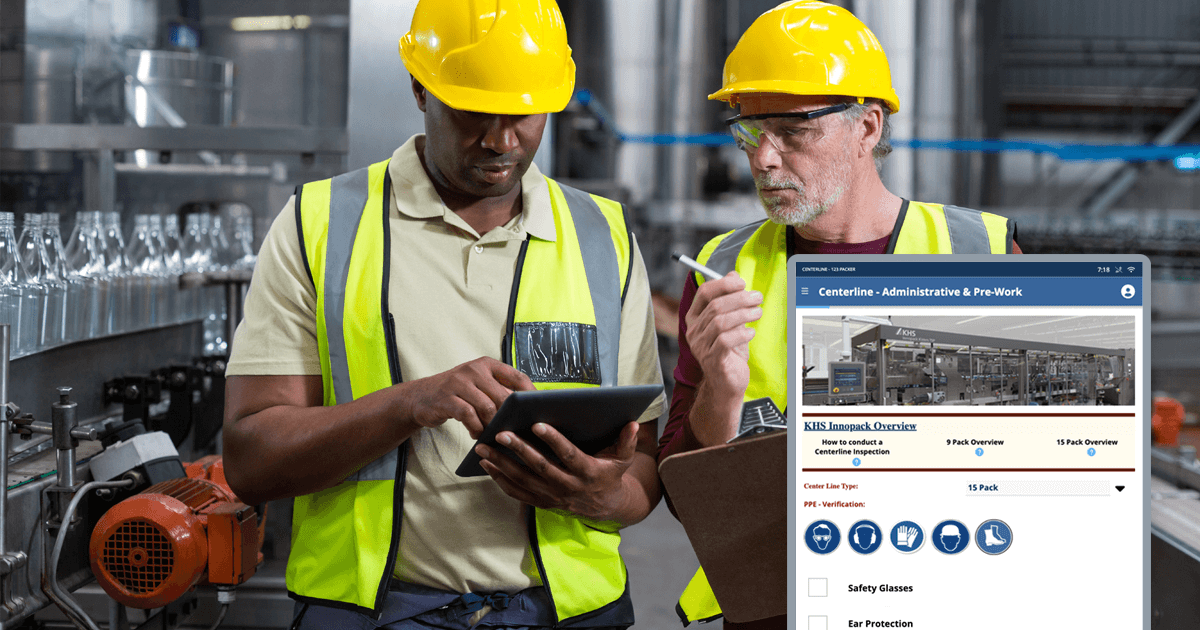
Centerlining in manufacturing is a methodology that uses standardized process settings to assure that all shop floor operations are carried out consistently.

For example, in manufacturing, it pinpoints which machine settings are needed to execute a given process and ensures operators implement those settings to avoid any defects on the shop floor. This works to decrease product and procedure discrepancies by improving machine efficiency.

centerlining in manufacturing

The type of machine configurations that can be centerlined to create quality goods that meet customer expectations range from temperature, speed, and pressure settings to the proper alignment of guard rails. When applied to a procedure, centerlining can substantially increase the number of sellable items, secure uniform product quality, and decrease production costs.

In a nutshell, employing a successful centerlining process can help optimize plant operations and reduce mistakes in product creation.

Learn more about how centerlining can improve everyday operations, and how to centerline a manufacturing process to yield the best output, in the following sections:

Centerlining methodology

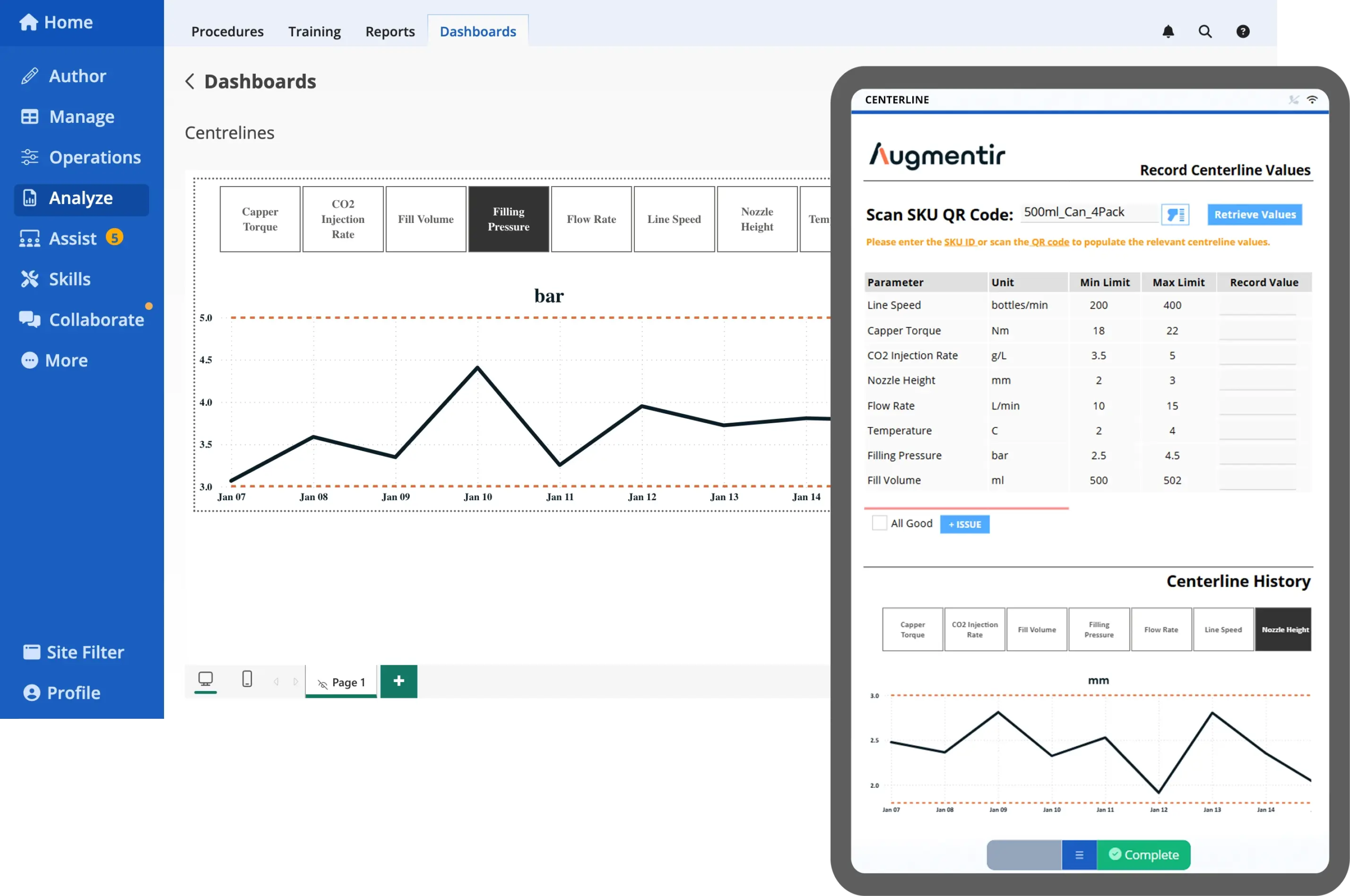
Centerlining works by using specific machine settings per product (pressure, speed, temperature, etc.) to ensure processes are carried out the same way during each assembly line run.

Using the right centerline settings also has a side benefit: it lets operators identify problems as they happen. If workers know which process variables are triggering production delays, they can better control them to boost product quality output.

This can be achieved by creating a statistical process control chart to see which variables are causing interruptions to the assembly line and make any needed changes to the process. Creating a chart can also help workers identify procedures that are affecting the development of goods to ensure continuous improvement.

Centerlining goes hand in hand with total productive maintenance (TPM), a method which utilizes equipment, machine operators, and supporting processes to boost the quality and safety of production protocols.

How manufacturing efficiency can be improved by centerlining

Standardizing the appropriate machine settings can make everyday operations run more smoothly. For example, centerlining the requirements for each product can streamline changeovers, allowing workers to quickly reset their equipment and not lose time when switching to a new product run. This can prevent costly mistakes and reduce waste throughout the shop floor.

It also guarantees that all processes are completed in the same manner. Consistency helps ensure quality, especially when operators are setting up equipment for a production run. Failing to configure the right settings can increase the time for product changeovers and cause product deficiencies.

How to centerline a manufacturing process

Centerlining in manufacturing is a great way to troubleshoot product and procedure variations, oversee operations, and carry out statistical analysis to boost quality assurance and control.

Learn how to centerline a process by following the four steps below.

Step 1: Determine key process variables

It’s crucial to spot process variables that have the greatest effect on product quality to minimize any defects. Potential variables can include pressure, temperature, density, mass, and more.

Step 2: Identify machine settings for each variable

Then, look at which centerline settings can be applied to each process to ensure the creation of quality goods. Again, you’ll want to determine what has worked well in the past and use a statistical process control chart to set variable limits.

Important things to consider are: when the process has worked, which setting was best suited for that procedure, and how the two worked in conjunction with one another.

Step 3: Assess variable impact on production process and product

After you’ve identified the appropriate machine settings, it’s time to monitor how each variable impacts the production process and final product creation. Start by analyzing which assembly line runs yielded the highest production rate, factoring in things like equipment idle time, scrapped parts, rework, etc., to gauge what works and what needs improvement.

It’s vital that you have accurate, clear data to analyze. We recommend digitizing your centerlining process and results to correctly quantify the performance of each variable.

Step 4: Ensure centerline settings are always applied

Lastly, make sure that all operators are aware of and educated on how to best implement a centerlining process so that the right settings are applied each time. Failure to do so can result in mistakes and product deficiencies down the line. It’s best to provide all the necessary resources, steps, and training from the get-go to avoid costly errors. Digital work instructions and connected worker tools are a great way to ensure that operators are properly equipped to perform centerlining procedures.

centerlining with augmentir

At this stage, your manufacturing firm should have the proper reporting techniques to evaluate product quality against centerline procedures.

Interested in learning more?

Augmentir is a connected worker solution that allows industrial companies to digitize and optimize all frontline processes that are part of their TPM strategy. The complete suite of tools are built on top of Augmentir’s patented Smart AI foundation, which helps identify patterns and areas for continuous improvement.

augmentir connected worker platform


Learn how to improve manufacturing shift handover with our downloadable template and AI-powered connected worker solution.

The manufacturing world is at an exciting yet challenging crossroads. Deloitte’s 2025 Manufacturing Industry Outlook paints a vivid picture of the road ahead—one filled with hurdles like labor shortages and rising input costs but also brimming with opportunities driven by digital transformation and innovation. At Augmentir, we see this journey every day through our work with industry leaders, and we’re thrilled to share how our AI platform is helping manufacturers navigate these challenges with confidence and creativity.

2025 manufacturing industry outlook

Deloitte’s report doesn’t just forecast trends; it highlights the critical role technology plays in shaping the future. For us at Augmentir, this is more than just a validation of our work. It’s a call to action—an affirmation that we’re on the right path to empowering manufacturers with AI to build smarter, more resilient operations. Let’s dive deeper into how Augmentir’s AI platform, and specifically Augie, our Industrial Generative AI Suite, aligns with Deloitte’s vision and how we’re enabling our partners to seize the opportunities ahead.

Tackling Labor Shortages and Value Chain Disruptions

Labor shortages are no longer hypothetical scenarios or statistical warnings—they’re the daily reality for manufacturers. Deloitte’s report underscores the urgency of addressing these workforce challenges, and at Augmentir, we’re ready to help.

Our industrial Gen AI assistant, Augie, goes beyond just numbers. Yes, it forecasts workforce needs and optimizes staffing levels, ensuring that resources are allocated precisely where they’re needed. But it also does something more profound: it prioritizes people. By streamlining talent management and offering actionable workforce planning insights, Augie helps manufacturers foster environments where employees feel valued and empowered. A happy and engaged workforce is the backbone of any successful operation, and that’s why our solutions are designed to enhance satisfaction and retention alongside productivity.

augie generative ai assistant for manufacturing standard work

Supply chain disruptions, another thorn in the industry’s side, are no match for Augie’s analytical prowess. By delivering real-time insights and actionable recommendations, Augmentir helps manufacturers proactively address potential bottlenecks and ensure operational resilience. With Augie, labor and value chain challenges transform from overwhelming obstacles into manageable opportunities.

Managing Rising Input Costs and Enhancing Efficiency

The pressure of rising costs—whether from raw materials or wages—is a constant battle for manufacturers. Every dollar saved can make a monumental difference, but achieving savings without sacrificing quality is a delicate balance. That’s where Augie excels.

Imagine having a personal advisor who’s always on the lookout for ways to optimize your operations. That’s Augie. By analyzing market trends and production data, Augie offers insights into cost-saving opportunities and ways to enhance efficiency. These aren’t generic, one-size-fits-all solutions—they’re tailored recommendations that align with your specific goals.

From optimizing supply chains to fine-tuning production processes, Augie empowers manufacturers to navigate the complexities of rising costs while staying competitive. The result? Greater operational efficiency, better resource allocation, and a clear pathway to long-term sustainability. In today’s fast-paced market, those aren’t just advantages; they’re necessities.

Embracing Smart Operations Through Digital Transformation

The future of manufacturing is undeniably digital, and Deloitte’s report emphasizes the transformative potential of technologies like AI and cloud computing. At Augmentir, we’re not just advocates for digital transformation—we’re enablers.

Augie seamlessly integrates with cutting-edge technologies, enabling manufacturers to unlock the full potential of smart operations. By embracing tools like generative AI and IoT, manufacturers can improve efficiency, foster innovation, and gain a competitive edge. But digital transformation isn’t just about adopting new tools; it’s about rethinking processes and strategies to drive meaningful change. That’s where Augie shines—bridging the gap between traditional manufacturing and the smart factories of tomorrow.

When manufacturers adopt a digital-first mindset, they’re not just investing in technology—they’re investing in growth, resilience, and innovation. And with Augie by their side, that transformation becomes not just achievable but inevitable.

Driving Strategic Innovation and Investment

Innovation is the lifeblood of manufacturing, but with countless technologies vying for attention, choosing the right investments can feel overwhelming. Augie simplifies this process by offering data-driven insights into the areas with the highest potential return.

Whether it’s advanced AI, extended reality, or cutting-edge simulation tools, Augie helps manufacturers make informed decisions that align with their strategic goals. From optimizing production lines to enhancing workforce training, Augie ensures that technology investments deliver tangible, meaningful results.

augie data assistant continuous improvement

This isn’t just about staying ahead of the competition—it’s about driving innovation that meets customer demands, supports sustainability, and creates lasting value. With Augie, manufacturers have the clarity and confidence they need to make investments that matter.

Looking Ahead

Deloitte’s 2025 Manufacturing Industry Outlook offers a vision of both challenge and opportunity, and we at Augmentir couldn’t be more excited about the road ahead. The future of manufacturing is one of resilience, efficiency, and innovation—and AI is the key to unlocking it.

With Augie, manufacturers can tackle their toughest challenges and turn them into opportunities for growth. From labor shortages to rising costs, from digital transformation to strategic innovation, Augie is more than just a tool—it’s a trusted partner in navigating the complexities of the modern manufacturing landscape.

Are you ready to transform your operations and embrace the future of manufacturing? Let’s connect. Together, we can build a smarter, stronger, and more sustainable industry that thrives in the face of change.


See Augmentir in Action
Get in Touch for a Personalized Demo

Join Chris Kuntz for an interview Packaging Insights on how AI and connected worker technology can help the packaging industry overcome the skilled labor crisis.

The packaging industry has been hit by the low availability of skilled workers, but for Chris Kuntz, VP of Strategic Operations at Augmentir, AI systems offer the solution. In this interview with Joshua Poole from Packaging Insights, Chris explores how AI and the Augmented Connected Workforce could revolutionize the packaging industry and how Augmentir’s AI-powered connected worker solution supports optimal efficiencies in manufacturing. He also discusses the importance of effective regulatory frameworks for AI.

This transcript has been edited for clarity and length. View the original video interview on the Packaging Insights website here.

packaging industry connected workforce

——

Joshua Poole: Hello, everyone. My name is Joshua Poole, and I am the editorial team leader at CNS Media, the publisher of Packaging Insights. I am very pleased to be joined today by Chris Kuntz, who is the Vice President of Strategy at Augmentir, and who is here to talk about the benefits of AI in relation to the packaging industry.

So welcome to you, Chris.

Chris Kuntz: Thank you very much, and thanks for having me, Joshua.

Joshua Poole: So, Chris, AI systems are expected to really transform the wider society but in relation to the packaging industry, to what extent could they revolutionize operations there?

Chris Kuntz: The reality is, to a huge extent. The impact centers around the manufacturing workforce – the people that are part of manufacturing. Historically, the application of AI, artificial intelligence, and machine learning, in manufacturing anyway, has focused on automating repetitive lower-level processes, that replace humans in the factory. Today, what we need to think about, and what we focus on here at Augmentir, is how we can use AI to augment the human workforce. And so, AI, again, used throughout the industry, its served great application from a predictive maintenance, machine failure standpoint, energy efficiency – things like resource utilization and even supply chain visibility and quality control.

And those applications of AI in manufacturing will continue to provide value. But the reality is people are still needed in paper mills, on the factory floor in the areas of safety, quality, and maintenance. There are jobs that just require that humans are there. And that’s not going away any time soon. But what we are faced with, and what many manufacturers are faced with, is these workforce challenges of the aging workforce, the retiring workforce going away. They’re walking out the door with a vast amount of knowledge that is essential to operate factories and plants. Pre-pandemic we had an emerging workforce coming in that maybe didn’t have the necessary skills, but today post-pandemic era, there’s a massive job shortage. There are no workers coming in, and so manufacturers are forced to look at a pool of less-skilled workers to perform tasks that they may not be initially qualified for.

So, it is not just that the skilled labor is going out, it’s just that we don’t have any skills coming in. And so, every manufacturer is faced with a massive labor shortage and as a result a massive shortage of skills required to operate successfully any given day on the shop floor. And that’s really where we think the value is going to come from an AI standpoint, and it’s kind of transformative when you look at historically the application of AI in manufacturing.

Joshua Poole: So, you mentioned the industry is really struggling to overcome the lack of a qualified workforce. How can AI overcome this problem across the industry?

Chris Kuntz: One of the great things about artificial intelligence, and our history as a company, and one of our previous companies was focused on collecting data from connected machines and then using that data and analyzing that data with AI to understand how to make those machines operate better and improve those machines.

From a human standpoint, humans have been relatively disconnected on the shop floor. They’re using paper-based checklists and SOPs and work procedures, the same sort of technology they were using 20, 30 years ago. So, they’re relatively disconnected, and we know little about how they’re operating and how they’re performing and where they need help and where they need assistance.

If we can connect those workers – and I am talking connecting with phones, tablets, wearable devices – if we can connect those workers we have a digital portal into how they’re performing, and through AI we can analyze how they’re performing and then offer them real-time guidance almost like an AI assistant that’s sitting there helping them out if they are struggling, helping them out if they need help, guidance, or support, or if there is a potential safety or security issue that they might be running into.

The same way that AI has historically been used to act on machine data to improve machine efficiency and performance, we can use the same approach for the humans in the factory.

Joshua Poole: Mm-hmm, and can you provide any examples of the ways in which your platform, Augmentir, has benefited companies looking to embrace AI to improve their operations?

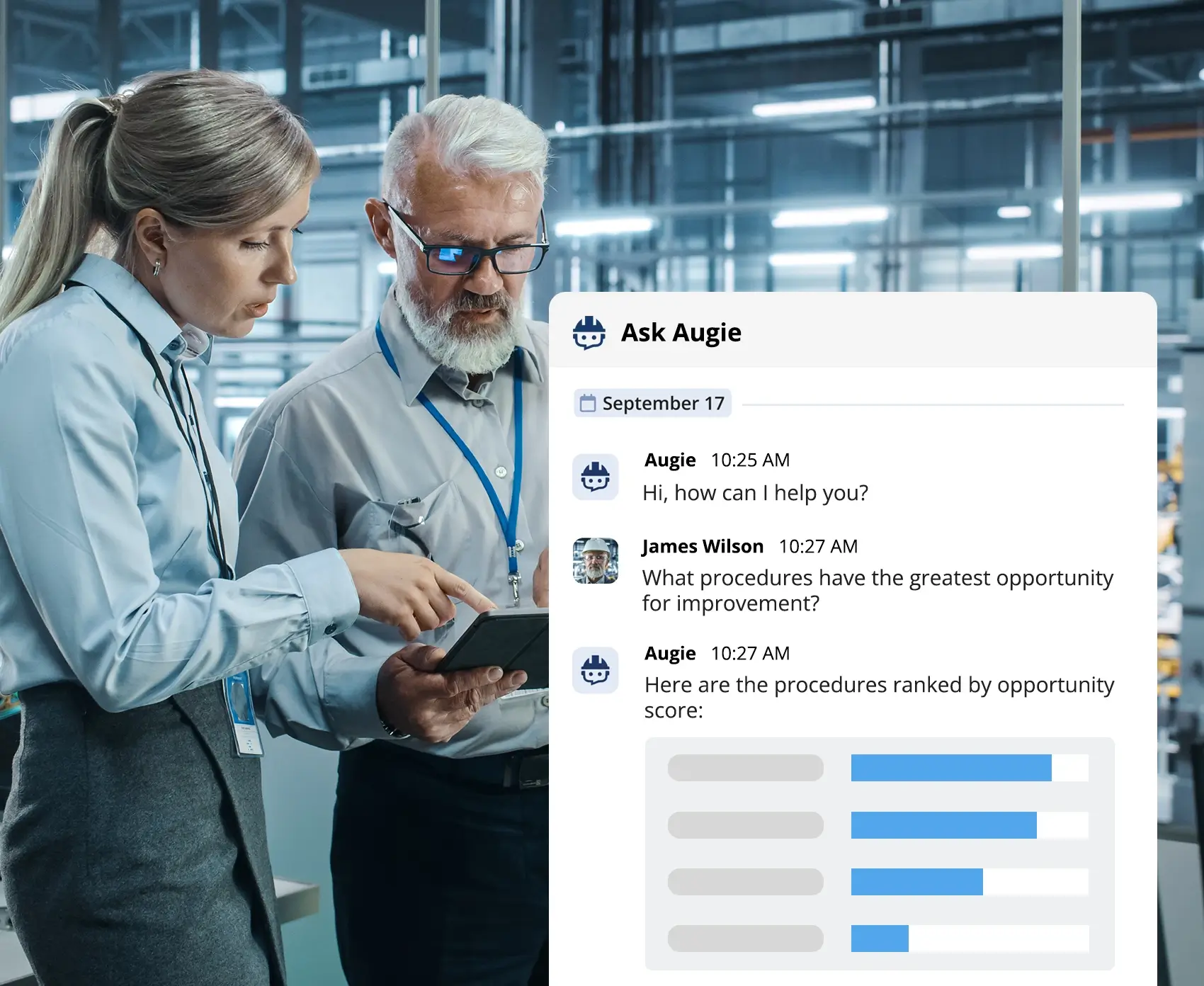
Chris Kuntz: Yes, there are a few different ways. More recently we just launched our Generative AI assistant called Augie™. And what that does is that allows workers or operations managers, using natural language, to solve problems faster, assist in troubleshooting, and provide guidance when needed.

One of the first use cases is troubleshooting. This happens every day in a plant, in a paper mill, it happens every day – there’s a problem with a machine, we need to get it back up and running. Otherwise, there’s a downtime issue, which leads to production/revenue loss. And it’s not a standard procedure to fix the machine. And so there’s troubleshooting that needs to happen. This process is very collaborative. But also from a worker standpoint, they typically have to go to 5, 6, 10 different systems to try to find information or talk to different people.

And what a Generative AI assistant can do is be that digital front end to all that wealth of information and return information on, “Hey here’s the solution to this problem. It’s been solved before, it’s in this published guide, here you go.” Or, “You may want refer at this work procedure. This is something, a troubleshooting guide that could help you solve the problem.” Or, “Here’s a subject matter expert that exists” and you can remotely connect to this person who has expertise in this particular type of equipment.

And so being able to give real-time access to that individual at the time of need is critical. And I think the other big area, at least early on here, is around training.

So, if you think about the skilled labor, workforce shortage, the tenure rates in manufacturing, people are quitting faster. They’re not sticking around for 15 years, they’re sticking around for three years, maybe, possibly, at max. And so, training and learning and development, HR leaders have to think about how to change onboarding practices because it’s not practical anymore to onboard someone for six months if they’re only gonna be around for nine months.

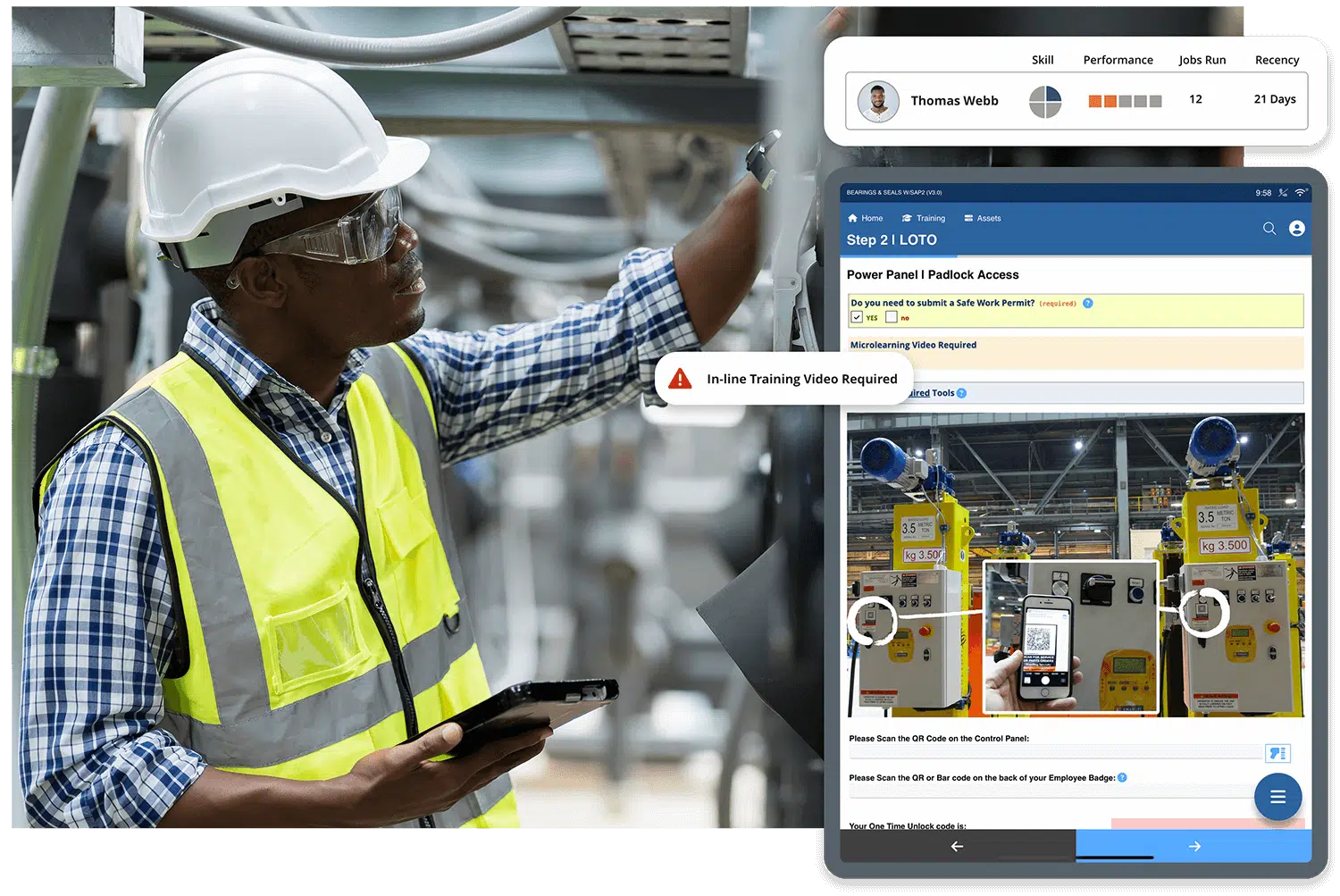
And so the goal, with many of the organizations that we speak with, the goal is to reimagine and rethink training and move it away from the before they’re productive in the classroom to move it onto the floor. Move it into the flow of work, they call it. And so what we can do with AI there is, we don’t understand that worker or their skill level or their competency levels. And if that’s digitally tracked, we can use AI to augment those work instructions and work procedures to say, “Hey, you’re a novice. This is your first month on the job. You’re required to watch this safety video before you do this routine.” And if you’re an expert worker, maybe you wouldn’t be required to do that. Or if you were trained, but your performance is lagging vs. the benchmark, we can come – the instructions can come and be dynamically adjusted to say, “Hey, here’s some additional guidance to help you through this procedure and through this routine.”

So, it gives visibility and insight into areas. I mean, if you had three people on the shop floor, you’d probably know exactly what they were doing. But once you get some larger organizations and they have dozens of people or hundreds of people, it becomes much much harder to understand where the opportunities for improvement are. And AI has the ability to do that, certainly in the training area.

Joshua Poole: Hmm, that’s very interesting. And of course, AI is largely unregulated worldwide, which can create problems like AI washing and irresponsible use. But what do you see as the biggest concern with the proliferation of AI systems within the packaging industry?

Chris Kuntz: So, certainly there’s a lot of concerns with respect to that, and for Augmentir, our approach is we leverage a – certainly from a Generative AI standpoint, we leverage a proprietary, fit-for-purpose, pre-trained large language model that sits behind our Generative AI solution. And when you combine that with robust security and permissions that can help factory managers, operators, and ever engineers or frontline workers only have access to the information that they need, and still provide the benefits of problem-solving faster and improved collaboration.

One of the other things though that I think is really important is this concept of “verified content” – so we’ve all used ChatGPT, right? And early on, I think they had this disclaimer, ChatGPT is 90% correct, so it could return false data. That’s not just not acceptable in an industrial settting. You can’t say, “Here’s a routine to do a centerlining on a piece of equipment” and have someone stick their hand in a place and get it chopped off. You can’t be 90%, you have to be 100%.

So, we have a concept of our Generative AI system, the ability to return verified and unverified data, and then the organization can decide what they want to do with that. So, if it’s a frontline worker, maybe, if it is unverified data, it’s labeled, and you need a supervisor that has to come over if you are going to perform that routine. And then the ability to sort of take the information that comes back and categorize it in terms of verified data, unverified data, and then be able to control how you’re using that. So, it’s not the wild wild west, it’s a very controlled environment. The scope of, if you think about our, in our world, if we’re serving a manufacturing company – and Augmentir is being used for digital manufacturing in paper and packaging companies like Graphic Packaging and WestRock, and so the information that, in our scope of their world is corporate documentation, engineering documentation, operational data, work order data, people data – could be their skills matrix and training history and things like that, but it’s all contained within their enterprise. We’re not looking outside of that, it’s really a constrained data set. And that’s what feeds our large language model.

That significantly helps the application of this, there are people that are exploring using more open AI and GPT models to do this. But then you run into the problems that you said, where there’s a lot of information that both you are feeding into the AI, which could be a security risk, and then the information that you are getting back that could be a security risk.

Joshua Poole: Okay, and as a final question. What advice would you give to politicians working to establish these regulatory frameworks for AI systems?

Chris Kuntz: Great question.

You know, our point of view is we think, you know President Biden had the AI regulation executive order here in the United States back in October, we think it’s much needed on several fronts. Certainly, every company now is saying that they’re an AI company and trying to sprinkle in AI to everything they do. And some of that can be a little problematic.

But at least in the U.S. here in Biden’s AI regulation executive order, there was a lot of talk about job disruptions and putting focus on the labor and union concerns related to AI policies. I think that reinforces our use of AI as a way to augment workers. We’re not looking to replace workers and it’s addressing a huge problem. I think the Department of Labor, they’re issuing guidance to employers around AI that you can’t use it to track workers and you can’t use it to, you know there’s labor rights that exist in the world. And I think that gets back to having these AI co-pilots or Generative AI assistants that can help workers perform their jobs safely and correctly, maximizing the potential. It’s really where on-the-job learning comes into play. It’s things that were happening off the factory floor before. Now it’s squarely suited to help address some of the big manufacturing labor workforce problems that exist today. So, there’s a lot of language in that executive order around making sure that AI is used, not just responsibly, but used for purposes that are going to further the industry. And again, that’s squarely where we sit in terms of workforce development and using it to address the labor shortages from a training and support standpoint.

But, overall, I think, absolutely we embrace the regulatory – Generative AI regulation – and control aspects of this because it could become problematic if you are not doing that, for sure.

Joshua Poole: Mm-Hmm that’s very interesting. Chris, thanks for your time today.

Chris Kuntz: Yes, thank you very much. Thanks for having me.


See Augmentir in Action
Get in Touch for a Personalized Demo