Various operational excellence tools are available to help businesses achieve their goals, including lean management, Six Sigma, and business process reengineering. These methodologies provide structured approaches to improvement that can be customized to fit any organization’s needs.
Lean manufacturing tools focus on eliminating waste and include:
- 5S workplace organization (Sort, Set in order, Shine, Standardize, Sustain)
- Kanban for visual workflow management
- Just-in-time inventory systems
- Standardized work documentation
- Visual management boards
Six Sigma tools are designed to reduce variation and defects:
- DMAIC methodology (Define, Measure, Analyze, Improve, Control)
- Statistical analysis software
- Design of experiments
- Process capability analysis
- Failure mode and effects analysis (FMEA)
These tools enable organizations to streamline processes, eliminate waste, and improve efficiency. For example, GE credited Six Sigma with delivering $10 billion in benefits during its first five years of implementation.
Operational excellence tools also help businesses measure operational excellence and track progress toward their goals. Metrics like Overall Equipment Effectiveness (OEE), First Pass Yield, and Customer Satisfaction Index provide concrete ways to measure improvement over time.
- Kaizen: Continuous, incremental improvement driven by all employees.
- Total Productive Maintenance (TPM): Maintain and improve the safety, quality, and integrity of production in manufacturing.
- Total Quality Management (TQM): Organization-wide efforts to improve quality and customer satisfaction.
- Run to Target (RTT): Maintaining consistent production performance by ensuring that operational targets are met efficiently and effectively.
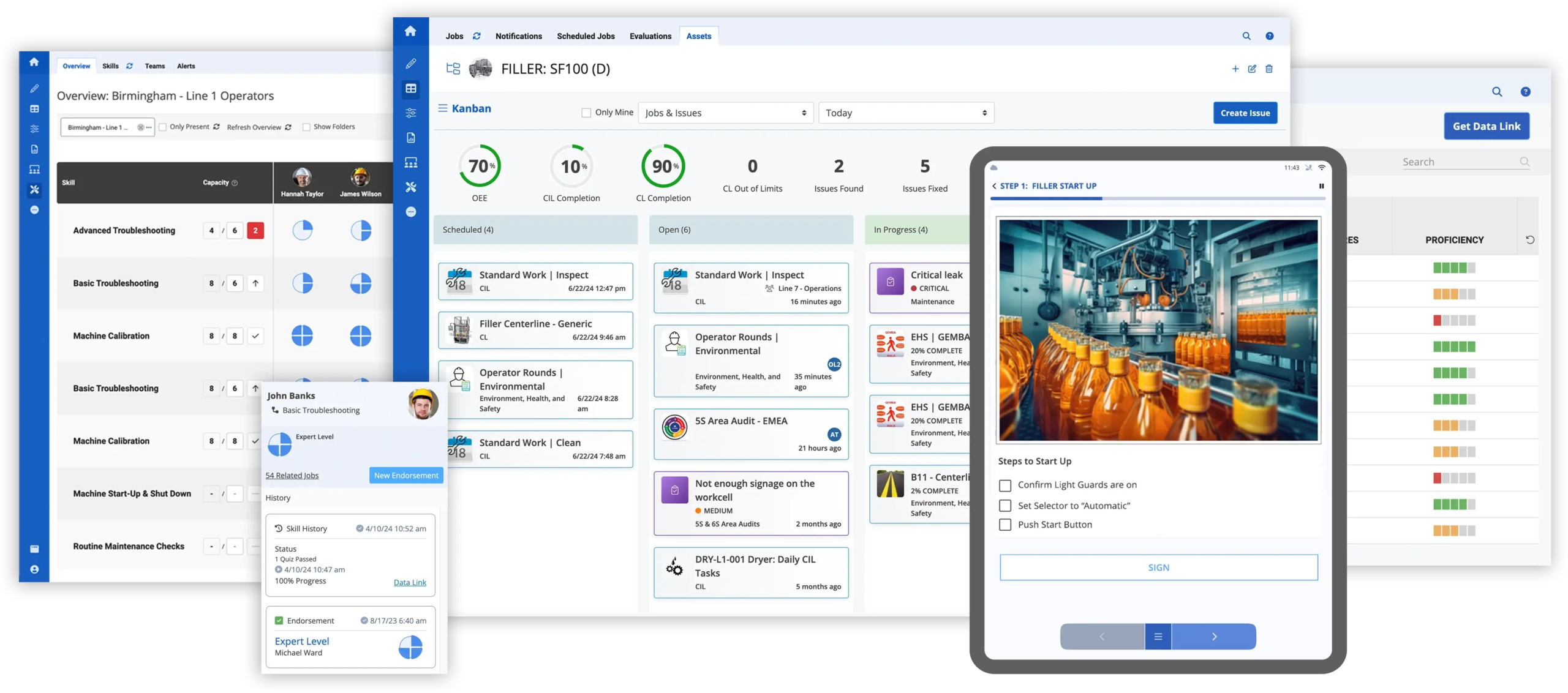
In addition to traditional methodologies like lean management and Six Sigma, modern operational excellence efforts increasingly leverage digital solutions such as Connected Worker Tools and Integrated Work Systems. These tools enhance employee engagement, improve process visibility, and foster continuous improvement by connecting frontline workers with real-time data, collaboration platforms, and standardized processes.
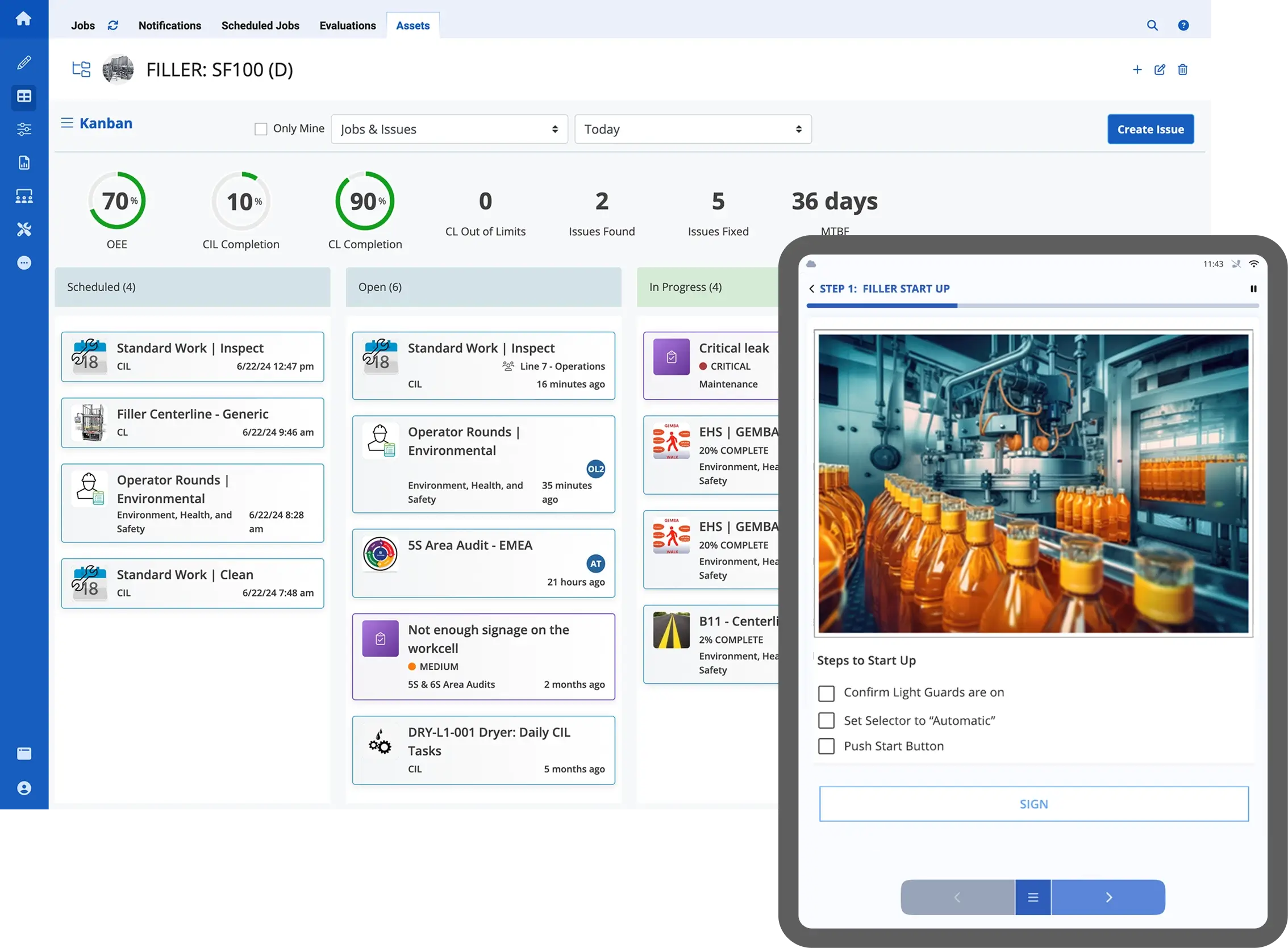
Connected Worker Tools and Platforms empower employees by providing access to the right information at the right time, enabling better decision-making and faster problem resolution. These tools often include mobile applications, wearable devices, and augmented reality interfaces that facilitate training, communication, and task management on the shop floor or in service environments.
Integrated Work Systems (IWS) combine people, processes, and technology into a cohesive framework that supports operational excellence. IWS standardize workflows, embed best practices, and align daily work with strategic initiatives and business objectives. By integrating operational data and employee input, these systems help organizations drive process optimization, improve resource utilization, and achieve significant cost savings.
Together, Connected Worker Tools and Integrated Work Systems complement established operational excellence tools by enhancing collaboration, increasing process discipline, and embedding operational excellence deeply into the organization’s culture and internal operations.
By leveraging these tools, organizations can drive operational excellence and achieve sustainable growth. The key is selecting the right combination of tools for your organization’s specific challenges and goals.